
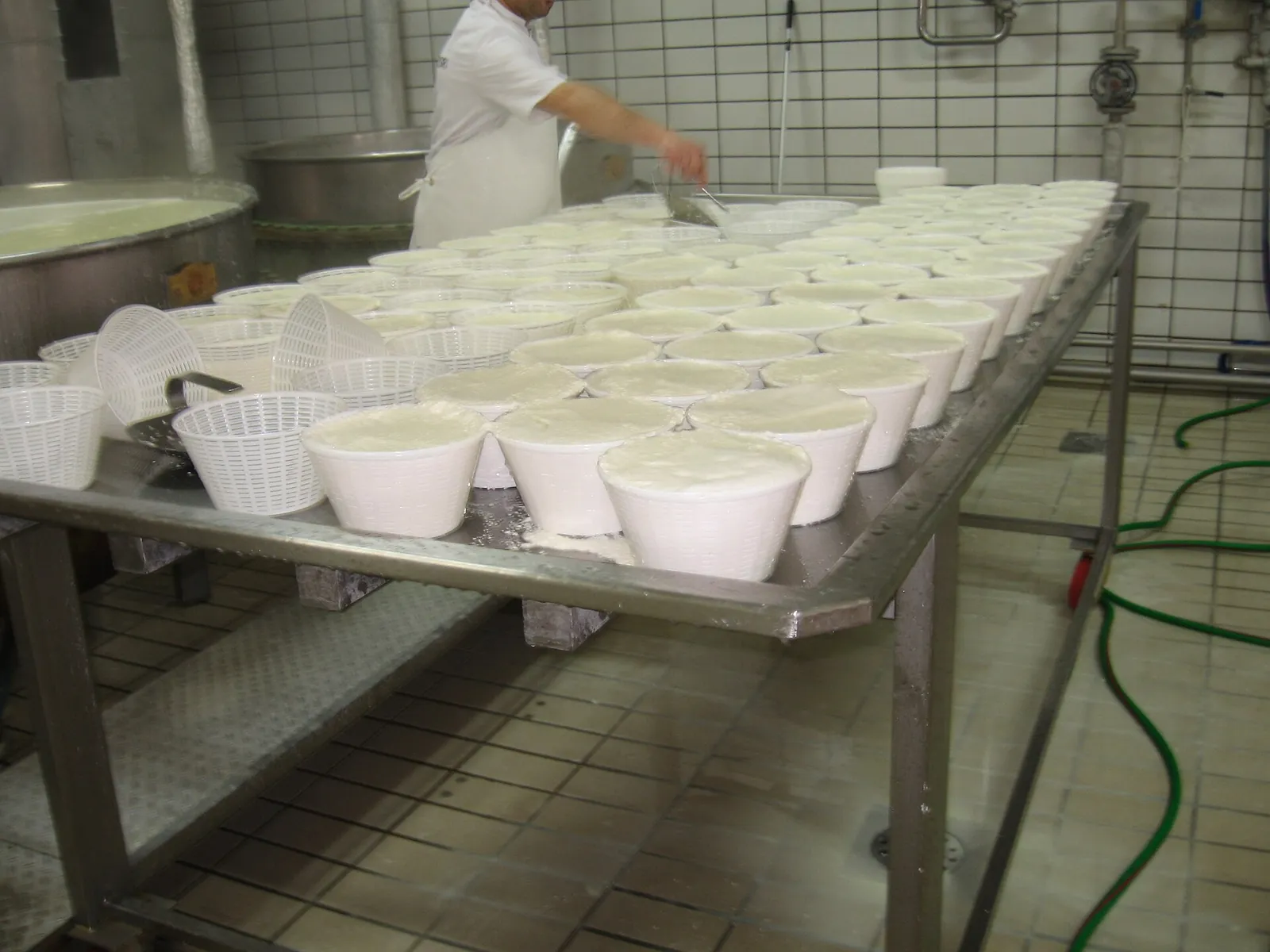
Most of the famous names have been protected under EU law since 1996.
This page maps the main Italian cheeses, shows which names are protected and points to the guides that go deeper on each region.
Italian cheese at a glance
Here is Italian cheese at a glance: the cheeses most US shoppers meet, the milk behind each and whether the name was in the EU's first big protected-name list.
| Cheese | Milk | Style | In the June 1996 EU list |
|---|---|---|---|
| Parmigiano-Reggiano | Cow | Hard grana, crystalline when aged | Yes, PDO |
| Grana Padano | Cow | Hard grana, gentler and milder | Yes, PDO |
| Pecorino Romano | Sheep | Hard, sharp and salty | Yes, PDO |
| Gorgonzola | Cow | Blue, soft (dolce) or firm (piccante) | Yes, PDO |
| Mozzarella di Bufala Campana | Buffalo | Fresh stretched curd | Yes, PDO |
| Fontina | Cow | Semi-soft Alpine melter | Yes, PDO |
| Taleggio | Cow | Washed-rind, fruity | Yes, PDO |
| Provolone Valpadana | Cow | Stretched-curd, mild to sharp | Yes, PDO |
| Mascarpone, ricotta, burrata | Cow | Fresh, creamy | Not in that list |
The dates come from Commission Regulation (EC) No 1107/96 of June 12, 1996, whose Italian entries include every protected name in the table above.
Italian cheese tradition by region
Italian cheese tradition follows the map: the cheese of a place depends on its animals, its climate and what else the farm produced.
The north is cow country. Parmigiano-Reggiano comes from a zone the consortium defines as Parma, Reggio Emilia, Modena, Mantua on the right of the Po and Bologna on the left of the Reno. Grana Padano covers a wider plain, which is why it usually costs less. Piedmont and Lombardy add soft cheeses such as Robiola, Taleggio and Gorgonzola, and the Alps give Fontina; the Piedmont guide covers that corner.
The south and the islands lean on sheep, buffalo and stretched curd. Pecorino Romano is a sheep's-milk cheese, Mozzarella di Bufala Campana uses buffalo milk, and southern cheeses like caciocavallo and scamorza are pulled and shaped by hand. Sardinia and Sicily have their own pecorino styles, described in the Sardinia and Sicily guide. For the whole country region by region, start with the Italian cheese guide.
The hard cheeses: Parmigiano, Grana Padano and pecorino
The hard cheeses are the ones you grate and keep for months, and Parmigiano, Grana Padano and pecorino are easy to confuse at the counter.
Parmigiano-Reggiano is the benchmark grana, a cow's-milk cheese with a crunchy crystalline texture and deep savory flavor once it has aged. The consortium marks maturation on the rind at 12, 24 and over 30 months. Grana Padano is the same idea made across a larger area, softer and milder, and a sensible everyday pick for pasta and risotto.
Pecorino Romano is another animal and another job. It is sheep's milk, sharp and salty, and it is the traditional grating cheese of Roman pasta dishes like cacio e pepe. Because it is saltier, season the pot more lightly when you use it.
Fresh and stretched-curd cheeses
Fresh and stretched-curd Italian cheese is where texture does the work: curd is heated in hot water and pulled, which gives mozzarella its spring and provolone its slice.
Mozzarella di Bufala Campana is the protected buffalo-milk version, soft and milky, and it is best the day it is made. Cow's-milk fior di latte, low-moisture pizza mozzarella, burrata and the pear-shaped scamorza belong to the same family; the mozzarella guide separates fresh, low-moisture and buffalo. Ricotta is different again: it is made from whey, not curd, and mascarpone is a thickened cream.
Soft, washed-rind and blue cheeses
Soft and blue Italian cheese lives mostly in the north. Taleggio is a washed-rind square, pungent on the nose and fruity and gentle on the palate. Fontina melts smoothly and is the cheese behind the Piedmontese fonduta. Robiola is a soft, creamy cheese that is often mixed-milk.
Gorgonzola is the great Italian blue. Dolce is spoonable and mild; piccante is firmer and sharper. Both are protected names, so the label should say Gorgonzola DOP, and the pairing guide's honey, pear and walnut combinations suit either.
How Italians eat cheese
How Italians eat cheese is less about a board and more about where the cheese lands in a meal. Hard cheese is grated over pasta and soup, or broken into chunks as an aperitivo snack with a glass of sparkling wine. Fresh mozzarella and burrata appear in antipasti with tomatoes, olive oil and basil. Soft cheeses go on bread or polenta, and ripe Gorgonzola or pecorino often meets honey or pear at the end of the meal.
For a board, a good starting point is about 1 to 2 ounces of each cheese per person as an appetizer, as laid out in the serving guide, and the pairing guide matches wines to each Italian cheese.
How to buy Italian cheese in the US
To buy Italian cheese in the US, read the rind and the label rather than the front of the pack. A real Parmigiano-Reggiano wedge shows dotted lettering on the rind, and the protected name is spelled out in full. "Parmesan" without the full name is a different product. The PDO and PGI guide explains what the labels mean and why a protected name in the EU does not always protect the word on a US shelf.
Buy hard cheese cut from a wheel when you can, wrap it in wax or parchment, and keep it in the vegetable drawer. Buy fresh mozzarella and burrata in liquid, eat them within a day or two of opening and serve them at cool room temperature, not straight from the fridge.
What most Italian cheese guides get wrong
What most Italian cheese guides get wrong is treating Parmigiano and Grana Padano as interchangeable and the word "Parmesan" as a quality. They share a style, but they are separate protected names with different areas, and Parmesan alone guarantees neither.
They also skip the cooking logic. Hard cheeses add flavor, stretched-curd cheeses add melt and fresh cheeses add moisture, so using pecorino where pizza mozzarella belongs, or the reverse, changes the dish more than any brand choice.
Questions about Italian cheese
These are the most common questions about Italian cheese.
What is the most famous Italian cheese?
The most famous Italian cheese is Parmigiano-Reggiano, a hard cow's-milk grana with an EU PDO since 1996.
What is the difference between Parmigiano-Reggiano and Grana Padano?
Parmigiano-Reggiano and Grana Padano are both hard cow's-milk granas, but Parmigiano is made in a smaller defined area and tastes deeper, while Grana Padano is milder and covers a wider zone.
Which Italian cheese is blue?
Gorgonzola is the Italian blue cheese, sold as soft, sweet dolce or firmer, sharper piccante.
Which Italian cheeses melt best?
Italian cheeses that melt best are mozzarella, Fontina, provolone and Taleggio, which are moist and elastic enough to flow without turning grainy.
Which Italian cheese is made from sheep's milk?
Pecorino Romano is the best-known Italian sheep's-milk cheese, hard and salty and made for grating.
Where to start with Italian cheese
Start with Italian cheese by buying one wedge of Parmigiano-Reggiano with the name on the rind, grate half over pasta and eat the rest in chunks. Add a fresh mozzarella for a tomato salad and a small piece of Gorgonzola with honey. Then pick a region from the guide above to explore next.
Sources
- Commission Regulation (EC) No 1107/96 of 12 June 1996 on the registration of geographical indications and designations of origin (OJ L 148, 21.6.1996), Official Journal of the European Union
- Parmigiano Reggiano home page, area of production and maturation marks, Consorzio del Formaggio Parmigiano Reggiano
- eAmbrosia, the EU geographical indications register, European Commission