
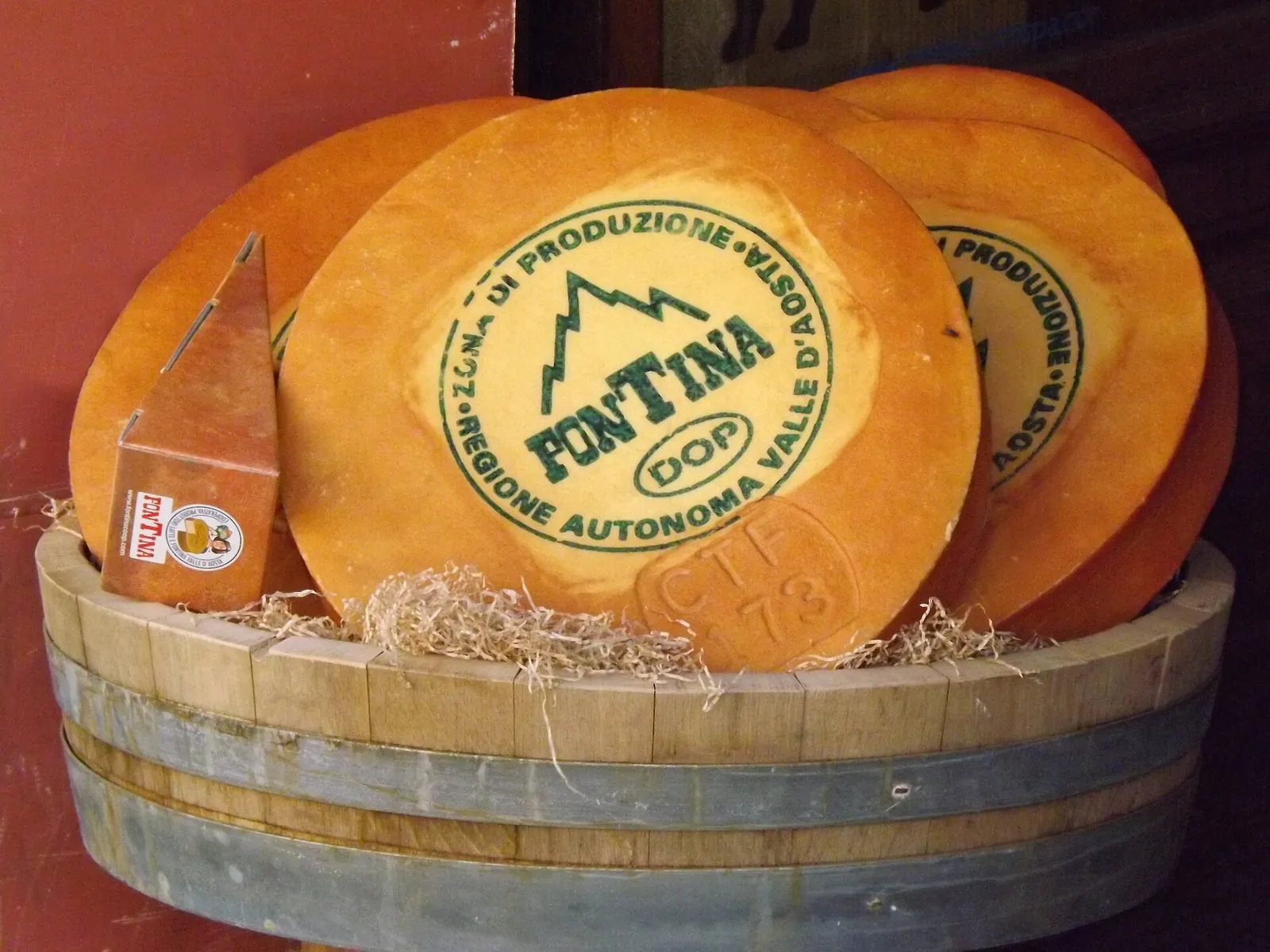
At the store, "fontina" names a style as well as a protected cheese. The PDO original is made from the milk of mountain cows and aged in cellars; the others use the name and share the melt. All of them melt well, and that is what most cooks buy fontina for.
Fontina cheese at a glance
This table compares fontina cheese in three forms, using the EU register and Aosta Valley rules for the original and published descriptions of the others.
| Fontina PDO | Danish fontina | Wisconsin fontina | |
|---|---|---|---|
| Made in | Aosta Valley, Italy, only | Denmark | Wisconsin |
| Milk | Whole milk from Valdostana cows; unheated in the traditional rules | Pasteurized cow's milk | Cow's milk |
| Aging | About 3 months in humid cellars; 80 days minimum | Less than the Italian original | Typically about 90 days |
| Rind | Thin, brown, brushed; casein plaque on the edge | Red wax | Varies |
| Texture | Soft, elastic, small scattered holes | Semi-soft, pliable, a few holes | Soft when young, firmer with age; small holes |
| Flavor | Sweet and delicate, stronger with age | Buttery with a tangy finish | Creamy, butter and roasted nuts, stronger with age |
| Protected name | Fontina PDO since 1996 | None | None |
Fontina PDO from the Aosta Valley
Fontina PDO has been registered in the EU since June 21, 1996, for cheese made and aged only in the Aosta Valley, and its rules start with the cow. The register's summary describes whole milk from the local Valdostana cattle, taken from a single milking; the full specification adds that the milk is not heated above 97°F (36°C) before the calf rennet goes in, which in effect makes it a raw-milk cheese. The curd is then cooked only lightly, hence "semi-cooked," dry-salted and aged for about 3 months. The summary traces the name to references from the 18th century, and the specification says the cows spend about 100 days a summer on alpine pastures at an average of 6,500 feet (2,000 m).
The Aosta Valley's April 2026 production regulation, a newer text than the 1996 specification, fills in the rest: aging of at least 80 days in cellars at 39 to 54°F (4 to 12°C) and at least 90 percent humidity, wheels of about 16 to 26 pounds (7.5 to 12 kg), and a thin brown rind. It also lists raw or thermized milk, heated to at least 147°F (64°C) for 40 seconds, and milk from consecutive milkings, so its milk rules are looser than the 1996 text. Every wheel carries a casein plaque with a code on its edge. Wheels from alpine pasture dairies carry a green plaque and may add Alpeggio, and wheels aged at least 180 days may add Lunga Stagionatura, long aging.
Danish and US fontina vs Italian Fontina
Danish and US fontina differ from the Italian original in where they are made, how long they age and how they taste. Dairy Farmers of Wisconsin says Wisconsin cheesemakers have made fontina since the late 1800s and describes a creamy cheese with tones of butter and roasted nuts, typically aged about 90 days. Its separate page on fontal, a look-alike that may be made anywhere outside the Aosta Valley, calls it mild, milky and slightly sweet, aged under three months and moist enough to melt easily.
A profile in culture magazine of one Danish fontina describes pasteurized cow's milk, a red wax coat, a pliable semi-soft paste with a few scattered holes and a buttery flavor with a tangy finish, aged for less time than the Italian cheese. The US has no federal standard of identity for fontina, since the FDA's cheese standards in 21 CFR Part 133 have no section for it, so a "fontina" label is only as specific as its maker. For the original, look for Fontina PDO on the label and the plaque and stamp on the wheel.
Fontina melting and fonduta
Fontina melts into a smooth, creamy pool, which is why it is the cheese of fonduta and a favorite for gratins, grilled cheese and baked pasta. Treccani describes fonduta as a thick Piedmontese cream of fontina melted in a double boiler with cream and egg yolks, served very hot and often topped with slices of white truffle. At home, cube 8 ounces (225 g) of fontina, melt it with a splash of milk or cream and 3 egg yolks over barely simmering water, stir until smooth, and keep it below a boil so the yolks do not scramble. Serve it over polenta, toasted bread or boiled potatoes.
Fontina is a fast, creamy melter but a mild one, so pair it with a sharper cheese in sauces and keep it to about a quarter of the cheese on a pizza, where its fat can turn the pie oily. USDA's fontina entry shows why: 31 grams of fat per 100 grams, or 8.8 grams and 110 calories an ounce. The best melting cheeses ranks it among the creamy melters.
Fontina cheese substitute
The best fontina cheese substitute is Gruyère, which melts as smoothly and is firmer and nuttier; USDA puts it at 33 percent water against fontina's 38. For the washed-rind side of fontina, use Taleggio or Raclette, both soft enough for gratins and sauces. For a mild melt, Havarti or young Gouda is the closest in texture. The Substitute Finder lists more swaps.
How to store fontina
How to store fontina comes down to its moisture: it has a damp rind and a soft paste, and the production regulation calls its storage delicate, because mold can spread quickly. Wrap a cut piece in cheese paper or wax paper, then loosely in plastic, and keep it in the refrigerator; how to tell if cheese has gone bad covers when mold means it is time to throw a piece out. The regulation also forbids freezing Fontina PDO, so keep the wedge in the fridge rather than the freezer.
What most fontina advice gets wrong
Most fontina advice treats the name as one cheese, and three details change what you buy.
A fontina label is not proof of the PDO. Danish fontina, Wisconsin fontina and fontal cheeses made elsewhere all use the name, so only Fontina PDO guarantees Aosta Valley milk, the 80-day minimum and the casein plaque on the wheel.
Fontina is not always raw-milk. The traditional rule keeps the milk unheated, but the April 2026 regulation lists thermized milk as an option, and Danish fontina is pasteurized, so check the label if raw milk matters to you.
Fontina is not one flavor. The PDO flavor is sweet and delicate and gets stronger with age, and the Alpeggio and Lunga Stagionatura mentions mark wheels from summer pastures and wheels aged at least 180 days.
Questions about fontina cheese
These are the questions about fontina cheese that come up most often.
What does fontina cheese taste like?
Fontina cheese tastes sweet, creamy and delicate when young, with notes of butter and roasted nuts that grow stronger with age; Danish fontina is buttery with a tangy finish.
Is Danish fontina the same as Italian Fontina?
Danish fontina is not the same as Italian Fontina: it is made from pasteurized milk in Denmark, aged for less time and milder, while Fontina PDO comes only from the Aosta Valley.
Is fontina good for melting?
Fontina is excellent for melting: it softens into a smooth, creamy layer for fonduta, gratins, sandwiches and pizza, though it is mild enough to need a sharper partner in a sauce.
What is the difference between fontina and Gruyère?
The difference between fontina and Gruyère is softness and flavor: fontina is a softer, sweeter Italian cheese, while Gruyère is a firmer, nuttier Swiss one, with 33 percent water in USDA data against fontina's 38, and both melt smoothly.
Is fontina safe during pregnancy?
Fontina PDO is made from raw or thermized milk, and the FDA's pregnancy guidance says to avoid cheeses made with unpasteurized milk and calls cheeses made with pasteurized milk okay. Check the label for pasteurized milk, ask your doctor, and see cheese during pregnancy.
Choosing fontina cheese
Choosing fontina cheese comes down to the dish: buy Fontina PDO for fonduta and for eating at room temperature, where its sweet, nutty depth shows, and a milder Danish or US fontina for everyday melting. Taste a piece of each side by side, then make a small fonduta with whichever you prefer.
Sources
- Fontina (PDO, EUGI00000012990) specification and summary sheet, European Commission eAmbrosia register
- Disciplinare di produzione "Fontina" (April 2026), Regione Autonoma Valle d'Aosta
- Treccani: Fontina and Fonduta, Vocabolario Treccani
- Dairy Farmers of Wisconsin: Fontina and Fontal Cheese
- Fontina (Danish) Cheese, culture: the word on cheese
- USDA FoodData Central (SR Legacy): cheese, fontina and cheese, gruyere, U.S. Department of Agriculture
- U.S. FDA: 21 CFR Part 133, Cheeses and related cheese products and Listeria (Food Safety for Moms-to-Be)