
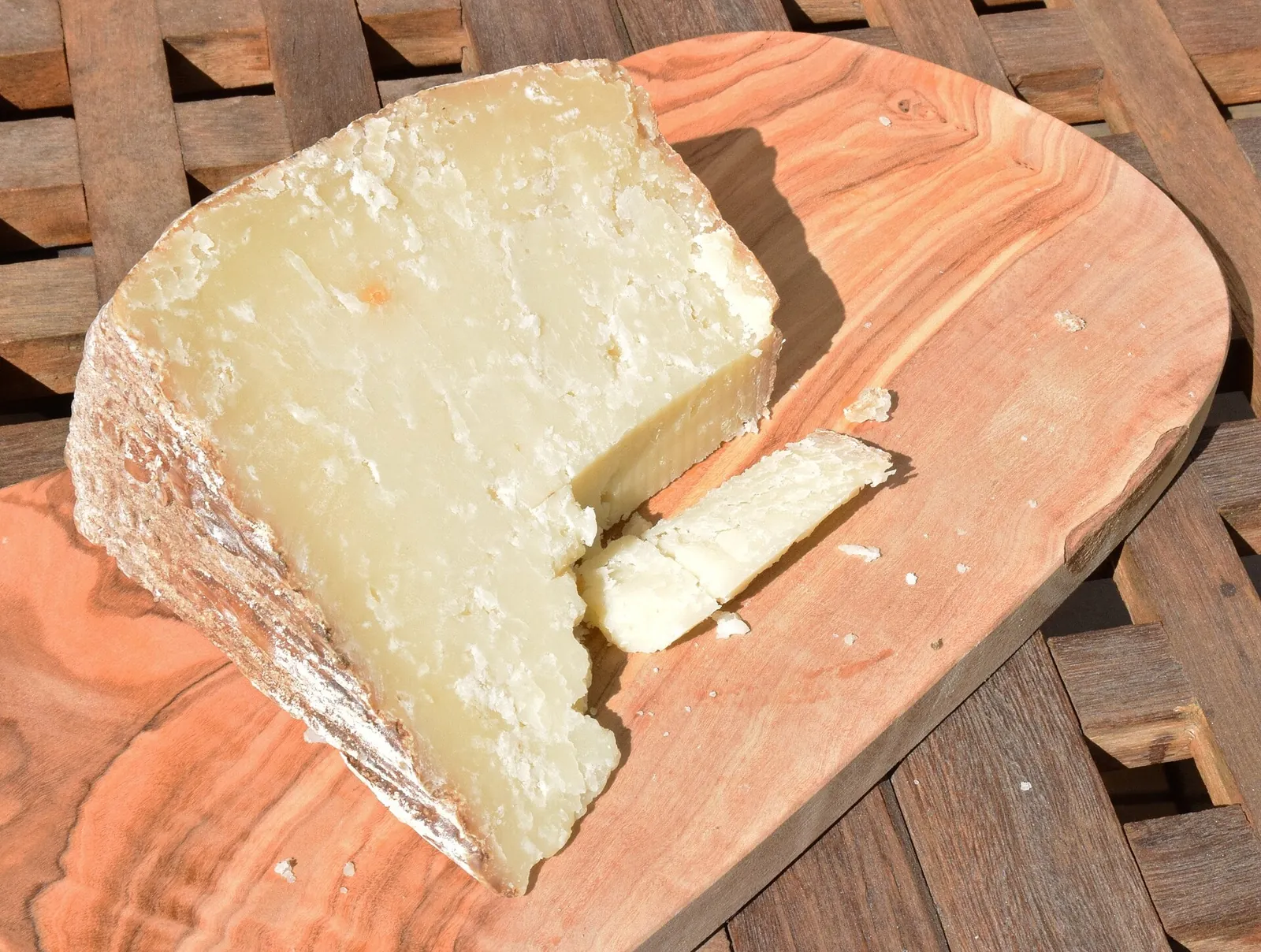
It comes in two styles: dolce, which is young, supple and mild, and maturo, which is firm, sharper and meant for grating.
The split matters more than the name on the label. Two wheels with the same PDO seal can behave like different cheeses, so the first thing to decide is whether you want to slice it or grate it.
Pecorino Sardo at a glance
Here is Pecorino Sardo at a glance, with the figures taken from the consortium and the sibling guide to Sardinian cheeses.
| Detail | Pecorino Sardo |
|---|---|
| Milk | Whole sheep's milk from Sardinia (the Sarda breed) |
| Made in | Sardinia, Italy; every production step must happen on the island |
| Protected name | PDO, granted in 1996 (Regulation EC 1263/96) |
| Types | Dolce (20 to 60 days); Maturo (over two months) |
| Style | Hard, semi-cooked, pressed |
| Best use | Dolce for the table; maturo for grating |
What Pecorino Sardo is
What Pecorino Sardo is comes down to its PDO: it has been a protected designation of origin since 1996, which means the milk, the making and the ripening all have to happen in Sardinia. The consortium's description of the PDO says the milk is whole sheep's milk from the island, from animals fed on natural pastures. In 2014 the protection was extended to grated cheese and cut formats such as shavings, cubes and slices, so a bag of grated Pecorino Sardo can carry the name too.
Do not confuse it with other Sardinian sheep's cheeses. Smoky, shepherd-made Fiore Sardo is a separate PDO, and much of the world's Pecorino Romano is also made on the island. The Sardinia and Sicily guide puts all three side by side, and the PDO and PGI guide explains what the seals promise.
How Pecorino Sardo is made
Pecorino Sardo starts with sheep's milk that may be thermized (heated gently) or pasteurized, then set with calf rennet at 35 to 39 degrees C (95 to 102 degrees F), according to the consortium. The curd is cut and semi-cooked at no more than 43 degrees C (109 degrees F), pressed, salted by brine or dry salt, and ripened in rooms with controlled temperature and humidity.
The cut of the curd is what separates the two types. For dolce the granules are broken to about the size of a hazelnut; for maturo they are cut finer, to about a corn kernel. Smaller granules release more whey, so maturo is drier and firmer, and it keeps ripening for longer.
Pecorino Sardo dolce and maturo by age
Pecorino Sardo dolce is aged 20 to 60 days, while maturo is aged more than two months, and the difference shows in the mouth. Dolce is supple and sweet, with a milky, gently tangy sheep's milk flavor. Maturo turns firm and compact, then grainy with long aging, and its nutty, savory edge sharpens into the tang that the directory notes for this cheese.
The facts box lists an age range of 2 to 12 months, which describes maturo rather than the whole name, since dolce is ready in under two months. Strength sits in the middle of the sheep's cheese range: more assertive than a mild cow's cheese, much gentler than a salty Romano.
How to buy Pecorino Sardo in the US
Buying Pecorino Sardo in the US starts with the words "Pecorino Sardo" and "DOP" (the Italian form of PDO) on the rind or label, since generic "Sardinian pecorino" or "Romano-style" is something else. Italian importers and good cheese counters carry it; supermarkets often have only the grated or Romano versions.
Ask which type it is. If the label says dolce, or the paste is pale and springy under your thumb, it is a slicing cheese. If it says maturo, or the paste is straw to golden and hard, treat it as a grating cheese. A cut from a wheel is better than a long-wrapped wedge, which sweats and picks up plastic flavor. One wedge of each type teaches you the style fast.
How to serve and cook with Pecorino Sardo
Pecorino Sardo works differently at each age, so serve dolce in slices and maturo in shavings or grated. Take either out of the fridge about an hour before eating, because cold hides sheep's milk flavor.
Dolce goes on a board with honey, walnuts and fruit, or into sandwiches and warm vegetable dishes where it softens. Maturo is the pantry cheese: grate it over pasta, soups, roasted vegetables and beans, or shave it over a salad. It is saltier and more savory than parmesan-style cows' cheese, so taste the dish before you add salt.
What to serve with Pecorino Sardo
Pecorino Sardo pairs best with Sardinian-leaning drinks and sweet, nutty sides. Start with wine: Cannonau, Sardinia's red, suits maturo; Vermentino, a crisp island white, suits dolce; Sangiovese works with either. For beer, an amber ale, a pilsner or a saison all hold up to the salt. On the plate, pear, grape and fig bring sweetness, and honey, walnuts and olives round out a board. The pairing guide lists more matches for this cheese, and the wine and cheese basics explain why sweetness and fruit calm salty sheep's cheeses.
Substitutes for Pecorino Sardo
Substitutes for Pecorino Sardo are other firm sheep's milk cheeses: Pecorino Romano, Manchego and Idiazabal. Pecorino Romano is the swap for grating, but it is much saltier, so use less. Manchego fits the slicing role of a dolce or young maturo, and Idiazabal adds smoke, which Pecorino Sardo does not have. The substitute finder shows more options.
Pecorino Sardo mistakes that cost you flavor
Most Pecorino Sardo mistakes come from treating the two types as one cheese.
Grating dolce
Grating dolce gives you a gummy pile, because the young paste has too much moisture to turn to fine shreds. Buy maturo when the recipe says to grate.
Buying the grated version first
Buying grated Pecorino Sardo first hides what you are paying for, since you cannot see the rind or the paste. Start with a wedge and grate it yourself.
Salting before tasting
Salting a dish before you add aged Pecorino Sardo makes the finished plate too salty. Add the cheese first and season last.
Questions about Pecorino Sardo
These are the questions about Pecorino Sardo that come up most.
What does Pecorino Sardo taste like?
Pecorino Sardo tastes milky and gently tangy when young and nutty, savory and sharper when aged. The older the wheel, the firmer and more grainy it gets.
Is Pecorino Sardo the same as Pecorino Romano?
Pecorino Sardo is not the same as Pecorino Romano: both are sheep's milk cheeses, but each has its own protected name and style. Sardo is usually milder, especially as dolce, and Romano is the saltier grating cheese.
Can you eat the rind of Pecorino Sardo?
Pecorino Sardo rind is edible on a good wheel, though it is hard on aged cheese. Many cooks drop a piece into soup for flavor and remove it before serving.
How do you store Pecorino Sardo?
Store Pecorino Sardo wrapped in wax or parchment paper in a lidded container in the fridge. The storing cheese guide covers wraps for hard cheeses.
Is Pecorino Sardo made with raw milk?
Pecorino Sardo is made from sheep's milk that may be thermized or pasteurized, according to the consortium, rather than being a raw-milk cheese by rule.
Your first Pecorino Sardo
For your first Pecorino Sardo, buy a small piece of each type, a dolce for slicing with honey and a maturo for grating over pasta, and compare them side by side.
Sources
- The PDO: Pecorino Sardo, Consorzio per la Tutela del Formaggio Pecorino Sardo
- Pecorino Sardo PDO, Qualigeo (dolce and maturo aging, registration date)
- Sardinia and Sicily cheeses, cheese.help