
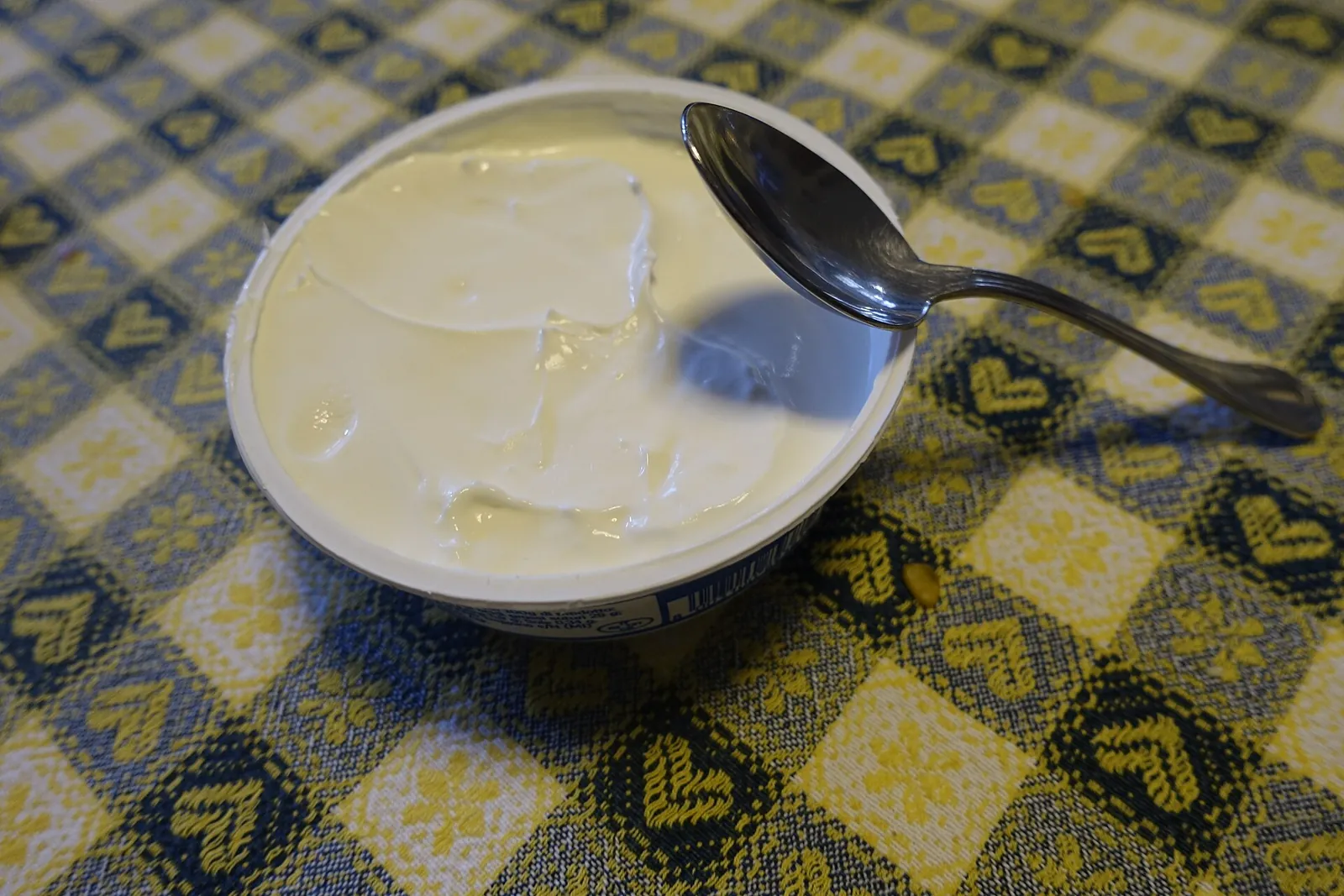
One idea explains it: mascarpone is cream with the water taken out, not milk with fat added. About 85 percent of its solids are fat, the same share as in heavy cream, and it spreads and spoons like thick whipped cream, with a milky, slightly sweet flavor and a tangy finish.
Mascarpone cheese at a glance
This table summarizes mascarpone cheese, with fat, water and calories from the Italian CREA composition tables.
| Mascarpone | |
|---|---|
| Milk | Cow's cream |
| Origin | Lower Lombardy, around Lodi, Italy |
| Made by | Heating cream to 185 to 203°F (85 to 95°C) and stirring in acid |
| Rind | None |
| Age | Fresh; rested about 24 hours in small molds |
| Texture | Soft, dense, spreadable |
| Flavor | Milky and slightly sweet, with a tangy finish |
| Fat | 47 g per 100 g (13.3 g an ounce) |
| Water | 44.4 g per 100 g |
| Calories | 129 an ounce |
| Protected name | None in the EU register |
| US standard | None; 21 CFR Part 133 has no section for mascarpone |
What mascarpone is made of
Mascarpone is made of cow's cream and an acid, and nothing else is needed to set it. A 2020 paper in Molecules describes the method: cream with about 80 percent of its dry weight as fat is heated to 185 to 203°F (85 to 95°C), and acid is stirred in until the cream coagulates, ending at a pH of 5.7 to 6.6. Treccani names diluted tartaric acid, and makers also use citric, acetic or lactic acid, vinegar or lemon juice. The heat denatures the whey proteins, so part of them stays in the cheese. The curd is drained and rests for about 24 hours in small molds.
Because heat and acid do all the work, with no culture or rennet, mascarpone is easy to make at home: how to make quick mascarpone takes cream and lemon juice. Ricotta is a cousin set the same way, but it starts from whey or milk, not cream.
Mascarpone fat content
Mascarpone fat content runs about 47 percent by weight in CREA's tables, which makes it richer than the cream it starts from.
| Per 100 g | Mascarpone (CREA) | Heavy whipping cream (USDA) | Cream cheese (USDA) |
|---|---|---|---|
| Water | 44.4 g | 57.7 g | 52.6 g |
| Fat | 47.0 g | 36.1 g | 34.4 g |
| Fat as a share of solids | 85% | 85% | 73% |
| Protein | 7.6 g | 2.8 g | 6.2 g |
| Calories per ounce | 129 | 96 | 99 |
Draining removes mostly water, so the fat concentrates. Cream cheese is a different product: the FDA's standard calls for at least 33 percent milkfat and no more than 55 percent moisture, in a cheese set with a lactic culture and a clotting enzyme. Mascarpone has no federal standard at all, so read the nutrition label, since fat can vary by brand, and the ingredient list: cream and an acid is what the method calls for.
Mascarpone uses: tiramisu and beyond
Mascarpone uses start with tiramisu, where it is beaten with egg yolks and sugar into the cream that layers coffee-soaked ladyfingers, but the cheese works wherever you want richness without much tang. Treccani lists creams and cold desserts, and a 2026 University of Wisconsin study calls mascarpone popular in cheesecake and tiramisu. For tiramisu, stir the cold mascarpone smooth with a spatula, then fold in whipped cream or beaten egg whites for lift; the tiramisu guide has the full dessert.
It also tops berries and roasted fruit with a drizzle of honey, makes a rich frosting, and can replace half the cream cheese in a cheesecake for a richer slice. In savory cooking, stir it in at the end, over low heat, for body without a cheesy flavor: about 1/4 cup (2 ounces) into risotto for four, or a spoonful or two into a pasta sauce, mashed potatoes or polenta.
Mascarpone substitute
The best mascarpone substitute is cream cheese loosened with heavy cream, though the result is tangier and less rich. Beat 8 ounces (227 g) of softened cream cheese with 1/4 cup (60 ml) of heavy cream until smooth to stand in for 1 cup of mascarpone. Cream cheese has about a quarter less fat (34 grams per 100 against 47) and a culture's tang, so the swap suits cheesecake and frosting better than tiramisu. For a lighter tiramisu, blend 1 cup of well-drained ricotta with 1/4 cup of heavy cream until smooth; it is less rich and slightly grainier. Crème fraîche is thinner and tangier still; mascarpone vs crème fraîche shows where it works. The Substitute Finder lists more swaps.
How to store mascarpone
How to store mascarpone comes down to cold and cleanliness: keep the tub refrigerated, press plastic wrap onto the surface once it is open, and use a clean spoon each time. Follow the date on an unopened tub; the Wisconsin study notes that hot packing, filling the product hot into its container, has given mascarpone a much longer shelf life than it had historically. Once opened, finish it within a few days, and stir it before using if a little liquid has separated.
What most mascarpone advice gets wrong
Most mascarpone advice treats the cheese as tougher than it is, and three details change how you handle it.
Frozen mascarpone cracks. The University of Wisconsin Center for Dairy Research stored commercial mascarpone for 450 days at 39°F (4°C), 32°F (0°C) and 0°F (minus 18°C). The samples held at 39°F and 32°F kept their firmness, but the frozen ones turned cracked and brittle, and tiramisu foam made from them was weaker. The authors call frozen storage "highly detrimental" and say it should be avoided.
Beating harder does not make it fluffier. At 47 percent fat, mascarpone can turn grainy or split if it is beaten hard or warmed. Stir it smooth while cold, then fold in whipped cream or egg whites for lift.
Warm mascarpone is a safety problem, not just a texture problem. Italian investigators traced a late-1996 botulism outbreak that sickened eight people, one fatally, to commercial mascarpone eaten alone or in tiramisu; a break in the cold chain at retail had likely let Clostridium botulinum spores grow and make toxin. Buy it from the cold case and keep it, and any tiramisu, refrigerated.
Questions about mascarpone cheese
These are the questions about mascarpone cheese that come up most often.
Is mascarpone the same as cream cheese?
Mascarpone is not the same as cream cheese: mascarpone is cream set with heat and acid and runs about 47 percent fat, while cream cheese is cultured and set with a clotting enzyme, with a federal minimum of 33 percent milkfat. The page on cream cheese vs mascarpone compares them in recipes.
Does mascarpone melt?
Mascarpone softens and thins when heated rather than melting into strings, and boiling can split it, so stir it into hot dishes at the end over low heat.
Can you eat mascarpone on its own?
You can eat mascarpone on its own, since the cream is heated during making, and Treccani notes how spreadable it is: spoon it over fruit with honey or spread it on toast.
Is mascarpone vegetarian?
Mascarpone is generally vegetarian because it is set with acid and heat rather than animal rennet, but check the label for rennet or other added enzymes.
Is mascarpone safe during pregnancy?
The FDA's pregnancy guidance does not name mascarpone, but it says to avoid cheeses made with unpasteurized milk and calls other cheeses made with pasteurized milk okay. Check the label for pasteurized cream, keep it cold, and see cheese during pregnancy.
Choosing mascarpone cheese
Choosing mascarpone cheese comes down to the dish: buy it for tiramisu and desserts where richness is the point, and use cream cheese loosened with cream only when a recipe can take some tang. Buy one tub from the cold case, check the date, and for a first taste spoon it over berries with a little honey.
Sources
- Mascarpone (vocabolario), Treccani
- Unveiling the Molecular Basis of Mascarpone Cheese Aroma: VOCs Analysis by SPME-GC/MS and PTR-ToF-MS (Capozzi and others, 2020), Molecules via PubMed Central
- Frozen storage is detrimental to the functionality of cream cheese and mascarpone even in high-pressure-treated samples (Jiménez-Maroto and others, 2026), Journal of Dairy Science via PubMed
- An outbreak in Italy of botulism associated with a dessert made with mascarpone cream cheese (Aureli and others, 2000), European Journal of Epidemiology via PubMed
- Food composition tables: Mascarpone (code 164800), CREA Alimenti e Nutrizione; USDA FoodData Central (SR Legacy) cream, fluid, heavy whipping and cheese, cream, U.S. Department of Agriculture
- U.S. FDA: 21 CFR 133.133, Cream cheese, 21 CFR Part 133, Cheeses and related cheese products and Listeria (Food Safety for Moms-to-Be)