
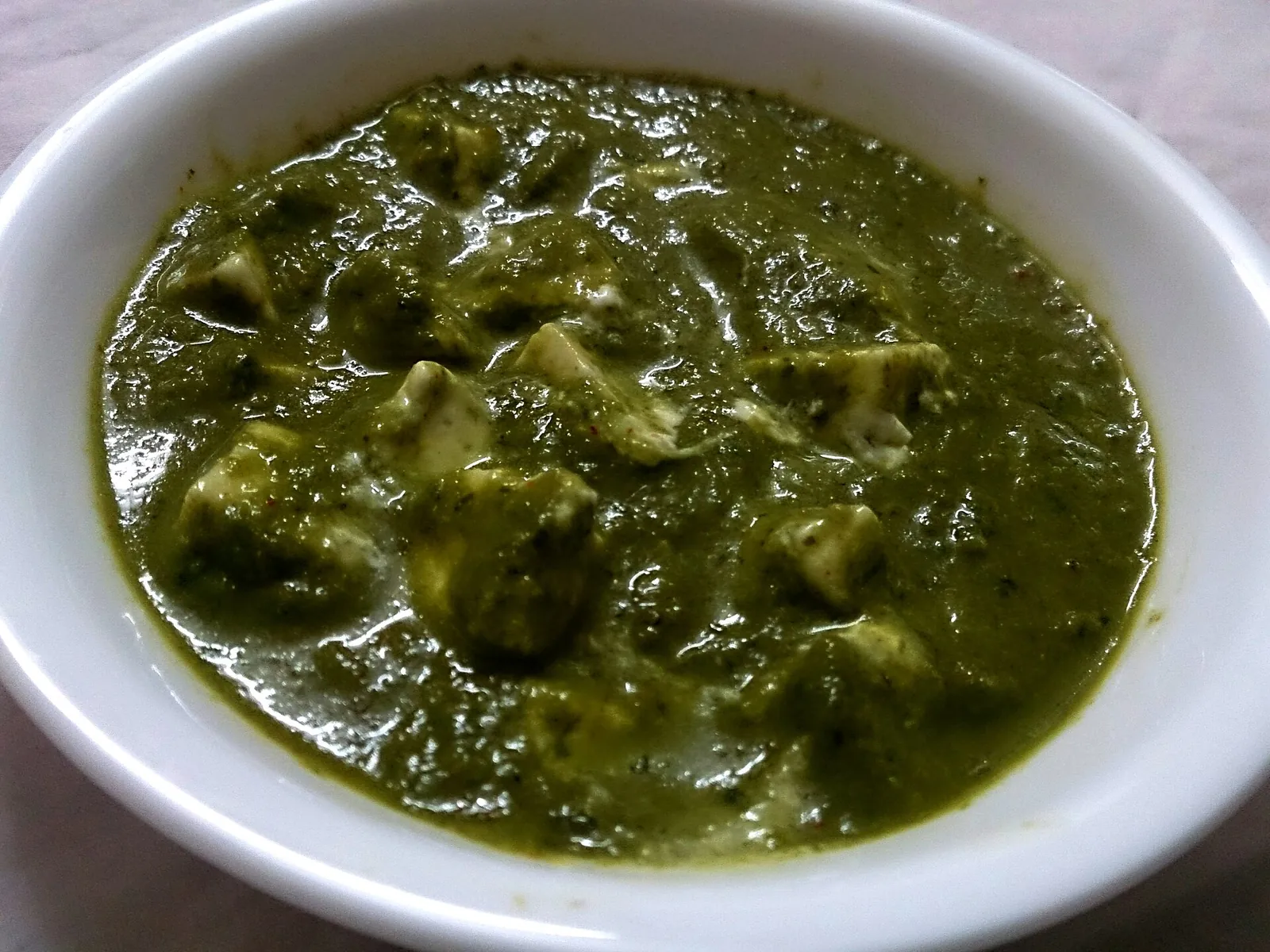
It is mild and slightly milky, soft but firm, and it holds its shape in a hot pan or a simmering curry, which is why it stars in palak paneer and paneer tikka.
Heat and acid explain it. Milk heated to about 176°F (80°C) or more binds its whey proteins to its casein, and acid then sets the curd, so the cheese browns and softens but does not flow. No rennet is used, so paneer suits vegetarians.
Paneer cheese at a glance
Here is paneer cheese at a glance, with figures from Indian standards, published research and Norway's food composition table.
| Paneer cheese | |
|---|---|
| Milk | Cow's or buffalo's |
| Origin | India and South Asia |
| Set with | Heat and acid (lemon juice, vinegar, citric or lactic acid); no rennet |
| Salt | None added; about 5 mg sodium an ounce |
| Water | About 52 to 56% |
| Fat | At least 50% of dry matter; about 25% of weight in cow's-milk paneer |
| Protein | About 17% in cow's-milk paneer |
| Per ounce | About 92 kcal, 7 g fat and 5 to 7 g protein, depending on the source |
| Texture | Soft but firm, spongy, close-knit |
| Flavor | Mild, milky, faintly sweet |
| Keeps | Freshest for about 3 days; about a week refrigerated |
What paneer cheese is
Paneer cheese is a heat-and-acid cheese: milk is heated, an acid curdles it, and the curds are drained and pressed. A review in the Journal of Food Science and Technology describes it as trapping almost all the milk's fat, with casein bound to denatured whey proteins. India's standards call for at least 50 percent milk fat in the dry matter, and the review credits Afghan and Iranian travelers with bringing paneer to India.
The American Cheese Society groups paneer with ricotta and queso blanco as acid-and-heat cheeses: milk held at 176°F (80°C) or above for at least five minutes, then acidified slowly to about pH 5. John Lucey of the University of Wisconsin explains that the heat makes whey proteins bond permanently to casein, which gives cheese with less melt.
How paneer cheese is made
Paneer cheese is made by heating milk to about 185 to 195°F (85 to 90°C), cooling it to about 160 to 175°F (70 to 80°C), stirring in acid until the whey runs clear, then draining and pressing the curds for 15 to 20 minutes. India's NIFTEM then chills the block in 39 to 43°F (4 to 6°C) water for 2 to 3 hours to firm it, and says cow's milk yields 17 to 18 percent of its weight in paneer.
The curdling temperature matters. In research the review cites, raising it from 140 to 187°F (60 to 86°C) cut paneer's moisture from 59 to 49 percent, and 158°F (70°C) gave the best frying quality for shape and softness. The home method walks through the steps.
Buying paneer cheese in the US
The best paneer cheese to buy in the US is a full-fat, vacuum-packed block from the refrigerated case, with milk and acid as its only ingredients. Indian grocers are the surest source, and US dairies make it too: Dairy Farmers of Wisconsin notes that a Reeseville maker took best-in-class for paneer at the 2018 World Championship Cheese Contest. Frozen cubes also exist, and NIFTEM says they thaw quickly for direct use.
Read the label for three things. Choose full-fat, because the review reports that paneer from low-fat milk has a hard, rubbery, chewy body. Check the date. And expect pasteurized milk: the American Cheese Society notes that federal law requires cheeses aged under 60 days to be pasteurized.
How to cook paneer cheese
The way to cook paneer cheese is to pat it dry, cut it into 3/4-inch (2 cm) cubes and brown it briefly in hot oil or ghee before it meets a sauce. The browning firms the surface so the cubes survive simmering. Add them to the sauce for the last 3 to 5 minutes, since long simmering can firm them up too far. If a store-bought block feels firm or rubbery, soak the cubes in warm water for 10 to 15 minutes first.
- Palak paneer: simmer the browned cubes in a spinach puree with ginger, garlic and cumin; see the palak paneer recipe.
- Paneer tikka: marinate cubes in spiced yogurt for 30 minutes or more, skewer them and cook over high heat, turning, until charred in spots; see paneer tikka.
- Bhurji: crumble the paneer and scramble it with onion, tomato and spices.
Paneer carries no salt of its own, so salt the sauce or marinade and taste. Dairy Farmers of Wisconsin suggests crisp white wines or light lagers beside it. For a salty cheese that behaves the same way, see halloumi vs. paneer.
Storing paneer cheese
Storing paneer cheese means keeping it cold, covered and wet. Dairy Farmers of Wisconsin says fresh paneer lasts about a week in the refrigerator, in an airtight container or submerged in water, while NIFTEM says its freshness holds for only 3 days. The review says spoilage starts on the surface, as a greenish-yellow slime with an off flavor, so throw out any block that turns slimy.
Freezing works at a cost. In a study the review cites, paneer frozen for 120 days kept its flavor and look, but its body and texture deteriorated. Freeze cubes for curries, not for frying.
What most paneer cheese advice gets wrong
Most paneer cheese advice says to buy any block and fry it, and three details change that.
Cow's milk paneer is more fragile. The review says buffalo milk gives a firm, close-textured paneer and cow's milk a soft, weak one, so press the block and turn the cubes gently.
Low-fat paneer is not a better buy. Paneer from low-fat milk turns out hard and rubbery, so buy full-fat.
Uncooked paneer is not for everyone. The CDC does not name paneer, but it advises people who are pregnant or at higher risk to avoid unheated queso blanco-type cheeses unless they are heated to 165°F or steaming hot. Paneer is in the same acid-and-heat family, so cook it through; see cheese during pregnancy.
Questions about paneer cheese
These quick answers cover what people ask most about paneer cheese.
What is paneer cheese made of?
Paneer cheese is made of milk and an acid such as lemon juice, vinegar or citric acid, with no rennet and no added salt.
Is paneer cheese vegetarian?
Paneer cheese is vegetarian because acid sets it, so it uses no animal rennet, as Dairy Farmers of Wisconsin notes.
Does paneer cheese melt?
Paneer cheese does not melt: it softens and browns but keeps its cubes, because heat has bonded its whey proteins to its casein. The melting cheese guide covers the rest.
Is paneer cheese healthy?
Paneer cheese is a full-fat, unsalted cheese: Norway's food composition table lists 325 calories, 24.5 grams of fat and 19 milligrams of sodium per 100 grams. Its protein is 26 grams there against about 17 in NIFTEM's figures, so check the pack.
What can you use instead of paneer cheese?
The closest swap for paneer cheese is queso blanco, an acid-and-heat cheese, but it is salted: USDA lists 704 milligrams of sodium per 100 grams, so cut the salt elsewhere. Halloumi is saltier still, and firm tofu is the usual dairy-free stand-in.
What does paneer cheese taste like?
Paneer cheese tastes mild, milky and faintly sweet, and it takes on the spices around it; the review calls the flavor sweetish, acidic and nutty.
Your first paneer cheese
For your first paneer cheese, buy a full-fat vacuum pack, brown the cubes in hot oil and finish them in a spinach sauce or on skewers. Then try a batch at home.
Sources
- Paneer: An Indian soft cheese variant: a review (Journal of Food Science and Technology), Kumar, Rai, Niranjan and Bhat, via PubMed Central
- Paneer Processing (PMFME training material), National Institute of Food Technology Entrepreneurship and Management, Government of India
- Cheese Definitions & Categories, American Cheese Society
- Paneer, Dairy Farmers of Wisconsin
- The pros and cons of high-heat treatments, John A. Lucey, University of Wisconsin Center for Dairy Research, in Dairy Foods (2020)
- Preventing Listeria Infection, Centers for Disease Control and Prevention
- Cheese, paneer (Matvaretabellen, the Norwegian food composition table), Norwegian Food Safety Authority
- USDA FoodData Central, SR Legacy row: queso blanco, USDA