
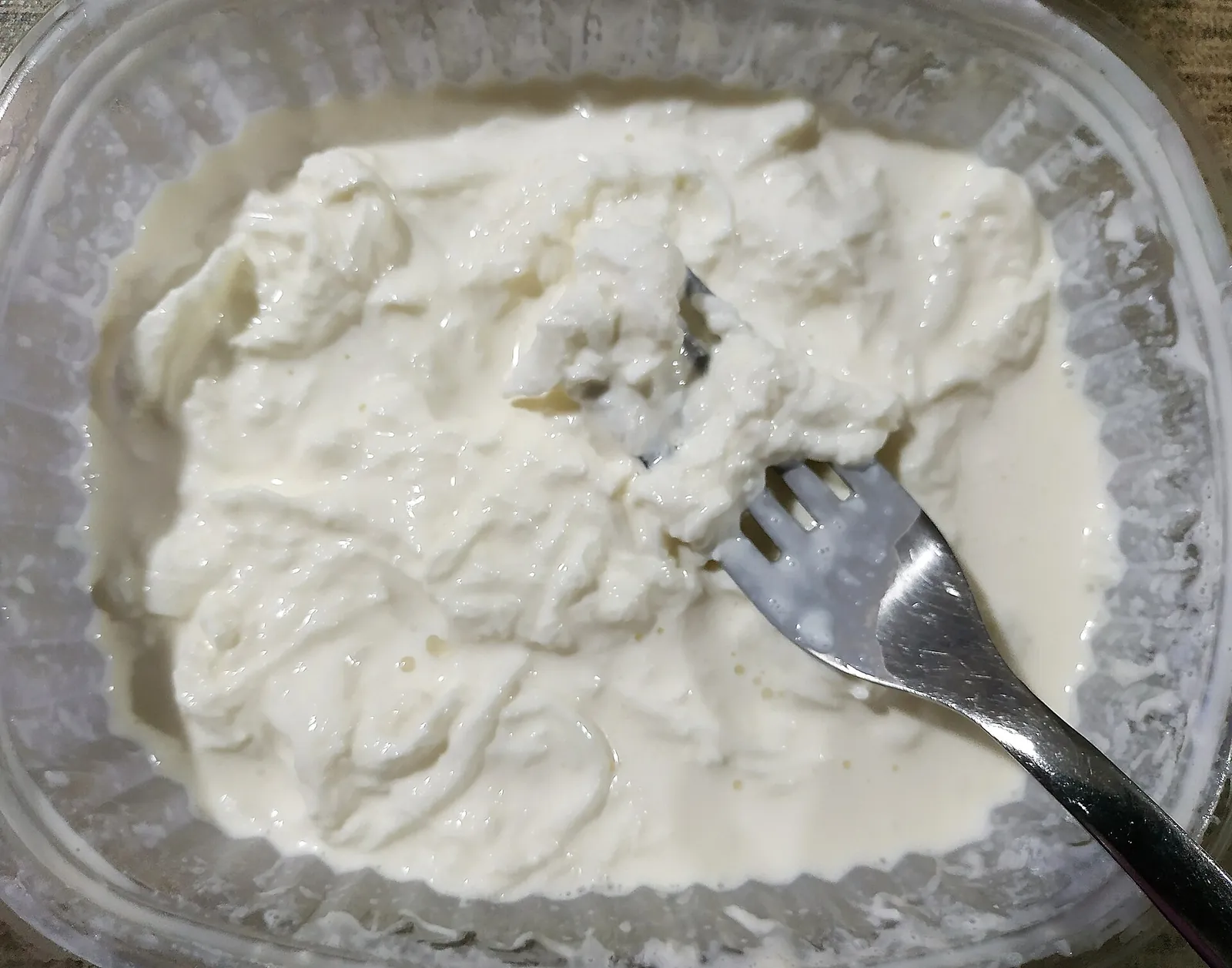
It is the filling you find inside burrata, sold on its own in a tub without the mozzarella pouch.
That makes it the cheese to buy when you want the molten part and nothing else. The shreds give it a stringy bite, the cream gives it richness, and neither is held in a shell, so you can spoon it onto almost anything.
Stracciatella cheese at a glance
This is stracciatella cheese at a glance, so you can tell what the tub should be.
| Detail | Stracciatella |
|---|---|
| Milk | Cow's, or Italian water buffalo's when it is made from buffalo mozzarella |
| Origin | Apulia (Puglia), Italy |
| Type | Stretched-curd (pasta filata) fresh cheese, shredded and mixed with cream |
| Color and texture | White, loose and creamy, with soft strings of curd |
| Flavor | Mild, sweet, milky and buttery |
| Aging | None; eaten fresh |
| Season | Made all year, said to be best in spring and summer |
What stracciatella cheese is
Stracciatella cheese is a fresh cheese made by shredding stretched curd and, traditionally, mixing it with cream, according to the encyclopedia entry on the cheese). The name comes from the Italian verb for tearing, which describes the ragged strips.
The same word names other foods. An egg-drop soup from Rome and a chocolate-flecked gelato are also called stracciatella, and neither contains this cheese. If a menu says "stracciatella" next to tomatoes or toast, it means the cheese.
It was not designed as a standalone cheese. It is the middle of burrata, and delis began selling the filling by itself. Burrata di Andria has a protected name; the filling does not need one to be sold, so quality varies a lot from tub to tub.
How stracciatella cheese is made
Stracciatella cheese starts the way mozzarella does: milk is set with rennet, the curd is cut and drained, then worked in hot water until it turns smooth and elastic. The guide to types of mozzarella explains why that step makes curd stretch.
Instead of being shaped into a ball, part of the stretched curd is pulled or cut into ribbons. Those strands go into cream. Hand-torn strands are irregular, and that uneven size is what makes a good tub feel like soft strings in sauce rather than uniform noodles. Under the protected recipe for Burrata di Andria, the shreds must be torn by hand and the cream can be skimmed from fresh milk or whey, or be fresh or UHT cream.
Factories use the same idea with a measured ratio. In a 2023 University of Bari trial of burrata, the stracciatella was UHT cream mixed with freshly made mozzarella strands in equal weights, 1 to 1. That ratio is a useful starting point at home: the cream should coat the shreds and pool a little, not drown them.
Stracciatella cheese flavor and texture
Stracciatella cheese tastes mild, sweet and milky, with a clean buttery finish, and it feels soft and loose with stringy bits that still have a little spring. Almost all of the flavor comes from fresh milk and cream, so there is nothing for age or salt to hide behind. A tub that smells sour or like old dairy is past it.
It is lightly salted, and that is why it needs help. A sprinkle of flaky salt, a few drops of olive oil and something acidic such as ripe tomatoes, lemon zest or a little vinegar bring it into focus. It is not as dense or milky as mascarpone, and it has strands where mascarpone is smooth.
How to buy stracciatella cheese in the US
Buying stracciatella cheese in the US usually means a plastic tub from a cheese counter, an Italian deli or a well-stocked grocery, often next to the burrata. Check the date and buy the freshest tub, because the cream and the curd both go sour quickly.
Look for white shreds sitting in slightly loose cream with a clean, milky smell. Skip a tub that is puffed, watery on top with a gap, or yellowing. Shelf life varies: a study of Burrata di Andria put handmade burrata's shelf life at 3 to 5 days and machine-formed burrata's at up to 20, so follow the printed date and treat tubs from a local maker as a same-day or next-day food. Neither the filling nor burrata keeps well, even chilled, the encyclopedia entry notes.
US stores sell stracciatella made from pasteurized milk. If you are pregnant, cheese during pregnancy covers what to check before you buy.
How to use stracciatella cheese
Use stracciatella cheese raw, at the end, as a topping rather than a cooking ingredient. A good rule is to take it out of the fridge 20 to 30 minutes before eating so the cream loosens and the flavor opens up.
- On toast: spoon it onto grilled or toasted bread with olive oil, flaky salt and pepper.
- On pizza: dollop it onto a pizza after it comes out of the oven; the heat softens it without splitting the cream.
- Under vegetables: spread it on a plate and set roasted tomatoes, asparagus or zucchini on top.
- In pasta: stir a few spoonfuls into hot, drained pasta off the heat so the cream turns into a light sauce.
- With fruit and cured meat: peaches, figs and prosciutto all work, since sweetness and salt balance the cream.
Cooking it for long is the mistake. Heat melts the shreds into a greasy puddle and separates the cream, so add stracciatella at the end or after the oven.
Stracciatella cheese substitutes
The best stracciatella cheese substitute is the inside of a burrata: cut it open, scoop out the filling and eat the pouch separately. Burrata vs. mozzarella shows how the two are built.
To make something close, tear fresh mozzarella into thin strips, mix it with an equal weight of heavy cream and a pinch of salt, and chill it for 30 minutes. This follows the 1 to 1 ratio the Bari trial used, though a home version will be less rich than a dairy's. Making mozzarella at home is the next step if you want to shred your own curd. Ricotta and mascarpone are looser or smoother and are not good matches.
What most stracciatella cheese advice gets wrong
Most stracciatella cheese advice makes it sound like a smaller burrata, and it is not quite that. Burrata is a pouch plus a filling, built to be cut open at the table. Stracciatella is only the filling, so there is no shell to hold it, and it works better as a topping or a sauce.
Another habit is serving it ice cold. Cream firms in the fridge and dulls flavor, so give it half an hour out.
The last is storing the tub for a week "because it's cheese." It is closer to cream with curd in it. Keep it covered in the coldest part of the fridge and finish it within a day or two; the storing cheese guide has more on soft cheeses.
Questions about stracciatella cheese
These are the questions about stracciatella cheese that come up most.
What is stracciatella cheese?
Stracciatella cheese is stretched mozzarella curd shredded into strips and mixed with cream. It is white, soft and mild, and made from cow's or buffalo milk.
Is stracciatella the same as the inside of burrata?
Stracciatella is the inside of burrata, the cream-and-shreds filling, without the mozzarella shell. Burrata, mozzarella and stracciatella compared lays out all three.
Is stracciatella cheese the same as the gelato or the soup?
Stracciatella cheese shares only a name with the chocolate gelato flavor and the Roman egg-drop soup. They are different foods.
How long does stracciatella cheese last?
Stracciatella cheese is best within a day or two of purchase, and the printed date on the tub is the limit, not a target. Smell it first: sour or yeasty means throw it out.
Can you cook with stracciatella cheese?
Stracciatella cheese is best added after cooking. Spoon it over hot pasta, a finished pizza or roasted vegetables rather than baking it.
Your first stracciatella cheese
For your first stracciatella cheese, buy one small tub on the day you plan to eat it, let it sit out for 30 minutes, and spoon it over grilled bread with olive oil and flaky salt. Next, try it over warm pasta.
Sources
- Stracciatella (cheese)), Wikipedia
- Application of Commercial Biopreservation Starter in Combination with MAP for Shelf-Life Extension of Burrata Cheese, Foods (MDPI), 2023
- Burrata di Andria PGI: Physicochemical and Microbiological Features, Foods (MDPI), 2020