
Cotija is Mexican, named for the town of Cotija in Michoacán, and the traditional kind is a raw-milk mountain cheese whose curd is never heated. Parmesan is Italian in origin, and the US standard for it calls for a cooked curd and at least 10 months of curing.
Those methods leave different cheeses behind. By USDA figures, cotija holds more water and more salt than a wedge of Parmesan and just over half the protein, so young cotija breaks into soft, salty crumbs where Parmesan grates into a fine, dry snow. And cotija does not melt, which decides most swaps.
Cotija vs Parmesan vs feta at a glance
This cotija vs Parmesan vs feta table puts the three salty crumbling cheeses side by side, with nutrition per ounce from USDA.
| Cotija | Parmesan | Feta | |
|---|---|---|---|
| Origin | Mountains of Jalisco and Michoacán, Mexico; also made in the US | Italy, as Parmigiano-Reggiano | Greece (PDO) |
| Milk | Cow's, raw in the traditional cheese | Cow's, raw or pasteurized | Sheep's, or sheep's with up to 30% goat's (PDO) |
| Curd | Never heated above 93°F (34°C) | Cooked to 115 to 125°F | Drained, dry salted, then brined |
| Aging | At least 3 months, traditionally | At least 10 months (US standard) | At least 2 months (PDO) |
| Water | 38% | 30% | 55% |
| Sodium per ounce | 397 mg | 333 mg | 323 mg |
| Protein per ounce | 5.7 g | 10.1 g | 4.0 g |
| Heat | Softens, keeps its shape | Melts into sauces when finely grated | Softens, keeps its shape |
| Best use | Elote, tacos, beans | Pasta, risotto, soup | Salads, pies, a cotija stand-in |
Is cotija the same as Parmesan?
Cotija is not the same as Parmesan, and the gaps run from the milk to the plate.
Different curds
The curds take different paths. In the federal standard for Parmesan, the curd is cut to the size of wheat kernels and heated to 115 to 125°F; after at least 10 months it is a hard, granular cheese that "grates readily," with no more than 32 percent moisture. Traditional Cotija is made at room temperature, never above 93°F (34°C), according to a 2011 FAO mission report, then salted by hand, pressed and ripened for months.
More salt, less protein
Cotija has more salt and less protein than Parmesan, by USDA's numbers. Queso cotija lists 1,400 mg of sodium per 100 grams against 1,175 mg for hard Parmesan, so ounce for ounce cotija is the saltier of the two, while the drier Parmesan carries 10.1 grams of protein per ounce to cotija's 5.7.
Different flavor and melt
Cotija and Parmesan also differ in flavor and melt. Wisconsin Cheese describes cotija as bold and salty with a gentle sharpness, with aged cotija moving toward Parmesan's savory depth, and notes that cotija stays intact instead of melting; finely grated Parmesan, by contrast, dissolves into hot pasta and risotto.
Cotija, the cheese of the Jalisco and Michoacán mountains
Cotija the cheese comes from a pocket of the Sierra de Jalmich, where Jalisco meets Michoacán, and today it is made in only a handful of municipalities there, including the south of Cotija and Tocumbo in Michoacán, according to a 2015 study by Esteban Barragán and Thierry Linck. Ranchers there raise cattle mainly for beef and make cheese only in the rainy season, roughly July to October, while the cows graze native pasture; the milk is the share taken from the calves' ration. Wheels of 18 to 25 kilos (40 to 55 pounds) were sold in nearby towns, chiefly Cotija, the town the cheese is named for, and Los Reyes.
How traditional Cotija is made
Traditional Cotija is made from raw cow's milk, rennet and salt, and the FAO mission that watched 15 producers in 2010 recorded each step. The milk cools to 86 to 90°F (30 to 32°C) before the rennet goes in, sets for about an hour, then drains in cloth sacks. The curd is salted and crumbled by hand, pressed for one to three days under 22 to 132 pounds (10 to 60 kg), and set on reed shelves, where the wheels are turned and wiped daily. Makers wait at least three or four months before selling. A typical wheel is about 14 inches (35 cm) across and weighs around 44 pounds (20 kg), light yellow to deep orange, with white mold in the rind's cracks.
Fresh vs aged cotija
Fresh vs aged cotija is the choice you face in a US store. Wisconsin Cheese describes fresh cotija as softer, slightly moist and gently salty, good for crumbling, and aged cotija, sold as queso añejo, as firmer, drier and more pungent, best finely grated. Wisconsin makers include Mullins, Sartori, W&W Dairy and Wisconsin Cheese Group.
The mountain original changes in its own way. Tasters on the FAO mission found it mostly salty for the first two to three months; after that the salt receded behind plant and animal notes, and wheels past a year tasted like most aged cheeses. Producers also sort it by texture: a sliceable, creamy cheese and a crumbly, granular one.
The Cotija name and its collective mark
The Cotija name is not protected the way Parmesan's Italian original, Parmigiano-Reggiano, is. When producers sought a denomination of origin, Mexico's Institute of Industrial Property (IMPI) refused, ruling that Cotija had become a generic name, and granted a collective mark, "Queso Cotija, región de origen," instead, Barragán and Linck write. Cotija is one of four Mexican artisanal cheeses with such a mark, a 2024 UNAM study notes, and a Mexican standard, NMX-F-735-COFOCALEC-2018, allows raw milk for ripened artisanal Cotija. The cheese won a top award at an international fair in Cremona, Italy, in 2006.
Because the name is generic, anyone can sell "cotija." Barragán and Linck warn that many cheeses sold as cotija or cotija-style in Mexico are often very dry and very salty, made with skim milk or vegetable proteins. In the US, read the ingredient list: milk, cultures, salt and enzymes is what you want.
How to use cotija
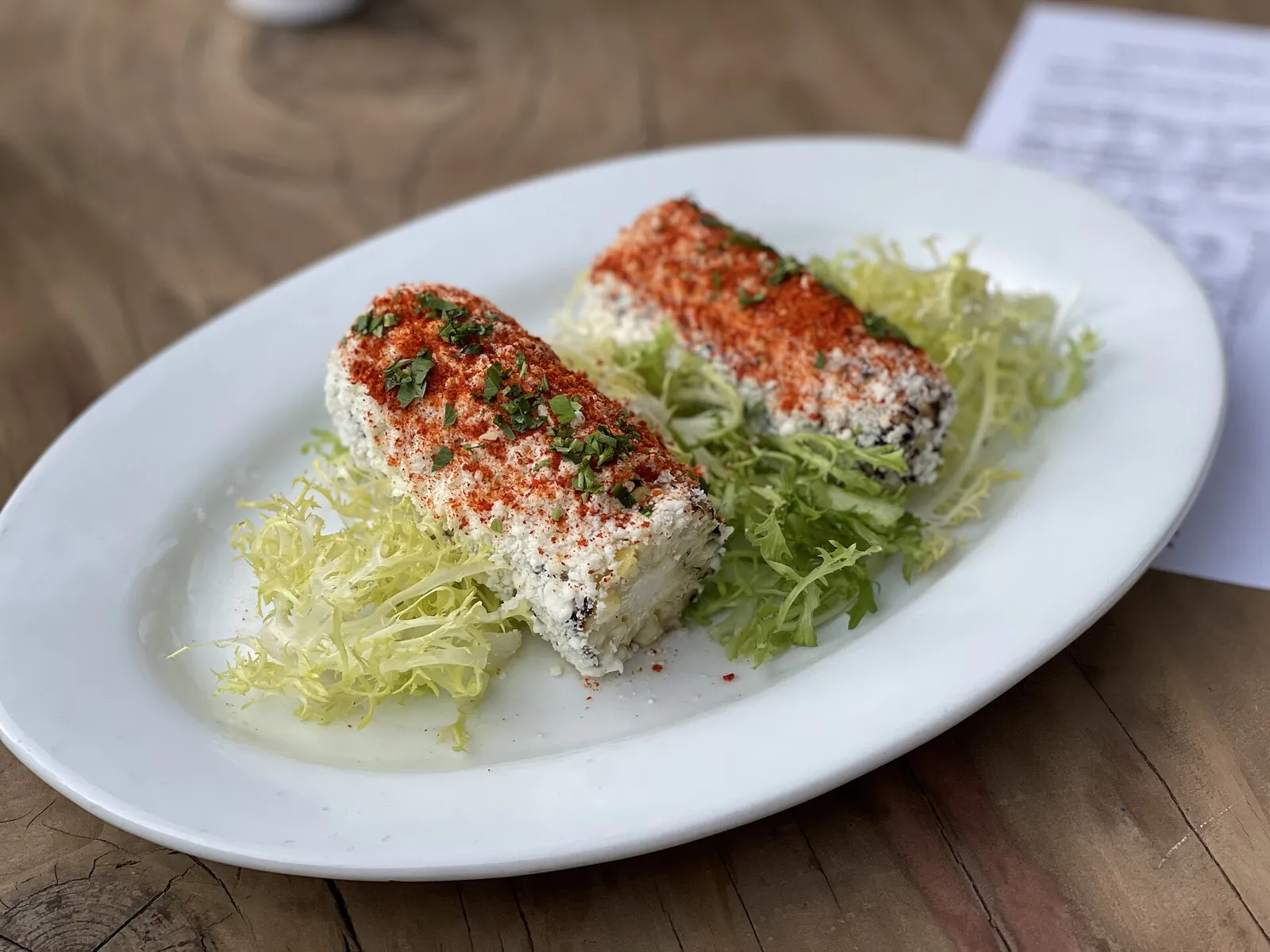
How to use cotija comes down to one rule: add it at the end, because it will not melt into anything. Crumble fresh cotija over tacos, tostadas, beans, enchiladas and salads, and grate aged cotija over soups such as pozole. For elote, brush 4 grilled ears of corn with 1/4 cup (60 g) of mayonnaise or crema, roll them in 2 ounces (55 g, about 1/2 cup) of finely crumbled cotija, then dust with chili powder and squeeze lime over the top. Salt the dish only after tasting; the cheese brings plenty. More ideas are in the guide to Mexican cheeses and how to use them.
Cotija substitutes
The best cotija substitutes depend on whether you need crumbs or a grating cheese. For crumbling, feta is closest in texture, though it is wetter at 55 percent water; pat it dry first. For grating, use Parmesan or Pecorino Romano, and start with a little less since both are strong. Wisconsin Cheese also suggests ricotta salata, which is milder. The substitute finder covers other swaps.
What most cotija advice gets wrong
Most cotija advice treats every cheese labeled cotija as the same thing, and three details change how you shop and cook.
The supermarket tub is not the mountain cheese
A supermarket tub labeled cotija is not necessarily the mountain cheese: the name is generic, and the original is seasonal, raw-milk and aged for months. If you find a wheel or wedge marked "Queso Cotija, región de origen," you are buying the cheese the collective mark protects.
Cotija is not always the saltiest cheese on the shelf
Cotija is not always the saltiest cheese on the shelf. It beats a wedge of Parmesan, but dry grated Parmesan, at 23 percent water in USDA data, carries 511 mg of sodium per ounce against 397 for cotija.
Aged does not mean low risk
Aged does not mean low risk when the milk is raw. The FDA's guidance on queso fresco-type cheeses lists cheeses made from raw milk among the high-risk cheeses that pregnant women, adults over 65 and people with weakened immune systems should avoid, along with soft, fresh queso fresco-type cheeses whether pasteurized or not. Traditional Cotija is raw-milk cheese, so higher-risk eaters should stick to cotija labeled pasteurized and ask their doctor; see cheese during pregnancy.
Questions about cotija and Parmesan
These questions about cotija and Parmesan come up most when people are standing at the stove.
Can you substitute cotija for Parmesan?
You can substitute cotija for Parmesan as a topping, using aged cotija for grating and a little less of it. Do not use it where Parmesan has to melt.
Can you use Parmesan instead of cotija on street corn?
You can use Parmesan instead of cotija on street corn: grate it finely and use a bit less, since it is drier. Feta gets closer to cotija's soft crumb.
Does cotija melt?
Cotija does not melt; it softens and keeps its shape, which is why it goes on at the end.
Can you use cotija in alfredo sauce?
Cotija is a poor choice for alfredo sauce because it will not melt into a smooth sauce. Make the sauce with Parmesan and crumble cotija on top if you want its salty bite.
What Mexican cheese is closest to Parmesan?
The Mexican cheese closest to Parmesan is aged cotija, sold in the US as queso añejo, which is firm and dry enough to grate finely.
Is cotija the same as queso fresco?
Cotija is not the same as queso fresco: cotija is drier, saltier and aged, while queso fresco is fresh, mild and moist. The full queso fresco vs cotija comparison shows when to use each.
Cotija or Parmesan: what to buy
For cotija or Parmesan, buy for the dish. Pick fresh cotija in a block for tacos, beans and elote, aged cotija when you want to grate, and Parmesan for anything that has to melt. Taste a crumb of cotija before you salt the pot, and if you ever see a wheel marked "Queso Cotija, región de origen," buy a piece to taste the original side by side.
Sources
- Informe de la misión IPN-COFOCALEC-FAO sobre el Queso Cotija (Parguel and others, 2011), Food and Agriculture Organization of the United Nations
- Las denominaciones de origen en México. El queso Cotija: entre confiscación y valorización patrimoniales (Barragán and Linck, 2015), Carta Económica Regional via Dialnet
- Microbiological Evaluation of Two Mexican Artisanal Cheeses: Analysis of Foodborne Pathogenic Bacteria in Cotija Cheese and Bola de Ocosingo Cheese by qPCR (Estrada-Hernández and others, 2024), Foods via PubMed
- Discover the Versatile Flavor of Cotija Cheese, Dairy Farmers of Wisconsin
- 21 CFR 133.165, Parmesan and reggiano cheese, Electronic Code of Federal Regulations
- Feta PDO summary sheet (EL/0427), European Commission eAmbrosia register
- USDA FoodData Central (SR Legacy): queso cotija, parmesan, hard, parmesan, grated and feta, U.S. Department of Agriculture
- Queso Fresco-type Cheeses Consumer Guidance, U.S. Food and Drug Administration