
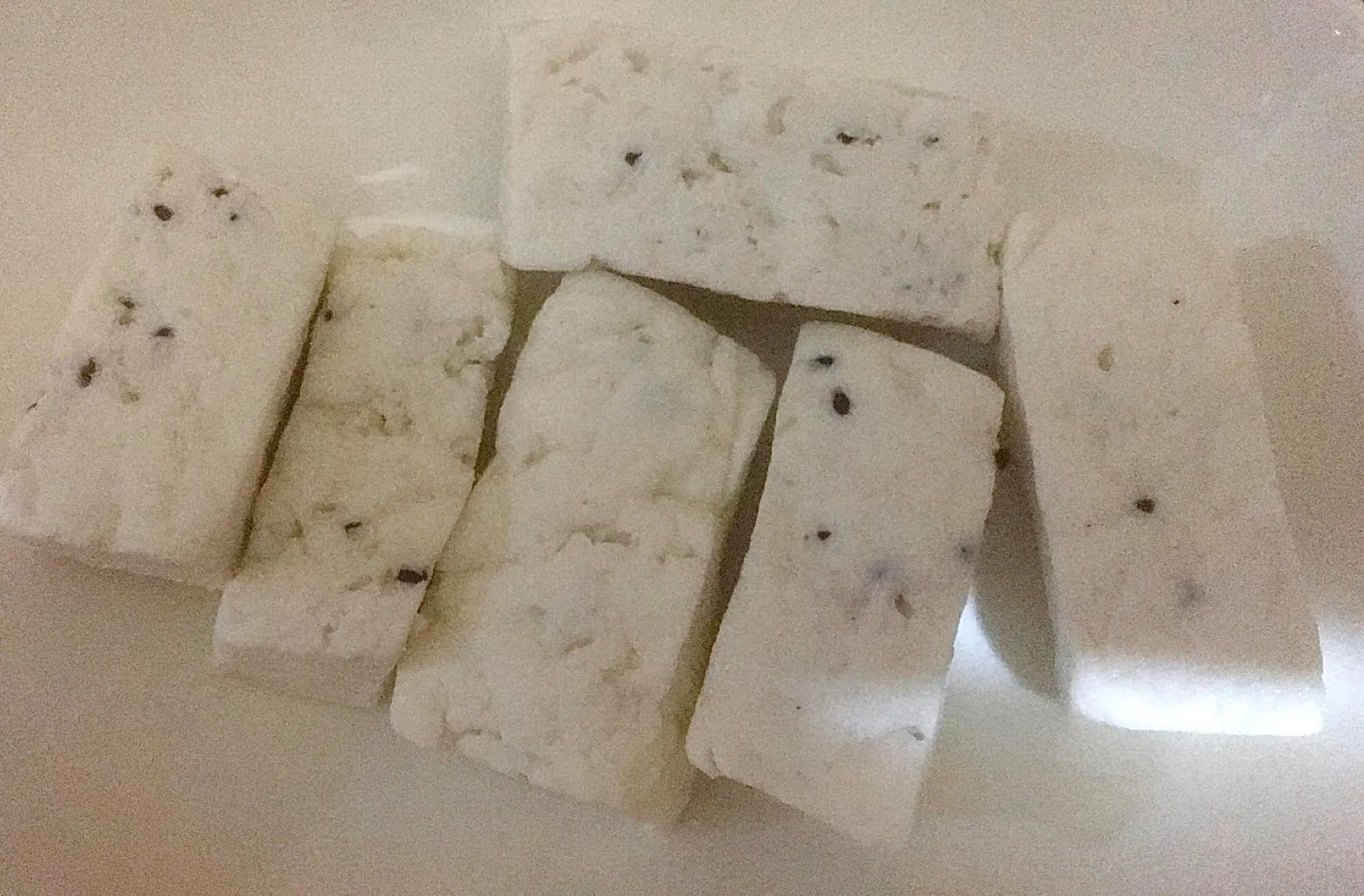
It is also one of the cheeses behind knafeh, the syrup-soaked pastry, where the salt has to come out first.
What sets it apart from the other brined cheeses in the case is how little it shouts. There are no spices in it and no sharp tang, only clean milk and salt, which is why it works at breakfast and in dessert.
Akawi cheese at a glance
Here is Akawi cheese at a glance, drawn from the dairy studies and references listed at the end.
| Detail | Akawi cheese |
|---|---|
| Also spelled | Akkawi, Akkaweh, Ackawi |
| Milk | Usually cow's milk; sheep's or goat's milk are also used |
| Region | The Levant; the name points to the port city of Acre |
| Texture | Smooth, semi-firm, supple, slices and cubes cleanly |
| Flavor | Mild and milky, with salt from the brine |
| Brine | Laboratory studies cure it in 10 percent salt brine, then store it at 4°C (39°F) |
| Protected name | None that this page could confirm |
What Akawi cheese is
Akawi cheese is a white brine cheese from the Levant, named after the Palestinian city of Acre (Akka in Arabic), according to Wikipedia's Akkawi entry. It is commonly made from pasteurized cow's milk, though goat's or sheep's milk can be used, and it counts as a semi-hard cheese.
You will see the name spelled Akawi, Akkawi, Akkaweh and Ackawi on packages. They all mean the same cheese, so search every spelling when you shop.
How Akawi cheese is made
Akawi cheese is made by warming milk, setting it with rennet, draining the curd, shaping it into blocks and curing the blocks in brine. Wikipedia gives milk heated to 35 to 40°C (95 to 104°F), about an hour to curdle, then curd packed into square hoops and left in salted whey brine for two days. A commercial dairy may differ on the details.
The brine does three jobs at once. In the dairy literature it supplies the salty taste, firms the cheese and keeps it for weeks. Research on a model high-salt Akawi tested brines of 10, 7.5 and 5 percent salt over 30 days at 4°C, which is a useful picture of how it is kept at home too: cold, covered and in its liquid.
How to desalt Akawi cheese
To desalt Akawi cheese, slice it into 1/2-inch (1.3 cm) pieces, cover with cold water and soak it in the fridge, changing the water every hour or so. For eating on a plate, 2 to 4 hours is a good start; for knafeh, soak it longer, even overnight. Taste a corner before you commit.
Salt leaves a cheese slowly and only from the outside in, so thickness controls the time. Thin slices lose salt in an hour or two; a whole block can take a day. Researchers who studied the related Nabulsi cheese soaked it overnight in a refrigerator at 5°C, and they found the soak made the cheese softer and less gummy. A block you plan to cube for a salad needs far less than one you plan to melt into a dessert.
How to buy Akawi cheese in the US
Buying Akawi cheese in the US usually means a Middle Eastern, Lebanese or Palestinian grocery, where it sits in the refrigerated case as a block packed in brine or vacuum sealed. Check the ingredient list for pasteurized milk, salt and rennet or enzymes.
Pasteurized matters for a wet, soft brined cheese. A 2022 study in the Journal of Food Science notes that white brined cheese has been linked to listeriosis outbreaks worldwide, and if you are pregnant, the FDA and CDC advice on soft cheeses applies. Keep the cheese in its own brine in the fridge, and read the guide to storing cheese for the general rules.
How to use Akawi cheese
Akawi cheese is a table cheese first. Slice it thin with tomatoes, cucumbers, olives and za'atar on flatbread for a Levantine breakfast, or tuck it into savory pastries and sandwiches. The olives and pickles pairing guide covers the plate in more detail.
For knafeh, soak the cheese until it tastes only gently salty, then layer it between the pastry. The cheese warms and turns soft and a little stretchy under hot syrup; a blend with some low-moisture mozzarella gives more pull. If you like the idea but want a firmer, spiced cousin, see Nabulsi, which has its own page.
Akawi cheese substitutes
The best Akawi cheese substitute depends on the job. For knafeh, low-moisture mozzarella is the usual stand-in, because it is mild and melts into strings. For a table plate, feta works if you soak it in several changes of water first, since feta is tangier and crumblier. For grilling or frying, halloumi holds its shape in a hot pan where Akawi cheese will soften. The rest of the regional family is in the guide to Middle Eastern cheeses.
What most Akawi cheese advice gets wrong
Most advice on Akawi cheese says "soak it" and stops, which skips the part that decides how it tastes.
Akawi cheese should not be soaked bland
Akawi cheese soaked until it tastes of nothing is a mistake, because the salt is half the flavor. For a savory plate, stop when it is pleasantly salty. Only the dessert version needs most of it gone. The guide to salt in cheesemaking explains why brined cheeses lean on it for firmness and keeping.
Akawi cheese will not melt like mozzarella
Akawi cheese softens and goes pliable in heat but will not pool like mozzarella, so do not expect a pizza-style melt. Inside pastry, under syrup, it works because it holds together while it warms.
Akawi cheese keeps best in its brine
Akawi cheese left out of its liquid dries and toughens at the edges. If you soaked a block, use it in a few days and return any unsoaked cheese to its brine.
Questions about Akawi cheese
These are the questions about Akawi cheese that come up most.
What does Akawi cheese taste like?
Akawi cheese tastes mild, milky and clean, with salt from the brine and none of the sharp tang that feta has.
Why soak Akawi cheese in water?
Soaking Akawi cheese in cold water pulls salt out of the cheese so it tastes gentler, which matters most in knafeh and other sweets.
Is Akawi cheese the same as Nabulsi?
Akawi cheese is not the same as Nabulsi: Nabulsi is traditionally sheep's milk, boiled and flavored with spices, while Akawi is plainer and usually cow's milk.
Can you eat Akawi cheese without soaking it?
You can eat Akawi cheese without soaking it, but it is salty, so most people rinse or soak it first, especially for a main dish.
Is Akawi cheese pasteurized?
Akawi cheese is commonly made from pasteurized milk, though you should check the label of the one you buy.
Your first Akawi cheese
For your first Akawi cheese, buy a small block at a Middle Eastern grocery, cut it into thin slices, soak them in cold water for two hours and taste. Serve it with tomatoes, olives and warm flatbread, and keep the rest in its brine.
Sources
- Salt reduction in a model high-salt Akawi cheese, Gandhi and Shah, Journal of Food Science, 2016
- The effect of NaCl substitution with KCl on Akawi cheese, Ayyash, Sherkat and Shah, Journal of Dairy Science, 2012
- Akkawi cheese, Wikipedia
- Quality of White-Brined Nabulsi Cheese Made with Different Proportions of Sheep's and Cows' Milk, Abu-Alruz, Current Research in Nutrition and Food Science, 2023
- Chitosan-ZnO nanocomposite coating for inhibition of Listeria monocytogenes on white brined cheese, Olaimat et al., Journal of Food Science, 2022