
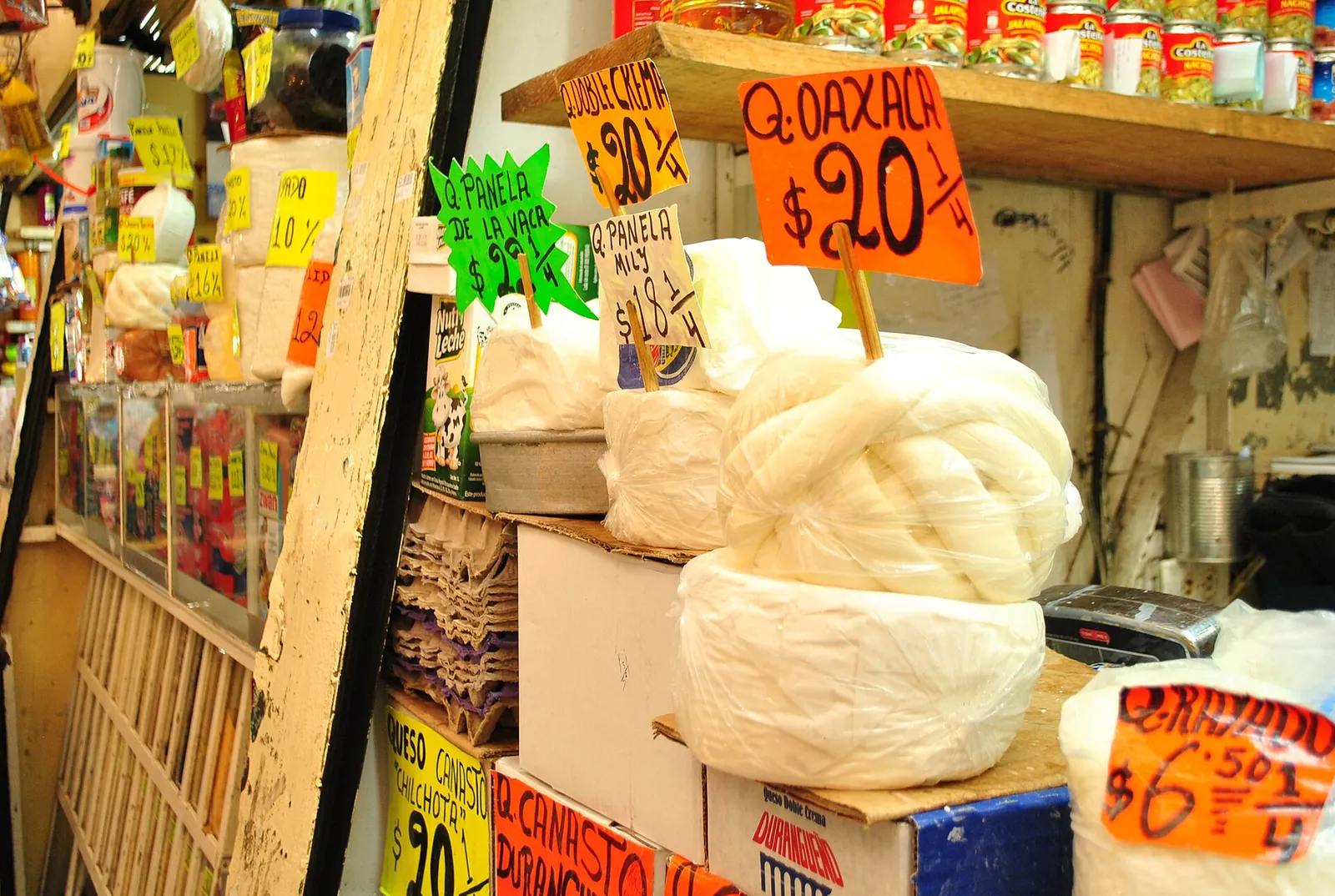
Queso fresco, panela and cotija stay put under heat, while Oaxaca, Chihuahua and asadero are the melters.
Most of them are cow's milk cheeses made for the table rather than the cheese board. That is why the same few names show up in almost every recipe from Mexico, and why the wrong swap, such as grated cotija in a quesadilla, goes wrong so quickly.
Mexican cheeses at a glance
This table of Mexican cheeses sorts the common ones by job.
| Cheese | Texture | Melts? | Best use |
|---|---|---|---|
| Queso fresco | Soft, white, spongy | Softens, no melt | Crumbled over tacos, beans, enchiladas |
| Panela | Firm, moist, basket pattern | Softens, no melt | Sliced, grilled or cubed in salads |
| Requesón | Loose, grainy | No | Fillings for tacos and pastries |
| Queso añejo | Firm, dry | No | Grated or crumbled garnish |
| Cotija | Hard, crumbly | No | Finishing cheese for elote and beans |
| Oaxaca | Stretched-curd, stringy | Yes | Quesadillas, queso fundido |
| Chihuahua | Semi-hard, tiny holes | Yes | Quesadillas, chiles rellenos |
| Asadero | Semisoft, stretched-curd | Yes | Queso fundido, quesadillas |
Fresh Mexican cheeses that crumble or slice
Fresh Mexican cheeses are the everyday cheeses: mild, a little salty and eaten within days of making. Queso fresco is the best known. It is set with culture and rennet, then milled, salted and lightly pressed, which gives a spongy white cheese that crumbles easily and softens but does not melt.
Panela is its firmer cousin, drained in baskets that leave a woven pattern on the rind, which is why it is also called queso de canasta. It holds its shape in a hot pan, so it is the one to grill or fry. Requesón is the soft, grainy one, traditionally sold wrapped in corn husks, with a light, unsalty taste that suits enchiladas and tostadas. See the requesón page for how it is made.
Fresh cheeses made from raw milk carry a food safety warning in the US, and pasteurized ones are not risk free for everyone. The queso fresco page covers the FDA advice for people who are pregnant, 65 or older, or immunocompromised.
Aged Mexican cheeses for grating
Aged Mexican cheeses do the opposite job of the fresh ones: a little goes a long way. Cotija is the standard, hard and crumbly, and it is often compared to Parmesan. The comparison is about use only, since cotija is a different cheese, and queso fresco versus cotija shows how to tell the two crumbly cheeses apart in a shop.
Queso añejo is the aged version of queso fresco. It starts soft and turns firm as it ages and is often coated in chili pepper, and it is mostly a garnish. Shake it over beans or salads as you would cotija, and taste first, since the salt level varies by brand.
Melting Mexican cheeses for quesadillas
Melting Mexican cheeses share one trait: their curd is either stretched or pressed so it turns smooth rather than greasy. Oaxaca cheese is stretched curd wound into a ball. Its pH is adjusted to about 5.3 to get the stringy texture, and it pulls apart in strands. Chihuahua cheese, also sold as queso menonita, was created by the Mennonite community in northern Mexico and is a mild, semi-hard, pale yellow cheese that melts evenly.
Asadero is a third stretched-curd melter, used for queso fundido and quesadillas. In the US, supermarket packs labeled "Mexican blend" or "quesadilla cheese" are usually built from these styles or from substitutes such as Monterey Jack, so check the label if you want the real one.
Mexican manchego is a melter too, and a confusing name. It is a cow and goat milk blend, unlike Spanish manchego, which is sheep's milk, and it made up about 15 percent of Mexican cheese sales in 2018.
What most guides to Mexican cheeses get wrong
Guides to Mexican cheeses usually treat "Mexican cheese" as one flavor, but the useful difference is moisture and how the curd was handled. A cheese sold as queso blanco, queso fresco or panela may look identical in the case and still behave differently in a pan.
Three habits fix most problems. Do not buy queso fresco to melt, because it softens into a crumbly paste. Do not salt a dish before adding cotija, which can be intensely salty. And do not treat queso de bola as a Mexican original: it is the Dutch cheese Edam under another name, a name it also carries in Venezuela and the Philippines. In Yucatán it is stuffed with meat, raisins, capers and olives as queso relleno.
How to buy Mexican cheeses in the US
Buying Mexican cheeses is easiest at a Latin market, where the brands are made for the cuisine, but most large supermarkets now stock queso fresco, cotija and Oaxaca in the refrigerated cheese aisle or near the tortillas. US-made versions are common and perfectly good for cooking.
Pick the fresh ones last, check the date, and use them within a few days of opening, with the package kept at 40°F or below. Wrapped Oaxaca balls, cotija wedges and añejo keep longer. When a recipe names a cheese you cannot find, swap by job: Monterey Jack for a Chihuahua or Oaxaca melt, feta or a mild fresh cheese for queso fresco, and ricotta for requesón.
Questions about Mexican cheeses
These questions about Mexican cheeses cover the choices people usually get stuck on.
What are the most common Mexican cheeses?
The most common Mexican cheeses are queso fresco, cotija, Oaxaca, Chihuahua and panela, with requesón, añejo and asadero close behind. Mexican manchego is another name you will see.
Which Mexican cheese melts best?
The Mexican cheeses that melt best are Oaxaca, Chihuahua and asadero. Oaxaca pulls into strings, while Chihuahua melts smooth and mild.
What Mexican cheese goes on elote?
The Mexican cheese that goes on elote is cotija, crumbled over grilled corn. Queso fresco is the milder swap, and a little grated añejo works too.
Is queso fresco the same as queso blanco?
Queso fresco is not the same as queso blanco in the usual US sense. Queso fresco is set with culture and rennet, while queso blanco is made with acid and heat.
Can you substitute one Mexican cheese for another?
Substituting one Mexican cheese for another works only within a job. Swap fresh for fresh, melter for melter and grating cheese for grating cheese.
Start with three Mexican cheeses
To start with Mexican cheeses, buy three: queso fresco to crumble, Oaxaca to melt and cotija to finish. That set covers tacos, quesadillas and elote. Add panela when you want a cheese to grill.
Sources
- List of Mexican cheeses, Wikipedia
- Edam cheese, Wikipedia
- Preventing Listeria Infection, Centers for Disease Control and Prevention
- Queso fresco: Mexico's Fresh Cheese, cheese.help (its sources cover queso fresco, cotija, Oaxaca, Chihuahua, panela and requesón on the linked pages)