
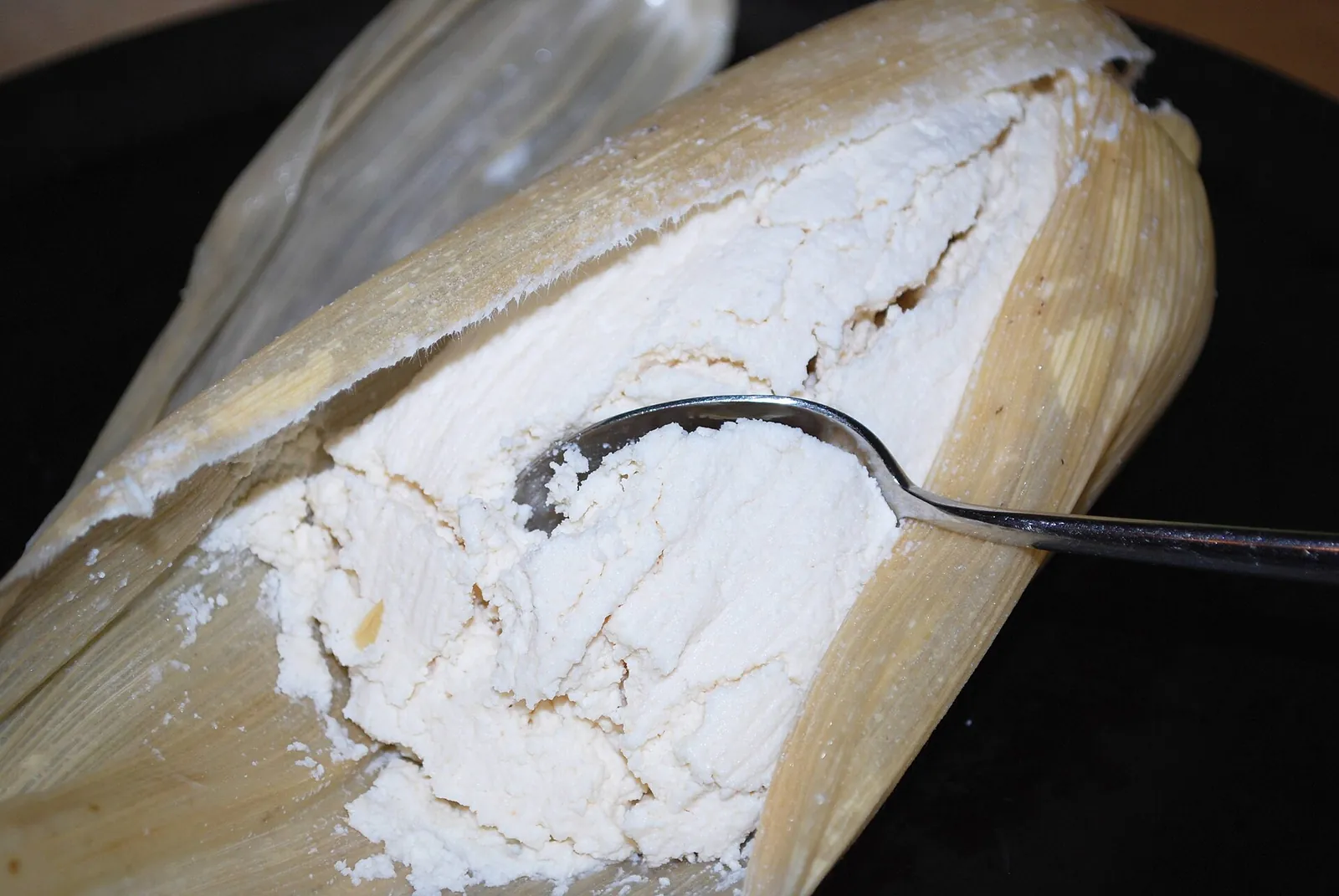
It tastes very mild and slightly salty, so it works as a filling that carries other flavors.
The idea behind it is whey. Cheesemakers who drain curd for other cheeses are left with a liquid that still holds protein, and requesón turns that protein into a spoonable curd.
Requesón at a glance
Here is requesón at a glance, based on a review of Hispanic cheeses and USDA nutrient data for ricotta.
| Detail | Requesón |
|---|---|
| Milk | Pasteurized whey with whole milk or cream added |
| Set with | Heat (about 185°F) and vinegar |
| Moisture | About 75 percent |
| Texture | Soft, moist, grainy and spreadable |
| Flavor | Very mild, semisweet to slightly salty |
| Age | Fresh, eaten within days |
| Close cousin | Ricotta (74 percent water, USDA) |
How requesón is made
Requesón is made by heating whey blended with whole milk or cream to 185°F (85°C) and adding vinegar to clot it. The commercial method in the Van Hekken and Farkye review of Hispanic cheeses starts with pasteurized whey, tops it up with whole milk or cream, adds salt, and moves the wet curd into containers to drain overnight.
The milk or cream matters because whey alone has little fat or protein left, so the added dairy decides how rich the finished cheese is. That is why fat varies from one brand to the next.
Requesón vs ricotta
Requesón and ricotta are close cousins: both are soft, grainy, fresh cheeses built on whey, and a trade description calls requesón the "Hispanic version of ricotta." The review also calls it spreadable and similar to ricotta, with a slightly salty flavor and grainy texture.
Their numbers line up as well. USDA lists whole milk ricotta at 73.69 grams of water per 100 grams, and the review puts requesón at about 75 percent moisture. The ricotta guide covers the Italian original. The main practical difference is that requesón is usually salted and a touch more savory, so taste before adding salt to a recipe.
Requesón flavor and texture
Requesón tastes very mild and a little sweet, with a soft, moist, grainy texture, according to a Cafe Meeting Place description of Hispanic-style cheeses. Fresh, it spoons like loose ricotta; drained overnight, it holds together like a thick filling.
It is not an aged or tangy cheese, and it has no rind. It takes spice, herbs and honey equally well, which is why the same tub can fill a savory gordita at lunch and top a bowl of fruit at breakfast. Salt is the one thing to watch: brands vary, so taste a spoonful before you season a filling.
How to use requesón
Requesón is a classic filling in Mexican home cooking. Spread it into tacos, stuff it into gorditas and tlacoyos, or roll it into chiles and quesadillas, often with herbs or chile strips. It also goes on tostadas, into dips and salads and into baked dishes such as cheese enchiladas, where it adds creaminess.
On the sweet side, serve it with honey, syrup or fruit, or fold it into pastries and desserts in the way you would use ricotta; cannoli fillings show the idea. It pairs with chiles, tomatoes, beans, herbs and, for dessert, cinnamon and fruit.
How to buy requesón in the US
Buying requesón in the US means looking for tubs in the refrigerated case at Latin markets and many supermarkets, sometimes labeled requesón or "Mexican style ricotta." Check the date, because it is a fresh cheese, and look for pasteurized on the label.
Open the tub and see how wet it is. If liquid has pooled, tip it off, and for fillings press the cheese in a fine strainer for 15 to 30 minutes. Use it within a few days; the storing cheese guide has wrap and container tips.
What most requesón advice gets wrong
Most requesón advice calls it plain ricotta and skips the details that change a recipe.
Requesón is not always pure whey cheese
Requesón is not always made from whey alone, because the review describes whey supplemented with whole milk or cream. Pure whey yields very little curd, and the added dairy is why the cheese is creamy rather than dry.
Requesón is not queso fresco
Requesón is not queso fresco, even though both are white, fresh and mild. Queso fresco is set with rennet and milled into a crumbly cheese, while requesón is heat-and-acid curd that is spooned or spread. Do not crumble it over beans and expect the same result; for that, see the sibling panela and the guide to Mexican cheeses.
Wet requesón ruins a filling
Wet requesón ruins a filling, because loose whey turns tortillas and pastry soggy. Drain it first and season it afterward, since draining concentrates the salt.
Requesón substitutes
Requesón substitutes are simple: whole milk ricotta swaps in one to one, and part skim ricotta works when you want it lighter. Drain either one if it looks wet. Cottage cheese with small curds, drained and lightly mashed, is a decent backup in savory dishes. The substitute finder lists other options.
Questions about requesón
These are the questions about requesón that come up most.
Is requesón the same as ricotta?
Requesón is very similar to ricotta but not identical. Both are soft, grainy whey-based cheeses, and a Mexican version is often a bit saltier and made with added milk or cream.
What is requesón made from?
Requesón is made from pasteurized whey, supplemented with whole milk or cream, heated to about 185°F (85°C) and clotted with vinegar.
What does requesón taste like?
Requesón tastes very mild, milky and slightly sweet or salty, with a soft, moist, grainy texture.
What is requesón used for?
Requesón is used as a filling for tacos, gorditas and pastries, as a topping for tostadas, in dips and in sweet dishes with honey and fruit.
Can you substitute ricotta for requesón?
Ricotta can replace requesón in nearly every recipe. Drain it if it is wet and adjust the salt.
Your first requesón
For your first requesón, buy a tub of the pasteurized kind, drain it and spoon it warm into a corn tortilla with a roasted chile strip. If you cannot find it, drained whole milk ricotta will do.
Sources
- Hispanic Cheeses: The Quest for Queso, Van Hekken and Farkye, Food Technology, Institute of Food Technologists
- Cheese, ricotta, whole milk, USDA FoodData Central
- Versatile and Authentic Hispanic-style Cheeses, Cafe Meeting Place