
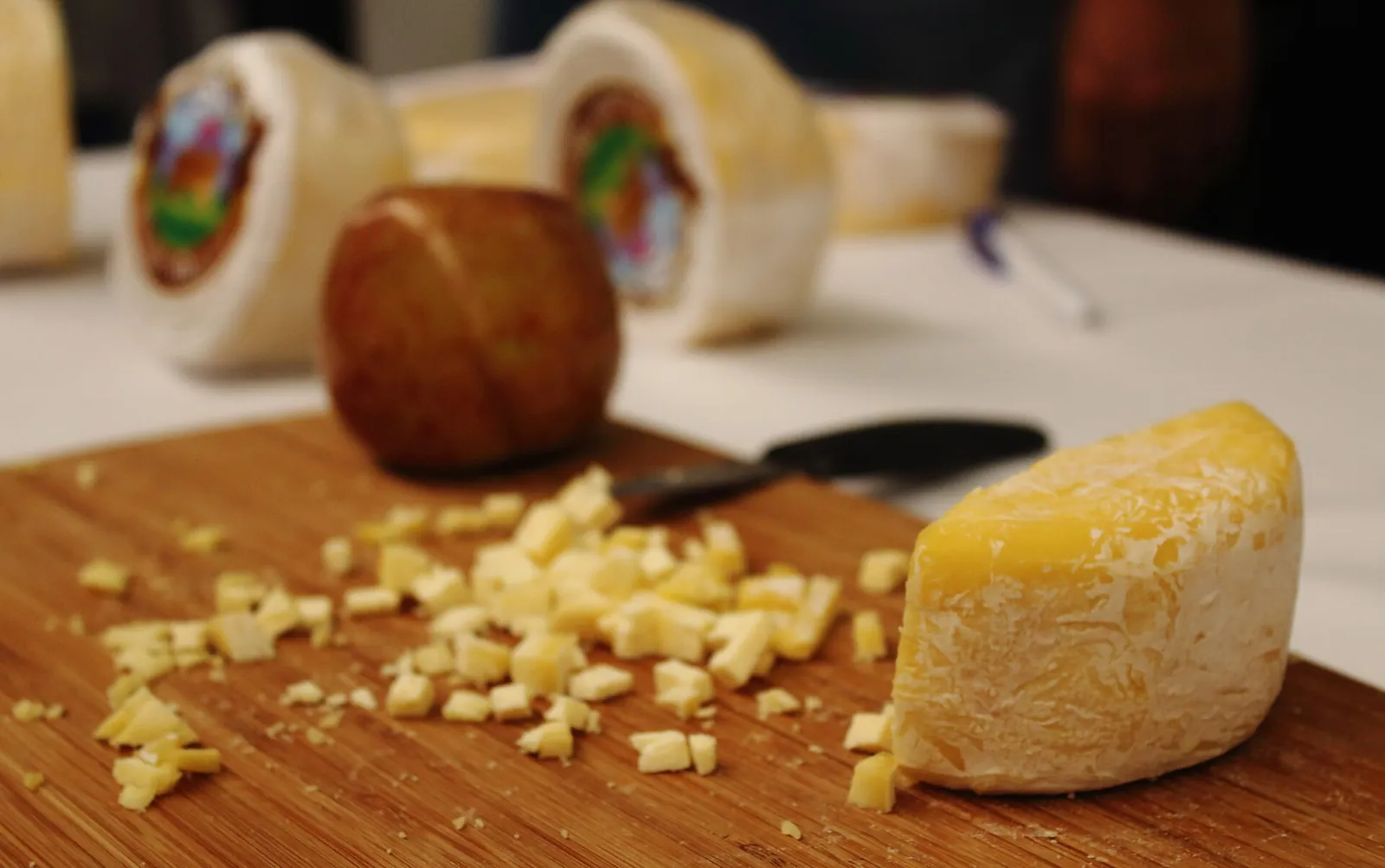
Queso fresco, panela and cotija hold their shape; Oaxaca, asadero and Chihuahua pull and flow.
This page covers the main Mexican cheeses, how each is made and how to find them in a US store. The guide to Mexican cheeses has the cooking detail.
Mexican cheese at a glance
Here is Mexican cheese at a glance, with milk, style and behavior over heat for the cheeses you will see most.
| Cheese | Milk | Style | Behavior over heat |
|---|---|---|---|
| Queso fresco | Cow's | Fresh, crumbly, rennet-set | Softens, does not melt |
| Panela | Cow's | Fresh, sliceable, basket pattern | Does not melt |
| Cotija | Cow's | Dry, salty, aged | Crumbles or grates, does not melt well |
| Oaxaca | Cow's | Stretched curd wound into a ball | Melts into long strings |
| Asadero | Cow's | Stretched, molded into cylinders or balls | Melts and slices well |
| Chihuahua | Cow's | Cheddar-style, high moisture | Melts, tangy |
The behavior column follows a 2003 review of Hispanic cheeses by USDA and Cal Poly researchers, which describes queso fresco and panela as non-melting, asadero and Oaxaca as excellent melters and cotija as ideal for grating.
Mexican cheese that crumbles
Mexican cheese that crumbles is the topping group, and it is built on salt, moisture and the way the curd is handled.
Queso fresco and panela
Queso fresco and panela are both fresh, rennet-set cheeses. The review describes queso fresco as rennet-set cheese from whole or part-skim milk, with finely milled curd and a crumbly texture, at 46 to 57 percent moisture. Panela is set with rennet too, but its curd is cut into large 1-inch cubes, so it slices and crumbles, and the traditional basket pattern comes from its mold. Neither melts, and the full details sit on the queso fresco page linked in the table.
Cotija
Cotija is the aged, salty cheese often compared to Parmesan. The same review puts it at 35 to 42 percent moisture and more than 4 percent salt, traditionally hung in cheesecloth to drain, and calls it ideal for grating. The traditional cheese comes from the Sierra de Jalmich, where Jalisco meets Michoacán. The Cotija guide separates it from Parmesan, and the queso fresco versus cotija page compares the two toppings.
Mexican cheese that melts
Mexican cheese that melts is the group for quesadillas and queso fundido, and it relies on stretching or on cheddar-style stacking of the curd.
Oaxaca is a pasta filata cheese, like mozzarella: the curd is soured, kneaded in hot water, stretched into a ribbon and wound into a ball. The review calls it similar to mozzarella, with a sweet milk flavor and excellent melt. The Oaxaca cheese guide has the method, and Dairy Farmers of Wisconsin says it is now made in Wisconsin using an Italian technique that Dominican friars brought to Mexico.
Asadero is also stretched, shaped into cylinders, balls or twine, and melts and slices well. Chihuahua cheese, also sold as Menonita, is a different build: the review calls it a high-moisture white cheddar or Colby type, made with stacking and milling steps, tangy and eaten within one to two months. It melts, but without the long strings of Oaxaca.
How Mexican cheese reaches the US
How Mexican cheese reaches the US is largely through American factories. The 2003 review says production of Hispanic cheeses in the US rose 52 percent in five years, from 67.4 million pounds in 1996 to 102.6 million pounds in 2001, and called it one of the fastest-growing cheese markets in dairy. That growth is why Oaxaca and queso fresco sit in ordinary supermarket cases next to cheddar, though the figures are old.
Read the label. Oaxaca, queso fresco, panela and cotija sold in the US are often made domestically, and traditional raw-milk Cotija has a different profile from the pasteurized version. Cheeses made from raw milk and sold fresh carry a real food-safety risk for pregnant people and others, so read the FDA's queso fresco guidance first. It says these high-moisture, low-acid cheeses can support Listeria, advises pregnant women, adults over 65 and immunocompromised people to avoid them, and says to buy only sealed packages labeled pasteurized.
In a pinch, low-moisture mozzarella replaces Oaxaca. Feta replaces queso fresco or cotija, though it is saltier and tangier, so cut back on added salt in the dish.
What most Mexican cheese lists get wrong
Most Mexican cheese lists get queso fresco wrong: they say it is an acid-set cheese. It is not. The review describes it as rennet-set, and a starter culture is optional. Acid-and-heat cheeses like queso blanco are a different family, which is why queso fresco crumbles and softens but never behaves like a melting cheese.
They also treat Oaxaca and queso fresco as interchangeable. They are opposite builds: one is stretched and melts, the other is milled and crumbles. Swap them and your quesadilla stays in sad crumbles instead of pulling into strings, or your topping turns to rubber under the broiler. Wisconsin cheesemakers make the same distinction, calling queso fresco crumbly and non-melting, and Oaxaca stringy like mozzarella.
Questions about Mexican cheese
These are the most common questions about Mexican cheese.
What is the best Mexican cheese for melting?
The best Mexican cheese for melting is Oaxaca, a stretched-curd cheese that melts into long smooth strings, with asadero and Chihuahua as other melters.
What is the best Mexican cheese for tacos?
The best Mexican cheese for tacos is queso fresco or cotija as a topping, since both stay in place over hot food.
Is queso fresco made with acid?
Queso fresco is set with rennet, and a starter culture is optional, so it is not an acid-set cheese.
Does Mexican cheese melt?
Mexican cheese melts only in some styles: Oaxaca, asadero and Chihuahua do, while queso fresco, panela and cotija soften or hold their shape.
What is a good Mexican cheese substitute?
A good Mexican cheese substitute is low-moisture mozzarella for Oaxaca, and feta for queso fresco or cotija.
Where to start with Mexican cheese
Start with Mexican cheese by buying one melter and one crumbler: a ball of Oaxaca for quesadillas and queso fresco for beans, enchiladas and tacos. Then try cotija on grilled corn. The enchilada guide is a good first recipe, and the pairing guide matches the cheeses with Mexican lagers and light wines.
Sources
- Hispanic Cheeses: The Quest for Queso (Van Hekken and Farkye, January 2003), Food Technology, Institute of Food Technologists
- Oaxaca cheese, Dairy Farmers of Wisconsin
- Queso Fresco-type Cheeses Consumer Guidance, U.S. Food and Drug Administration