
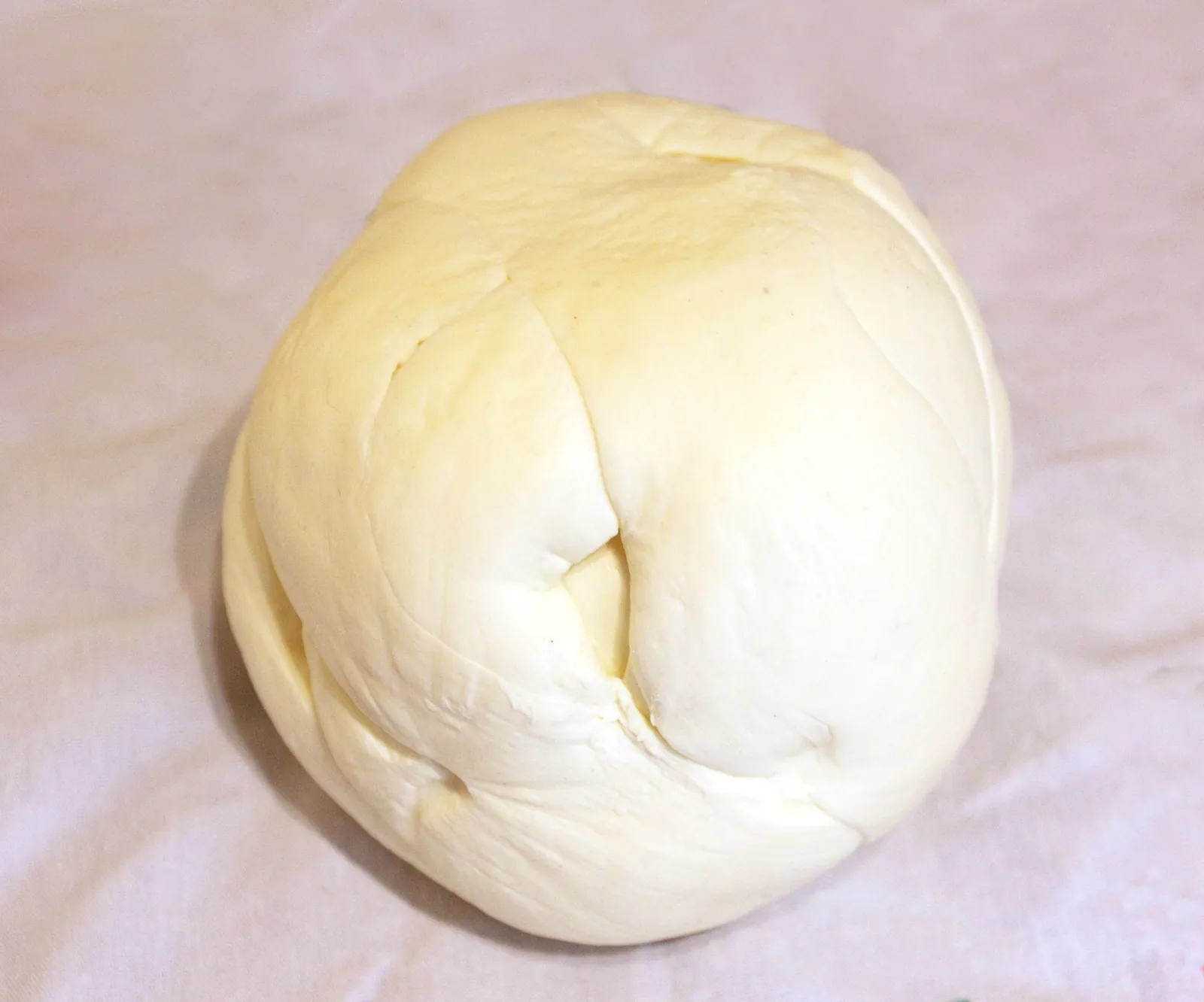
It peels into strings, and it melts better than almost any cheese you can put in a tortilla.
Oaxaca cheese at a glance
Here is Oaxaca cheese at a glance, from the sources listed below.
| Detail | Oaxaca cheese |
|---|---|
| Milk | Cow |
| Style | Semi-soft, pasta filata (stretched curd), no rind |
| Origin | Oaxaca, southern Mexico |
| Also called | Quesillo |
| Age | Fresh, eat within days |
| Texture | Stringy, supple, stretchy |
| Flavor | Mild, milky, buttery |
| Moisture and pH | About 40 to 46% moisture; pH 5.0 to 5.5 |
Where Oaxaca cheese comes from
Oaxaca cheese is named for the state of Oaxaca in southern Mexico, and Wisconsin cheesemakers say Dominican friars brought the stretched-curd technique to Mexico from Italy. In Mexico it is often called quesillo. It has no protected name, so any dairy can label a ball "Oaxaca," and many US versions are made in Wisconsin.
How Oaxaca cheese is made
Oaxaca cheese is made by setting warm milk with rennet, letting the curd sour in its whey, then kneading it in hot water until it stretches. The curd is pulled into a long ribbon, cooled, salted and wound into a ball. Souring matters because the stretch only works once the curd is acidic enough, the same reason mozzarella is made this way. A 2022 study of the artisanal method warmed the milk to 90 to 93°F (32 to 34°C), cut the curd, poured off most of the whey and let the curd rest 30 to 45 minutes until it turned acidic enough to stretch. A 2003 review by Van Hekken and Farkye puts the finished cheese at pH 5.0 to 5.5.
The soured curd was cut into cubes and kneaded by hand in hot water at about 158°F (70°C), within the 158 to 176°F (70 to 80°C) the review gives as the traditional range. Traditional quesillo is made from raw milk with no starter culture, while commercial versions use pasteurized milk and often add one.
Why Oaxaca cheese is wound into a ball
Oaxaca cheese is wound into a ball because the stretching step leaves it as one long ribbon. The ribbon goes into cold water to firm up, 39°F (4°C) for about 5 minutes in the 2022 study, then is rubbed with dry salt, about 2 percent of its weight there, and wound. To use it, find the loose end, unwind the ball and tear the ribbon into strips, much as you would string cheese. The string cheese guide explains why stretched curd peels this way.
What Oaxaca cheese tastes like
Oaxaca cheese tastes mild and milky, which Wisconsin cheesemakers compare to a young Monterey Jack with more butter and far more melt. A sensory study listed descriptors such as moist, salty, fibrous and squeaky. It is fresh, so there is no sharpness to speak of. The texture is the draw: soft, a little squeaky, and fibrous enough to tear into strands.
How to buy Oaxaca cheese in the US
Buying Oaxaca cheese means looking for a ball or coil labeled Oaxaca or quesillo in the refrigerated Latin or cheese section. Most US supermarket versions are pasteurized. Check the label if you are pregnant or serving someone who is, because artisanal quesillo can be raw-milk and the CDC advises avoiding unpasteurized cheese in pregnancy.
How to use Oaxaca cheese
Using Oaxaca cheese is simple: pull it apart by hand and let it melt. It is the standard cheese for quesadillas, tlayudas and queso fundido, and Wisconsin cheesemakers also suggest tostadas, empanadas, baked pasta and egg scrambles. About 2 ounces (1/2 cup torn strands) is enough for an 8-inch tortilla. See quesadillas for how it compares with other melters, the melting cheese ranking for its place among stringy melters, and Mexican cheeses for the rest of the family.
For long strings, shred or tear it and melt it over medium heat in a covered pan so it softens without browning. A hot dry skillet or comal is enough.
What to serve with Oaxaca cheese
What to serve with Oaxaca cheese leans on lime, avocado and roasted chili; the pairing guide lists other cheeses. Pineapple is a good sweet counter, and warm tortillas and chorizo are the usual company.
For wine, try Albarino, Pinot Grigio or a dry rose. For beer, a Mexican lager, pilsner or blonde ale keeps it light.
Substitutes for Oaxaca cheese
The best substitute for Oaxaca cheese is low-moisture mozzarella, which is made by the same stretch method and, by the federal standard, runs 45 to 52 percent moisture; the mozzarella guide explains the types and the substitute finder has more. Skip fresh mozzarella packed in water, whose standard allows 52 to 60 percent moisture and can leave a quesadilla soggy. Scamorza gives a similar pull with a slightly firmer, sometimes smoked, flavor, and Monterey Jack melts well though it will not string. Do not swap in queso fresco or cotija, which are different cheeses that do not stretch.
How to store Oaxaca cheese
Store Oaxaca cheese in the fridge in its original wrapping or an airtight container, and use it within about a week of opening for the best flavor. Fresh pasta filata cheeses lose their stretch as they age. A study of vacuum-packed Oaxaca stored at 46°F (8°C) found softness, elasticity and flavor changing over 24 days, so buy only what you will use. Aging adds melt but costs flavor, since off-flavors appeared over the same 24 days.
What most Oaxaca cheese advice gets wrong
Most Oaxaca cheese advice says it is just mozzarella, and the match is closer than it should be only in melt. Oaxaca is saltier and more buttery, and it is sold fresh, so low-moisture block mozzarella is a substitute rather than a copy. Another mistake is cooking it too long: past a minute or two over heat it turns rubbery and sweats oil, so melt it only until it strings. Reduced-fat Oaxaca also stretches less: a Journal of Dairy Science study found that lowering the fat made melted Oaxaca release oil more easily and stretch less, so buy the full-fat ball for long strings.
Questions about Oaxaca cheese
These are the questions about Oaxaca cheese that come up most.
What is Oaxaca cheese?
Oaxaca cheese is a mild Mexican stretched-curd cheese, wound into a ball, that melts into long strings. It is also called quesillo.
Is Oaxaca cheese the same as mozzarella?
Oaxaca cheese is not the same as mozzarella, though both are stretched-curd cheeses with a similar melt. Oaxaca is a little more buttery and is sold as a wound ball.
Is Oaxaca cheese good for quesadillas?
Oaxaca cheese is the classic quesadilla cheese because it melts smoothly and pulls into strings.
How do you pronounce Oaxaca cheese?
Oaxaca cheese is pronounced "wa-ha-ka," according to Dairy Farmers of Wisconsin, with the x sounding like an h.
Is Oaxaca cheese the same as queso fresco?
Oaxaca cheese is quite different from queso fresco: Oaxaca is stretched, stringy and melts, while queso fresco is crumbly and does not. The queso fresco guide covers the fresh cheese.
Can you eat Oaxaca cheese raw?
Oaxaca cheese can be eaten cold, pulled apart like string cheese, if it is pasteurized. Check the label, as artisanal quesillo may be raw-milk.
Oaxaca cheese quesadillas and other quick uses
Oaxaca cheese quesadillas need only two things, a warm tortilla and a handful of torn cheese. Fold the tortilla over the cheese on a hot comal or skillet, press lightly, and flip once the cheese begins to ooze. The cheese is mild, so add a spoonful of salsa, sliced roasted poblano or cooked mushrooms.
For queso fundido, melt Oaxaca in a small oven-safe dish under the broiler until it bubbles, add chorizo, and scoop it up with tortillas. For a tlayuda, spread refried beans on a large crisp tortilla, cover it with torn cheese and toast it until the edges brown.
Your first Oaxaca cheese
For your first Oaxaca cheese, buy a pasteurized ball, tear it, and fold it into a warm tortilla with a little chorizo or roasted chili. Eat it within a few days.
Sources
- Oaxaca Cheese, Dairy Farmers of Wisconsin
- Changes in quality of nonaged pasta filata Mexican cheese during refrigerated vacuum storage, Journal of Dairy Science via PubMed
- Composition, yield, and functionality of reduced-fat Oaxaca cheese (Caro and others, 2011), Journal of Dairy Science via PubMed
- Sensory profile development of Oaxaca cheese and relationship with physicochemical parameters (Sandoval-Copado and others, 2016), Journal of Dairy Science via PubMed
- Hispanic Cheeses: The Quest for Queso (Van Hekken and Farkye, 2003), Food Technology, Institute of Food Technologists
- Properties of Oaxaca Cheese Elaborated with Ultrasound-Treated Raw Milk (Huerta-Jimenez and others, 2022), Foods via PubMed Central
- 21 CFR 133.156, Low-moisture mozzarella and scamorza cheese, eCFR (FDA standards of identity)
- Preventing Listeria Infection, Centers for Disease Control and Prevention