
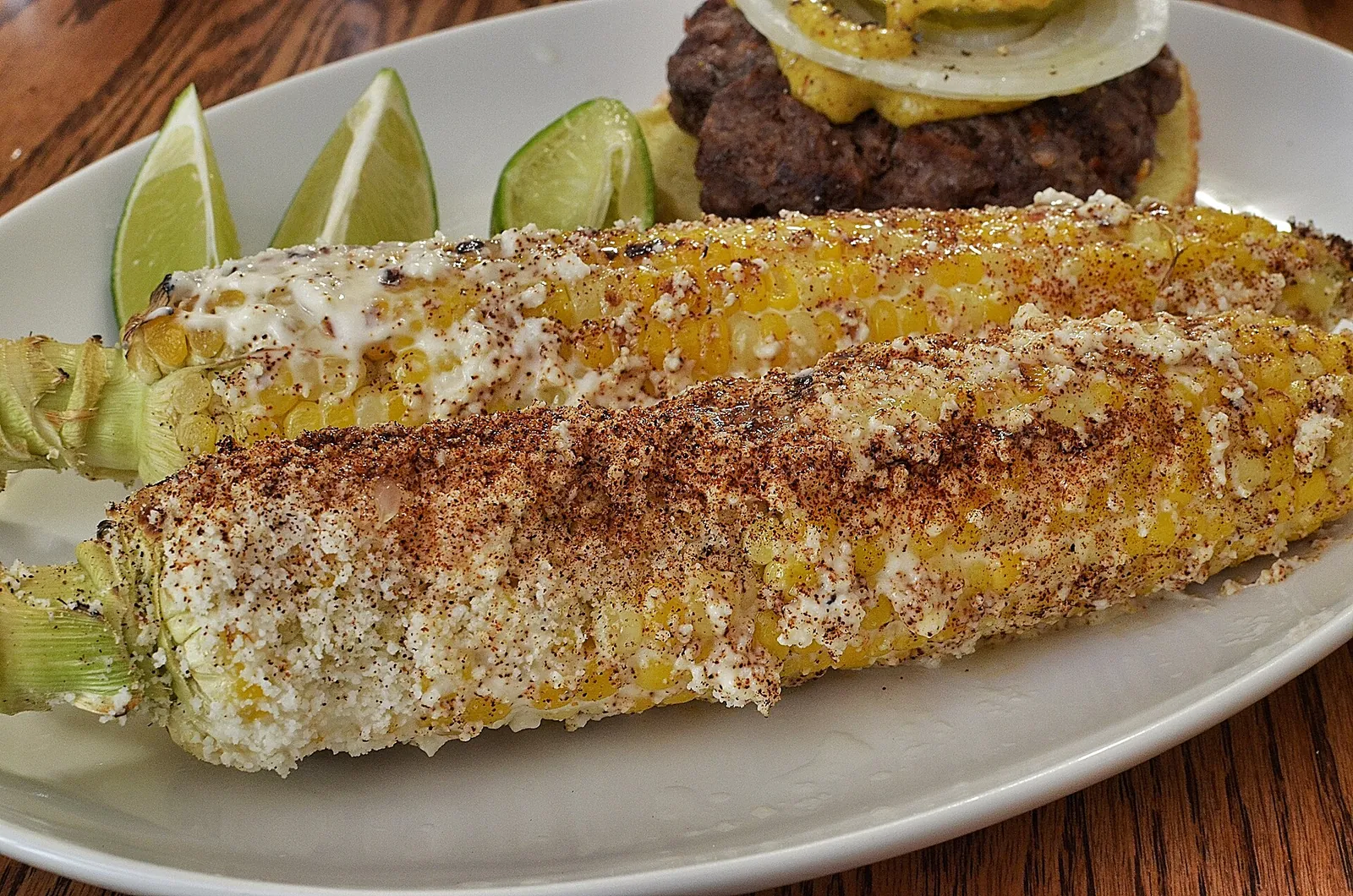
Both are white Mexican cow's milk cheeses that go on top of food, which is why they get mixed up. They are made differently, and neither melts, so the choice depends on the flavor you want.
Queso fresco vs cotija at a glance
This queso fresco vs cotija table compares the two cheeses where they differ, with USDA figures per 100 g, except where noted.
| Queso fresco | Cotija | |
|---|---|---|
| Age | None; sold and eaten fresh | Aged; traditionally at least 3 months |
| Set with | Rennet, not acid | Rennet |
| Texture | Soft, moist crumble | Firm, dry, granular; aged cotija grates |
| Water (USDA) | 51.4% | 38.0% |
| Fat (USDA) | 23.8 g | 30.0 g |
| Protein (USDA) | 18.1 g | 20.0 g |
| Sodium (USDA) | 751 mg (213 mg per ounce) | 1,400 mg (397 mg per ounce) |
| Heat | Softens, does not melt | Softens, keeps its shape |
| Flavor | Mild, milky, slightly salty | Bold, salty, a little sharp |
The real differences between queso fresco and cotija
The real differences between queso fresco and cotija are moisture, salt and age. In their review of Hispanic cheeses, USDA's Diane Van Hekken and Cal Poly's Nana Farkye give queso fresco 46 to 57 percent moisture and 1 to 3 percent salt, with a pH of 6.1 or higher. Cotija comes in drier, at 35 to 42 percent moisture, with more than 4 percent salt and a pH of 4.7 to 5.5. The USDA table backs that up, with cotija's 1,400 mg of sodium per 100 g against 751 for queso fresco.
Both are rennet cheeses. Queso fresco is set with rennet, not acid, then the curd is cut, cooked, drained, finely milled, dry-salted and packed, and the milling is what makes it crumble. The queso fresco page has the full method. Cotija is also rennet-set, and the same review notes that commercial versions use thermophilic starters because of high cooking temperatures. The traditional version is a raw-milk mountain cheese from Jalisco and Michoacán, aged for months, as the cotija guide explains.
Texture and flavor
Texture and flavor differ because queso fresco and cotija crumble differently. Queso fresco breaks into soft, moist, milky crumbs that melt into the warm food under them, while cotija stays in dry, salty granules. The review says queso fresco "falls apart when minimal force is applied," and that cotija is hard but milled, so it shares a low hardness with queso fresco.
Wisconsin cheesemakers sell fresh cotija that is softer and gently salty, and aged cotija that is firmer, drier and more pungent, best finely grated. A tub labeled cotija in the US may be the fresher kind, so taste before you season.
Melting and cooking
Melting and cooking are limited for both, because neither queso fresco nor cotija melts. The review says queso fresco does not melt because its pH stays above 5.2, and calls cotija something that "does not melt well but is ideal for grating." In a hot pan queso fresco softens and browns, and cotija softens and holds its shape.
That makes both finishing cheeses. Crumble queso fresco over beans, enchiladas, tacos and salads when you want a cool, mild contrast. Use cotija on elote, soups and tostadas, where the salt matters. For a gooey quesadilla, add Oaxaca cheese; see Mexican cheeses for more.
Which to use: queso fresco or cotija
Which to use, queso fresco or cotija, depends on how much salt the dish needs:
- Elote and corn salads: cotija, rolled on the hot corn.
- Tacos, tostadas and enchiladas: queso fresco for mild creaminess, or cotija for a salty finish.
- Beans, soups and pozole: cotija, grated if it is aged.
- Salads and fruit: queso fresco, which will not overpower.
- Frying: queso fresco, patted dry, browns in a hot nonstick pan.
- Swaps: use less cotija than queso fresco, since it has about twice the sodium per ounce, and see the substitute finder.
What most queso fresco vs cotija advice gets wrong
Most queso fresco vs cotija advice gets three things wrong: how queso fresco is made, how interchangeable the pair is, and what the safety rules cover.
Queso fresco is not an acid cheese. Some guides say it is curdled with vinegar. The USDA review describes it as rennet-set, and the acid-and-heat cheese is queso blanco.
Cotija is not always the mountain cheese. The name is generic, so a supermarket tub may be a young, moist, pasteurized cheese, and the traditional wheel is raw-milk, aged and seasonal.
Aged does not mean safe for everyone. The FDA's queso fresco-type guidance tells pregnant women, adults 65 or older, newborns and people with weakened immune systems to avoid queso fresco, queso blanco and requesón even when pasteurized, because of listeria. If you choose to eat them anyway, the FDA suggests cooking the cheese as part of the dish to 165°F (74°C). Check the label, and ask your doctor.
Questions about queso fresco vs cotija
These are quick answers to common questions about queso fresco vs cotija.
What is the difference between queso fresco and cotija?
The difference between queso fresco and cotija is age and salt: queso fresco is fresh, moist and mild, while cotija is aged, drier and roughly twice as salty by weight in USDA data.
Can you substitute queso fresco for cotija?
You can substitute queso fresco for cotija as a topping, but it will be milder and softer, so add salt to the dish. Going the other way, use less cotija.
Does queso fresco or cotija melt?
Queso fresco and cotija do not melt into a smooth sauce. Queso fresco softens and browns, and cotija holds its shape, so use Oaxaca or another melter for gooey dishes.
Which cheese goes on elote, queso fresco or cotija?
Cotija is the classic cheese on elote, because its salt stands up to the mayonnaise, chili and lime. Queso fresco works if you want a milder coat.
Is cotija the same as Parmesan?
Cotija is not the same as Parmesan; it is a salty Mexican cheese that crumbles and does not melt, while Parmesan is an Italian-style cooked-curd cheese that grates and melts finely.
Choosing between queso fresco and cotija
Choosing between queso fresco and cotija is easiest with one question: do you want a mild creamy crumble or a salty one? Buy queso fresco from a sealed package that says pasteurized, and keep a small wedge of cotija for finishing corn and soups. Taste either one before you add salt to the rest of the dish.
Sources
- Hispanic Cheeses: The Quest for Queso, Food Technology Magazine, Institute of Food Technologists (Van Hekken and Farkye)
- Queso Fresco-Type Cheeses: Consumer Guidance, U.S. Food and Drug Administration
- USDA FoodData Central (SR Legacy): Cheese, fresh, queso fresco (172223) and Cheese, mexican, queso cotija (170898)