
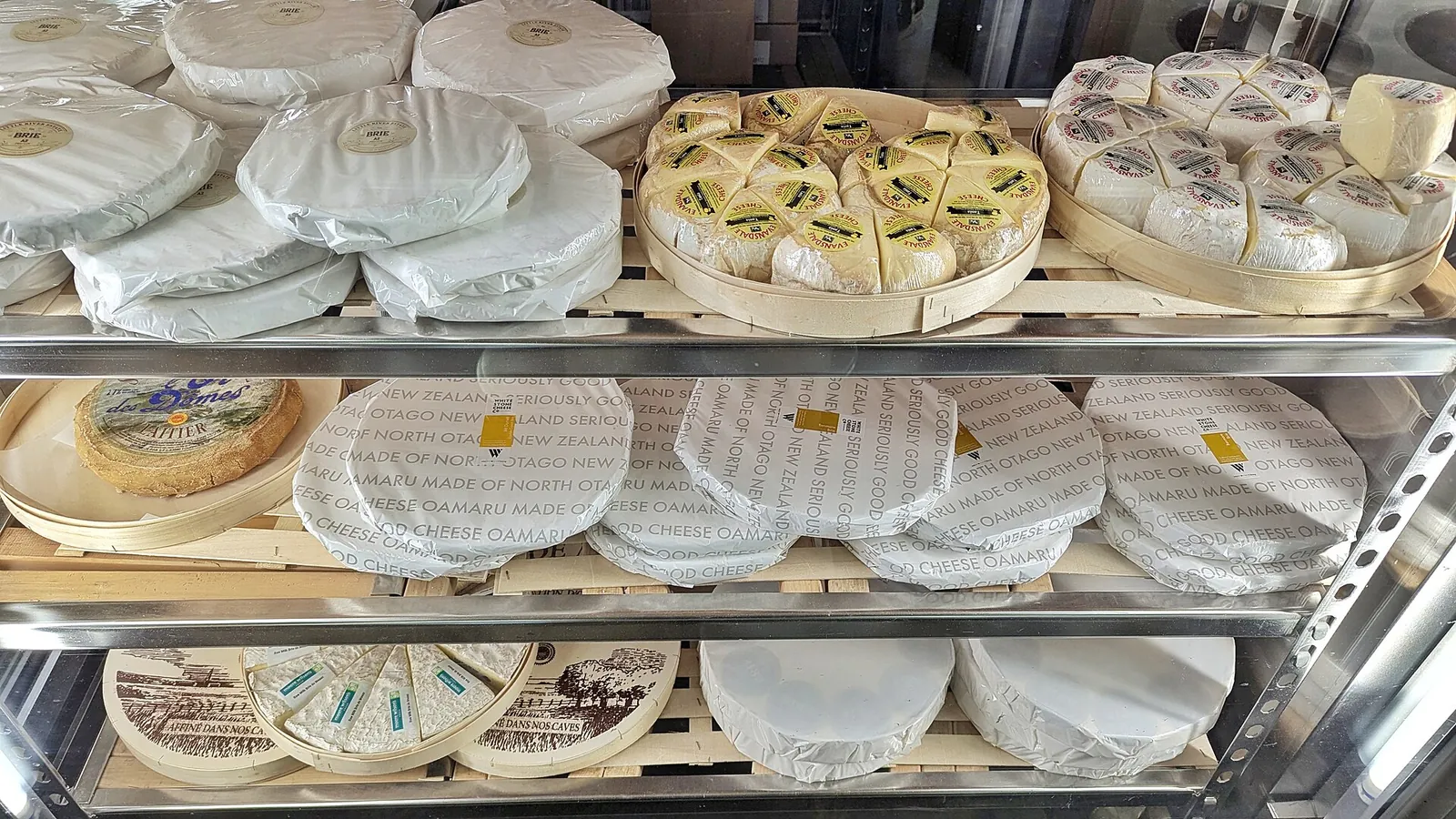
Neither country has a long list of protected names of its own, so the useful way to shop is by style and by maker.
The makers below are examples, not a ranking. Small producers change hands, change recipes and stop making cheeses, so treat any single name as a place to start looking rather than a promise of what is on the shelf.
Australian and New Zealand cheese at a glance
This table of Australian and New Zealand cheese lists examples from both countries.
| Cheese | Country and region | Milk | Style | Maker named as an example |
|---|---|---|---|---|
| Gippsland Blue | Australia, Gippsland | Jersey cow | Blue, sweet and buttery, orange crust | Tarago River Cheese Company |
| Pyengana Cheddar | Australia, Tasmania | Cow | Cheddar-style, aged about a year, granular and nutty | John Healey |
| King River Gold | Australia, Milawa | Cow | Semi-soft, pink-orange washed rind | David and Anne Brown |
| Kervella Affine | Australia | Goat | Soft, turns hard and salty with age | Gabrielle Kervella |
| Windsor Blue | New Zealand, South Island | Cow | Blue, rich and full flavored | Whitestone |
| Waitaki Camembert | New Zealand, South Island | Cow | Bloomy rind | Whitestone |
| Airedale | New Zealand | Cow | Semi-soft to semi-hard, red-coated rind | Not stated |
Australian cheese: regions and styles
Australian cheese comes from several states rather than one famous region. A UK cheese guide places its examples in Tasmania, Gippsland and Milawa in Victoria, the Hunter Valley in New South Wales and the Adelaide area in South Australia, which tells you the scene is spread out and mostly small.
Blues are a strong point. Gippsland Blue is described as a sweet, buttery Jersey-milk blue with an orange crust that ripens in 8 to 10 weeks. King Island Dairy, which has operated on King Island in Bass Strait, Tasmania, since 1902, makes blue, cheddar, brie and camembert styles, with varieties that include a Danish-style blue, Blue Brie, Ash Blue and Smoked Cheddar. The dairy has also changed ownership, most recently to two Australian cheesemakers in March 2025, a good reason to check a label before assuming a recipe is unchanged.
Goat cheese is the other thread. Kervella Affine is a soft organic goat cheese that is mild at two weeks and becomes hard, flaky and salty with age, while Woodside Cabecou, from the Adelaide area, is almost mousse-like when young and turns mushroomy as it ripens.
New Zealand cheese: the South Island and beyond
New Zealand cheese in the specialist category is easiest to explain through one maker. Whitestone Cheese, founded in 1987 in Oamaru on the South Island by Bob and Sue Berry, makes 23 specialist cheeses: blues such as Windsor Blue and Moeraki Bay Blue, bloomy-rind Waitaki Camembert and Whitestone Brie, a Manuka Feta, and sheep's and goat's milk cheeses.
Windsor Blue was named New Zealand Champion of Champions in 2006 and won gold at the Brisbane International Cheese Awards. Awards are marketing as well as evidence, but a gold at an open competition is a fair sign that a blue is worth the money.
Airedale, a semi-soft to semi-hard cheese with a red-coated rind, is fruity when young and more full bodied and savory with age. Whitestone Farmhouse, a soft cheese with a Penicillium candidum rind, has a fresh, slightly fruity tang that the guide compares to pineapple and guava.
Cheddar and bloomy-rind styles in Australia and New Zealand
Cheddar and bloomy-rind cheeses are the two styles you will find most easily from both countries. Pyengana Cheddar from Tasmania is aged about a year and is described as granular, rich and nutty. If you want to taste how age changes a cheddar, the aged vs. young cheddar page explains what to expect, and the cheddar profile covers the style.
For bloomy rinds, King Island and Whitestone both make brie and camembert styles. The Brie page and the Camembert page explain ripeness and rind, which apply to a Tasmanian brie as much as a Normandy one.
Protected names and Australian and New Zealand cheese
Protected names matter for Australian and New Zealand cheese mostly because of names borrowed from Europe. A cheese called "Danish blue" or "feta" made in Tasmania or Oamaru is not the protected European product, even when it is well made. The PDO, PGI and TSG guide explains what the European seals promise, and the Greek rules compared with everything else sold under that name are covered elsewhere on the site with everything else sold under that name.
The practical reading: judge an Australian or New Zealand feta or blue on its own terms, by milk, age and maker, not by the original it echoes.
Buying Australian and New Zealand cheese in the US
Buying Australian and New Zealand cheese in the US takes some looking, since distribution is patchy and this page does not claim any particular cheese is stocked. Ask a specialty cheese counter for blues, bloomy rinds and aged cheddars from either country, and look at the label for the maker, the milk and the age.
If you cannot find the named cheeses, buy the style instead. A blue cheese guide helps you pick a sweet, buttery blue like Gippsland Blue's style, and a young goat cheese stands in for the soft goat cheeses.
How to serve Australian and New Zealand cheese
How to serve Australian and New Zealand cheese is simple: build a board by style, not by country. Take a cheddar or other firm cheese, a bloomy rind, a blue and a goat cheese, and add crusty bread, fruit and nuts. Take cheese out of the refrigerator about an hour before serving.
Both countries make notable white wines, so a crisp Sauvignon Blanc suits a young goat cheese or a fresh bloomy rind. A sweet dessert wine or honey suits a blue.
What most Australian and New Zealand cheese advice gets wrong
Advice about Australian and New Zealand cheese usually claims the grass makes the difference, without naming a cheese. That is a plausible idea for pasture-fed milk, but the sources for this page do not measure it, so it is not stated here as fact.
What the sources do show is narrower and more useful: the best-known names are small producers, the lineup changes, and awards and maker history tell you more than a country label does. Another common mistake is treating the region as one cheese tradition when it spans a Tasmanian island dairy, Victorian blues and a South Island specialist.
Questions about Australian and New Zealand cheese
These questions about Australian and New Zealand cheese come up often.
What is Australian and New Zealand cheese known for?
Australian and New Zealand cheese is known for blues, bloomy-rind bries and camemberts, cheddars and goat cheeses, mostly in European styles.
Where in Australia is cheese made?
Cheese in Australia is made in several places, including Tasmania, Gippsland and Milawa in Victoria, the Hunter Valley and the Adelaide area, according to one cheese guide.
Is New Zealand cheese good?
New Zealand cheese from specialists such as Whitestone has won awards, including Windsor Blue's Champion of Champions title in 2006.
Is Australian feta the same as Greek feta?
Australian feta is not the same as Greek feta, because the EU reserves the feta name for Greek PDO cheese.
Can you buy Australian and New Zealand cheese in the US?
You can sometimes find Australian and New Zealand cheese at specialty counters, but stock varies, so ask for the style if the named cheese is missing.
Try Australian and New Zealand cheese
To try Australian and New Zealand cheese, start with a blue and a bloomy rind from one maker, then add an aged cheddar. If you cannot find these names, pick the same styles from a counter you trust, and read the label for milk and age.
Sources
- King Island Dairy, Wikipedia
- Whitestone Cheese, Wikipedia
- Australian and New Zealand Cheeses, I Love Cheese