
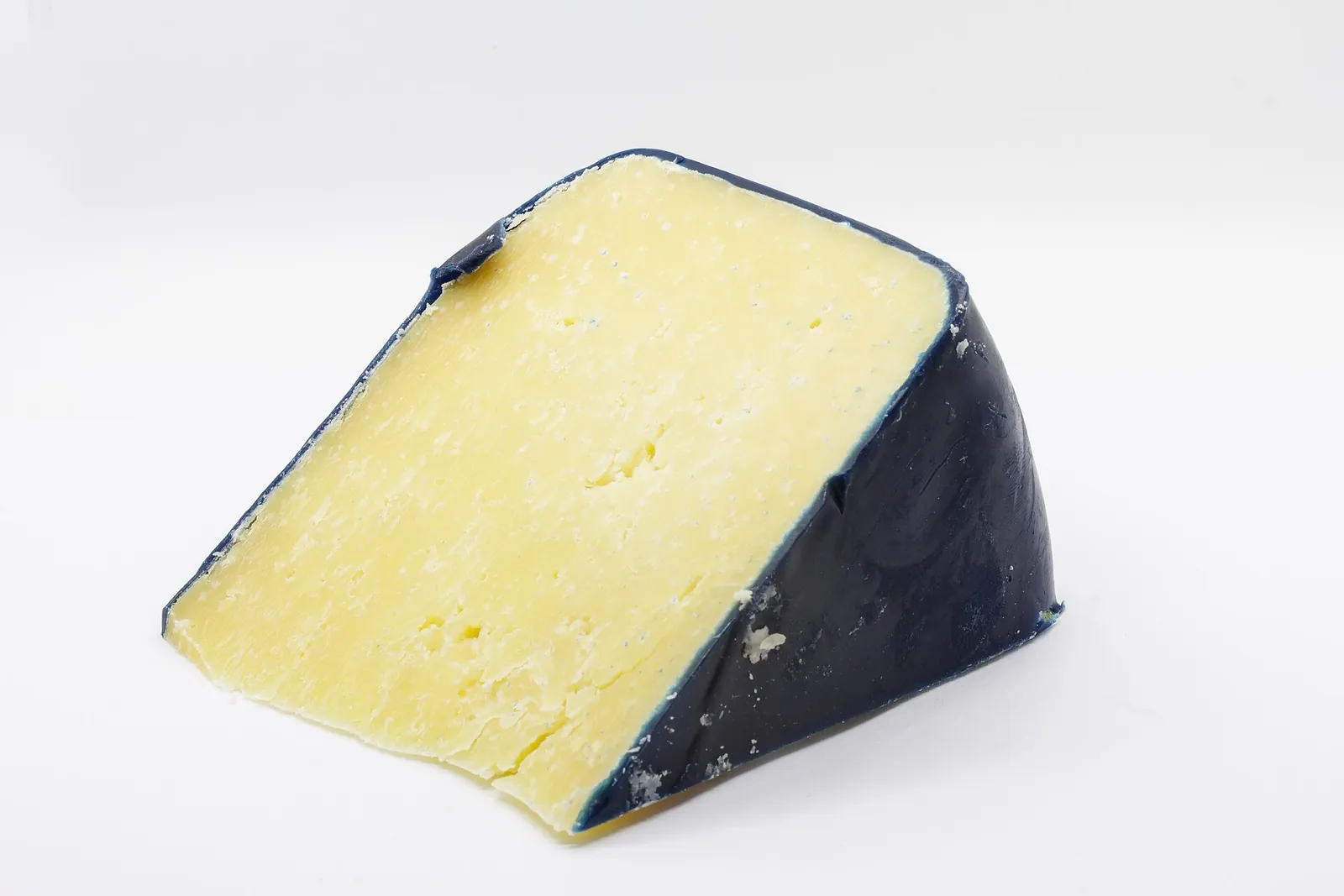
Its flavor depends mostly on age: mild and supple at about 3 months, sharp and crumbly after 2 years.
This page is the short reference. The full history, making and uses of cheddar has the detail, and the aged vs young cheddar guide goes deeper on sharpness.
Cheddar cheese origin and protected name
Cheddar cheese comes from Somerset, England, but the word "cheddar" itself is not protected, so a cheddar can be made anywhere. What is protected is one English style: West Country Farmhouse Cheddar Cheese. The GOV.UK register lists it as protected in the UK scheme from December 31, 2020, after an EU registration in 1996. The PDO and PGI guide explains what those seals promise.
In the US, "cheddar cheese" is a defined name. The federal standard sets at most 39 percent moisture and at least 50 percent milkfat in the solids. Cheddar made from unpasteurized milk must be cured at 35°F or warmer for at least 60 days. That is a minimum curing time, not a ban on raw milk.
How cheddar cheese is made
Cheddar cheese is made by cheddaring: starter bacteria acidify the milk, the curds are separated from the whey, then heated and pressed in the step that gives the cheese its name, according to Wisconsin Cheese. Timing and temperatures vary by maker. Acid development matters more than it looks: the UW Center for Dairy Research notes that the rate and extent of acid development decide calcium retention and with it the cheese's body, texture and performance. Too much acid gives a short, brittle, grainy cheese with a bitter edge.
Cheddar cheese taste and texture by age
Cheddar cheese tastes milder and feels smoother when young, and turns sharper, drier and more crumbly with age. Wisconsin Cheese describes young cheddar as smooth, semi-firm and creamy, and aged cheddar as nuttier and sharper, with a tangier finish, some earthy notes and hard, salt-like crystals that add a slight crunch. Those crystals are a normal sign of age, not spoilage.
| Age | What to expect |
|---|---|
| About 3 months (mild) | Buttery, supple, melts smoothly |
| 6 to 12 months (medium to sharp) | Nutty and tangy, still sliceable |
| 1 to 2+ years (extra sharp) | Crumbly, sharp, sometimes crunchy with crystals |
The age bands are a rough guide and brands label sharpness differently.
White vs orange cheddar cheese
White and orange cheddar cheese taste the same at the same age, because the color comes from annatto, a natural dye. Wisconsin Cheese explains that makers once added it to even out the look of cheese made from golden summer milk, and some keep the habit today. Color tells you nothing about age or quality. In a recipe you can swap one for the other; a white cheddar sauce just comes out ivory instead of gold.
How to buy cheddar cheese in the US
Buy cheddar cheese by the age words on the label, such as mild, sharp or extra sharp, and by an aging statement like "aged 12 months" where one is given. Sharpness terms are not tied to a set number of months, so one brand's sharp can be another's medium. For cooking, a block aged around 9 months is a safe pick. For the board, ask for a cut from a farmhouse or clothbound wheel and taste it first.
Buying a block and grating it yourself costs less per ounce than most bagged shreds, and the cheese tastes fresher. A large block also lets you trim away any surface mold, which the storing cheese guide explains.
How to serve and cook with cheddar cheese
Serve cheddar cheese at room temperature: take it out of the fridge 30 to 45 minutes ahead so the fat softens and the flavor opens up. Cut it in blocks or thin slices rather than crumbling it, unless it is a very aged piece that crumbles on its own.
For melting, young to medium cheddar gives the smoothest sauce. Very old cheddar has lower moisture and a more broken-down protein structure, so it can turn grainy when heated hard. Stir it into a sauce off the boil. The best melting cheeses ranks cheddar against the field, and it is a natural in grilled cheese, mac and cheese, burgers and baked potatoes.
What to serve with cheddar cheese
What to serve with cheddar cheese follows its sharpness: something sweet or fruity softens it, something bitter or rich stands up to it. The pairing guide covers the whole directory. For cheddar the list is:
- Wine: Cabernet Sauvignon, Malbec, dry Riesling
- Beer: brown ale, IPA, stout
- Fruit: apple, pear, fig
- Extras: whole-grain mustard, chutney, crusty bread
A wedge of sharp cheddar, a sliced apple and a spoonful of chutney is a fine plate on its own.
Substitutes for cheddar cheese
Substitutes for cheddar cheese depend on what you need from it. Aged gouda gives a similar nutty depth. Gruyère melts well and tastes a little sweeter. Manchego is a firmer sheep's milk choice for a board, though it is not a melting cheese in the same way. For a milder swap, Colby is the closest American cousin. The substitute finder lists more options by cheese.
How to store cheddar cheese
Store cheddar cheese wrapped in wax or parchment paper, then loosely in a bag or container in the fridge. Wrapped this way it breathes without drying out. Plastic wrap pressed on the cut face can leave a sweaty, sour surface. If you buy a big block, cut it into smaller pieces and keep the rest sealed, so you open one piece at a time.
Questions about cheddar cheese
These are the quick answers about cheddar cheese.
Is cheddar cheese pasteurized?
Cheddar cheese is usually made from pasteurized milk in the US, but raw-milk cheddar is legal if it is cured at 35°F or warmer for at least 60 days, per the federal standard.
Is cheddar cheese the same as Colby?
Cheddar cheese is not the same as Colby: colby gets a cold-water wash and a shorter age, so it is milder, moister and softer. The cheddar vs colby comparison lays out the differences.
Why is cheddar cheese sometimes orange?
Cheddar cheese is orange when annatto, a natural dye, is added. The color does not change the taste.
What are the crunchy bits in cheddar cheese?
The crunchy bits in cheddar cheese are hard, salt-like crystals that form in aged cheddar, and they are a normal sign of age.
Is cheddar cheese from England?
Cheddar cheese began in England, in Somerset and the wider West Country, but today most of what US shoppers buy is made in the US or elsewhere. Only West Country Farmhouse Cheddar Cheese carries the protected English name.
Your first cheddar cheese
For your first cheddar cheese, buy a sharp block aged around 9 months for cooking and a small wedge of farmhouse cheddar for the board. Taste them side by side with a slice of apple.
Sources
- 21 CFR 133.113, Cheddar cheese, Legal Information Institute, Cornell Law School
- West Country Farmhouse Cheddar Cheese, GOV.UK
- Cheddar Cheese, Wisconsin Cheese
- How Acidity and Moisture Affect Cheese Characteristics, UW Center for Dairy Research