
Ireland adds a younger tradition of farmhouse cheeses such as Cashel Blue, Gubbeen and Coolea.
Britain's best cheeses are named for places, and several of those names are protected by law. Read the label, because "Stilton" and "Yorkshire Wensleydale" mean one thing, while plain "Wensleydale" or "Cheshire" can mean something looser.
The main British and Irish cheeses at a glance
This table of British and Irish cheeses shows the milk, the texture and the one thing each is best known for. Every cheese here is made from cow's milk.
| Cheese | Where | Texture | Protected name | Try it with |
|---|---|---|---|---|
| Cheddar | Somerset origin, made worldwide | Hard, sharp when aged | West Country Farmhouse Cheddar (PDO) | Pickle, apple, bread |
| Stilton | Derbyshire, Leicestershire, Nottinghamshire | Blue, creamy to crumbly | Blue and White Stilton (PDO) | Port, walnuts, celery |
| Wensleydale | Yorkshire Dales | Crumbly, moist, mild | Yorkshire Wensleydale (PGI) | Fruit cake, apple |
| Lancashire | Lancashire | Creamy, tasty or crumbly | Beacon Fell Traditional Lancashire (PDO) | Toast, Eccles cakes |
| Cheshire | Cheshire | Dense, crumbly | None listed in the sources used | Oatcakes, ale |
| Caerphilly | Wales | Crumbly, lemony | Traditional Welsh Caerphilly (PGI) | Salad, bread, chutney |
| Cashel Blue | Tipperary, Ireland | Blue | None checked | Pear, honey |
| Coolea | Cork, Ireland | Gouda style | None checked | Crackers, cider |
Cheddar: the British cheese everyone knows
Cheddar is the British cheese most people know, and it takes its name from the village of Cheddar in Somerset. Caves in nearby Cheddar Gorge gave steady humidity and temperature for maturing it, and some cheddar still ages there.
The name "cheddar" itself is not protected, which is why it is made all over the world. The protected one is West Country Farmhouse Cheddar, a PDO for cheese made in Somerset, Dorset, Devon and Cornwall by traditional methods, including cloth wrapping. The cheddar page covers flavor and age, and good cheddar tells you what to look for at the counter.
Scotland also has a protected cheddar, Orkney Scottish Island Cheddar, though this page gives no more detail on it.
Stilton and the blue cheeses of England
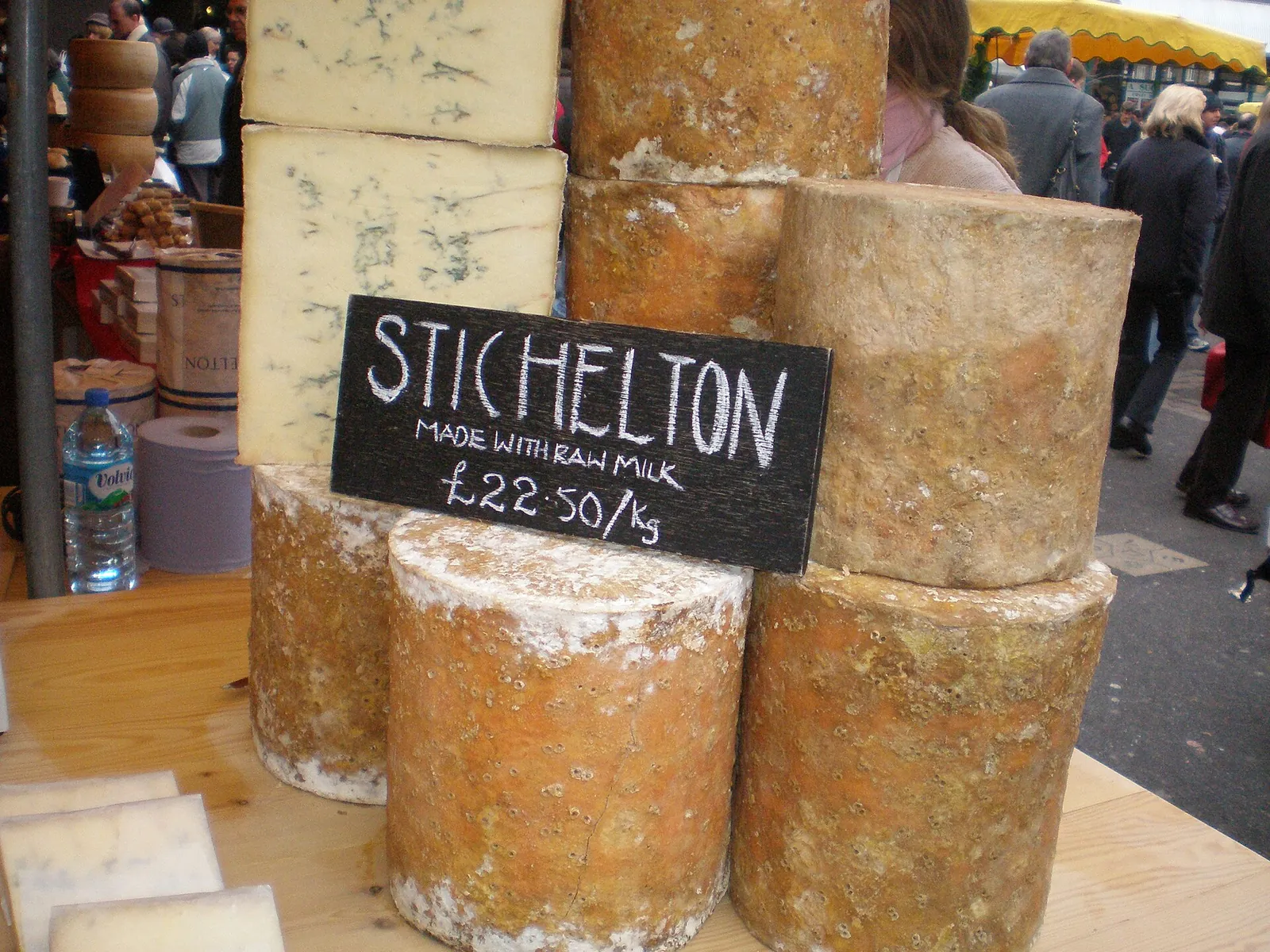
Stilton is England's blue cheese, and its name is protected twice, once for Blue Stilton and once for White Stilton. The GOV.UK register entry shows both as PDO names, first registered with the EU on June 21, 1996 and carried into the UK scheme on December 31, 2020.
Stilton may be made only in Leicestershire, Derbyshire and Nottinghamshire, from pasteurized local milk. The village of Stilton, in Cambridgeshire, is outside that area, so no Stilton comes from Stilton. Read the Stilton page for the aging stages, and the Shropshire Blue page for the orange cousin, which is not covered by that name.
Wensleydale, Lancashire and Cheshire: the crumbly territorials
Wensleydale, Lancashire and Cheshire are the crumbly territorial cheeses, named for the counties where they began. They are young, moist and tangy, not sharp and aged like cheddar.
Wensleydale is mild and honeyed, and "Yorkshire Wensleydale" is a PGI, registered with the EU on December 21, 2013, per GOV.UK. Lancashire is protected as Beacon Fell Traditional Lancashire, a PDO since 1996. Its curds from two or three days are blended, and there are three styles: creamy (4 to 12 weeks), tasty (12 weeks to 24 months) and crumbly. The Lancashire page explains which to pick for toast.
Cheshire is one of the oldest recorded named English cheeses, first documented in the 1580s. The sources used here list no protected name for it, so a "Cheshire" on a US label tells you the style, not the place.
Caerphilly and the cheeses of Wales
Caerphilly is the best known Welsh cheese, a crumbly, lemony cow's milk cheese. The protected name is "Traditional Welsh Caerphilly," a PGI registered by the EU on January 30, 2018, and it covers only cheese made in Wales. A plain "Caerphilly" may come from Somerset or Wiltshire. See the Caerphilly page for the full rules.
Irish farmhouse cheeses worth knowing
Irish farmhouse cheeses are a small, modern craft, and the best known are all cow's milk: Cashel Blue (a blue from Tipperary), Gubbeen (a smear-ripened cheese from Cork), Durrus, Ardrahan and Milleens (all Cork), Cooleeney (a Camembert style from Tipperary) and Coolea (a Gouda style from Cork).
Two have their own pages here: Cashel Blue and Coolea. Irish cheddar-style cheese is the one you will see most in US supermarkets, along with Dubliner, a Cork cheese in the cheddar style. For the country overview, see the Ireland page and the United Kingdom page.
How UK protected names work for British and Irish cheeses
How UK protected names work for British and Irish cheeses comes down to the GB scheme that took over from the EU one, and each registration carries two dates: the original EU one and December 31, 2020 for the UK scheme. PDO means every step happens in the named area; PGI is looser, so at least one step must. The PDO and PGI guide has the full difference.
Names can also be lost. Swaledale Cheese was registered as a PDO in 1996 but was canceled on August 29, 2022, per GOV.UK, so it is no longer protected. Ireland's cheeses are protected by EU rules where they are registered, but this page does not state specifics for Irish names without a source.
What most British cheese advice gets wrong
British cheese advice gets one thing wrong: it treats "farmhouse" and "protected" as the same promise. They are not. West Country Farmhouse Cheddar has a PDO, but plain "farmhouse cheddar" does not.
The other mistake is serving everything cold. A territorial like Lancashire or Cheshire is dense and loses its flavor straight from the fridge, so take it out for about 30 minutes. A good starting board is one crumbly cheese (Lancashire), one hard (a clothbound cheddar), one blue (Stilton), plus oatcakes, a sharp pickle and fruit. For quantities, use the board builder.
Questions about British and Irish cheeses
These are the questions people ask about British and Irish cheeses.
What are the best known British cheeses?
The best known British cheeses are cheddar, Stilton, Wensleydale, Lancashire, Cheshire and Caerphilly.
Which British and Irish cheeses are protected?
British cheeses with protected names include Stilton, Yorkshire Wensleydale, Beacon Fell Traditional Lancashire, West Country Farmhouse Cheddar and Traditional Welsh Caerphilly. Irish cheeses on this page are not covered here for protection.
Is Stilton a British cheese made in Stilton?
Stilton is a British cheese that cannot be made in Stilton, because the village is in Cambridgeshire, outside the three permitted counties.
What is the oldest British cheese?
The oldest recorded named British cheese on this page is Cheshire, first documented in the 1580s.
What are Irish farmhouse cheeses?
Irish farmhouse cheeses are small-batch cow's milk cheeses such as Cashel Blue, Gubbeen, Durrus and Coolea.
Where to start with British and Irish cheeses
Start with British and Irish cheeses by buying three: a protected Stilton, a Yorkshire Wensleydale or Lancashire, and a cheddar labeled West Country Farmhouse. Taste them with plain oatcakes and keep the Stilton for last.
Sources
- Stilton Blue Cheese, GOV.UK
- Yorkshire Wensleydale, GOV.UK
- Beacon Fell Traditional Lancashire Cheese, GOV.UK
- Swaledale Cheese, GOV.UK
- West Country Farmhouse Cheddar, Wikipedia
- List of British cheeses, Wikipedia
- List of Irish cheeses, Wikipedia