
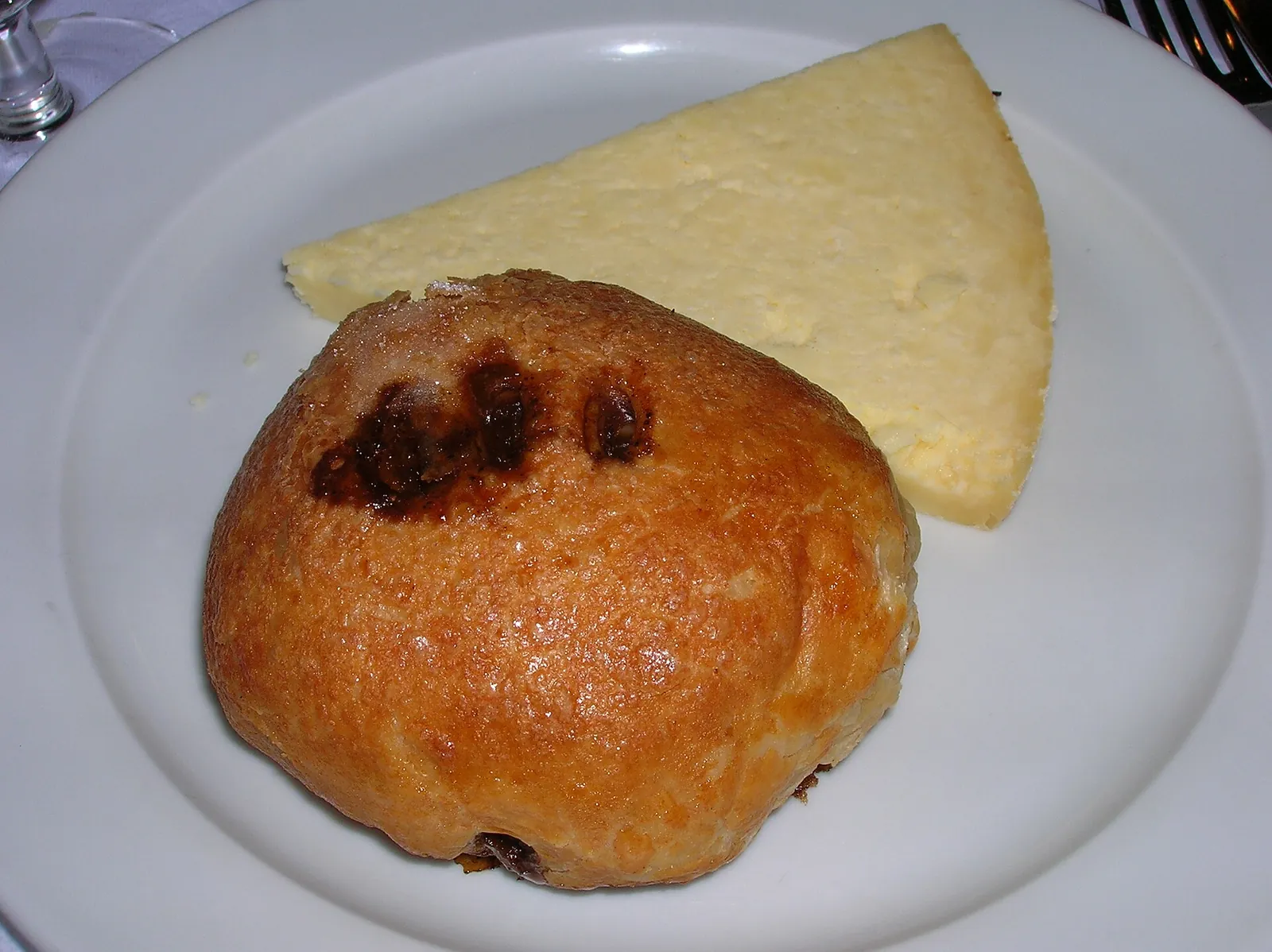
The first two are the traditional cheese, made by blending curds of different ages, and the third is a newer, drier, more acidic cousin.
The blending is the point. Fresh curd mixed with curd that has rested for a day or two gives Lancashire its loose, buttery body, and that body is why Creamy and Tasty melt so smoothly for toast and rarebit.
Lancashire cheese at a glance
Here is Lancashire cheese at a glance, based on the PDO specification and a reference summary.
| Detail | Lancashire cheese |
|---|---|
| Milk | Full-fat cow's milk; the PDO requires Lancashire milk |
| Protected name | "Beacon Fell Traditional Lancashire Cheese" (PDO) |
| Styles | Creamy (young), Tasty (mature), Crumbly (modern) |
| Fat and moisture | At least 48 percent fat in the dry matter; moisture no more than 48 percent |
| Texture | Traditional: loose, open and buttery, firmer and spreadable when mature |
| Flavor | Young: clean and mellow. Mature: quite sharp and tangy |
| Shape | Cylinders or portions, bandaged, waxed, buttered or vacuum packed |
What the Lancashire cheese PDO covers
Lancashire cheese carries a protected name only in its traditional form: "Beacon Fell Traditional Lancashire Cheese" is a protected designation of origin (PDO), registered with the EU in 1996 and on the UK register since December 31, 2020, according to GOV.UK. Both the milk and the cheesemaking must be in the ceremonial county of Lancashire, plus Blackpool and Blackburn with Darwen.
The specification describes a cheese that is loose and open with a buttery feel and, when mature, spreadable. For what a PDO seal does and does not promise, see the guide to PDO and PGI cheeses.
How Lancashire cheese is made
Lancashire cheese is made by milling and mixing curds of different ages, which is unusual among English cheeses. According to the product specification, the cheesemaker cuts the curd to about the size of a broad bean, drains the whey, and holds some curd for 24 to 48 hours.
The next day, new curd goes into the mill with roughly equal portions of 24-hour and 48-hour curd, or with 24-hour curd alone. It is finely milled, salted at about 2.5 percent of the curd by weight, and lightly pressed. The cheese then matures for at least 3 to 4 weeks, is sold from about a month, and is fully mature at around six months.
The method owes a lot to Joseph Gornall of Garstang, whom Lancashire County Council hired in the late 1800s to teach farmers a standard method. The specification says true Traditional Lancashire is still made that way.
Creamy, Tasty and Crumbly Lancashire cheese compared
Creamy and Tasty Lancashire are one cheese at different ages, while Crumbly is a different recipe. Creamy is young, clean and mellow with a fluffy, buttery body. Tasty is aged longer and turns quite sharp and tangy, firm enough to slice and soft enough to spread. Wikipedia gives roughly 4 to 12 weeks for Creamy and 12 weeks to 24 months for Tasty.
Crumbly Lancashire is the odd one out. It dates from the 1950s, matures in only 6 to 8 weeks, and is a high-acid, fresh, crumbly cheese that suits mass production. The PDO specification complains about this style, calling it a "characterless white, acid and crumbly" imitation that undercut the creamy original. Crumbly is also the Lancashire made outside the county, so the protected name does not describe it.
How to melt Lancashire cheese
Lancashire cheese is celebrated for melting, and Creamy Lancashire does not turn stringy when it melts, according to the Wikipedia summary. That makes it the classic base for cheese on toast, a cheese toastie or Welsh rarebit: grate it, press it onto toast and grill until it bubbles.
Pick the style for the job. Creamy gives a mild, smooth melt. Tasty gives more bite, so use less of it or pair it with sweet chutney. Crumbly will not melt as smoothly because it is drier and more acidic, so keep it for scattering over salads, baked potatoes and bakes. For other melters, see the best melting cheeses.
Buying Lancashire cheese in the US
Buying Lancashire cheese in the US is easiest at a cheese shop, which will often cut from a whole wheel. Look for "Traditional Lancashire" or "Beacon Fell" for the protected cheese, and check whether the label says Creamy, Tasty or Crumbly, because the three behave differently. Many US shops stock only Crumbly or a generic "Lancashire", so ask which style you are getting.
Choose a piece with an even, cream-colored paste. Creamy should look moist and loose; Tasty should look firmer with a clean, slightly sharp smell. The storing cheese guide covers wraps; keep Lancashire in wax paper in the fridge and use it within a week or two of cutting, since the moist styles dry out quickly.
Lancashire cheese substitutes
The best substitute for Lancashire cheese depends on the job. For crumbling, young Wensleydale or Caerphilly work, and Cheshire is the other moist, crumbly English cheese. For melting on toast, a mild or medium cheddar gets you close, though it will be firmer and less buttery. The substitute finder has more.
What most Lancashire cheese advice gets wrong
Most advice on Lancashire cheese blurs three different cheeses into one.
Lancashire is not only crumbly
Lancashire cheese is not defined by crumbling, because the traditional style is moist, loose and spreadable when mature. The dry, crumbly cheese many shoppers meet is the 1950s style, not the one the PDO describes.
Crumbly is not a ripe Creamy
Crumbly Lancashire is not an aged Creamy; it is made differently, in a few weeks, and is more acidic. If a recipe says "Lancashire" for melting, buy Creamy, not Crumbly.
Old Tasty is not more Lancashire
An older Tasty Lancashire is sharper and firmer, which is a style choice and not a ranking. The specification says the cheese is fully mature at about six months but sells from one, so choose by flavor.
Questions about Lancashire cheese
These are the questions about Lancashire cheese that come up most.
What are the three types of Lancashire cheese?
The three types of Lancashire cheese are Creamy, which is young and mellow; Tasty, which is aged and sharper; and Crumbly, a modern, acidic, fresh style.
What is "buttery crumble" in Lancashire cheese?
"Buttery crumble" in Lancashire cheese is the texture of the traditional style: loose and open yet moist and buttery, from blending curds of different ages.
Is Lancashire cheese good for cheese on toast?
Lancashire cheese is one of the classic cheeses for cheese on toast, and Creamy Lancashire melts without turning stringy.
Is Lancashire cheese pasteurized?
Lancashire cheese is made from full-fat cow's milk, and the PDO specification does not state whether the milk is pasteurized, so check the label on the piece you buy.
Where is Lancashire cheese made?
Lancashire cheese with the Beacon Fell PDO is made only in Lancashire, from milk produced in the county; Crumbly styles can be made elsewhere.
Your first Lancashire cheese
For your first Lancashire cheese, buy Creamy for toast and Tasty for the board, grate the Creamy onto bread and grill it. If a shop only has Crumbly, use it on salads and not under the grill.