
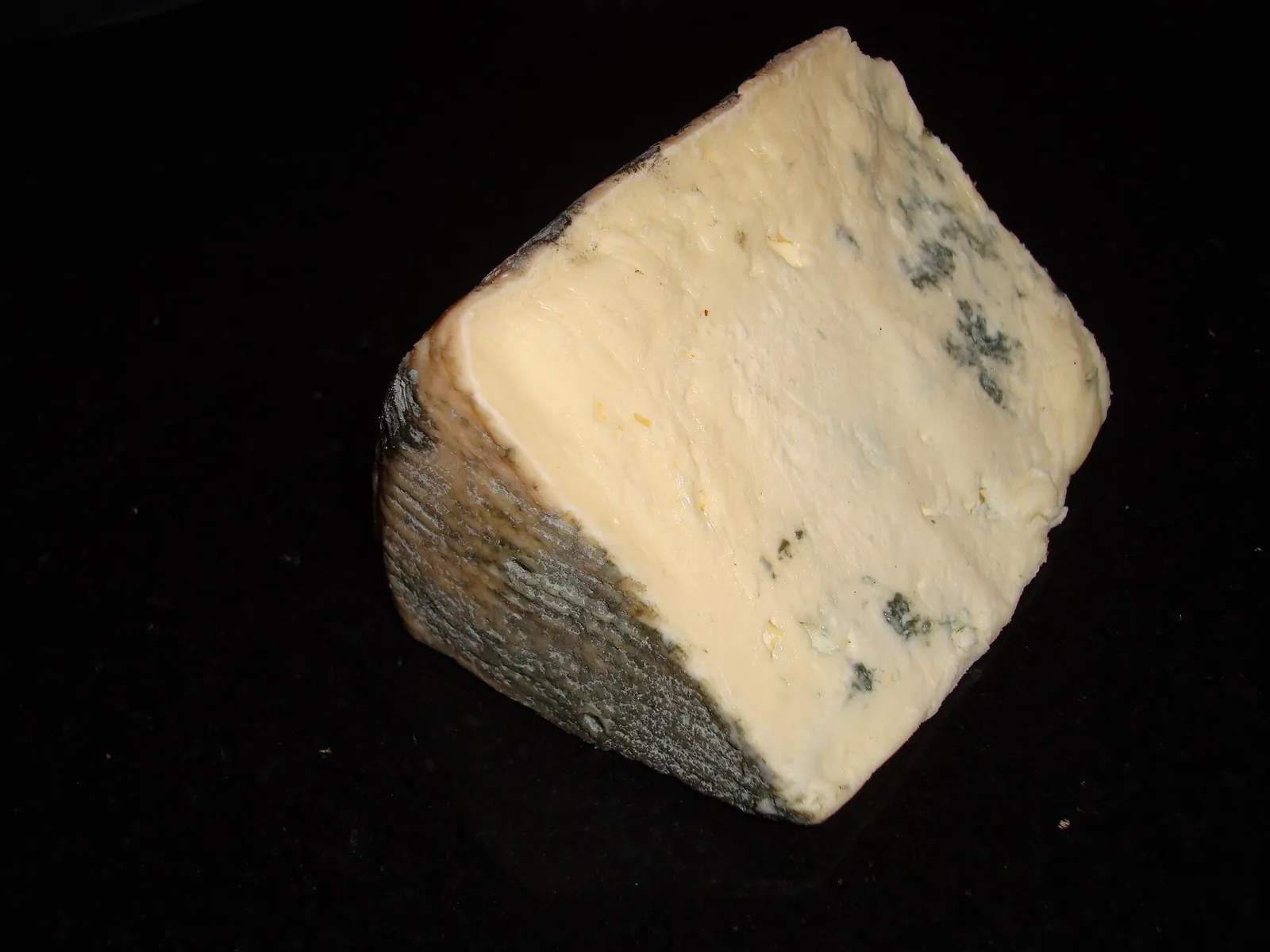
It is semi-soft, creamy and only mildly veined, which makes it a good first blue for people who find Roquefort too much.
It also has a clear place in Irish food history: the family that makes it describes it as the first Irish farmhouse blue, started in 1984. That makes the cheese younger than most European classics, and it is still made by the same family.
Cashel Blue cheese origin and maker
Cashel Blue cheese is made by J&L Grubb, a family business near Fethard in County Tipperary. Louis and Jane Grubb began in 1984, and the Grubb family's own history records that they started with around eight cheeses in a 90 liter copper vat. Per the maker, more than half the milk now comes from the family's own Holstein-Friesian herd.
The name is not a protected designation in the way Stilton or Roquefort are, so the label tells you the brand and the maker rather than a legal recipe. A sheep's milk sibling, Crozier Blue, comes from the same producer, so check the label if you want the cow's milk original.
How Cashel Blue cheese is made
Cashel Blue cheese is made from pasteurized cow's milk, salt, vegetarian rennet, starter cultures and Penicillium roqueforti, according to the maker's ingredient list. The mold is the same species used for Roquefort and Stilton. As it grows through the wheel it breaks down fats and proteins, and that breakdown is what makes the paste creamier and gives the blue its tang.
The maker also points out that the lactose is fermented out over time. If you avoid lactose, that is a reason to ask your doctor, not a promise, so read the label and follow medical advice. The cheese is hand made and has a natural rind that is not meant to be the star of the plate.
What Cashel Blue cheese tastes like
Cashel Blue cheese tastes creamy and slightly acidic, with a rounded blue tang rather than a sharp, salty bite. The maker describes the paste as semi-soft and mildly blue-veined. Young wheels are firmer and fresher, and older ones turn softer and more buttery, with the blue becoming more noticeable.
Compared with the other blues in a shop, it sits at the mild end. Blue Cheese 101 explains how the veins form and why blues vary so much in strength.
How to buy Cashel Blue cheese in the US
Cashel Blue cheese is exported, and you will usually find it as a cut wedge at a cheese counter or in a well-stocked supermarket, wrapped in foil or plastic. Look for a creamy ivory paste with blue-green veining spread through it, not a dry, chalky center or a wet, slimy surface.
Buy a small piece and ask when it was cut. Blue cheese keeps its flavor best when it is cut close to the day you buy it.
What to serve with Cashel Blue cheese
Serving Cashel Blue cheese at room temperature, about an hour out of the fridge, gives you the creamy texture it is known for. It also pairs well with sweet and fruity partners that balance the tang, as the site's pairing guide lists.
- Wine: Sauternes, Port or Riesling.
- Beer: Irish stout, barley wine or a dubbel.
- Fruit: pear, apple or fig.
- Extras: honey, walnuts and soda bread.
The classic Irish board is a wedge with soda bread and honey. For more on why sweet drinks suit blue cheese, see the port and blue cheese guide.
Cooking with Cashel Blue cheese
Cooking with Cashel Blue cheese works best when you add it at the end. Crumble it over a steak just off the grill, stir it into a warm cream sauce for pasta off the heat, or scatter it on a pear and walnut salad. Its mild character means it will not take over a dish the way a strong blue can, so use a generous amount, about 1 to 2 ounces (30 to 55 g) per serving.
Substitutes for Cashel Blue cheese
Substitutes for Cashel Blue cheese should be soft, creamy and not too sharp. The substitute finder suggests three.
- Gorgonzola: the closest in texture, especially the dolce style. See the Gorgonzola guide.
- Danish Blue: saltier and sharper, so use a little less. See the Danish Blue profile.
- Stilton: crumblier and stronger, but the same family of flavors. See the Stilton guide.
Cashel Blue cheese mistakes to avoid
Cashel Blue cheese mistakes are mostly about temperature and storage. Serving it ice cold mutes it, and wrapping it in plastic for days makes the surface wet and sour. Do not scrape off the veins, since the blue is the cheese working as intended.
If a different mold grows on the surface, cut away at least 1 inch (2.5 cm) around it and rewrap in fresh paper, as USDA advises for hard cheeses, but throw out crumbled or sliced cheese that has gone moldy.
How to store Cashel Blue cheese
Storing Cashel Blue cheese in wax paper or parchment inside a lidded container in the fridge lets it breathe while keeping its smell to itself. Aim to finish a cut piece within about two weeks. The storing cheese guide covers wraps in more detail.
Questions about Cashel Blue cheese
These are the questions about Cashel Blue cheese that come up most.
Is Cashel Blue cheese pasteurized?
Cashel Blue cheese is made from pasteurized cow's milk, according to the maker.
Is Cashel Blue cheese vegetarian?
Cashel Blue cheese uses vegetarian rennet, per the maker's ingredient list, but check the pack in case the recipe changes.
Where is Cashel Blue cheese made?
Cashel Blue cheese is made on a family farm near Fethard in County Tipperary, Ireland. The British and Irish cheeses guide puts it alongside other Irish farmhouse cheeses.
Is Cashel Blue cheese strong?
Cashel Blue cheese is mild for a blue, with a creamy body and a gentle tang rather than a sharp salty finish.
Trying Cashel Blue cheese
Start with a small wedge of Cashel Blue cheese, let it warm up, and eat it with a pear, a few walnuts and a spoon of honey. If you like it, try it next to a stronger blue to see the difference.
Sources
- Cashel Blue Cheese, Cashel Blue (J&L Grubb)
- Cashel Blue, Cashel Blue (J&L Grubb)
- Cashel Blue, Wikipedia
- Molds on Food: Are They Dangerous?, USDA Food Safety and Inspection Service