
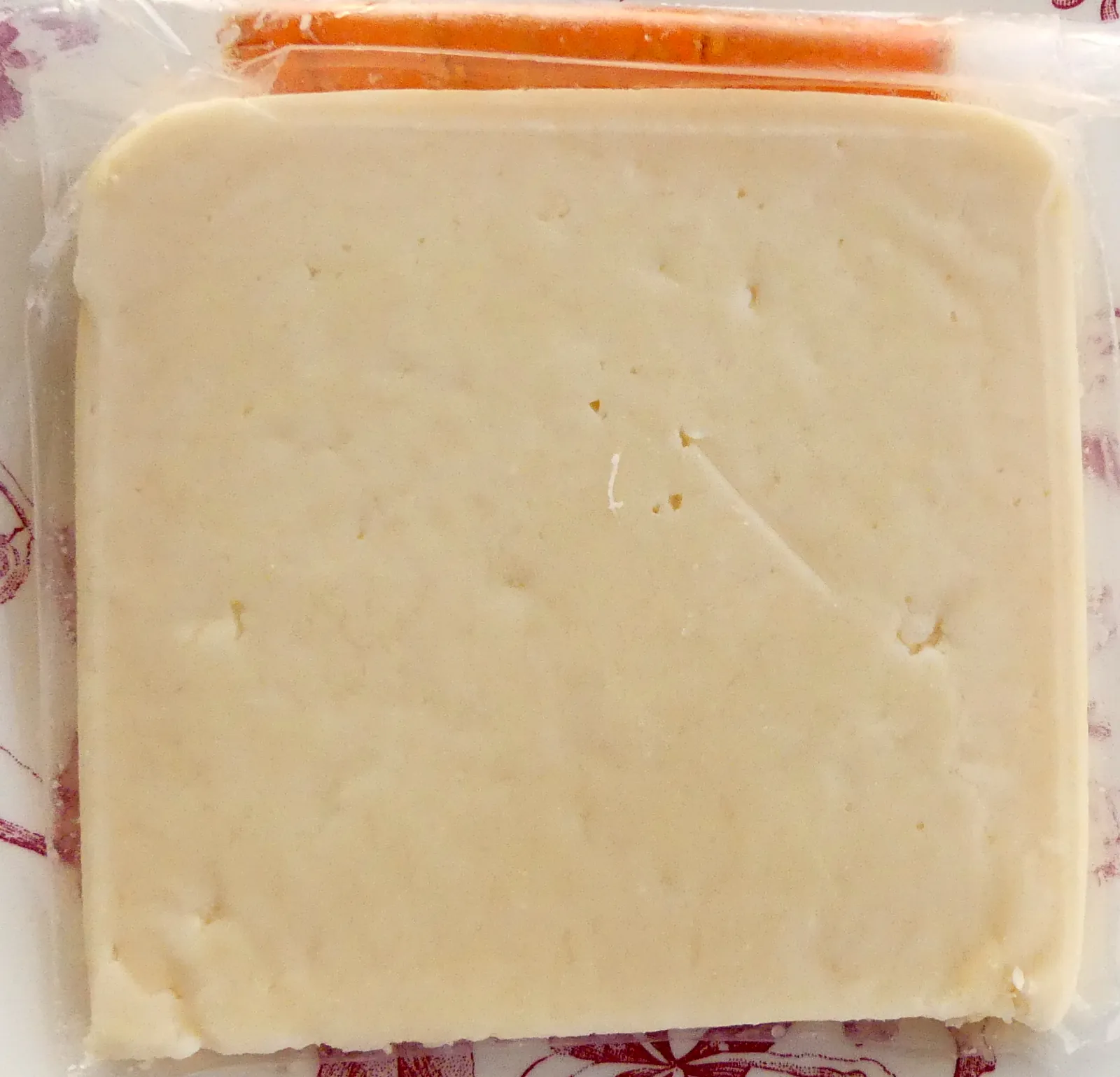
The name is borrowed from Gruyère, but this is a separate cheese, and two versions carry protected names: Graviera Kritis from Crete and Graviera Naxou from Naxos.
The difference that matters at the counter is the milk. Cretan graviera is sheep's milk (sometimes with goat), while Naxos graviera is mostly cow's milk, so the two taste and behave a little differently even though both are pressed, cooked-curd cheeses.
Graviera cheese at a glance
Here is graviera cheese at a glance, with the figures taken from the original registration papers for the two PDOs.
| Detail | Graviera Kritis | Graviera Naxou |
|---|---|---|
| Made on | Crete (Chania, Rethymno, Heraklion, Lasithi) | Naxos, in the Cyclades |
| Milk | Sheep, or sheep and goat | Cow's milk, with no more than 20% sheep and goat milk |
| Texture | Hard, compact paste with small eyes | Hard, elastic, pale yellow, scattered small holes |
| Ripening floor in the papers | Not less than 3 months at 14 to 18°C (57 to 64°F) | 70 to 80 days at about 15°C (59°F) |
| Wheel | Not stated in the summary | Cylinder, 3 to 4 kg or 8 to 9 kg |
| Composition | Not stated in the summary | Moisture 38% at most, fat at least 40% of dry matter |
The graviera cheese PDOs
The graviera cheese PDOs number three, Kritis, Naxou and Agrafon, and each name limits milk and place. Graviera Agrafon, from the Agrafa mountains of mainland Greece, is the third, and Wikipedia's graviera entry lists it beside the other two. The guide to PDO and PGI labels explains what the seal does and does not promise.
Graviera Kritis (Crete)
Graviera Kritis must be made from sheep's milk or a mix of sheep's and goat's milk, in the four prefectures of Chania, Rethymno, Heraklion and Lasithi. The registration summary on the EU register describes the method: the milk is set at 34 to 36°C (93 to 97°F), the curd is cut after 30 minutes and heated again to 50 to 52°C (122 to 126°F) with constant stirring, then pressed for a few hours. The cheese rests a day, sits in 18 to 20 Baumé brine for 2 to 5 days depending on size, and then ripens at 14 to 18°C, being turned and salted on the surface about ten times.
That summary, dating from the 1994 application, sets a floor of 3 months of ripening. Descriptions of the cheese today, including a guide to Cretan cheese, give a minimum of 5 months, so the age on the label is the thing to read.
Graviera Naxou (Naxos)
Graviera Naxou is made on the island of Naxos from cow's milk, which may be mixed with sheep's and goat's milk as long as those do not exceed 20% by weight. The Greek ministerial decision for the PDO sets the method: coagulation at 36 to 37°C (97 to 99°F) for 30 to 40 minutes, cutting to rice-grain size, cooking at 50°C (122°F) with stirring for 60 minutes, and pressing for 3 to 4 hours. It ripens for at least 70 to 80 days at about 15°C.
The decision describes a thin, dry rind and a pale yellow, hard, elastic paste with scattered holes and the occasional crack, with moisture capped at 38%.
Graviera cheese flavor and texture
Graviera cheese tastes nutty, sweet and buttery, and the nuttiness deepens with age, according to America's Test Kitchen. Wikipedia describes the Cretan version as slightly sweet with a burnt caramel edge, and the wheels often carry the crisscross print of the draining cloth.
Texture is firm and dense, not crumbly like feta and not as flaky as an aged Parmesan. Expect a smooth slice with a few small irregular holes. Because Naxos graviera starts from cow's milk, a reasonable guess is that it reads a little milder and creamier than the sheep's-milk Cretan wheels, though the age of the piece matters as much as the island.
How to buy graviera cheese in the US
Buying graviera cheese in the US usually means a Greek or Mediterranean market or a good cheese counter, and America's Test Kitchen's advice is to check specialty stores if you can find it. Read the label for the full name, "Graviera Kritis" or "Graviera Naxou", and the PDO mark: a package that says only "graviera" may be a graviera-style cheese made elsewhere, and the label should tell you the origin.
Ask for a wedge cut from a wheel and look for a pale gold paste without cracks or a dried, gray edge. Buy a small piece first, because the flavor swings with age.
How to use graviera cheese
You can use graviera cheese as a table cheese, a grating cheese and a frying cheese, including for saganaki. Shave or cube it onto a meze board with olives, bread, figs and honey (the cheese and honey guide has ideas), grate it over pasta and baked dishes, or fold it into pies.
For saganaki, cut a slab about half an inch (1 cm) thick, rinse it, pat it dry, flour it lightly and fry it in a hot pan with olive oil until golden on both sides. A cold, firm, dry slice is what stops the cheese from spilling; squeeze lemon over it and eat it right away. Saganaki has the full method, and kasseri is the other common choice.
Graviera cheese substitutes
The closest substitute for graviera cheese is Gruyère, which America's Test Kitchen names as the replacement. Gruyère is more savory and a little less sweet; the Swiss, Gruyère and Emmental comparison shows how it differs. For frying, kefalotyri, which you can read about on its cheese page, is the usual Greek stand-in. Feta and halloumi are not good swaps: feta crumbles in the pan and halloumi is squeakier and saltier.
What most graviera cheese advice gets wrong
Most graviera cheese advice treats graviera as one cheese, and it is not.
Kritis and Naxou are not the same cheese
Kritis is a sheep's-milk cheese and Naxou is mostly cow's milk, so a recipe that says "graviera" may behave differently with each. Their ripening floors also differ on paper, 3 months for Kritis in the original papers and 70 to 80 days for Naxou, so a young Naxou wedge will be softer and milder than an older Kritis one.
Graviera is not a copy of Gruyère
Graviera is named after Gruyère but is not an Alpine copy: the Greek PDO papers describe a cheese ripened in warm rooms at 14 to 18°C or about 15°C, with its own milk, brine and turning routine. Treat Gruyère as a stand-in, not the same thing.
Saganaki needs a firm cheese
Saganaki fails when the cheese is warm or wet, because the slab slumps and leaks before a crust forms. A fridge-cold slab, dried well, in a properly hot pan gives a crust and a soft middle.
Questions about graviera cheese
These are the questions about graviera cheese that come up most.
What does graviera cheese taste like?
Graviera cheese tastes nutty, sweet and buttery, with the nutty notes growing stronger as it ages.
Is graviera cheese the same as Gruyère?
Graviera cheese is not the same as Gruyère: it takes its name from the Swiss cheese and is a hard, nutty cheese, but it is a Greek cheese made with its own PDO rules. Gruyère is the Swiss original.
What is graviera cheese made from?
Graviera cheese is made from sheep's milk or a sheep and goat blend on Crete, and mostly from cow's milk on Naxos, depending on the PDO.
Can you fry graviera cheese?
Graviera cheese can be fried, and it is one of the cheeses used for saganaki. Keep the slice cold and dry and cook it quickly in a hot pan.
How long is graviera cheese aged?
Graviera cheese is aged at least 70 to 80 days for Naxou and, in the original papers, at least 3 months for Kritis, though Cretan wheels are now described as aged 5 months or more.
Your first graviera cheese
For your first graviera cheese, buy a small wedge labeled Graviera Kritis from a Greek market or cheese counter, serve it at room temperature with figs and honey, and then try a slab fried as saganaki. Next time, compare it with a Naxos piece.
Sources
- Graviera Kritis (Graviera Cretense), PDO registration summary, eAmbrosia, European Commission
- Ministerial Decision No. 313071, Recognition of PDO for the cheese "Graviera Naxou", Greece, WIPO Lex
- Graviera, Wikipedia
- 6 Greek cheeses you should seek out, America's Test Kitchen
- Cretan cheese guide, Crete Direct