
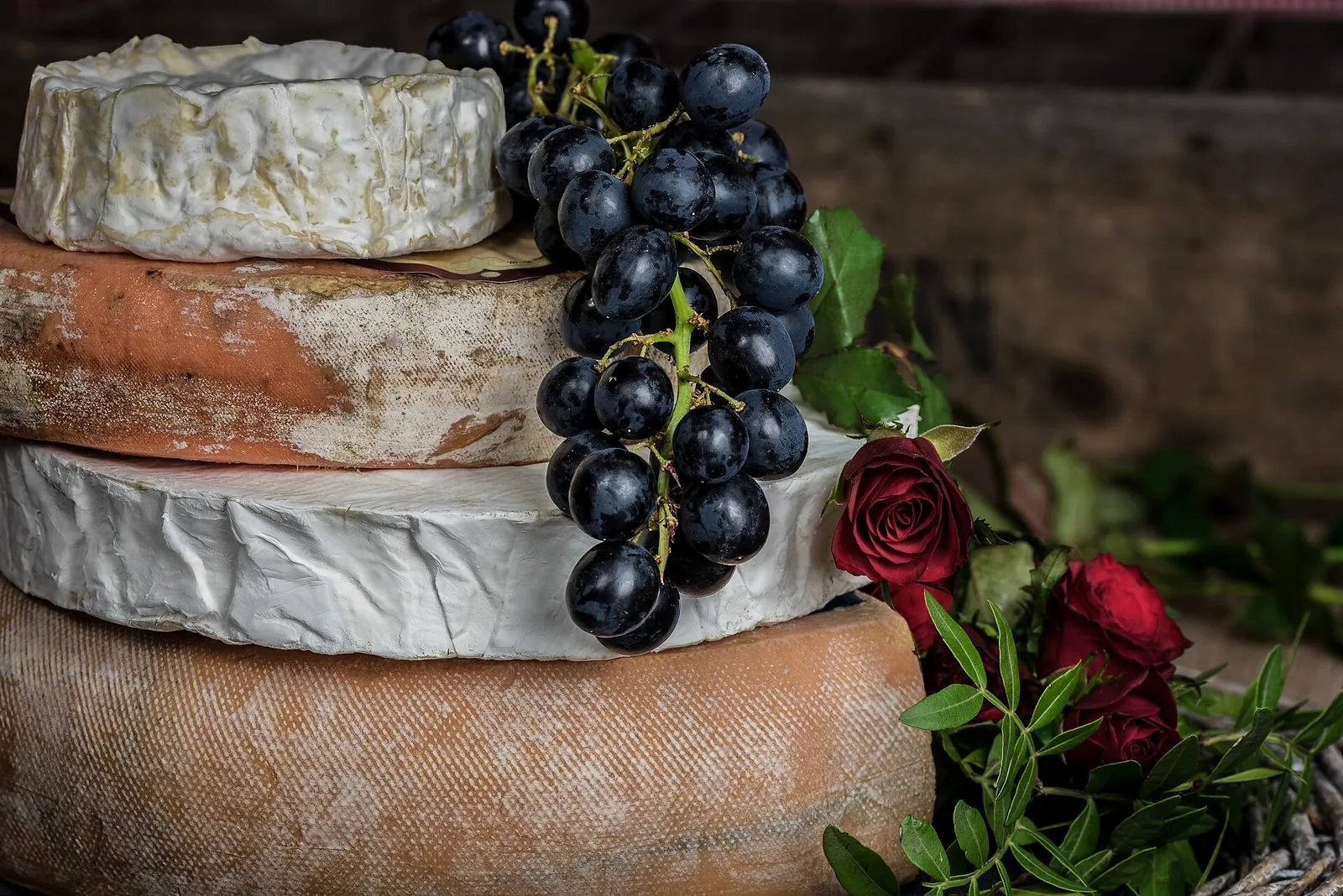
The simple rule is to match weight: delicate fruit with mild, fresh cheese, and concentrated fruit with strong, aged cheese.
Season does most of the choosing for you. Fruit at its peak needs almost nothing done to it, and fruit out of season is better dried. This page runs through the year, then covers dried fruit and fruit pastes. Honey has its own page in cheese and honey, and the sweet preserves are in cheese and jam, chutney and mostarda.
Cheese and fruit pairings at a glance
This cheese and fruit table lists the matches that work most reliably, with the reason each one does.
| Fruit | Cheese | Why it works |
|---|---|---|
| Pear | Gorgonzola, Stilton | Soft sweetness against salty, sharp blue |
| Apple (crisp, tart) | Cheddar | Acid and crunch cut a dense, savory cheese |
| Fresh fig | Chèvre, blue cheese | Jammy sweetness against tang or salt |
| Grapes | Almost anything, especially Brie | Juice refreshes the mouth between rich bites |
| Berries | Fresh goat cheese, mascarpone | Tart fruit against a mild, creamy base |
| Peach or apricot | Ricotta, young goat cheese | Summer sweetness on a cool, plain cheese |
| Dried apricot | Comté, aged Alpine cheese | Chewy tartness beside a nutty, savory cheese |
| Dates | Parmigiano, blue, Manchego | Deep sweetness holds up to salt |
Each pairing here is guidance rather than a rule. The point is contrast, so if a cheese tastes sharp, reach for something sweeter, and if it tastes sweet and mild, reach for something tart.
Fruit with cheese by season
Fruit with cheese changes through the year, and buying what is in season gives you the sweetest fruit and the best price. The seasons below are broad guidance for the US, and local harvests vary.
Spring fruit with cheese
Spring fruit with cheese starts light, because the first fruit of the year is tart and delicate. Strawberries and rhubarb compote suit fresh goat cheese, ricotta and mascarpone, where a mild cream base lets the acid show. Skip strong blues this early in the year, since they flatten delicate fruit.
Summer fruit with cheese
Summer fruit with cheese is the easiest season, because juicy fruit is at its best. Peaches, apricots, cherries and berries go with ricotta, burrata, fresh mozzarella and young goat cheese. Melon is a classic with salty cured meat, and a mild cheese on the side keeps the plate from tasting too sweet. Slice stone fruit just before serving so it does not weep onto the cheese.
Fall fruit with cheese
Fall fruit with cheese is the most classic season: apples, pears, grapes and fresh figs arrive together. Crisp, tart apples suit cheddar and the Alpine cheeses. Ripe pears suit blues such as Gorgonzola and Stilton, and the blue cheese pairing guide covers more of those matches. Choose pears that give slightly at the neck, because a hard pear tastes of little and a mushy one turns grainy on a board.
Winter fruit with cheese
Winter fruit with cheese leans on citrus, pomegranate and fruit from storage. Pomegranate seeds add crunch and tartness over soft cheese, and thin slices of blood orange or clementine cut a rich, washed rind or a heavy blue. This is also when dried fruit does the most work, since fresh fruit is thin on the ground.
Dried fruit with cheese
Dried fruit with cheese works because drying removes water and concentrates the sugar, so a single piece tastes far sweeter than the fresh fruit did. That intensity stands up to strong, salty and aged cheeses that would swamp fresh fruit.
Dried figs and dates go with blue cheese, aged cheddar, Parmigiano and Manchego. Dried apricots, which keep a tart edge, suit nutty Alpine cheeses and cheddar. Raisins and dried cherries are good with sheep's-milk cheeses, and dried cranberries are a reasonable stand-in when nothing else is in the pantry.
Two practical points. Buy unsulfured or plain dried fruit if you want the real flavor, and chop large pieces so nobody takes a whole date in one bite. And a date stuffed with a little blue cheese or goat cheese is one of the easiest appetizers you can put out.
Fruit paste and membrillo with cheese
Fruit paste with cheese is the bridge between whole fruit and jam. The best known is membrillo, a firm Spanish paste made from quince, and it is the classic partner for Manchego.
Great British Chefs notes that quinces are very high in pectin, so membrillo sets with nothing but fruit and sugar. The recipe uses equal weights of sugar and quince purée, cooked slowly for about an hour to a dark amber color. The high sugar content preserves it, and the same source says it keeps for months in the fridge. You can buy it ready made in blocks at most cheese counters.
Cut membrillo into thin slabs and set a slice on a slice of cheese, rather than spooning it on the side. The paste is sweet enough that a thin layer is plenty.
How to put fruit on a cheese board
Fruit on a cheese board should add contrast and not bulk, so one fresh fruit and one dried fruit is enough for most boards. Pick the fresh one by season, and the dried one by the strongest cheese you are serving.
Wash and dry fruit well, slice apples and pears at the last minute (a little lemon juice slows browning), and cut figs in half to show the inside. Cut cheese should not sit out for long: USDA guidance is that perishable food should not be left out more than 2 hours, or 1 hour above 90°F, so refill the board in small amounts. Opened hard cheese keeps 3 to 4 weeks in the fridge per USDA FoodKeeper, so buying ahead is safe. For amounts, the cheese board guide and the board builder use about 2 oz of cheese per person as an appetizer.
Cheese and fruit mistakes that cost you flavor
Cheese and fruit mistakes are mostly about mismatched strength. A very mild fruit vanishes next to an aged cheese, and a very sweet fruit makes a mild cheese taste flat.
- Pairing hard, underripe fruit with a soft cheese, so neither has any flavor.
- Serving fruit straight from the fridge. Cold dulls sweetness, so let it sit out for about 20 minutes.
- Piling on dried fruit until the board tastes like dessert. Two kinds are plenty.
- Putting citrus next to a delicate bloomy rind, where the acid overwhelms it.
- Forgetting a knife for the fruit, so juice ends up on the cheese.
Questions about cheese and fruit
These questions about cheese and fruit come up most when people plan a board.
What fruit goes best with cheese?
The fruit that goes best with cheese is a crisp apple, a ripe pear or a bunch of grapes, because all three work with a wide range of cheeses. Figs and dates are better with blue and aged cheeses.
What dried fruit goes with cheese?
Dried fruit that goes with cheese includes figs and dates for blue and aged cheeses, and apricots for Alpine cheeses and cheddar. Pick the one that matches the cheese's strength.
What fruit goes with blue cheese?
Fruit that goes with blue cheese is pear first, then fresh or dried figs and grapes. The sweetness softens the salt and sharpness of the blue.
Can you serve cheese and fruit as dessert?
Cheese and fruit as dessert works well with a mild or creamy cheese, fresh fruit and a drizzle of honey or a spoon of membrillo. It is lighter than a sweet course and easy to prepare ahead.
What fruit goes with brie?
Fruit that goes with brie is grapes, apples, pears and fresh figs, plus a spoon of fruit preserve. Brie is mild and creamy, so it takes tart or juicy fruit well.
Choosing cheese and fruit
For cheese and fruit, buy what is in season, match mild with mild and strong with strong, and keep a pack of dried figs or apricots in the pantry for the months when fresh fruit is poor. Try a ripe pear with a wedge of blue, or a thin slice of membrillo on Manchego, as your first test. For crunch to go alongside, see cheese and nuts.
Sources
- Quince Cheese (Paste) Recipe, Great British Chefs
- Leftovers and Food Safety, USDA Food Safety and Inspection Service
- FoodKeeper App, FoodSafety.gov (USDA)