
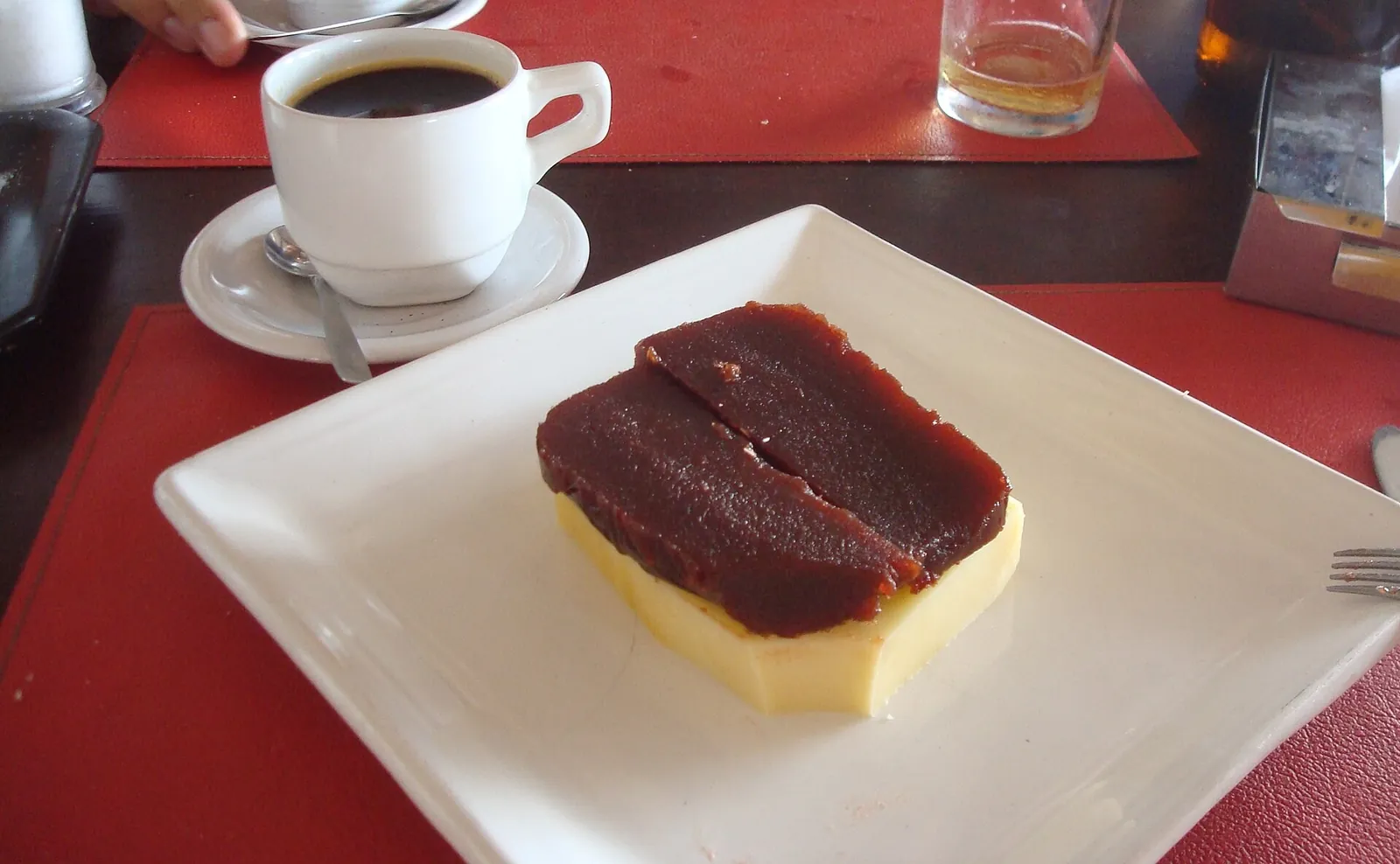
Pair sweet jam with salty or pungent cheese, spiced chutney with sharp cheddar, membrillo with Manchego, and mostarda with firm, aged cheese.
The four preserves behave differently. Jam is mostly sweet. Chutney adds vinegar and spice. Membrillo is a firm paste you slice. Mostarda is candied fruit with a mustard kick. Honey, the other board sweetener, has its own page at cheese and honey, so it is left out here.
Cheese and jam pairings at a glance
This cheese and jam table sets each preserve against the cheese it suits and the reason why.
| Preserve | Cheese | Why it works |
|---|---|---|
| Fig jam | Roquefort, Gorgonzola, chèvre | Deep sweetness against salt or tang |
| Cherry jam | Ossau-Iraty | Tart fruit against a nutty sheep's-milk cheese |
| Apricot jam | Comté, Brie | Soft sweetness against creamy or nutty |
| Berry jam | Cream cheese, fresh goat cheese | Tart fruit against a mild, creamy base |
| Onion chutney | Cheddar | Savory sweetness against a sharp cheese |
| Spiced fruit chutney | Aged cheddar, blue cheese | Spice and acid against pungent cheese |
| Membrillo | Manchego | Firm sweetness against salty sheep's milk |
| Mostarda | Parmigiano, aged Gouda, aged firm cheese | Sweet and mustard heat against salt |
All of this is guidance. If a pairing tastes too sweet, add acid, and if it tastes too sharp, add something with more fruit.
Jam with cheese
Jam with cheese is the easiest of the four to start with, because everyone has a jar. The sugar in jam balances salt, and the fruit acid cuts fat.
Fig jam is the most flexible: it suits blue cheese, goat cheese and brie. Cherry jam is a Basque habit with sheep's-milk cheese, and Ossau-Iraty is the cheese to try. Apricot and peach jam suit Alpine and creamy cheeses, and a tart berry jam suits cream cheese and fresh goat cheese.
Choose jam with a short ingredient list, mostly fruit and sugar, and a loose, spoonable set. Very sweet, gelatinous jam covers the cheese. A good test is to taste the jam alone: if it makes you wince, it will be too much on a mild cheese.
Chutney with cheese
Chutney with cheese is the British board habit, and it is a different thing from jam. Chutney is fruit or vegetables cooked with vinegar, sugar and spices, so it brings acid and spice as well as sweetness.
Sharp cheddar is the standard partner, and a ploughman's plate of cheddar, chutney, pickle and bread is the classic. Onion chutney suits cheddar and aged cheeses, apple chutney suits cheddar and washed rinds, and a mango or other spiced fruit chutney suits blue cheese and aged cheese. Mild, fresh cheese gets lost behind chutney, so keep it for cheeses with enough flavor to stand up.
Chutney varies a lot from jar to jar. Taste before you buy, and look for one where you can see pieces of fruit or onion.
Membrillo with cheese
Membrillo with cheese is the Spanish pairing, and Manchego is the cheese to start with. Membrillo is a firm paste of quince and sugar, and Great British Chefs notes that quinces are very high in pectin, so it sets without any added setting agent. The recipe there uses equal weights of quince purée and sugar, cooked for around an hour to a dark amber color.
Because it is firm, membrillo is cut, not spooned. Cut thin slabs and set one on a slice of Manchego. The same source says it can be cut into blocks to serve with cheese and keeps in the fridge for months, which makes it a convenient jar to have on hand. For the fruit itself, and for dried and fresh fruit generally, see cheese and fruit.
Mostarda with cheese
Mostarda with cheese is the Italian pairing that most US shoppers have not tried. Mostarda is, according to Wikipedia's entry on mostarda, a northern Italian condiment of candied fruit in a mustard-flavored syrup. Commercial versions use mustard essential oil, and home cooks may use mustard powder heated in white wine.
Mostarda di Cremona uses several fruits. Mostarda di Mantova uses small sour green apples, and the vicentina version is based on quince. It was traditionally served with boiled meats, the bollito misto, and it is now popular with cheese.
The mustard heat makes it strong, so use it with strong cheese: Parmigiano, aged Gouda, aged pecorino and blue. A teaspoon is plenty. Warn guests that it has a nose-clearing kick, since it looks like plain candied fruit.
How to serve jam and chutney on a cheese board
Serving jam and chutney on a cheese board takes one or two small bowls, each with its own spoon. One sweet and one savory is the usual choice, say fig jam and onion chutney, and that covers soft, firm and blue cheeses.
- Put the preserve beside the cheese it suits, not in the middle of the board.
- Set out a spoon for each bowl so no knife goes back into the jar.
- Add crackers or bread, as in cheese and crackers, for the preserve to sit on.
- Use about 2 oz of cheese a person as an appetizer, as in the board builder, and a tablespoon or so of preserve per person is plenty.
- Do not leave cut cheese out past about 2 hours, or 1 hour above 90°F, per the USDA's leftovers guidance.
Cheese and jam mistakes that cost you flavor
Cheese and jam mistakes come from too much sweet and too much of it. The cheese should still be the main flavor.
- Piling jam on a cracker until the cheese vanishes.
- Using a very sweet jam on a mild cheese, where it tastes like dessert.
- Pairing chutney with fresh cheese, where the vinegar drowns the milk.
- Serving mostarda without a warning.
- Serving everything at once, so each cheese tastes the same. Stick to one or two preserves.
Questions about cheese and jam
These questions about cheese and jam are the ones that come up most.
What jam goes with cheese?
The jam that goes with cheese is most often fig, then apricot, cherry and berry. Fig suits blue and goat cheese best, and berry suits cream cheese.
What is the difference between jam and chutney for cheese?
Jam and chutney differ in that jam is sweet fruit and sugar, while chutney also has vinegar and spices. Chutney suits sharp, firm cheese, and jam suits creamy or salty cheese.
What goes with cheddar, jam or chutney?
Chutney goes best with cheddar, especially onion or tangy fruit chutney. Jam is more of a match for brie, goat cheese and blue.
What is membrillo and what cheese does it go with?
Membrillo is a firm quince paste from Spain, and it goes with Manchego and other firm, salty cheeses. Serve it in thin slices.
What is mostarda and how do you eat it with cheese?
Mostarda is Italian candied fruit in a mustard-flavored syrup, and you eat it in small amounts with aged, strong cheese. A teaspoon beside the cheese is enough.
Choosing cheese and jam
For cheese and jam, buy one sweet and one savory preserve: fig jam and an onion or apple chutney cover most boards. Add membrillo if you have Manchego, and mostarda if you have a firm aged cheese. Start with a spoonful, taste, and add more only if the cheese can take it. Nuts add crunch, and cheese and nuts covers the picks.
Sources
- Quince Cheese (Paste) Recipe, Great British Chefs
- Mostarda, Wikipedia
- Leftovers and Food Safety, USDA Food Safety and Inspection Service