
Honey, ripe pears, figs and dessert wines all work, because sweetness rounds off the sharp, peppery bite that the blue mold creates, and a rich, bold partner holds its own where a delicate one disappears.
The second rule is to match strength. A soft, creamy blue is happy with a light touch, while a crumbly, salty one wants a partner with real sugar or weight. The rest of this page sorts drinks, sweet foods and savory foods by that logic. For how the cheese itself is made and why it is so salty, see the blue cheese guide.
Blue cheese pairing at a glance
This blue cheese pairing table shows the matches that work for most blues, grouped by what the partner does for the cheese.
| Partner | Why it works | Best with |
|---|---|---|
| Port, Sauternes, late-harvest wine | Sugar balances salt | Strong, crumbly blues |
| Stout, porter, barleywine | Roast and sweetness meet the funk | Bold blues |
| Honey | Sweet and smooth against salty | Any blue |
| Pears, figs, dates | Sweet fruit with some acid | Creamy and firm blues |
| Walnuts, pecans | Richness and crunch | Any blue |
| Steak, burgers, salads | Salt and fat meet fat and salt | Crumbles and sauces |
Wine with blue cheese
Wine with blue cheese should be sweet, or at least fruity and full, because a dry, delicate wine tastes thin and sour next to that much salt. Sweetness is the point. Sugar in the glass cancels out the saltiness on your tongue and lets the cheese's deeper flavors show.
Port with blue cheese
Port with blue cheese is the best-known match: a fortified wine with plenty of sweetness and weight that stands up to even the strongest blues. A tawny or ruby port in a small pour is plenty. The port and blue cheese guide covers the styles and why the pairing works.
Sauternes and other dessert wines
Sauternes and other dessert wines suit blue cheese for the same reason as port, only lighter and more honeyed. Late-harvest wines, ice wine and sweet sherry follow the same logic. As a guide, pick a sweet wine for a Roquefort or a salty Stilton, and a lighter one for a milder blue.
Dry red wine
Dry red wine can work with a mild, creamy blue if it is fruity and low in harshness, but it is the riskiest choice. Skip delicate dry whites, which a blue overwhelms. If the table drinks dry wine, put honey or fruit on the board so the sweetness is in the food instead.
Beer, cider and spirits with blue cheese
Beer, cider and spirits with blue cheese follow the same pattern: bold enough to match, with some sweetness to balance. Stout and porter bring roasted malt, and a barleywine adds sweetness. Sweet cider and ice cider work like a dessert wine. Bourbon, with its caramel and vanilla notes, makes a good small pour beside a strong blue. For a drink with no alcohol, a sweet apple juice or sweetened tea does the job, and the non-alcoholic pairings page has more.
Sweet foods for blue cheese
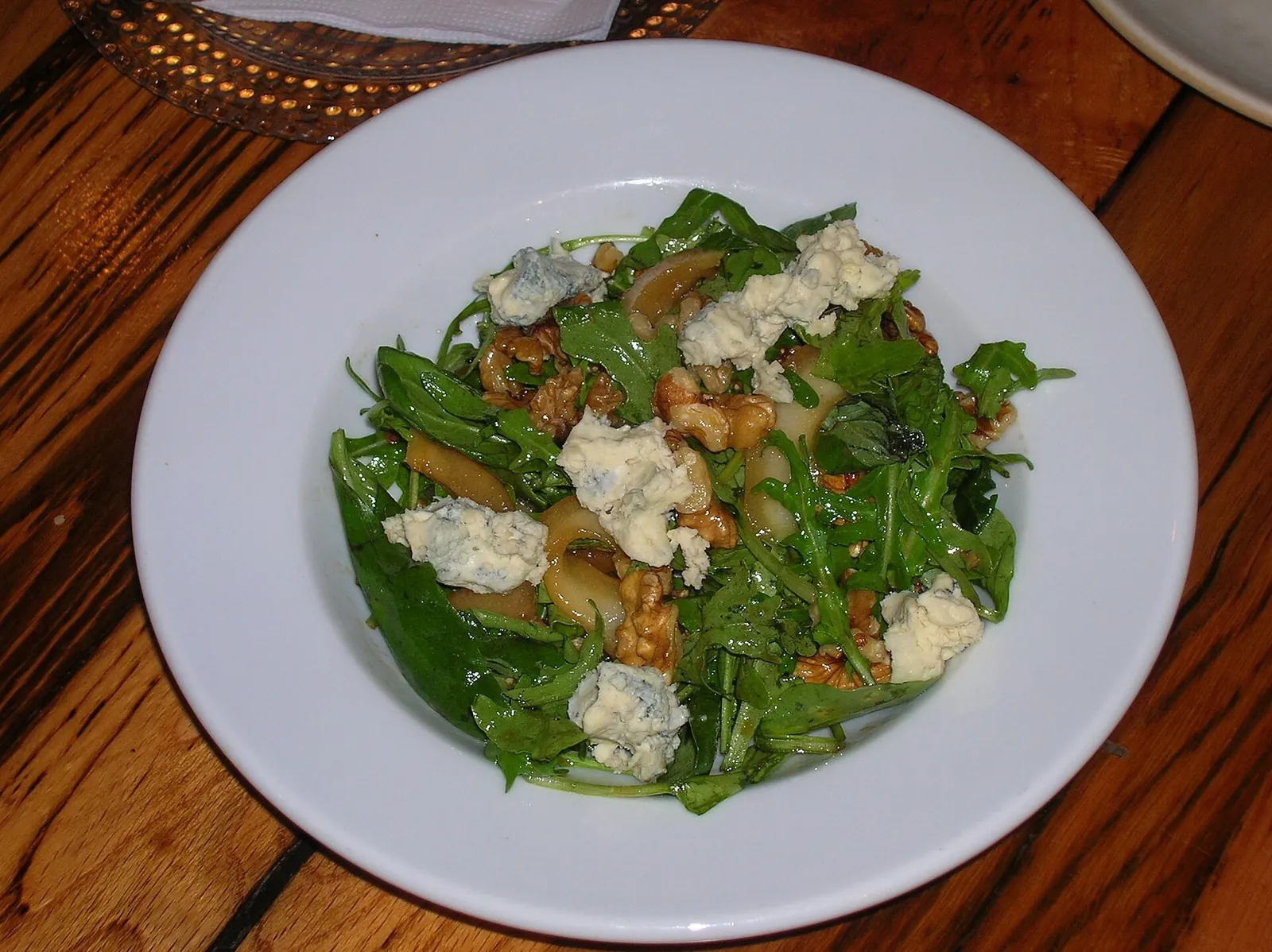
Sweet foods for blue cheese are the easiest wins, since there is no corkscrew involved. Honey drizzled over a wedge is the standard, and works with every blue. Ripe pears and fresh or dried figs add sweetness with a little acid, and dates give a sticky, caramel sweetness. Fig jam is a good spoonful on a cracker. Nuts add richness and crunch: toasted walnuts are the traditional choice, and pecans are a good second.
Savory foods with blue cheese
Savory foods with blue cheese work when the dish has fat and some sweetness to soak up the salt. Crumbled blue on a steak or burger, melted into a cream sauce, or tossed in a salad with pears and walnuts all do. Plain, neutral partners help too: a slice of baguette, an unsalted cracker or a boiled potato gives the cheese something to sit on. Salty crackers and cured meats stack salt on salt, so keep them modest on the same plate.
Blue cheese pairing by strength
Blue cheese pairing by strength means checking how long the cheese was aged and how salty it tastes before choosing. Gorgonzola shows the gap clearly: the Gorgonzola consortium describes dolce as creamy with a mild spice, aged at least 50 days, and piccante as firmer, crumblier and stronger, aged at least 80 days.
- Mild and creamy blues (Gorgonzola dolce, Cambozola, Saint-Agur): a lightly sweet wine, pear or honey, and gentle crackers.
- Strong and crumbly blues (Roquefort, Stilton, Cabrales, Gorgonzola piccante): port or Sauternes, dark honey, dates and walnuts, because these cheeses are strong enough to beat a delicate partner.
Blue cheese pairing mistakes to avoid
Blue cheese pairing mistakes usually come from too little contrast or too much salt. A dry, thin white wine, a salty cracker and a salty cured meat all push the same direction, and the cheese tastes harsher. Serving the blue straight from the fridge mutes it, so give it 30 minutes out, as the Gorgonzola consortium suggests for dolce. Cut cheeses should also not sit out for more than two hours, or one hour above 90°F, per University of Nebraska-Lincoln Extension, so put out half the wedge and keep the rest cold. And do not eat around the veins: they are the mold the cheese is made with, which USDA says is safe, though it advises trimming other surface mold from firm blues like Gorgonzola and Stilton by an inch.
Questions about blue cheese pairing
These questions about blue cheese pairing come up most often when someone is building a board or picking a bottle.
What is the best wine for blue cheese pairing?
The best wine for blue cheese pairing is a sweet or fortified one, such as port or Sauternes, because its sugar balances the salt.
What fruit goes with blue cheese?
Fruit that goes with blue cheese is ripe, sweet and a little acidic: pears, figs, dates and apples are the easiest.
Does blue cheese go with red wine?
Blue cheese goes with red wine only when the red is fruity and soft, and it works best with milder blues. A sweet wine is the safer choice.
Does honey go with blue cheese?
Honey goes with blue cheese very well: it is sweet and smooth against the salt, and a drizzle works on any style.
What beer goes with blue cheese?
Beer that goes with blue cheese is dark and full: stout, porter or a sweet barleywine.
What can you serve with blue cheese without alcohol?
Without alcohol, blue cheese goes with sweet apple juice, sweetened tea or sparkling cider-style drinks, plus honey and fruit on the plate.
Your first blue cheese pairing
For a first blue cheese pairing, buy a small piece of Gorgonzola dolce, set out a ripe pear, honey and a few walnuts, and add a small glass of port or a sweet dessert wine for guests who drink. Then try a stronger blue beside it and notice how much more sweetness the stronger one needs.
Sources
- The Gorgonzola, Consorzio per la Tutela del Formaggio Gorgonzola
- Charcuterie Boards and Food Safety, University of Nebraska-Lincoln Extension
- Molds on Food: Are They Dangerous?, USDA Food Safety and Inspection Service