
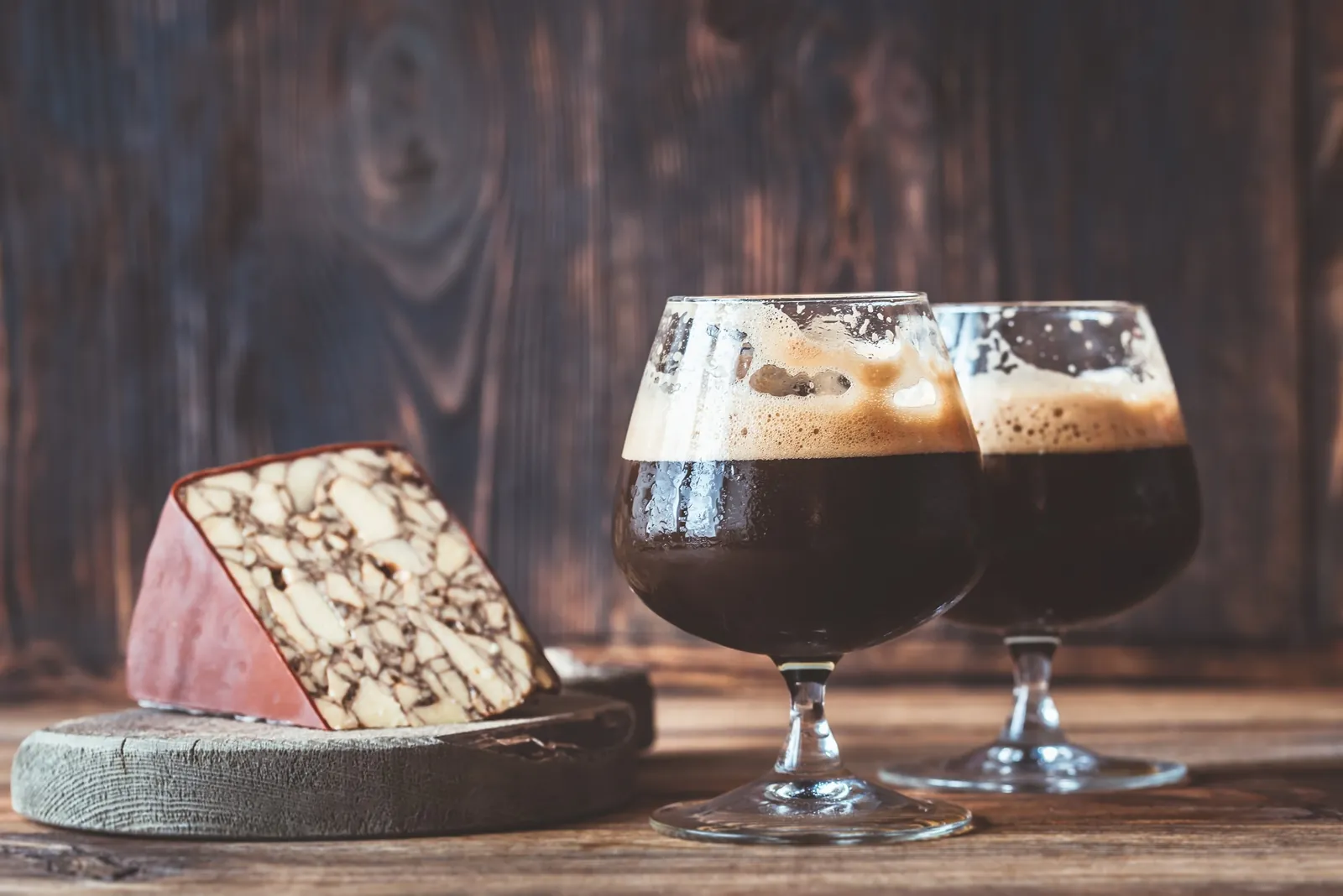
Beer is also forgiving, because the style range is wide enough that nearly every cheese has a match.
Two things beer does that wine cannot always do. Carbonation scrubs fat off your tongue between bites, and malt supplies bready, caramel and toasty flavors that line up with the browned, nutty notes of aged cheese. Hops add bitterness that balances malt's sweetness (see the beer overview), which can cut richness or clash with delicacy depending on how much of it there is. That last point is where most mismatches come from.
Beer and cheese pairing at a glance
This beer and cheese pairing table lists each style with the cheeses it suits and the reason, as guidance rather than rules.
| Beer style | Cheeses to try | Why it works |
|---|---|---|
| Pilsner, lager, Kölsch, wheat beer | Fresh mozzarella, feta, chèvre, young Gouda | Clean and fizzy, so it refreshes without covering mild flavors |
| Amber ale, brown ale, bock | Aged Gouda, Gruyère, Comté, cheddar | Caramel malt echoes the nutty, browned flavors |
| IPA | Sharp cheddar, aged Gouda | Bitterness cuts fat; the cheese needs enough flavor to hold up |
| Stout, porter | Stilton, other blues, aged cheddar | Roast and sweetness meet salt and tang |
| Belgian ale, saison | Washed-rind cheeses, Taleggio, Époisses | Spicy, yeasty notes meet funk |
| Sour, gose | Chèvre, feta, creamy bloomy rinds | Acidity plays like a squeeze of lemon |
The style categories above follow the families used in the Brewers Association beer style guidelines, which describe each style's color, flavor and strength.
Light beer and cheese: lagers, pilsners and wheat beers
Light beer and cheese is the easiest pairing in the guide, because a pilsner, Kölsch or wheat beer is clean enough to leave mild cheese alone. Fresh mozzarella, feta and chèvre are salty or tangy, and the cold fizz of a lager works the way a squeeze of lemon would.
Wheat beers with a little citrus suit goat cheese especially well. Skip hoppy lagers with the most delicate cheeses, since bitterness is the first thing you will notice.
Malty beer and cheese: ambers, browns and bocks
Malty beer and cheese is the most dependable match in the whole category. Caramelized malt echoes the same browned, nutty flavors that develop in aged cheese, so an amber or brown ale next to aged Gouda, Gruyère or Comté tastes like one flavor in two forms.
A bock, with its toasty sweetness, is a good partner for a firm cheese like Manchego or an aged cheddar. Choose beers that are malty rather than sweet, or the pairing turns cloying.
IPA and cheese: sharp cheddar and bold cheeses
IPA and cheese works when the cheese is strong and fatty enough to absorb the bitterness. Sharp cheddar is the textbook choice: the fat coats the tongue, the hops cut through it, and the cheese's sharpness stays visible. The aged versus young cheddar guide explains what to look for on the label.
The weak spot is delicate cheese. A very hoppy IPA beside fresh chèvre or a mild young cheese flattens it. If the beer is intensely bitter, pick the strongest cheese on the board.
Stout, porter and blue cheese
Stout and porter with blue cheese is the classic dark pairing: roasted malt tastes of coffee and chocolate, and it balances salt much as a sweet wine would. Stilton and other creamy blues work best, and the blue cheese pairing guide lists more. Stout and porter have historically been closely related, so the stout overview treats them together, and the advice here covers both. An aged cheddar is the milder alternative for guests who find blue too strong.
A sweeter, stronger beer such as a barleywine or imperial stout goes with the most intense blues. The wine-side equivalent is port.
Belgian ales, saisons and sours with washed-rind cheese
Belgian ales and saisons with washed-rind cheese follow a contrast-and-echo logic: peppery, fruity yeast notes sit comfortably beside the barnyard funk of Taleggio or Époisses. Sour beers and goses go the other direction, using acidity to cut cream, so they suit chèvre, feta and bloomy rinds like Camembert.
If a washed-rind cheese is very pungent, choose the stronger Belgian style. A pale, light beer disappears.
Beer and cheese pairing mistakes to avoid
Beer and cheese pairing mistakes usually come down to three habits, each easy to fix.
- Serving the beer too cold. Ice-cold beer numbs your tongue and hides malt. Take dark and malty beers out of the fridge 10 to 15 minutes early.
- Pairing two bold flavors that fight. A very bitter IPA with a very salty blue is a collision. Put a malty or sweet beer on the blue.
- Ignoring local pairings. A cheese and a beer from the same region have usually been drunk together for generations, so they are a safe starting point.
Pour small tastes, about 2 to 3 ounces, so guests can try several beers with one cheese. Start with the lightest beer and mildest cheese and work up, the same order as on a cheese board. For guests who do not drink, the non-alcoholic pairings page has options, including non-alcoholic beer styles worth trying.
Beer cheese dip is a different page
Beer cheese dip, the pub spread made by blending cheddar with beer, is cooking rather than pairing, and it has its own coverage in the cheese dips guide. If you want to pair a drink with the dip, a light lager works because it matches the beer in the recipe.
Questions about beer and cheese pairing
These beer and cheese pairing questions come up most often.
Is beer or wine better with cheese?
Beer is often easier than wine with cheese, because carbonation cuts fat and malt echoes aged-cheese flavors. Wine can win with some cheeses, so see the wine and cheese pairing guide too.
What beer goes with sharp cheddar?
Beer for sharp cheddar can be an IPA, whose bitterness contrasts with the fat, or a brown ale, whose caramel malt matches the cheese's savory side.
What beer goes with blue cheese?
Beer for blue cheese is a stout or porter for balance, or a barleywine for the strongest blues, because roast and sweetness offset the salt.
What beer goes with brie or Camembert?
Beer for brie or Camembert should be light and a little acidic: a wheat beer, saison or sour, so that the beer does not overwhelm the mild, creamy interior.
What is the best beer for a cheese board?
The best beer for a cheese board is a flight of three: a crisp lager, an amber ale and a stout, which together cover soft, firm and blue cheeses.
Your next beer and cheese pairing
For your next beer and cheese pairing, buy an amber ale and a wedge of aged Gouda, taste them together, then change one thing at a time: swap in an IPA, then a stout, and compare. The differences teach the rule faster than any chart.
Sources
- Brewers Association Beer Style Guidelines, Brewers Association
- Beer, Wikipedia
- Stout, Wikipedia