
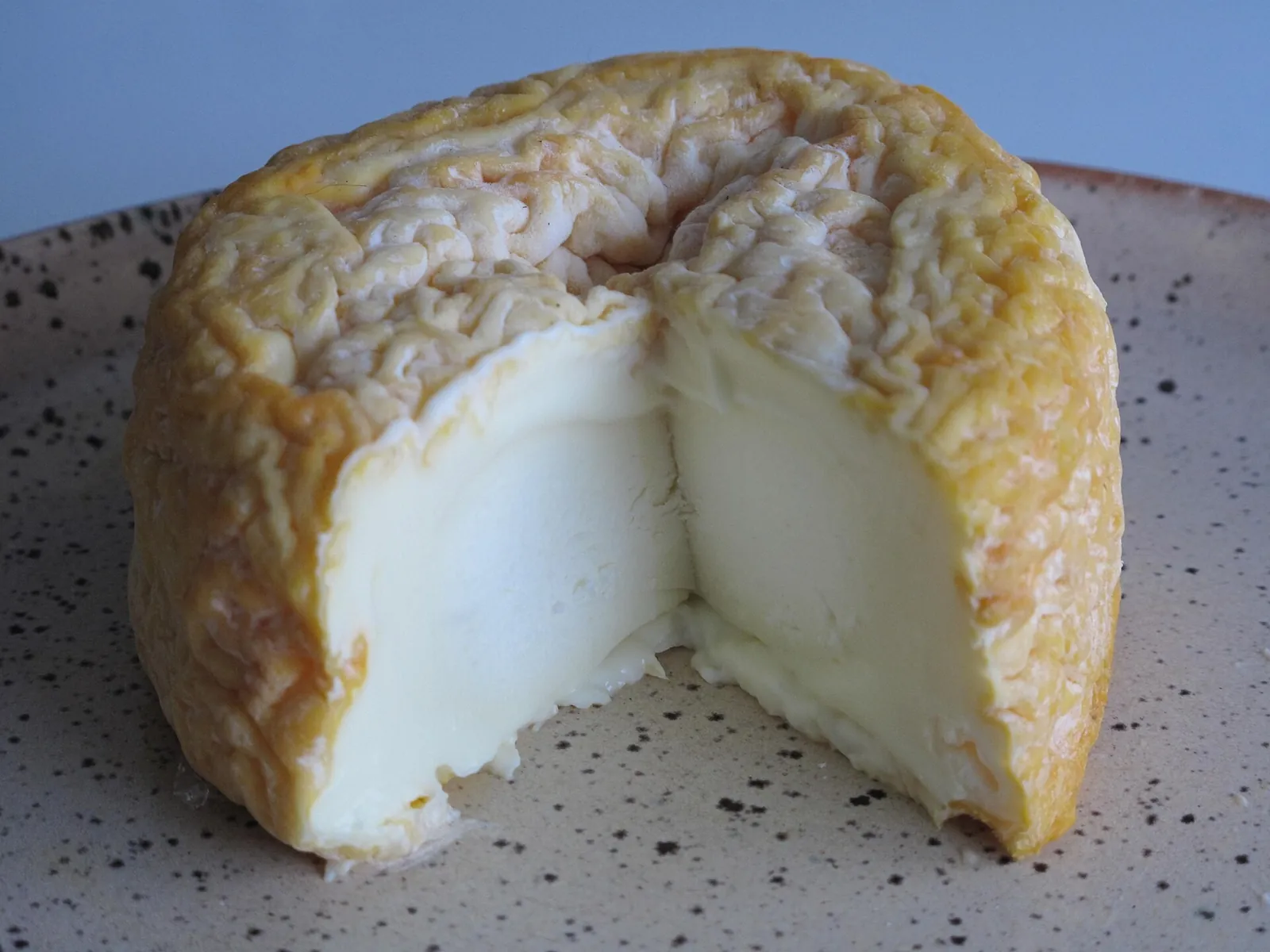
Start with a creamy cheese like Brie, a nutty aged Comté, or anything salty and fried.
The reason is mechanical, and you can use it. Cheese coats the palate with fat and salt. Acidity and bubbles scrub that coating away, so each bite tastes as fresh as the first, and a rich cheese never feels heavy. That is guidance, not law: a dry, high-acid sparkling wine will do the job even when the label does not say Champagne.
Champagne and cheese pairings at a glance
This table of Champagne and cheese pairings shows what each cheese gives the wine and which style of bottle suits it. Dry (brut) is the safe default for all of them.
| Cheese | What it brings | Wine style that suits it |
|---|---|---|
| Brie, Camembert | Butter, mushroom, soft fat | Brut, non-vintage |
| Triple-cream such as Brillat-Savarin | Very rich, very creamy | Brut or extra brut, very cold |
| Aged Comté | Nutty, brown butter, crystals | Brut with some age, or blanc de blancs |
| Parmigiano-Reggiano | Salt, savory depth | Brut or a dry sparkling red |
| Fried mozzarella, halloumi, cheese curds | Hot fat, salt | Brut, very cold |
| Fresh goat cheese | Tang, chalky texture | Brut or a crisp blanc de blancs |
| Blue cheese | Salt, funk | A sweeter style (demi-sec) |
Champagne and Brie
Champagne and Brie is the classic match because the bubbles lift the cheese's butter and the acidity tames the creamy center. A ripe wedge of Brie with a glass of non-vintage brut needs nothing else. Look for a rind that is bloomed white and a center that gives under a finger.
Triple-creams like Brillat-Savarin push the same idea further: they carry so much fat that they need the extra snap of a very dry, very cold bottle. The rind matters too. Bloomy rinds taste of mushroom and cellar, which is why a bottle with some yeasty, toasty character reads well beside them.
Champagne and aged Comté
Champagne and aged Comté is the pairing to pick when you want something more serious than Brie. Aged Comté turns nutty and sweet, with brown butter and sometimes small crunchy crystals, and those flavors echo the toasty, bready notes in a Champagne that has spent years on its yeast.
Slice the cheese thin or break it into shards, since a thick slice can overpower a delicate bottle. A blanc de blancs (made only from white grapes) is a clean, citrusy match; a fuller bottle with more age suits cheese that is closer to two years old. Gruyère and other Alpine cheeses behave the same way.
Champagne and fried or salty cheeses
Champagne and fried cheese works because hot fat and salt are exactly what bubbles and acid were made to cut. Think mozzarella sticks, halloumi fries, fried cheese curds or a golden slice of saganaki. A flute of cold brut next to a basket of fried cheese is a better match than a beer for many people, and cheaper than it sounds if you use a Cava or a Crémant.
Salty hard cheeses behave the same way. Chunks of Parmigiano-Reggiano with a dry sparkling wine is a long Italian habit: the salt makes the wine taste fruitier, and the wine makes the salt feel lighter. Skip very sweet sparkling wines here, they turn flat against salt.
Is it Champagne or sparkling wine?
Whether a bottle is Champagne or sparkling wine is a legal question as well as a taste one, because Champagne is a protected name. According to the Comité Champagne, the Champagne AOC is a national designation protecting the name, its production and its winemaking process, and the recognition dates back to 1936. The same page says the bubbles come from a second fermentation in the bottle, and that non-vintage Champagne must age at least 15 months in the cellar, vintage Champagne at least 3 years.
The name has been protected internationally since an 1891 treaty, reaffirmed in the 1919 Treaty of Versailles, Wikipedia summarizes; in the US it is barred on new American wine brands, with a grandfather clause for producers approved before 2006 that must also state the true origin, such as California.
So Prosecco, Cava, Crémant and English sparkling wine are not Champagne, and they are not meant to be. Each is a fine cheese partner. Match weight to cheese: lighter, fruitier Prosecco with fresh, mild cheeses; Cava with Spanish cheeses like Manchego; Crémant as a dry, near-Champagne choice with Brie. The general rules for any wine are in the wine and cheese pairing guide.
Champagne and cheese mistakes
The usual Champagne and cheese mistakes are about temperature and sweetness. Serve the wine cold, around fridge temperature, and take the cheese out of the fridge about half an hour ahead so it tastes of something. An ice-cold cheese and an ice-cold wine cancel each other out.
Sweetness is the other trap. Dry styles (brut and extra brut) suit most cheeses. A sweeter demi-sec wine is a deliberate choice for salty blues or a strongly flavored washed rind, not a default. And do not pair a delicate old Champagne with a pungent cheese, since the cheese wins.
For a party, one dry sparkling wine will carry a whole varied board, which is why it appears in the cheese board guide. Offer a non-alcoholic option too, such as the ideas in non-alcoholic pairings. Please serve alcohol only to adults.
Questions about Champagne and cheese
These questions about Champagne and cheese come up most often.
What cheese goes best with Champagne?
The cheese that goes best with Champagne is a ripe, creamy Brie or Camembert, with aged Comté and salty Parmigiano-Reggiano close behind. All three give fat or salt for the wine to cut.
Does Champagne go with fried cheese?
Champagne goes with fried cheese very well, since bubbles and acidity cut hot fat. Mozzarella sticks and halloumi fries are the easy places to start.
Can you use Prosecco or Cava instead of Champagne for cheese?
Prosecco or Cava instead of Champagne for cheese works fine. Choose a dry style and match the weight: Prosecco for mild cheese, Cava for Manchego.
Why is only wine from the Champagne region called Champagne?
Only wine from the Champagne region is called Champagne because the name is a protected appellation (AOC) with rules on area and production, according to the Comité Champagne.
Should Champagne be sweet or dry with cheese?
Champagne with cheese should usually be dry (brut). Save sweeter styles for salty blue cheese.
Pick your Champagne and cheese
For your first Champagne and cheese board, buy a ripe Brie, a piece of aged Comté and a bag of something fried, chill a brut bottle, and taste the three in that order. If the budget is tight, swap in a Cava or Crémant and keep the cheeses. Then try a still white from the same cheeses to compare.
Sources
- Champagne FAQ, Comité Champagne
- Champagne, Wikipedia
- Manchego, Wikipedia