
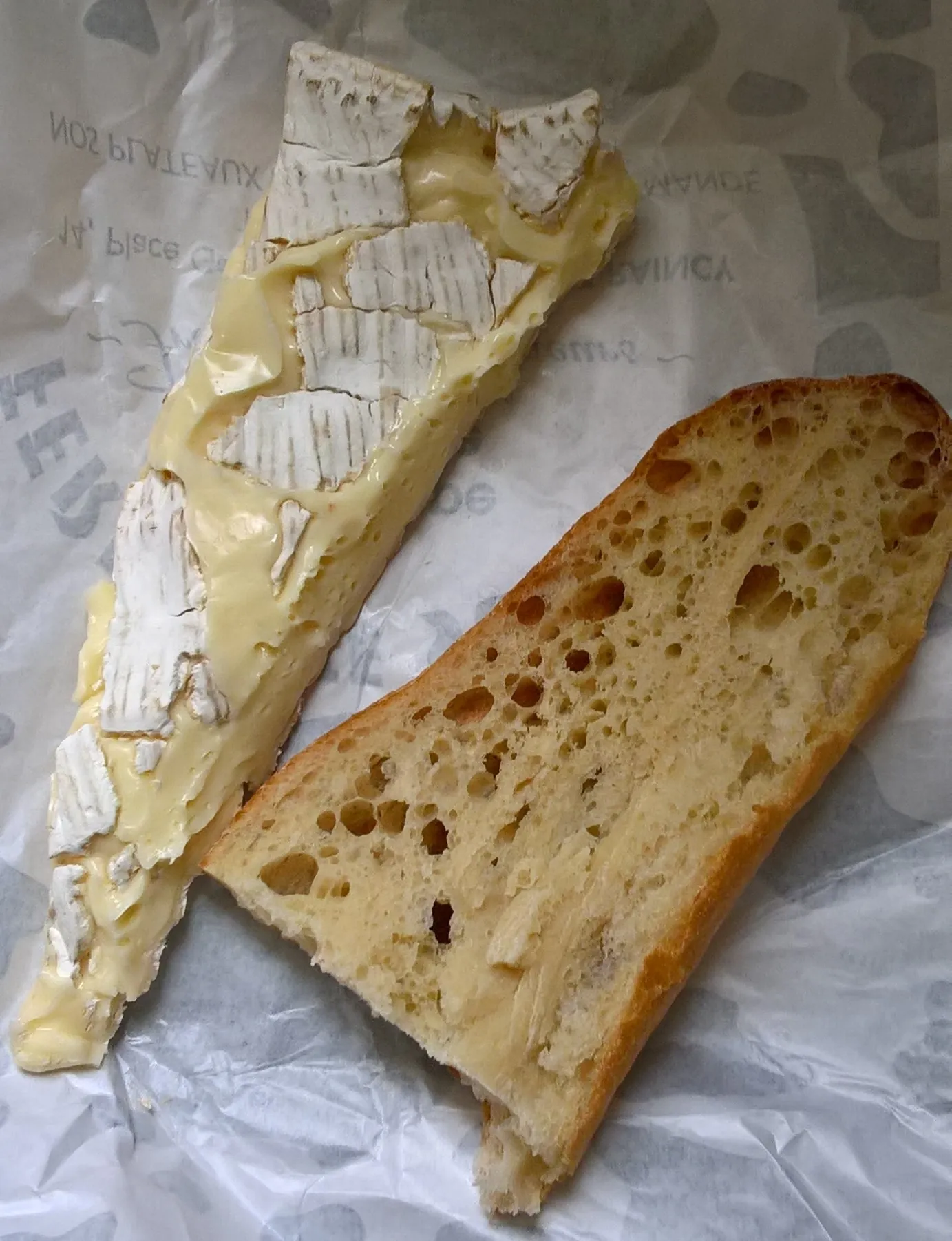
A baguette is the safe all-rounder, sourdough suits rich cheese, rye suits pungent cheese, and walnut or fruit bread suits blue.
Bread does what a cracker cannot: it is soft inside, so it cushions a hard cheese and soaks up a runny one. That is also why it needs choosing. A sweet, soft sandwich loaf gets lost beside a sharp cheese, while a heavy rye can flatten a delicate fresh one.
Cheese and bread at a glance
This cheese and bread table sets each bread style beside the cheeses it suits and why.
| Bread | Cheeses | Why it works |
|---|---|---|
| Baguette, ciabatta | Brie, camembert, chèvre, most cheeses | Crisp crust, neutral soft crumb |
| Sourdough, country loaf | Cheddar, Gruyère, creamy cheeses | Chew and tang meet richness |
| Rye, pumpernickel | Washed rind, Limburger, Munster, aged cheeses | Earthy, slightly sour, stands up to strong flavor |
| Walnut, raisin, fruit and nut | Blue, aged cheddar, goat cheese | Sweet and nutty against salty |
| Toast or grilled bread | Melting cheeses, raclette, baked brie | Crunch holds up to warm, runny cheese |
Baguette and crusty white bread with cheese
Baguette and crusty white bread go with cheese more broadly than any other loaf, because the crumb is plain and the crust adds crunch. A baguette suits a ripe brie or camembert, fresh goat cheese and almost any firm cheese. Ciabatta and a plain country loaf do the same job with a little more chew.
Slice on a slight diagonal, about half an inch thick, so each piece holds a knife of soft cheese. If the loaf has sat out since morning, a few minutes in a hot oven brings the crust back.
Sourdough with cheese
Sourdough with cheese works because its tang does what an acidic drink does: it cuts the fat in a rich cheese and clears the palate between bites. It suits creamy cheese, a nutty Gruyère, and sharp cheddar, and it is the standard choice for a grilled sandwich, where a sturdy, open crumb stays crisp. See how to make a perfect grilled cheese.
A mild, young cheese can taste flat beside a very sour loaf. If the sourdough is assertive, pair it with an aged cheese rather than a fresh one.
Rye bread with pungent cheese
Rye bread with pungent cheese is a classic because dense, dark, slightly sour bread is strong enough to share a plate with a cheese that smells loud. Limburger on dark rye with raw onion and mustard is the standard example, and the same bread suits Munster and other washed-rind cheeses. Rye is also a good base for aged Gouda and sharp cheddar.
Slice rye thin. It is dense, and a thick slab turns the cheese into a garnish. Pumpernickel is sweeter and darker, so try it with a milder washed-rind cheese first.
Walnut bread and fruit bread with blue cheese
Walnut bread and fruit bread suit blue cheese because they add sweetness and richness that balance salt and sharpness. A slice of walnut bread under a wedge of Stilton or Gorgonzola needs nothing else, and a drizzle of honey makes it a dessert. Raisin or fig bread works the same way with aged cheddar and goat cheese.
These loaves are already seasoned, so skip extra jam. If you want a spread, a little chutney is plenty.
Warm and toasted bread with cheese
Warm and toasted bread with cheese is the right call whenever the cheese is soft, baked or melted. Toast gives a crust that holds up under baked brie, raclette or fondue, and it stays crisp while the cheese stays soft. For a cold board, leave bread untoasted so it does not dry out.
Cheese and bread mistakes that cost you flavor
Cheese and bread mistakes usually come down to the bread being too sweet, too soft or too old. A soft, sweetened loaf crushes under a hard cheese and sweetens a salty one oddly. Stale bread makes any pairing worse, so slice shortly before serving, and wrap the loaf in a cloth rather than plastic to keep the crust.
Another mistake is serving only one bread. Offer two: a plain, crusty one and either rye or walnut. Add a few crackers for variety (see cheese and crackers).
Mind the cheese as well as the bread. The University of Nebraska-Lincoln advises that cut cheeses should stay at room temperature for no more than 2 hours total, or 1 hour above 90°F, so replenish a board from the fridge instead of leaving everything out.
Questions about cheese and bread
These questions about cheese and bread are the ones people ask most when planning a board or sandwich.
What bread goes best with cheese?
The bread that goes best with cheese is a crusty white loaf such as a baguette, because its plain crumb suits almost every cheese. Move to sourdough or rye as the cheese gets stronger.
What bread goes with pungent cheese?
The bread that goes with pungent cheese is dense, dark rye or pumpernickel. Its earthy, slightly sour flavor holds up against washed-rind cheeses such as Limburger.
What bread goes with blue cheese?
The bread that goes with blue cheese is walnut, raisin or fig bread, whose sweetness and richness balance the salt. Plain baguette with honey also works.
What bread goes with brie?
The bread that goes with brie is a baguette or a light country loaf, sliced thin or toasted. The plain crumb lets the buttery rind and paste stand out.
Is sourdough good with cheese?
Sourdough is good with cheese because its tang cuts richness, and it is especially good with cheddar, Gruyère and creamy cheeses.
Should bread be toasted for a cheese board?
Bread for a cheese board can be toasted if the cheese is warm or soft, but fresh, untoasted slices are better for a cold board.
Matching cheese and bread
Start with a baguette, add rye if a pungent cheese is on the board, and walnut bread if there is a blue. Slice just before serving and offer two loaves. The cheese board guide covers amounts and order, and the board builder works out the weights.
Sources
- Charcuterie Boards and Food Safety, University of Nebraska-Lincoln Extension
- Leftovers and Food Safety, USDA Food Safety and Inspection Service
- FoodKeeper App, FoodSafety.gov (USDA)