
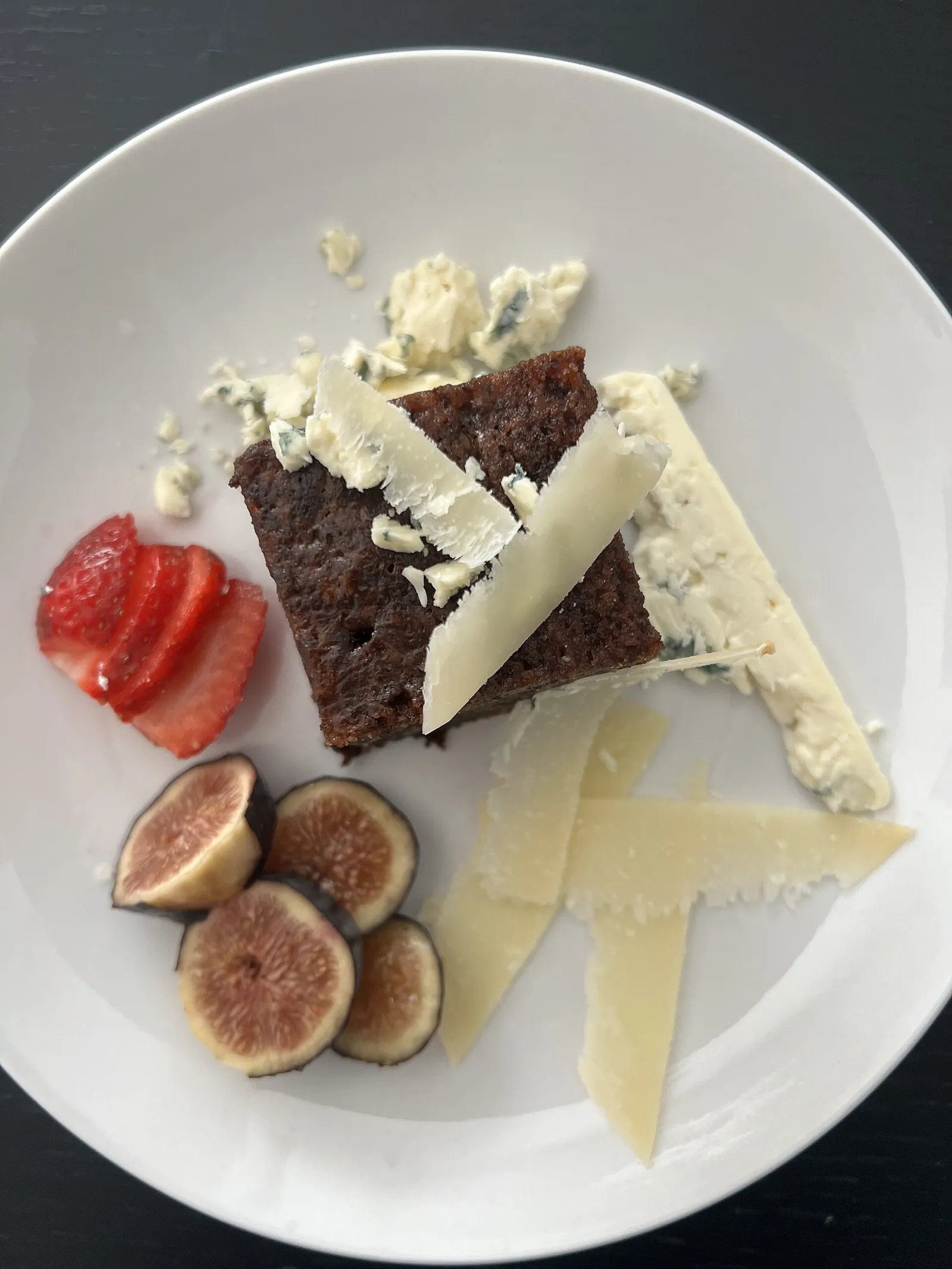
Both are rich, fatty and aged or fermented, so they share more than you would expect, and the match is either salty against sweet or caramel against caramel.
The three chocolates differ in what they contain, and that is what drives the pairing. According to Wikipedia's chocolate entry, dark chocolate is defined by its cocoa content, milk chocolate has the non-fat cocoa solids partly or mostly replaced by milk solids, and white chocolate has them all replaced by milk solids, so it contains cocoa butter but no cocoa solids. Less cocoa solids means less bitterness, more sweetness and more creaminess.
Cheese and chocolate pairings at a glance
This cheese and chocolate table shows which cheese goes with each type, as guidance for a tasting plate.
| Chocolate | Cheese | What happens |
|---|---|---|
| Dark | Blue cheese | Salt and pungency against bitter-sweet |
| Dark | Aged cheddar | Sharp, crumbly cheese against fruity cocoa |
| Milk | Aged Gouda | Caramel against caramel |
| Milk | Gruyère | Nutty cheese against milky sweetness |
| White | Mascarpone | Creamy against creamy, sweet against tang |
| White | Fresh goat cheese | Tang cuts the sweetness |
Dark chocolate and cheese
Dark chocolate and cheese is the classic pairing for bold cheeses. Bitterness, fruitiness and sometimes an earthy edge in the chocolate stand up to a blue, and the match works for the same reason that port with Stilton does: sweet and bitter against salty and pungent. Try a mild blue first, such as Gorgonzola dolce, before a sharp one.
Under the FDA standard, semisweet and bittersweet chocolate must contain at least 35 percent chocolate liquor. Much of the bitterness comes from compounds such as theobromine and caffeine, so a higher label percentage usually means a more bitter bar. Aged cheddar is the milder option. Its sharp, crumbly savor makes dark chocolate taste fruitier. A rule of thumb: the higher the cocoa, the stronger the cheese needs to be. A 70 percent bar suits a firm, sharp cheese, while a 55 percent bar is easier on gentler ones.
Milk chocolate and cheese
Milk chocolate and cheese works through shared flavors, not contrast. Aged Gouda has butterscotch and caramel notes, and milk chocolate has the same, so the two melt into a single flavor. Gruyère and other nutty Alpine cheeses work in the same way. Age is what builds the caramel flavor in Gouda, so check the label for the months.
Choose a cheese aged at least a year for this. A young, rubbery cheese has too little flavor to stand beside milk chocolate, and the chocolate wins.
White chocolate and cheese
White chocolate and cheese is the dessert route. It has cocoa butter and milk solids but no cocoa solids, so it is sweet, buttery and mild. The FDA standard for white chocolate requires at least 20 percent cacao fat, 3.5 percent milkfat and 14 percent total milk solids, and caps sweetener at 55 percent by weight, so check that a bar lists cocoa butter and not just vegetable fat. Mascarpone is the natural partner, since the cheese is creamy and lightly sweet already. Fresh goat cheese gives a tangy contrast, and a little fruit (raspberries, orange zest) ties it together.
Do not pair white chocolate with strong cheeses, which swamp it.
How to serve cheese and chocolate together
To serve cheese and chocolate together, build a small plate rather than a full board. Pick three cheeses and three chocolates, cut small pieces, and take both out of the fridge about 30 minutes ahead so the flavors open up. Serve the milder pairs first and the strongest last.
Taste the cheese first, then the chocolate, then both together: the chocolate melts slowly, so give it a moment. Garnishes should be simple. Honey, a few nuts or dried fruit are enough. For amounts, the usual guide of about 2 ounces of cheese per person as an appetizer applies; see the cheese per person guide.
For drinks, port or a sweet red wine suits dark chocolate and blue; see the red wine and cheese guide. For a non-alcoholic choice, black coffee or tea works, and the non-alcoholic pairings page has more.
Cheese and chocolate mistakes to avoid
Cheese and chocolate mistakes usually come from sweetness and strength. Very sweet chocolate flattens a mild cheese. Flavored chocolate (chili, mint, orange) can fight with the cheese, so start with plain bars. Cold chocolate and cold cheese taste of little, and a heavy cheese like a washed rind tends to clash with chocolate altogether.
Also watch the amounts: chocolate is rich, and one or two squares per cheese is plenty.
Questions about cheese and chocolate
These questions about cheese and chocolate cover the most common matches.
Does cheese go with chocolate?
Cheese goes with chocolate when you match intensity: dark with blue or aged cheddar, milk with aged Gouda, white with mascarpone.
What cheese goes with dark chocolate?
The cheese that goes with dark chocolate is a bold one, such as a blue or an aged cheddar, where salt and sharpness contrast with the bitterness.
What cheese goes with milk chocolate?
The cheese that goes with milk chocolate is aged Gouda or Gruyère, whose caramel and nutty notes echo the chocolate.
What cheese goes with white chocolate?
The cheese that goes with white chocolate is mascarpone or fresh goat cheese, which are creamy and tangy against the sweetness.
Is white chocolate real chocolate?
White chocolate is made with cocoa butter and milk solids but has no cocoa solids, per Wikipedia, so it lacks the bitterness of dark and milk chocolate.
Plan your cheese and chocolate plate
For your cheese and chocolate plate, start with blue and dark chocolate, aged Gouda and milk chocolate, and mascarpone with white chocolate. Taste small pieces, note which pair surprised you, and build the plate around that. For more ideas, see the pairing guide.
Sources
- Chocolate, Wikipedia
- 21 CFR 163.124, White chocolate, Legal Information Institute, Cornell Law School
- 21 CFR 163.123, Sweet chocolate, Legal Information Institute, Cornell Law School
- Dark chocolate, Wikipedia