
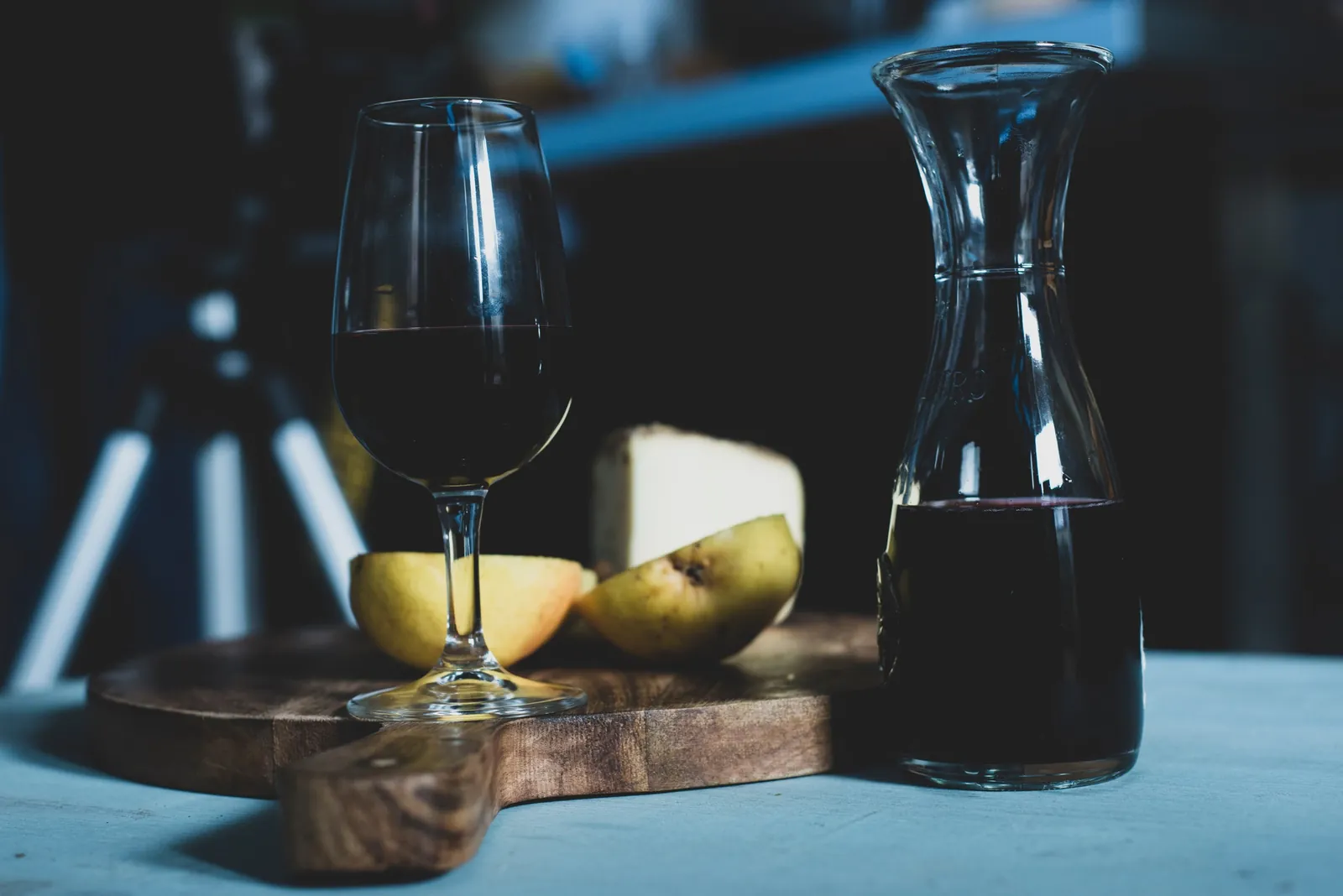
Aged cheddar, aged Gouda, Manchego and Parmigiano-Reggiano are the safe picks; fresh, soft or blue cheeses usually go better with something else.
This page covers reds only. For the general rules, see the wine and cheese pairing guide, and for crisp whites and goat cheese, the white wine and cheese guide.
Why red wine and cheese can clash
Red wine and cheese can clash because of tannin, the compound from grape skins and seeds that makes a red feel dry in the mouth. A review in Molecules describes how tannins bind salivary proteins and the resulting complexes reduce the lubricity of saliva, which is the dry, grippy feeling.
Against a delicate cheese, that grip is all you notice, and the pairing can taste bitter or metallic. Against a rich, fatty one, the cheese coats the mouth and the wine tastes smoother. That second effect is common wine-tasting guidance rather than something the review tests, but it is why the same Cabernet can taste harsh with a young goat cheese and mellow with aged cheddar.
Red wine and cheese matches by cheese
This red wine and cheese list is organized by cheese, with the red style that suits it and the reason. The wines are guidance; the cheese notes follow the producers' own advice where one exists.
| Cheese | Red that suits it | Why |
|---|---|---|
| Aged cheddar | Cabernet Sauvignon, Syrah | Fat and salt tame tannin |
| Aged Gouda | Merlot, Zinfandel | Caramel notes echo ripe fruit |
| Manchego | Medium-intensity aged red such as Rioja | Council's own advice |
| Parmigiano-Reggiano | Lambrusco, Pinot Noir, then bigger reds with age | Follows wheel age |
| Gruyère or Comté | Light red such as Pinot Noir | Nutty, not too strong |
| Taleggio | Fruity, low-tannin red | Soft tannin around a soft rind |
Red wine and cheese by wine style
Red wine and cheese also depends on temperature and amount. Take the cheese out about 30 minutes before serving so its fat softens and its flavor opens, and serve the red slightly below room temperature. Offer about 1 to 2 ounces of cheese per guest if dinner follows, and use the sip, bite, sip method to judge each pair. All of this is serving guidance, not a rule.
Red wine and cheese pairs more easily once you sort reds into light and bold, since the rule is to match weight.
Light reds with cheese
Light reds such as Pinot Noir and Beaujolais have soft tannins and bright fruit, so they are the most forgiving reds with cheese. Try them with mild firm cheeses like Gruyère, young Gouda or a nutty Alpine wheel. They are also the red to reach for when the board has a creamy Brie, where a heavy red would overwhelm it.
Medium reds with cheese
Medium reds such as Rioja and Chianti suit cheeses of medium strength. The Manchego council recommends medium-intensity aged reds for its sheep's-milk cheese, which fits a wine with balance rather than raw power. The Manchego page explains how its age changes the cheese.
Full-bodied reds with cheese
Full-bodied reds such as Cabernet Sauvignon and Syrah need the oldest, strongest cheeses on the board. The Parmigiano-Reggiano Consortium's pairing chart lists Lambrusco and smooth reds at 24 months, then full-bodied reds with bold tannins, including Cabernet Sauvignon, Merlot and Rioja, at 40 months. See Parmigiano-Reggiano for how to buy by age.
Red wine and cheese mistakes
Red wine and cheese mistakes are mostly about pairing a tannic wine with the wrong cheese. These are the ones that cause most disappointing boards.
- Big red with fresh goat cheese. The cheese is light and the wine is heavy, so the cheese disappears. Pour a white first; see the goat cheese pairing guide.
- Dry red with blue cheese. Salt and tannin clash. Blue is usually better with sweet wine, and the port and blue cheese guide explains why a fortified red works where a dry one does not.
- Red with washed-rind cheese. Strong, sticky rinds often fight tannin. A fruity, low-tannin red is the safest if you must.
- Serving the red too warm. A heavy red at a warm room temperature tastes alcoholic and flat; a slightly cool bottle keeps it fresh. This is general serving guidance.
- Judging only the wine alone. A tannic red tastes different after a bite of cheese. Sip, bite, sip again.
For a menu that plans cheeses and wines together, see the cheeses for wine night page.
Questions about red wine and cheese
These questions about red wine and cheese cover what to buy and what to avoid.
What cheese goes best with red wine?
The cheese that goes best with red wine is a firm, aged one such as aged cheddar, aged Gouda, Manchego or Parmigiano-Reggiano.
What red wine goes with cheese for beginners?
The red wine that goes with cheese for beginners is a light, low-tannin one such as Pinot Noir, which works with the widest range of cheeses.
Why does red wine taste bad with some cheeses?
Red wine tastes bad with some cheeses because its tannin feels harsh against delicate, fresh or very salty cheeses that lack the fat and body to balance it.
Does red wine go with brie?
Red wine goes with Brie only if it is light and fruity, as a heavy tannic red overwhelms the soft, creamy rind.
What red wine pairs with Parmigiano-Reggiano?
The red wine that pairs with Parmigiano-Reggiano depends on age: Lambrusco or Pinot Noir at 24 months, and fuller reds at 40 months, per the consortium.
Choose your red wine and cheese
Choose your red wine and cheese by starting with the cheese: buy something aged and firm, then match a red to its strength. A good first trio is a young Gruyère with Pinot Noir, a Manchego with Rioja and a 24-month Parmigiano-Reggiano with Lambrusco. Hold the blue and the goat cheese for another bottle, and keep a non-alcoholic option on the table for guests who skip wine.
Sources
- Wine and Grape Tannin Interactions with Salivary Proteins and Their Impact on Astringency: A Review of Current Research, Molecules
- 3 formas de maridar un queso Manchego, Consejo Regulador DOP Queso Manchego
- Wine and Parmigiano Reggiano, Consorzio del Formaggio Parmigiano Reggiano