
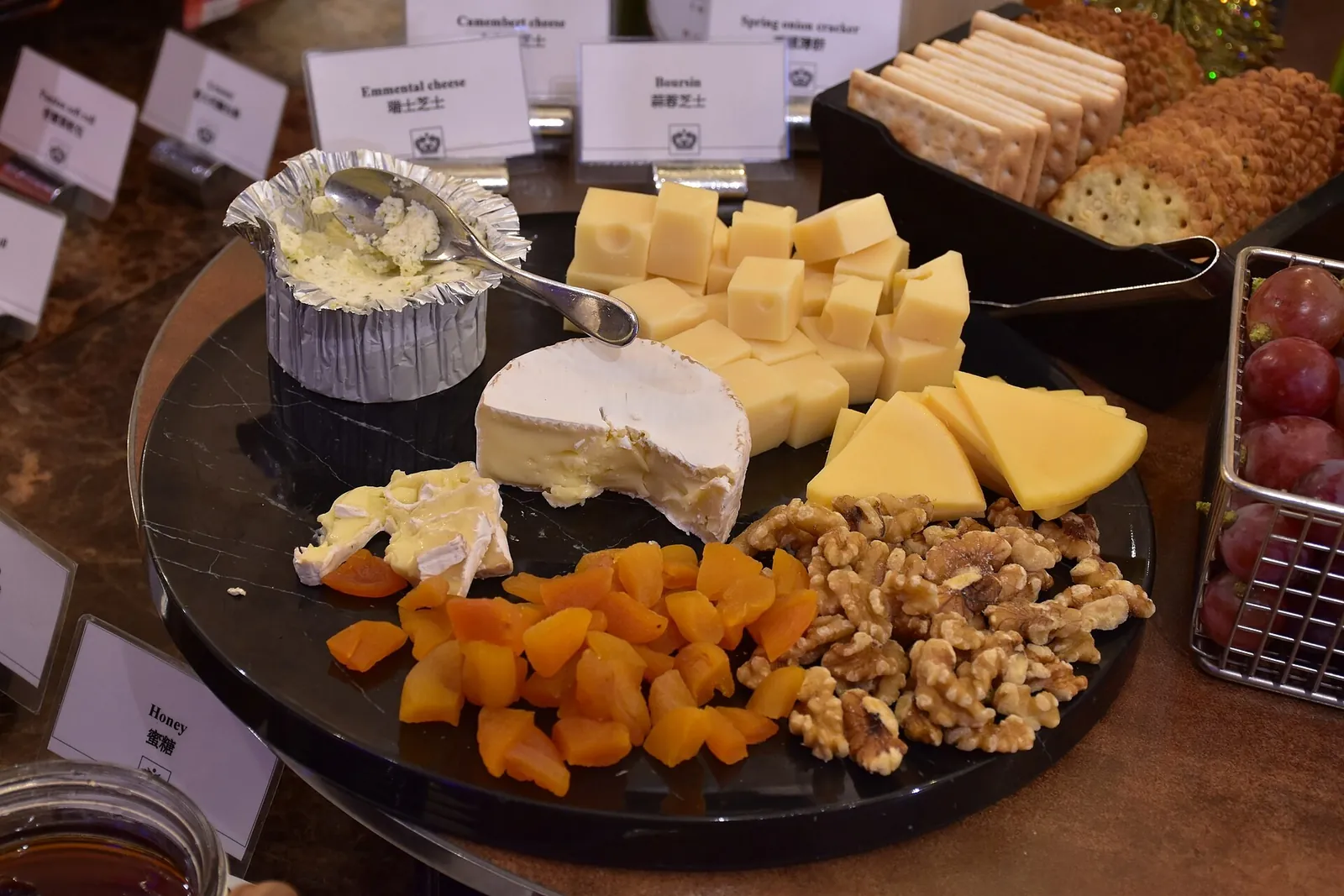
Walnuts go with blue, marcona almonds with Manchego, hazelnuts with Alpine cheese, and pecans with cheddar.
The pairing has two jobs. Texture is the obvious one: nothing on a board crunches like a nut. The other is flavor. Aged cheeses develop nutty, toasty notes, and a matching nut makes those notes easier to taste. If you want sweetness as well, add honey from cheese and honey or fruit from cheese and fruit.
Cheese and nuts pairings at a glance
This cheese and nuts table gives the standard matches and the reason behind each one.
| Nut | Cheese | Why it works |
|---|---|---|
| Walnut | Stilton, Gorgonzola, aged cheddar | Bitter, tannic edge against salty, creamy blue |
| Marcona almond | Manchego | Sweet, buttery nut against firm, tangy sheep's milk |
| Hazelnut | Comté, Gruyère, Beaufort | Echoes the nutty flavor of Alpine cheeses |
| Pecan | Cheddar, aged Gouda | Sweet, mellow nut against sharp or caramel-toned cheese |
| Pistachio | Chèvre, ricotta, feta | Green, slightly sweet crunch on fresh, tangy cheese |
| Almond (plain) | Brie, mild cheeses | Gentle crunch that does not compete |
These are guidance, not rules, and a mixed bowl of two or three nuts covers most boards without much thought.
Walnuts with cheese
Walnuts with cheese are the standard answer for blue. Walnuts have a slight bitterness from the thin skin, and that edge cuts through the salt and cream of Stilton or Gorgonzola. Aged cheddar and goat cheese also take walnuts well.
Buy halves rather than pieces, since they stay fresher, and taste one first. Walnuts go rancid sooner than most nuts, and a stale walnut tastes like old paint and ruins the cheese beside it. Toasting for a few minutes in a dry pan brings out the flavor and softens the bitterness a little.
Almonds and marcona almonds with cheese
Marcona almonds with cheese are a Spanish tapas habit, and they are the classic partner for Manchego. The Slow Food Foundation's Ark of Taste describes the Marcona almond as plump and round, with a sweet taste and very low bitterness, and traces it to the province of Alicante in southeast Spain. The name comes from an Arabic word meaning "round."
That sweetness and softness is the reason they suit Manchego: they give a rich contrast to a firm sheep's-milk cheese with some tang. Marconas are usually sold fried in oil and salted, which is how most US shops stock them. Because they are already salty, pair them with the less salty cheeses, or put out plain almonds for a very salty one.
Regular almonds are a quieter choice. They work with brie, fresh cheeses and mild cheddar because they do not compete.
Hazelnuts, pecans and pistachios with cheese
Hazelnuts, pecans and pistachios with cheese each have their own best match, and none of them is as universal as the walnut.
Hazelnuts with cheese
Hazelnuts with cheese are best with Alpine styles such as Comté, Gruyère and Beaufort. Those cheeses taste nutty and a little sweet, and a toasted hazelnut makes the likeness obvious. Rub off the loose skins after toasting, since they are bitter.
Pecans with cheese
Pecans with cheese suit cheddar and aged Gouda. Pecans are sweeter and softer than walnuts, so they do not fight a sharp cheddar. A handful of candied or maple-roasted pecans makes a good bridge to dessert.
Pistachios with cheese
Pistachios with cheese work best on fresh cheeses. Chopped pistachios over ricotta or a log of fresh goat cheese give color and crunch, and they taste good with feta and with honey. Use shelled, unsalted nuts when you can.
Candied and spiced nuts with cheese
Candied and spiced nuts with cheese add a third flavor and turn a savory board a little sweeter. Use them with the cheeses that can carry sugar: blue, aged cheddar and aged Gouda. They are less good with fresh cheese, where the sugar tastes heavy.
Keep them to one bowl, and put them near the blue instead of scattering them everywhere. A little goes a long way.
How to serve nuts on a cheese board
Serving nuts on a cheese board is easiest in a small bowl, or in a scatter of one or two kinds between the cheeses. A bowl keeps loose nuts from rolling under the cheese and gives guests something to grab.
- Toast raw nuts in a dry skillet over medium heat for 3 to 5 minutes, until they smell warm, and cool them before serving.
- Pick unsalted nuts when the cheese is salty, and salted nuts for mild cheese.
- Allow about a small handful of nuts per person on a board.
- Label the nuts. Nut allergy is a real concern for guests, so keep nuts in their own bowl and let people ask about them. Where a guest has an allergy, stay with the host's guidance and the advice of the guest's doctor.
- Keep the board's cheese within safe limits. Cut cheese can stay out about 2 hours, or 1 hour above 90°F, per the USDA's leftovers guidance.
Opened hard cheese keeps 3 to 4 weeks in the fridge per USDA FoodKeeper. The cheese board guide has amounts and order, and the board builder plans quantities by headcount.
Cheese and nuts mistakes that cost you flavor
Cheese and nuts mistakes are mostly about freshness and salt. The usual ones are stale nuts, too much salt and too many kinds.
- Using old nuts. Rancid nuts taste bitter and sour, and they overpower a delicate cheese.
- Salted nuts with a salty cheese. Doubling the salt makes both taste harsh.
- Crushing nuts into a mess on a creamy cheese, where they get soggy. Add them just before serving.
- Using three or four kinds of nut. Two is plenty.
Questions about cheese and nuts
These questions about cheese and nuts come up most often.
What nuts go best with cheese?
The nuts that go best with cheese are walnuts, almonds and hazelnuts. Walnuts are the most versatile, particularly with blue and aged cheese.
What nut goes with Manchego?
The nut that goes with Manchego is the marcona almond, a sweet, soft Spanish almond that is usually sold fried and salted. Plain almonds are a good second choice.
What nuts go with blue cheese?
The nuts that go with blue cheese are walnuts and pecans. Walnuts add a bitter edge, and pecans add a softer sweetness.
Should you toast nuts for a cheese board?
You should toast nuts for a cheese board, because heat brings out their oils and flavor. Three to five minutes in a dry pan, then cool them.
Can you pair cheese and nuts with wine?
Cheese and nuts can be paired with wine, and the usual rule is to follow the cheese. See the wine and cheese pairing guide for choices, and the non-alcoholic pairings page for other drinks.
Choosing cheese and nuts
For cheese and nuts, start with a wedge of blue and a bowl of toasted walnuts, or Manchego and marcona almonds, and add one more nut if the board is large. Buy small amounts of fresh nuts, toast them just before the party, and keep the salted ones away from the saltiest cheese. For sweet preserves to go with them, see cheese and jam, chutney and mostarda.
Sources
- Almendra Marcona (Marcona Almond), Slow Food Foundation, Ark of Taste
- Leftovers and Food Safety, USDA Food Safety and Inspection Service
- FoodKeeper App, FoodSafety.gov (USDA)