
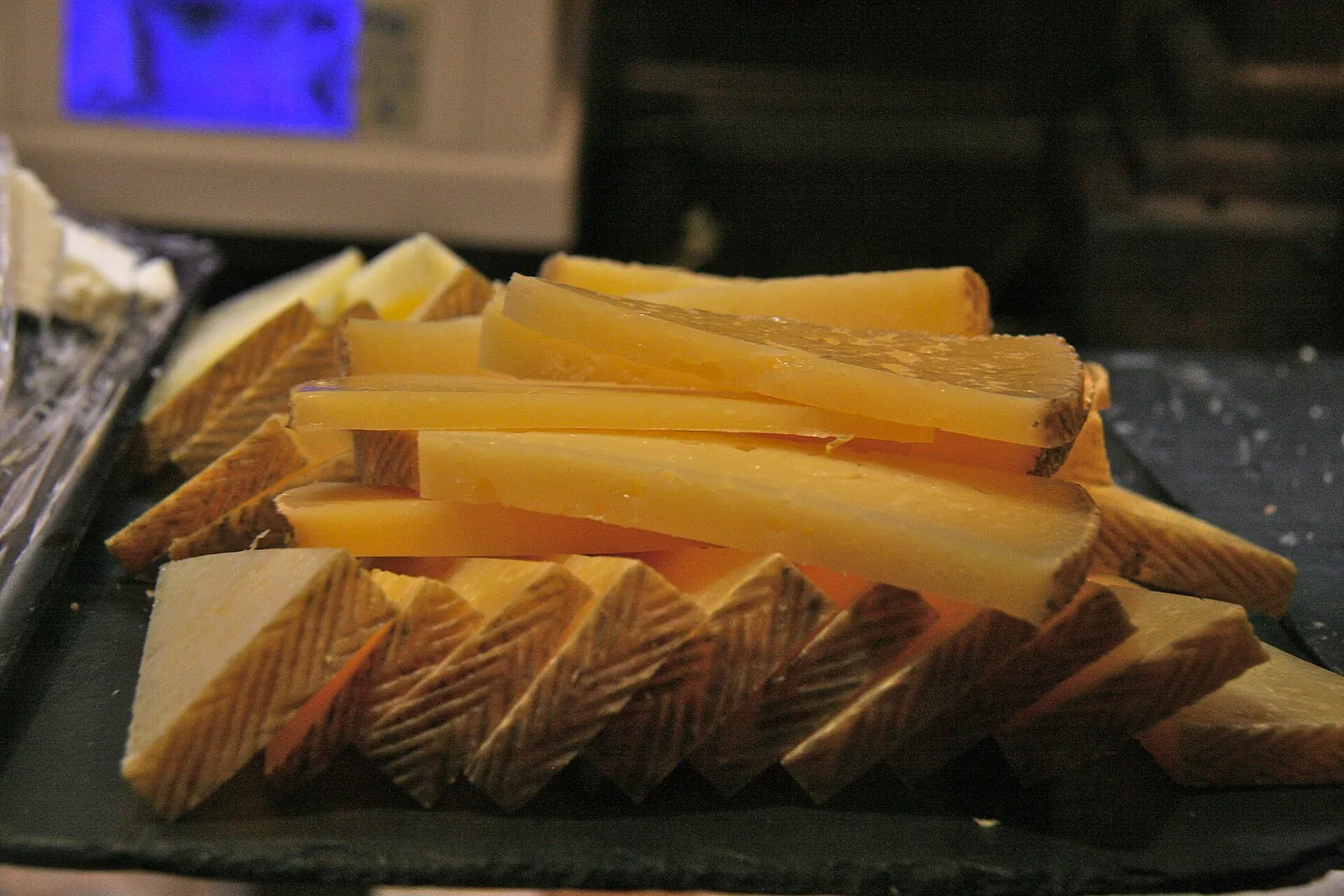
It is sharp, salty and savory, a close cousin of Manchego that is less famous.
It earns attention on its own: a 100-day minimum means even the youngest wedge has real depth.
Zamorano cheese at a glance
This Zamorano cheese at a glance table draws on the Foods and Wines from Spain product profile and the UK register of the EU name.
| Detail | Queso Zamorano |
|---|---|
| Milk | Whole milk from Churra and Castellana ewes |
| Made in | Province of Zamora, Castilla y León, Spain |
| Protected name | PDO, registered in the EU on June 21, 1996 |
| Shape and size | Up to 14 cm high, 24 cm across, up to 4 kg |
| Aging | At least 100 days from molding |
| Rind | Hard, well defined, pale yellow to dark gray |
| Paste | White to ivory-yellow, firm, compact, small holes |
| Fat | 45 percent of the dry matter |
What the Zamorano cheese name protects
The Zamorano cheese name protects the breed, the province and a long ripening. Foods and Wines from Spain says the milk is whole, clean ewe's milk from Churra and Castellana sheep, with no colostrum, preservatives or antibiotics. The sheep graze a continental climate with scarce rainfall of 300 to 500 mm a year on natural pasture.
The protected name dates to the EU's June 21, 1996 registration. The guide to PDO and PGI labels explains what the seal promises.
How Zamorano cheese is made
Zamorano cheese is made by warming the milk to 28 to 32°C (82 to 90°F), setting it with rennet and cutting the curd into grains of 5 to 10 mm. The curd is pressed into wheels, which are then ripened for at least 100 days from molding, turned and cleaned as needed.
The finished wheel stands no taller than 14 cm, no wider than 24 cm and weighs up to 4 kg. Fat must be at least 45 percent of the dry matter, protein at least 25 percent and dry matter at least 55 percent. That low moisture is why it is hard and long-keeping.
Flavor and texture of Zamorano cheese
The flavor of Zamorano cheese is intense and persistent, with a clear ewe's-milk aroma, sharpness, saltiness and a slight piquancy. The texture is firm and compact, and the paste runs from white to ivory-yellow with small holes scattered through it.
Because the minimum is already 100 days, even a young Zamorano is dense and savory rather than mild. Older wheels grow harder and sharper, and the rind goes darker. If you are used to a 60-day Manchego, Zamorano at its minimum will taste a step more mature.
Zamorano cheese vs Manchego
Zamorano cheese vs Manchego comes down to place, breed and rules rather than a large gap in style. Manchego is made in La Mancha from Manchega sheep; Zamorano is made in Zamora from Churra and Castellana sheep. Both are firm, pressed, aged sheep's milk cheeses that suit the same board and the same dishes.
For most shoppers Zamorano is simply the less famous option, and it is worth trying beside a Manchego of similar age to taste the breed difference. Do not expect it to be stronger by default: whether it tastes stronger depends on the age of each wedge, not the name.
How to buy Zamorano cheese in the US
Buying Zamorano cheese in the US means going to a specialty cheese shop or an online importer, since it is less common than Manchego. Look for the protected name on the label and a hard, dry rind. Ask the cheesemonger to cut a wedge from a wheel rather than selling a pre-wrapped piece.
The 100-day minimum means it clears the US 60-day rule for raw-milk cheeses if raw milk was used. See the raw-milk cheese page for what that means for pregnancy and other health cases.
How to serve and cook with Zamorano cheese
Serve Zamorano cheese at room temperature, in thin wedges, with membrillo, Marcona almonds, olives and cured ham. Pull it from the fridge about an hour ahead. Spanish reds such as Rioja and dry sherry suit its salt and sharpness; the red wine and cheese guide explains why tannins and a firm paste go together.
It also grates well over eggs, pasta, beans or roasted vegetables, doing the job of a hard grating cheese with more savory depth. The cheese board guide shows how to place it next to softer cheeses. Wrap leftovers in wax paper, per the storing cheese guide.
What most Zamorano cheese advice gets wrong
Most Zamorano advice treats it as a Manchego clone and skips what is distinct.
Zamorano cheese is not a Manchego clone
Zamorano cheese is not a Manchego clone, because the sheep, the region and the ripening rules differ. Treat it as a related cheese with its own name.
Zamorano cheese is not a young cheese
Zamorano cheese is not a young cheese, even when it is sold at its minimum age. At least 100 days of ripening means that all of it is firm and flavorful.
Zamorano cheese rind is not for tasting
Zamorano cheese rind is hard and dry, and most people cut it off before eating, though it is fine for flavoring a pot of beans or soup.
Questions about Zamorano cheese
These are the questions about Zamorano cheese that come up most.
What milk is Zamorano cheese made from?
Zamorano cheese is made from the whole milk of Churra and Castellana ewes in the province of Zamora.
How long is Zamorano cheese aged?
Zamorano cheese is ripened at least 100 days from molding, which is its legal minimum under the protected name.
Is Zamorano cheese like Manchego?
Zamorano cheese is like Manchego in style, since both are firm, aged, pressed sheep's milk cheeses, but they come from different regions and breeds.
What is a good substitute for Zamorano cheese?
For Zamorano cheese, aged Manchego is the closest stand-in, and Idiazabal is a good second choice if you can accept smoke or a Basque accent. The substitute finder lists more.
Your first Zamorano cheese
For your first Zamorano cheese, buy a small wedge at a specialty shop, serve it with quince paste and almonds, and taste it beside a Manchego if you can. The Spanish cheeses tour covers where to go next.
Sources
- Queso Zamorano PDO, Foods and Wines from Spain, ICEX
- Queso Zamorano protected food name, GOV.UK
- Consejo Regulador Queso Zamorano, Regulatory Board of the Queso Zamorano PDO