
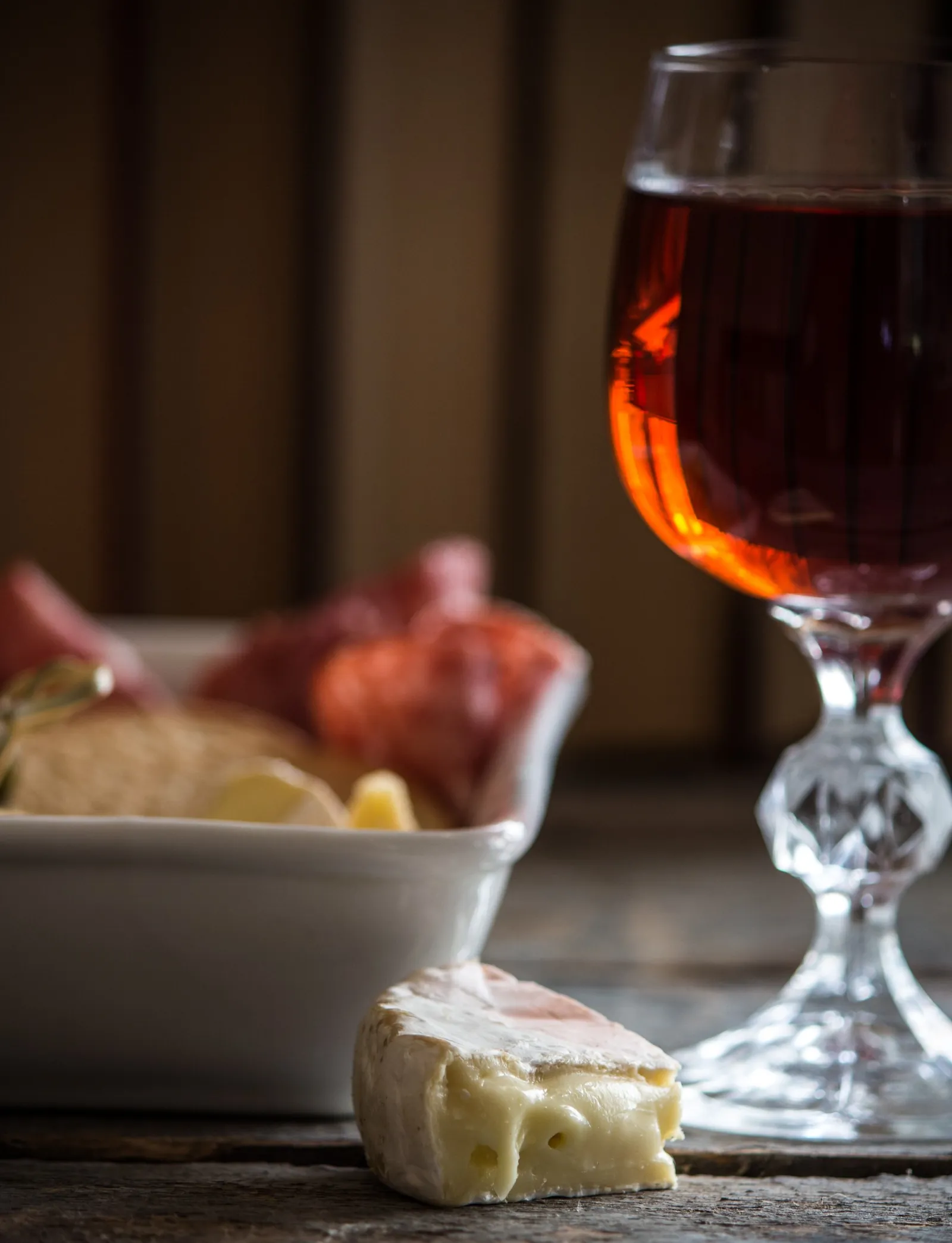
This page is only the matching, meat by meat.
For building the whole board, amounts and assembly, see the beginner charcuterie guide, and for the cheeses to buy, see the best cheeses for a charcuterie board. Both are consistent with the matches here, and neither is repeated.
Pairing cheese with charcuterie at a glance
This pairing cheese with charcuterie table matches each meat to cheeses that work and gives the reason.
| Meat | Cheeses that work | Why |
|---|---|---|
| Prosciutto, jamon serrano | Burrata, mozzarella, Parmigiano-Reggiano, brie, Manchego | Silky and sweet-salty; creamy or nutty cheese |
| Salami (mild) | Sharp cheddar, fresh goat cheese, provolone | Fat meets tang |
| Chorizo, soppressata, pepperoni | Manchego, aged Gouda, goat cheese, sharp cheddar | Spice needs tang or sweetness |
| Bresaola, speck | Gorgonzola dolce, Parmigiano-Reggiano | Lean meat can take a rich cheese |
| Mortadella | Parmigiano-Reggiano, provolone | Soft meat, salty hard cheese |
| Pate and rillettes | Tangy goat cheese, sharp cheddar, cornichons beside | Rich spread needs acid |
The rules behind charcuterie and cheese pairing
The rules behind charcuterie and cheese pairing are three, and they explain every row above. First, match strength: a mild cheese vanishes beside spicy salami, and a hard blue buries a thin slice of ham. Second, balance the salt: cured meat is already salty, so a creamy or low-salt cheese gives relief while a very salty cheese only stacks it. Third, contrast the fat: a lean meat takes a rich cheese, and a fatty meat takes a tangy or acidic one.
Prosciutto and cheese
Prosciutto and cheese go together when the cheese is mild, creamy or nutty. Prosciutto is a thin, silky, dry-cured ham with a sweet-salty edge, so burrata or fresh mozzarella adds cool cream, and Parmigiano-Reggiano adds crunchy savory depth. Brie works for the same reason. The Parma ham consortium itself lists grilled Taleggio with Prosciutto di Parma as an appetizer. Serve it with melon or fig, and keep the cheese portion modest so the ham stays in focus. Because the ham is thin and sweet, a very sharp cheese will cover it, so pick the mildest cheese on the board for it. Jamon serrano, the Spanish equivalent, pairs well with Manchego.
Salami and cheese
Salami and cheese match through tang and fat. A plain, mild salami is fatty and lightly spiced, and a sharp cheddar or a fresh goat cheese cuts through it. Provolone, with its smooth, slightly sharp flavor, is a reliable partner. Avoid a second salty, hard cheese beside it, which stacks salt on salt. If the salami is peppery or garlicky, move toward the cheddar or goat cheese; if it is very mild, provolone is enough. Fold the slices so each bite carries both meat and cheese on a cracker.
Chorizo and soppressata with cheese
Chorizo and soppressata with cheese needs a partner that can stand up to paprika or chili heat. A tangy goat cheese or a young Manchego cools it, and aged Gouda brings caramel sweetness that softens the spice. A sharp cheddar also holds up. Skip delicate cheeses here, since the heat will flatten them. A simple test is to taste the meat first, then the cheese: if the cheese tastes like nothing afterward, it is too mild for that meat. Pepperoni follows the same rules as soppressata, and a sharp cheddar is the easy choice.
Bresaola, speck and mortadella with cheese
Bresaola, speck and mortadella with cheese depends on the meat's weight. Bresaola is lean, air-dried beef, so a creamy Gorgonzola dolce gives it richness; the Gorgonzola consortium describes dolce as creamy with subtle spice, aged at least 50 days, which is why it stays gentle beside a delicate meat. Speck is lightly smoked, and a nutty hard cheese suits it. Mortadella is soft and mild, and a salty, crumbly hard cheese gives it contrast.
Pate, rillettes and cheese
Pate, rillettes and cheese work when the cheese brings acid or tang, because spreads are rich and soft. Fresh goat cheese or a sharp cheddar on the side, with cornichons, mustard and a crisp cracker, balances the richness. Keep the pate and cheese on different crackers, or you get two soft textures at once.
Accompaniments that connect meat and cheese
Accompaniments that connect meat and cheese should be sweet or acidic, since both meat and cheese are salty and rich. Fruit like figs and pears, honey, jam, cornichons and whole-grain mustard all refresh the palate between bites. Plain crackers or baguette give the board a neutral base.
Charcuterie and cheese pairing mistakes to avoid
Charcuterie and cheese pairing mistakes mostly come from mismatched strength and too much salt. A delicate ham next to a strong blue loses, and a very salty cheese beside a very salty meat tires the palate. Another is time: charcuterie meats and cheeses should not sit out more than two hours, or one hour above 90°F, according to University of Nebraska-Lincoln Extension, so put out part of the board and refill from the fridge.
Questions about pairing cheese with charcuterie
These questions about pairing cheese with charcuterie are the ones that come up when someone is choosing at the deli counter.
What cheese goes with prosciutto?
Cheese that goes with prosciutto is mild, creamy or nutty: burrata, fresh mozzarella, brie or Parmigiano-Reggiano.
What cheese goes with salami?
Cheese that goes with salami has tang: sharp cheddar, fresh goat cheese or provolone cut through the fat.
What cheese goes with chorizo?
Cheese that goes with chorizo is Manchego, aged Gouda, goat cheese or sharp cheddar, which cool or sweeten the spice.
What cheese goes with pate?
Cheese that goes with pate is tangy: fresh goat cheese or sharp cheddar, with cornichons or mustard.
Do you need cheese on a charcuterie board?
You do not strictly need cheese, but a creamy one gives relief from the salt. See the board builder for amounts.
Your charcuterie and cheese pairing, simply
For a simple charcuterie and cheese pairing, pick one meat and match it: prosciutto with burrata or Parmigiano-Reggiano, chorizo with Manchego, or salami with sharp cheddar, and add fig jam or cornichons. Then try a second pair and see how the meat changes with the cheese.
Sources
- Charcuterie Boards and Food Safety, University of Nebraska-Lincoln Extension
- The Gorgonzola, Consorzio per la Tutela del Formaggio Gorgonzola
- Parma Ham, Consorzio del Prosciutto di Parma