
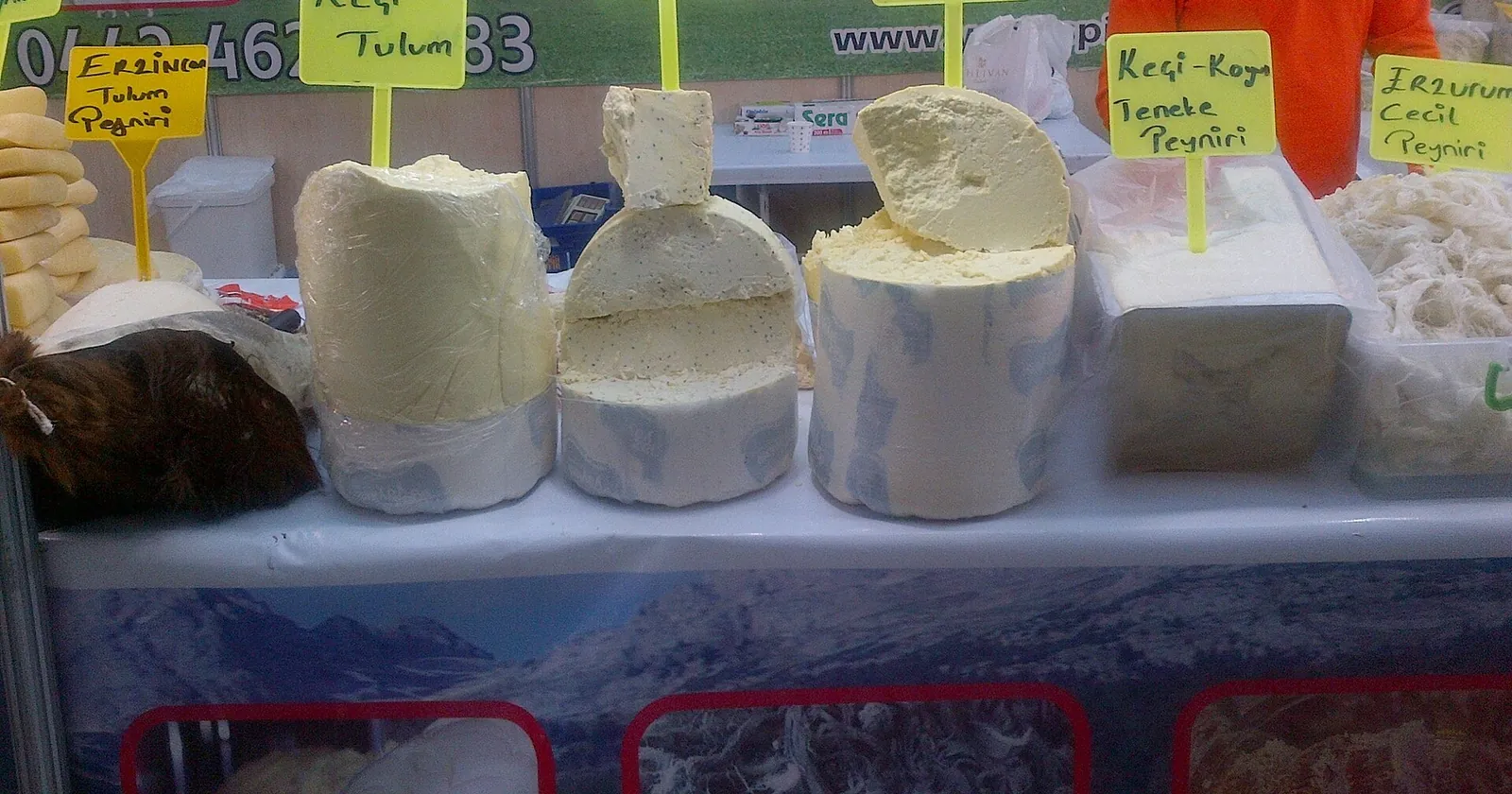
Around them sit tulum, ripened in a skin bag, lor and çökelek, made from whey and curd, and regional cheeses such as Ezine and otlu peynir.
The country is large, and so is the list. Turkey has 193 different cheeses, only 8 of which have a geographical indication, which is why the market names matter more than any one label. Most of what reaches US shelves is the first three, plus lor, so those are the ones to learn before you shop. The rest are worth asking about at a Turkish deli, where the person behind the counter usually knows which tub came from which region and how salty it will be.
Turkish cheeses at a glance
This table of Turkish cheeses gives milk, character and best use.
| Cheese | Milk | Character | Best use |
|---|---|---|---|
| Beyaz peynir | Varies by maker | White, brined, salty | Breakfast, salads, pastries |
| Kaşar | Cow's milk | Yellow, stretched, fresh or aged | Toasts, melting, slicing |
| Tulum | Sheep or goat | Crumbly, skin ripened | Table cheese, in cooking |
| Lor | Whey | Unsalted, fresh | Desserts, fillings |
| Çökelek | Skimmed curd | Dried or fresh, tangy | Cooking, spreads |
| Ezine | Sheep, goat and some cow | White, brined at least 8 months | Breakfast, meze |
| Otlu peynir | Sheep or goat | Herbed, East Anatolia | Breakfast |
| Mihaliç | Sheep | Hard, grating | Grated, sliced |
Beyaz peynir, the Turkish white cheese
Beyaz peynir is the Turkish white cheese, a salty brined cheese named for its color, which means white cheese. It is made from different milks depending on the producer, and it is eaten plain or in cooked dishes.
It resembles Greek feta and is cousin to the cheeses in the Balkan white cheese guide, but the name is not protected the way Greek feta is, so milk and salt vary from tub to tub. Look for sheep's milk on the label for the tangiest version, and taste a corner before you buy a big block, since a salty tub can be soaked in cold water.
Kaşar, the Turkish yellow cheese
Kaşar is the Turkish yellow cheese, a cow's milk cheese that is Turkey's other ubiquitous cheese, sometimes nicknamed Turkish cheddar, sold fresh or matured. It belongs to the stretched-curd family of kashkaval, where kaşar is the Turkish name.
Fresh kaşar is mild and melts easily, so it goes in toasted sandwiches, on pide and over lahmacun. Aged kaşar is firmer and sharper and suits slicing and grating. In the US it is sold as kashkaval or kasar at Turkish and Eastern European markets.
Tulum and the skin-ripened Turkish cheeses
Tulum is the skin-ripened Turkish cheese, sheep's curd molded in animal-skin bags, with regional types from İzmir, Ödemiş, Elazığ and Erzincan that have very different characters. The traditional goat's milk version is stuffed into a goatskin casing and ripened for about six months, while commercial makers often use barrels instead.
Expect a crumbly, salty, sharp cheese, stronger than beyaz peynir. A small amount goes a long way on bread or in an omelet.
Ezine and other regional Turkish cheeses
Ezine is the regional Turkish cheese that has the strongest legal protection abroad. According to Daily Sabah, it became the first Turkish cheese to receive an EU geographical indication, on November 18, 2023. It is a white cheese from Çanakkale, made from the milk of animals grazing on Mount Ida, with about 15 percent cow's milk and the rest sheep and goat. The same article mentions aging for a year, though other sources give shorter brining times, so ask the seller.
Other regional cheeses include otlu peynir, an herbed cheese from East Anatolia, and mihaliç, a hard sheep's cheese from Karacabey in Bursa that can be grated like Parmesan.
Lor and çökelek, the Turkish whey and curd cheeses
Lor is the Turkish whey cheese, an unsalted fresh cheese made from the by-products of kaşar or strained yogurt production and used in traditional dishes and desserts. It is the nearest thing to ricotta in a Turkish kitchen, and ricotta is the usual US substitute.
Çökelek is dried cottage cheese, kept fresh or sun-dried in storage containers. It is tangier and drier than the American product described on the cottage cheese page. Ask the seller whether it is fresh or dried, since the two behave very differently in cooking.
How to eat Turkish cheeses
How to eat Turkish cheeses starts with breakfast, called kahvaltı. Put out beyaz peynir, sliced kaşar, olives, tomatoes, cucumbers, honey and bread, with tea. Use kaşar for toasted sandwiches, tulum for a sharp bite, and lor for sweet fillings.
For an evening spread, brined white cheese with melon is a classic meze pairing, and rakı is the traditional spirit. For general ideas, try the regional pairings guide.
What most Turkish cheese advice gets wrong
Turkish cheese advice often gets wrong the claim that beyaz peynir is just feta. They are the same family of brined cheese, but beyaz peynir has no single recipe, and a Turkish tub can be cow's, sheep's or mixed. Kaşar is the other mix-up: it is stretched like provolone and melts, where white cheese crumbles. Pick by use, not name.
Questions about Turkish cheeses
These questions about Turkish cheeses are the ones shoppers ask most.
What is the most common Turkish cheese?
The most common Turkish cheese is beyaz peynir, the salty brined white cheese eaten at breakfast.
What is tulum cheese?
Tulum cheese is a Turkish cheese ripened in a goatskin or other skin casing, crumbly, salty and sharp.
Is kaşar the same as kashkaval?
Kaşar cheese is the Turkish version of kashkaval, a stretched yellow cheese that melts well.
Is Ezine cheese protected?
Ezine cheese is protected: it was the first Turkish cheese to receive an EU geographical indication, in November 2023.
What is lor cheese?
Lor cheese is an unsalted Turkish whey cheese, similar to ricotta.
Buying Turkish cheeses in the US
Buying Turkish cheeses in the US is easiest at Turkish, Middle Eastern or Eastern European grocers. Start with a tub of beyaz peynir and a wedge of kaşar, then try tulum. Keep brined cheese in its brine, refrigerated.
Sources
- Turkish cheeses, Wikipedia
- Tulum cheese, Wikipedia
- 'Ezine' 1st Turkish cheese to receive geographical indication by EU, Daily Sabah