
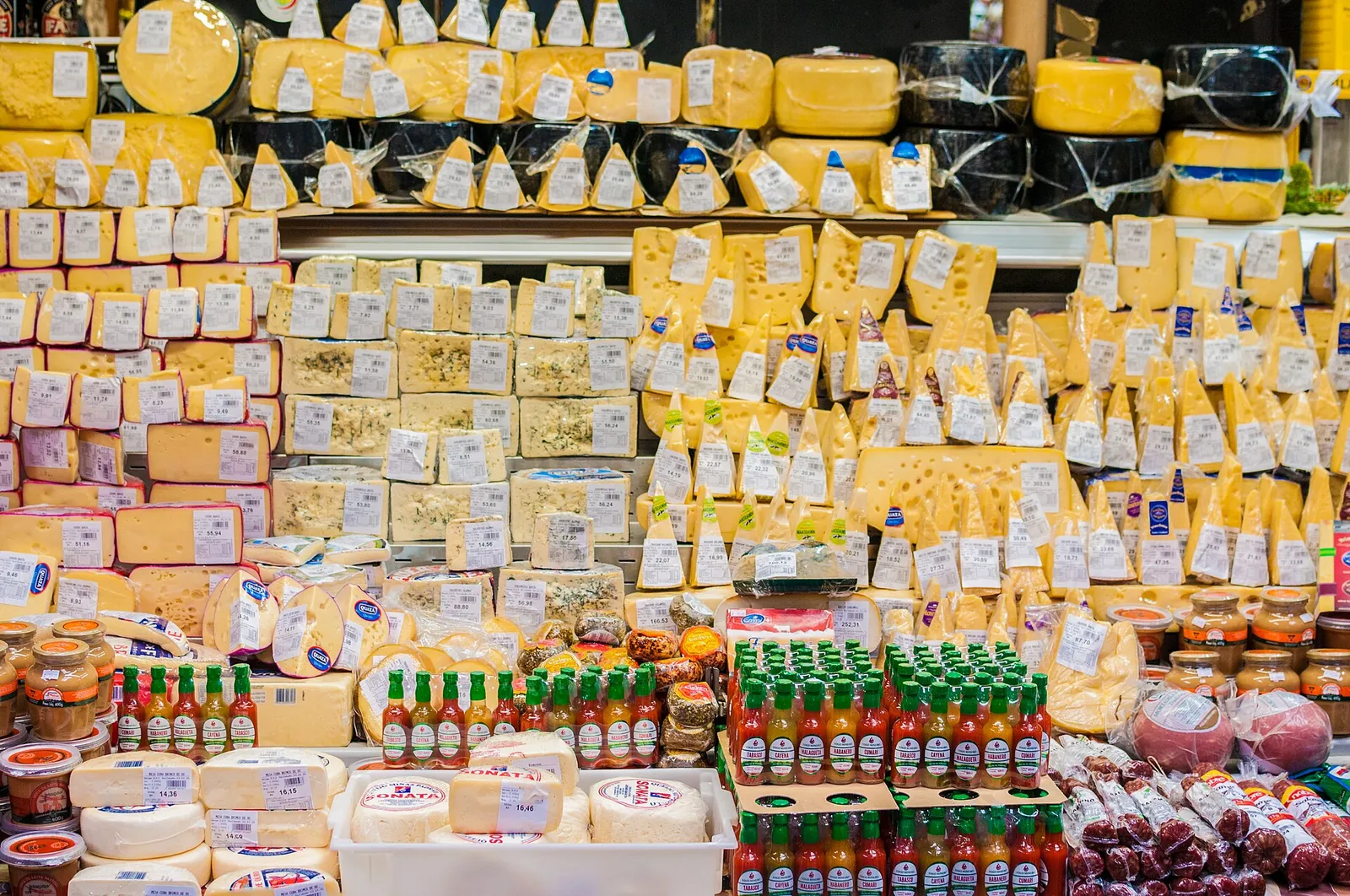
Argentine provoleta grills, Brazilian queijo coalho grills and squeaks, Venezuelan queso de mano fills arepas, and reggianito grates. Few of them are cheese board cheeses, and that is exactly why they are fun.
Much of the continent's cheesemaking follows European models, especially Italian ones, adapted to local milk and local meals. The sections below cover the styles you are most likely to find, and which ones are realistic to buy in the US.
South American cheeses at a glance
This table of South American cheeses lists the main styles.
| Cheese | Country | Milk | Texture and use |
|---|---|---|---|
| Provoleta | Argentina | Cow | Pulled-curd disc, grilled |
| Reggianito | Argentina | Cow | Hard, granular, grated |
| Queijo coalho | Northeast Brazil | Cow | Firm, squeaky, grilled |
| Minas cheeses | Minas Gerais, Brazil | Cow | Fresh to aged, table cheese |
| Queso de mano | Venezuela | Cow and ewe | Soft, layered, arepa filling |
| Queso de bola | Several countries | Cow | Edam, red-waxed |
Argentine cheeses: provoleta and reggianito
Argentine cheeses show the strongest Italian influence on the continent. Provoleta is a small disc of pulled-curd provolone, grilled until partly melted. It was created in the 1940s by Natalio Alba, an Italian immigrant from Calabria living in Córdoba, who adapted provolone into a smaller cheese that holds up on the grill. Typical discs are 4 to 6 inches (10 to 15 cm) across and about half an inch thick.
Provoleta traditionally opens an asado, before the meat, and is usually eaten with bread, often with chimichurri or oregano and chili flakes. At home, a cast-iron pan on high heat works, and the provolone page explains the cheese it descends from. Use a thick slice of provolone or a similar firm pulled-curd cheese, and serve it the moment it blisters.
Reggianito is the other Argentine staple. It is a hard, granular cheese made by Italian immigrants in imitation of Parmigiano Reggiano, aged 5 to 6 months in small wheels of about 15 pounds (6.8 kg). The name is the Spanish diminutive of Reggiano, a nod to the smaller size. It is mainly for grating over pasta and for cooking, so treat it like a young, milder Parmesan.
Brazilian cheeses: queijo coalho and Minas
Brazilian cheeses, mainly queijo coalho and Minas, split between the grill and the table. Queijo coalho comes from northeastern Brazil and is firm yet light, with a squeak when bitten, like fresh cheese curds. It is grilled on a stick, sold as a beach snack and cooked over charcoal at barbecues, where it takes on a golden, slightly burnt surface. Oregano or garlic sauce is the usual accompaniment. Its firm body is why it does not drip into the coals, a trait it shares with halloumi.
Minas cheese is a family, not a single cheese. It comes in frescal (fresh), meia-cura (half-aged) and curado (aged) forms, made from cow's milk in the state of Minas Gerais. A supermarket style called queijo padrão also exists. UNESCO added the traditional ways of making artisan Minas cheese to its Intangible Cultural Heritage list in December 2024.
Venezuelan cheeses: queso de mano and more
Venezuelan cheeses, with queso de mano the best known, are built around the arepa. Queso de mano is a soft, white, wet cheese that resembles fresh mozzarella but is built up in layers. It is made from cow and ewe milk curd mixed with hot water for elasticity, then cooled in molds that give a rough sphere. It fills arepas and cachapas, and a local version, guayanés cheese, is popular in Bolívar state.
If you cannot find it, a fresh mozzarella torn into strips is the nearest substitute in a sandwich or arepa. Fresh white cheeses of the queso fresco kind are everyday staples across the Andes too, and the queso fresco page shows how that style behaves.
Queso de bola and other imports
Queso de bola is the name for Edam in Spain and some former colonies. It goes by that name in the Philippines, Mexico and Venezuela. It is a semi-hard, pale yellow cow's milk cheese traditionally coated in red wax, aged from 4 weeks to 10 months, and the Edam page covers it in full. That makes it a convenient reference point when a South American recipe asks for a ball cheese.
What most South American cheese lists miss
Most lists of South American cheeses name the same two or three styles and skip the point that the grilling cheeses are a category with rules. They share a firm, high-heat tolerance, so a soft cheese will slump through the grate.
When a recipe calls for provoleta or coalho in the US, choose a firm pulled-curd cheese or a squeaky, firm cheese, dry the surface, and cook it hot and fast. Add herbs after the cheese hits the heat, not before. Avoid pre-shredded packs, which carry anti-caking starch and will not form a crust.
One note on names. A label reading "queso blanco" in the US means a different cheese from the soft, brined or fresh ones eaten in the Andes, and "queso fresco" varies by country. Read the description on the package rather than trusting the name.
Drinks for South American cheeses
South American cheeses pair with what the region drinks. Grilled provoleta suits a red such as Malbec, a common Argentine pairing for a barbecue. A cold lager works with salty, squeaky coalho. The wine and cheese pairing guide explains how to match style rather than name when you cannot find the local bottle.
Questions about South American cheeses
These questions about South American cheeses cover the names people search for most.
What is provoleta?
Provoleta is an Argentine grilling cheese, a small disc of pulled-curd provolone cooked until partly melted and often topped with oregano and chili flakes.
What is queijo coalho?
Queijo coalho is a firm Brazilian cow's milk cheese from the northeast that squeaks and holds its shape when grilled on a stick over charcoal.
What is reggianito?
Reggianito is an Argentine hard cheese modeled on Parmigiano Reggiano, aged 5 to 6 months in small wheels and mostly used for grating.
What is queso de bola?
Queso de bola is the Spanish name for Edam, used in Mexico, Venezuela and the Philippines, a red-waxed semi-hard cheese.
What goes in an arepa in Venezuela?
The cheese that goes in a Venezuelan arepa is often queso de mano, a soft layered white cheese made from cow and ewe milk curd.
Try South American cheeses
To try South American cheeses at home, start with a firm cheese and a hot pan: grill a thick slice of provolone as provoleta, or look for coalho in a Brazilian market. Grate reggianito over pasta if you find a wheel.
Sources
- Provoleta, Wikipedia
- Reggianito, Wikipedia
- Queijo coalho, Wikipedia
- Minas cheese, Wikipedia
- Queso de mano, Wikipedia
- Edam cheese, Wikipedia
- Traditional ways of making artisan Minas cheese in Minas Gerais, UNESCO Intangible Cultural Heritage