
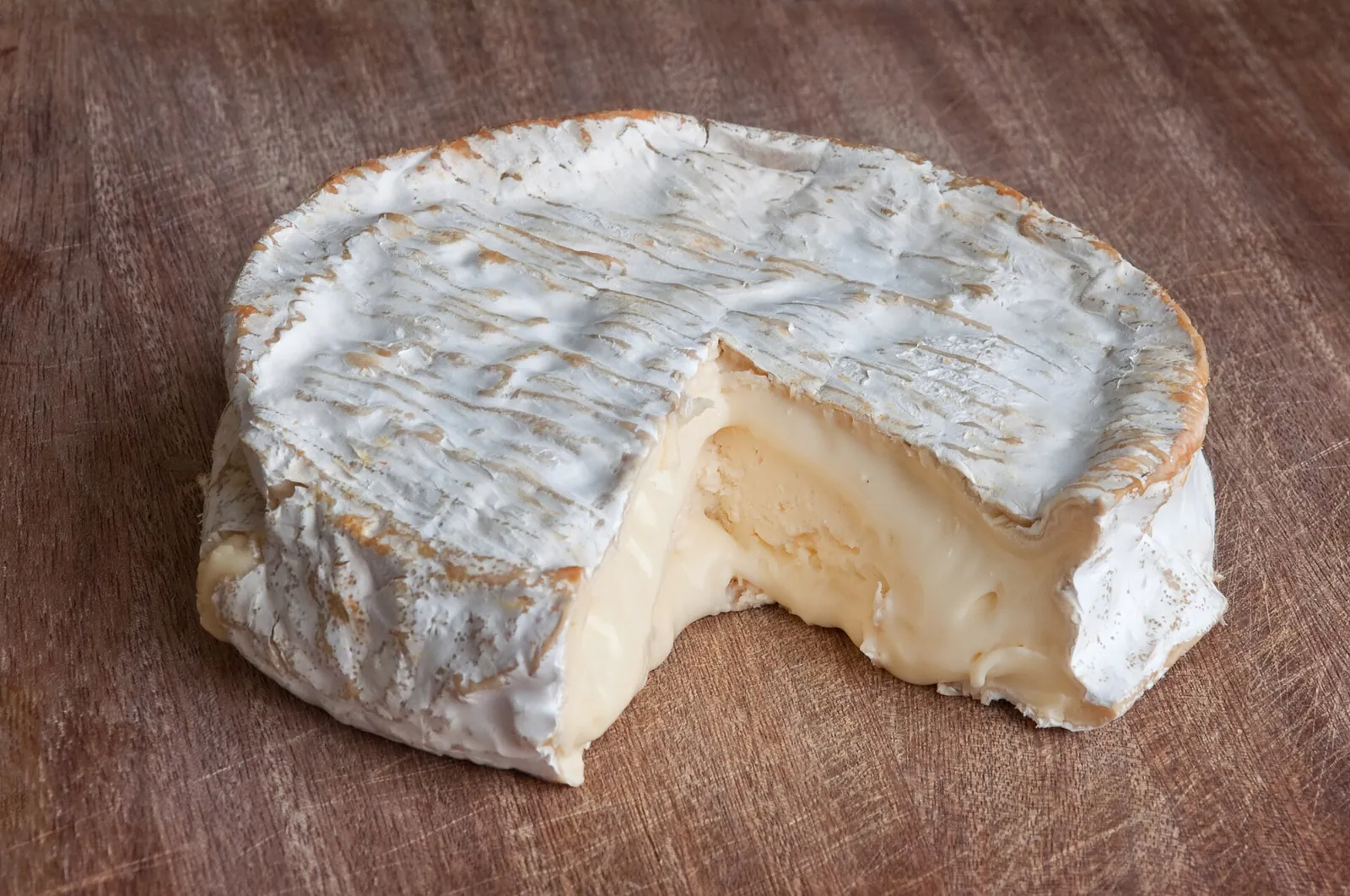
That single choice changes the law that applies to the cheese, the risk the CDC asks some people to avoid, and some of the flavor.
Most of what you buy in a US supermarket is pasteurized. Raw milk cheese is a smaller category, mostly at cheese counters and specialty shops, and it comes with a federal aging rule that pasteurized cheese does not need. Neither one is better in every way, so the useful question is which one fits who is eating it.
Pasteurized vs raw milk cheese at a glance
This pasteurized vs raw milk cheese table sets the two side by side on the points that matter at the store.
| Pasteurized | Raw milk (unpasteurized) | |
|---|---|---|
| Milk | Heat-treated before cheesemaking | Not heat-treated that way |
| US aging rule | None beyond the cheese's own standard | Cheddar's standard: cured at 35°F (about 2°C) or higher for at least 60 days |
| Where you find it | Nearly every supermarket cheese | Cheese counters, specialty shops, farmstead producers |
| CDC advice for higher-risk groups | Fine in most cases if the cheese is pasteurized (hard types; see the soft cheese note below) | Avoid, including aged cheese |
| Flavor | Clean and consistent | Often described as more varied and deeper |
| Label to look for | "Made with pasteurized milk" | "Raw milk" or "unpasteurized milk" |
What US law says about raw milk cheese
The US law on raw milk cheese is an aging rule written into each cheese's federal standard of identity. The standard for cheddar in 21 CFR 133.113 says that if the dairy ingredients are not pasteurized, the cheese is cured at a temperature of not less than 35°F for at least 60 days. If pasteurized ingredients are used instead, the standard sets a test limit on phosphatase, an enzyme that heat destroys, and has no curing minimum.
The reasoning behind the rule is that time, salt, acid and dryness make a cheese a harder place for bacteria to live. Many other federal cheese standards repeat the same 60-day wording, but check the standard for the cheese you care about, because each one is written separately. Cheeses without a federal standard are handled case by case.
Two things follow in practice. A raw milk cheese on a US shelf has at least been held for 60 days at the maker's cold storage, which is why fresh raw milk cheeses are rare in American stores and why a fresh cheese you see labeled raw is usually a sign to read the label twice. And the rule is an aging requirement, not a safety guarantee, which is where the next section comes in.
Safety: what the CDC says about raw milk and Listeria
The safety difference between pasteurized and raw milk cheese is mostly about Listeria, a bacterium that can survive refrigeration and is especially dangerous in pregnancy. The CDC's Listeria prevention page estimates about 1,600 people in the US get sick from Listeria each year, calls infection rare, and names pregnant women as a high-risk group.
Its advice for higher-risk people is direct. It lists "any type of cheese when made with (raw) unpasteurized milk" among the foods to avoid, with no exception for aged cheese. It also lists unheated queso fresco-type cheeses to avoid regardless of the milk, and it recommends hard cheeses made with pasteurized milk, or heated versions of the risky cheeses, as the safer choices.
So the 60-day federal rule and the CDC's advice sit side by side. The rule lets a raw milk cheese be sold legally; the CDC advice tells people who are pregnant, older, or have weakened immune systems that legal is not the same as risk-free for them. For the pregnancy details, cheese by cheese, see cheese during pregnancy.
Flavor: what raw milk changes and what it doesn't
The flavor difference between pasteurized and raw milk cheese is real but smaller than the marketing suggests, and it is easy to overstate. Cheesemakers who work with raw milk say that the milk's native bacteria and enzymes add variety, and that is the common reason traditional makers prefer it. This is a craft claim rather than a measured one, and plenty of excellent cheeses are made from pasteurized milk with added cultures.
What shapes taste more reliably is the recipe: the culture, the salt, the moisture, and above all the age. A 2-year pasteurized cheddar and a 60-day raw milk cheddar will not taste alike, and raw milk will not explain the gap. If you want to taste the effect of raw milk itself, buy two wedges of the same style from the same shop, one of each, and compare them side by side.
Texture and melt follow the cheese's structure rather than the milk treatment. Cooking changes the safety picture too: a cheese heated until it is hot and bubbling is a different case from the same cheese eaten cold, and the CDC's list of safer options explicitly includes heated versions of unheated soft cheeses. For the raw side in more depth, raw milk cheese covers the risks and benefits.
What most raw vs pasteurized advice gets wrong
Most advice on raw vs pasteurized cheese leans on four shortcuts that do not hold up: that pasteurized means mild, that 60 days means safe, that the label tells you the milk, and that raw means artisan.
Pasteurized does not mean bland. Pasteurization removes bacteria that cause illness, not the culture and aging that make a cheese sharp, funky or nutty. Aged pasteurized cheddar and pasteurized washed-rind cheeses are strongly flavored.
Sixty days is a minimum, not a guarantee. It is the number in the federal standard, and the CDC's advice for higher-risk groups does not bend for it. If you are pregnant or immunocompromised, follow the CDC and your doctor, not the aging rule.
The front of the package may not say. Look for "pasteurized milk" or "raw milk" in the ingredient line, and at a counter ask. Imported cheeses carry their own rules, so a European label saying "lait cru" means raw milk, and your counter can tell you what was sold in the US.
Raw is not automatically small-scale. The milk treatment says nothing about who made the cheese or how carefully. A raw milk cheese from a careful maker and a pasteurized cheese from a large plant can both be good, and both can be mishandled on the way to your fridge.
Which to buy: pasteurized or raw milk cheese
Which to buy, pasteurized or raw milk cheese, depends on who will eat it and what you want from it:
- Pregnant, older, or immunocompromised guests: pasteurized, and hard rather than soft, following the CDC list and your doctor's advice.
- A cheese board for a mixed group: mostly pasteurized, with any raw milk cheese labeled and set apart.
- Cooking sauces, baking and melting: pasteurized is easiest to find and consistent, and the melting cheese guide shows which cheeses work.
- Curious and healthy: raw milk cheese aged past 60 days is a legal, widely sold category; pick a reputable counter and read the label.
- Something familiar for the kids: pasteurized, since the CDC's advice for higher-risk groups includes anyone with a weaker defense against Listeria.
Questions about pasteurized vs raw milk cheese
These are quick answers to common questions about pasteurized vs raw milk cheese.
What is the difference between pasteurized and raw milk cheese?
The difference between pasteurized and raw milk cheese is the milk: pasteurized cheese starts with heat-treated milk, and raw milk cheese starts with unpasteurized milk, which in the US must cure at least 60 days at 35°F or higher under the cheddar standard.
Is raw milk cheese safe to eat?
Raw milk cheese carries a risk that pasteurized cheese is designed to avoid, which is why the CDC advises higher-risk people to avoid any cheese made with raw milk. Healthy adults buy it legally in the US when it meets the aging rule.
Why is raw milk cheese aged 60 days?
Raw milk cheese is aged 60 days because the federal standards for cheeses such as cheddar require it for cheese made with unpasteurized dairy ingredients, to give the cheese time to dry, salt and acidify.
Can pregnant women eat pasteurized cheese?
Pasteurized hard cheese is the CDC's safer choice during pregnancy. The CDC also lists unheated queso fresco-type cheeses to avoid even when pasteurized, so check the pregnancy guide above for specifics.
Does raw milk cheese taste better?
Raw milk cheese is often described as more varied, but the evidence is mostly makers' experience. Age, culture and salt change taste at least as much as the milk treatment.
Choosing between pasteurized and raw milk cheese
Choosing between pasteurized and raw milk cheese starts with the person eating it: use pasteurized for anyone the CDC lists as higher risk, and treat raw milk cheese as a deliberate choice you read the label for. The simplest next step is to read the ingredient line on the cheese in your cart, and if you want to taste the difference, compare a pasteurized and a raw milk wedge of the same style. For a related pair, see Parmesan vs Pecorino Romano.
Sources
- 21 CFR 133.113, Cheddar cheese, Electronic Code of Federal Regulations
- Listeria prevention: who is at risk and what to avoid, Centers for Disease Control and Prevention
- 21 CFR Part 133, Cheeses and related cheese products, Electronic Code of Federal Regulations