
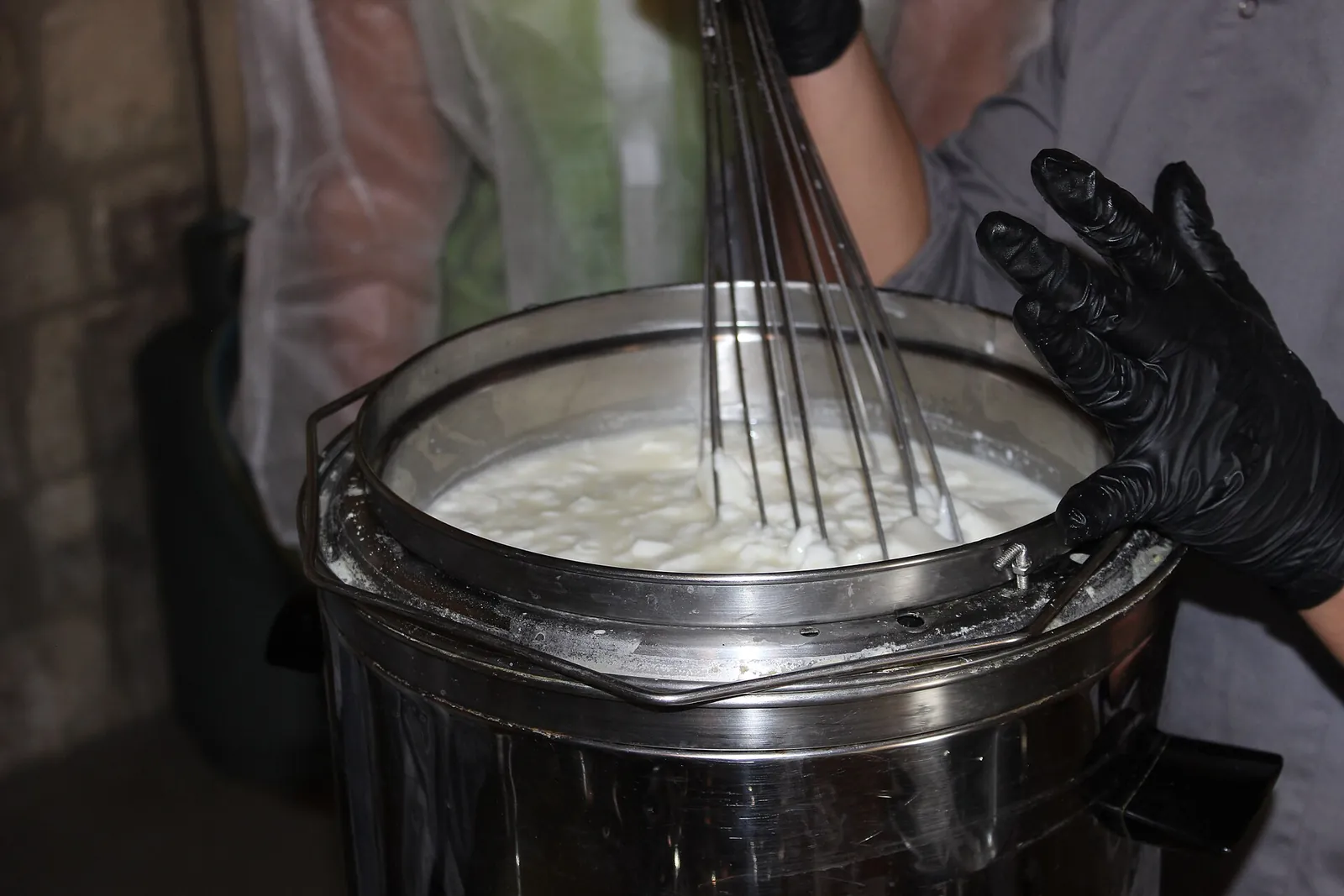
Heat the milk until it steams, stir in vinegar or lemon juice, and the proteins gather into soft white curds you scoop out and drain.
One caveat before you start: this is the milk version, not the traditional one. Italian ricotta is made from the whey left after cheesemaking, and the University of Guelph's cheesemaking e-book notes that whey proteins begin to coagulate at about 158°F (70°C). Home cooks rarely have fresh whey, so milk and acid stand in, and the result is richer and creamier. The difference is covered in full on the ricotta cheese page.
Homemade ricotta at a glance
Homemade ricotta at a glance: one pot, one thermometer, no rennet and no culture.
| Yield | About 2 cups (450 g) from a half gallon of milk plus cream |
| Active time | About 25 minutes, plus 10 to 30 minutes of draining |
| Key temperature | 185 to 195°F (85 to 90°C) |
| Milk | Pasteurized whole milk; cream is optional |
| Best for | Toast, pasta, pancakes, cannoli, lasagna |
| Keeps | A few days at 40°F (4°C) or below |
How to make ricotta
This ricotta method uses a half gallon of milk, which fits a standard 4 to 6 quart pot and drains in one sieve.
Ingredients for homemade ricotta
These ingredients make about 2 cups of ricotta, and the cream makes it softer and richer.
- 2 quarts (1.9 liters) pasteurized whole milk
- 1 cup (240 ml) heavy cream, optional for a richer cheese
- 3 tablespoons (45 ml) distilled white vinegar or fresh lemon juice
- 1/2 teaspoon salt, plus more to taste
Steps for making ricotta
These steps for making ricotta take about 30 minutes, and the draining time decides how creamy the cheese is.
- Pour the milk, cream and salt into a heavy 4 to 6 quart pot and set it over medium heat, stirring often and scraping the bottom so nothing scorches.
- Heat the milk to 185 to 195°F (85 to 90°C), when it steams, shows tiny bubbles at the edge and feels very hot, but is not at a rolling boil.
- Take the pot off the heat, pour in the vinegar or lemon juice, and stir slowly just two or three times.
- Leave the pot alone for 10 minutes, until fluffy white curds float on top of clear, slightly yellow whey.
- Line a fine sieve with a double layer of cheesecloth or a clean thin towel and set it over a bowl.
- Lift the curds gently with a slotted spoon into the sieve, or pour the pot through if the curds are small.
- Drain for 10 minutes for a soft, spoonable ricotta, 20 for a creamy one, or 30 for a firm one that holds a shape.
- Season with a pinch of salt if you like, then spoon it into a clean container and refrigerate.
Milk for homemade ricotta
The best milk for homemade ricotta is pasteurized whole milk, with a cup of cream added when you want a lush texture. Fat stays in the curd, so skim milk gives a dry, small yield, and USDA's data show whole-milk ricotta carries more fat than part-skim, which is why it tastes richer (see the ricotta page). Ultra-pasteurized milk often forms small, weak curds for cheese. If your batch is thin and sparse, try a different brand.
Start with cold milk and heat it slowly. Rushing the heat scorches the bottom and gives the ricotta a cooked taste.
Vinegar or lemon juice for ricotta
Vinegar or lemon juice works for ricotta, and the choice mostly changes flavor. Distilled white vinegar leaves almost no taste, while lemon juice leaves a faint citrus note that is lovely in sweet dishes. Avoid strongly flavored vinegars such as apple cider. Citric acid also works if you dissolve about 1 teaspoon in a little water.
The Guelph e-book says commercial makers add vinegar or citric acid after heating, which is the same order used here. Add the acid slowly at the end, and if the milk still looks milky after 10 minutes, stir in another tablespoon.
Ricotta mistakes and fixes
Ricotta mistakes come down to temperature, acid and stirring.
Ricotta that is grainy or dry
Grainy, dry ricotta comes from over-draining or overheating. Drain only 10 minutes next time, and stir in a spoonful of cream or whey to loosen it.
Ricotta that tastes sour or like vinegar
Ricotta that tastes sour or like vinegar has too much acid, so measure carefully and rinse the curds with a little cold water if needed.
Ricotta with tiny curds and little yield
Ricotta with tiny curds and little yield is usually made with low-fat or ultra-pasteurized milk. Switch to whole milk and add cream.
Ricotta that won't curdle
Ricotta that won't curdle needs more heat or a little more acid. Put the pot back on the burner, bring it to 190°F, and stir in another tablespoon of acid.
Storing and using homemade ricotta
Storing homemade ricotta safely means chilling it fast: refrigerate it at 40°F (4°C) or below in a clean, sealed container and use it within a few days. Dairy Farmers of Wisconsin calls store-bought ricotta short-lived and recommends using it within a week of purchase, and homemade has no preservatives, so be more conservative. Pour off any whey that collects.
Fresh ricotta is wonderful on toast with honey, folded into pancakes, or baked into three-cheese lasagna. For desserts, see the cannoli fillings, or use it for ricotta gnocchi. Homemade ricotta is not a melting cheese; like paneer, it holds its shape under heat.
Questions about making ricotta
These are the questions people ask most about making ricotta at home.
Can you make ricotta without vinegar or lemon juice?
You can make ricotta without vinegar or lemon juice by using citric acid or buttermilk, though both are less reliable than vinegar.
How much ricotta does a half gallon of milk make?
A half gallon of milk makes about 2 cups of ricotta with cream added, a little less without.
Is homemade ricotta real ricotta?
Homemade ricotta from milk is a ricotta-style cheese, since traditional ricotta uses whey; it tastes richer and is made the same way, with heat and acid.
What can you do with the leftover whey?
The leftover whey from ricotta can go into bread dough, soups or smoothies, and it keeps a few days in the refrigerator.
Can you freeze homemade ricotta?
You can freeze homemade ricotta for baking, but it turns more crumbly and watery; use it in lasagna or fillings, not on toast.
Your first ricotta
Your first ricotta needs a half gallon of whole milk, a cup of cream, vinegar and a thermometer. Drain for 20 minutes and taste it warm. Then move on to making mozzarella or quick mascarpone, both set with a similar clean method.
Sources
- Heat-acid precipitated cheese (Cheese Making Technology e-book, chapter 8.5), University of Guelph
- Ricotta, Dairy Farmers of Wisconsin
- The basics of cheesemaking, Oregon State University Extension