
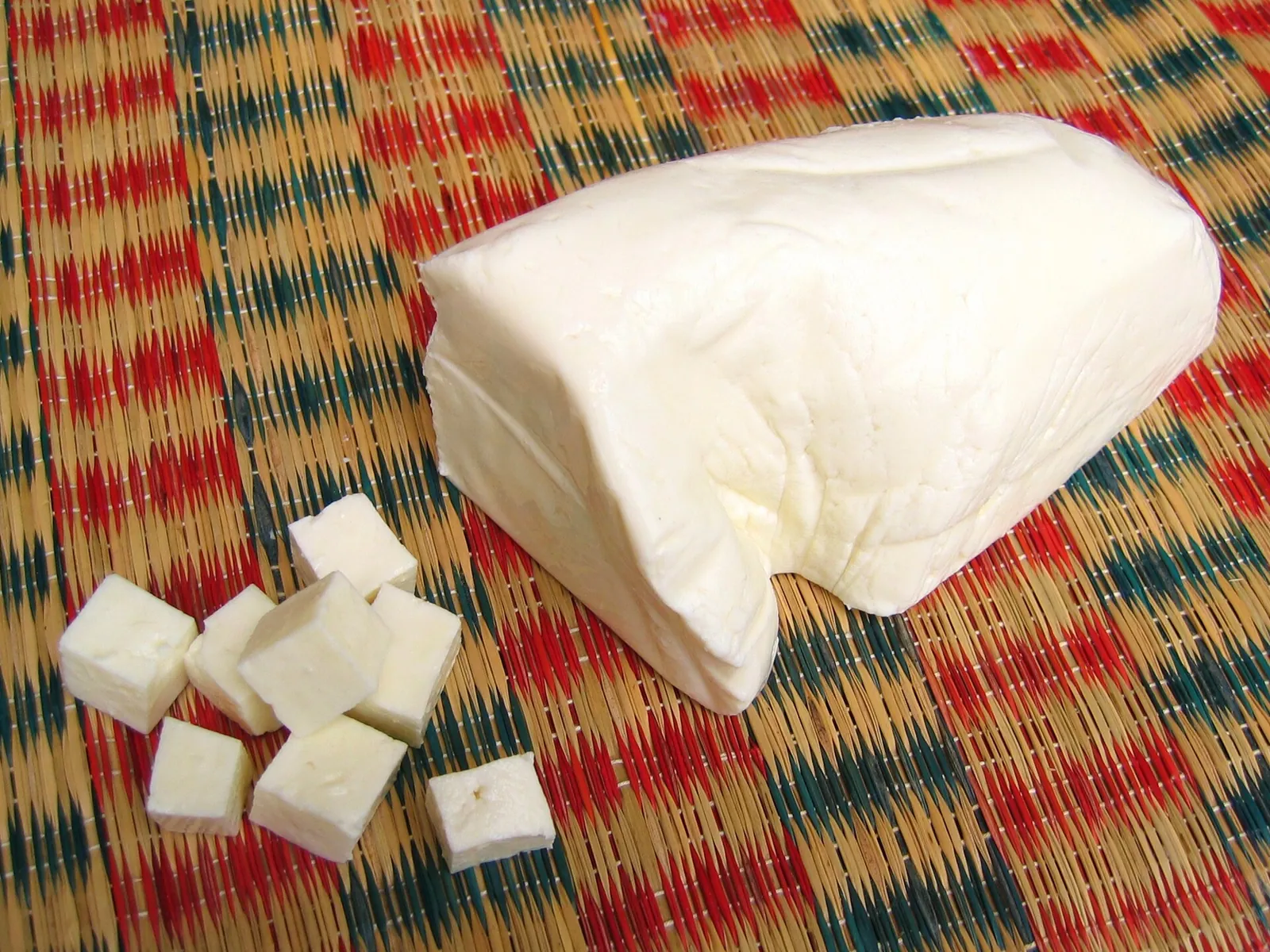
Heat the milk to 185°F (85°C), let it cool to about 160°F (70°C), stir in the diluted acid until the liquid runs clear, then drain, press and chill.
The thermometer decides the texture. Heat and acid together pull milk's protein and fat out of solution, and the temperature at the moment the acid goes in sets how tightly that protein packs. Dairy researchers cool the milk to 158°F (70°C) before curdling, because hotter curdling gives a hard, dry block, according to a review in the Journal of Food Science and Technology.
Homemade paneer at a glance
Homemade paneer at a glance comes down to a handful of numbers.
| Step | Target | Why it matters |
|---|---|---|
| Milk | 1 gallon pasteurized whole milk, not ultra-pasteurized | Fat keeps paneer tender; ultra-pasteurized milk forms curds poorly |
| Heat | 185 to 195°F (85 to 90°C), held 5 minutes | Binds whey proteins to the casein so they stay in the cheese |
| Curdle | 160 to 175°F (70 to 80°C) | Curdling hotter makes hard, dry paneer |
| Acid | About 4 1/2 fl oz lemon juice or 5% vinegar, diluted | Too much, or too strong, turns the curd grainy |
| Press | About 20 lb for 20 to 30 minutes | Squeezes out whey and knits the curds into a block |
| Chill | Ice water, 2 to 3 hours | Firms the block for clean slicing |
| Yield | About 1 1/2 lb per gallon | Cow's milk gives 17 to 18% of its weight as paneer |
| Keeps | Best within 3 days, refrigerated | Spoils from the surface first |
The best milk for making paneer
The best milk for making paneer is pasteurized whole milk, and more fat gives you a softer, richer block. Indian dairy research favors buffalo milk with 5 to 6 percent fat and rates fat as the biggest single influence on paneer quality; cow's milk alone makes a softer, more fragile cheese. US whole milk must carry at least 3.25 percent milkfat under 21 CFR 131.110, close to the 3.5 percent milk researchers have made acceptable paneer from. Stir 1 cup of heavy cream into the gallon and, by USDA's figures for both, the fat rises to about 5 percent.
Skip skim and low-fat milk. Homogenized milk is fine; in one study, homogenizing cow's milk improved both yield and tasting scores.
Why ultra-pasteurized milk curdles poorly
Ultra-pasteurized milk curdles poorly because the extra heat has already changed its proteins, which is why America's Test Kitchen tells paneer makers to skip it and UHT milk. Above about 167°F (75°C), whey proteins unfold and bond permanently to casein, explains John Lucey of the University of Wisconsin's Center for Dairy Research in a column on high-heat treatments; more of them means a wetter cheese, a mealy texture and curds that fuse poorly. Paneer needs some of that bonding, but ultra-pasteurized milk has been held at 280°F (138°C) or more for at least 2 seconds. Federal rules put the word "ultra-pasteurized" on the front of the carton, so check before you buy.
Lemon juice, vinegar or citric acid for paneer
Lemon juice, vinegar and citric acid all make good paneer, and how much acid you add matters more than which one. A British Columbia government food-safety plan for restaurant paneer uses lemon juice or vinegar at 3.5 percent of the milk's volume, about 4 1/2 fluid ounces per gallon, and lab methods use 1.4 to 2.3 grams of citric acid per kilogram of milk, or about 1 1/2 teaspoons per gallon.
Dilute the acid and add it in stages. In trials, stronger citric acid solutions gave paneer with less moisture, a lower yield and lower tasting scores, and the B.C. plan warns that too much acid makes the cheese grainy.
How to make paneer, step by step
This step-by-step method makes about 1 1/2 pounds of paneer from one gallon of milk.
Ingredients
- 1 gallon (3.8 liters) pasteurized whole milk, not ultra-pasteurized
- 1 cup (240 ml) heavy cream, optional, for a richer block
- 1/2 cup plus 1 tablespoon (135 ml) bottled lemon juice or distilled white vinegar (5% acidity), or 1 1/2 teaspoons citric acid
- 1 1/2 cups (360 ml) water
- 1/2 teaspoon salt, optional (traditional paneer is unsalted)
Equipment: a heavy 6 to 8 quart pot, an instant-read thermometer, a colander lined with a double layer of cheesecloth set over a bowl, and about 20 pounds of flat weight, such as a cast-iron skillet loaded with cans.
- Heat the milk. Heat the milk and cream over medium to 185 to 195°F (85 to 90°C), scraping the bottom often so nothing scorches, then hold it there for 5 minutes. The heat binds whey proteins to the casein so they stay in your cheese; in research, heating milk to 194°F (90°C) raised the yield.
- Cool to about 160°F (70°C). Turn off the heat and stir now and then until the thermometer reads 160 to 175°F (70 to 80°C). Acid added any hotter makes a hard block.
- Add the acid in thirds. Mix the acid with the water. Stir in a third with slow, gentle strokes, wait 30 seconds, and repeat until the curds clump and the liquid turns clear and yellow-green, even if acid is left over. Clear whey means the casein has dropped out (around pH 5.3); more acid only sours the cheese.
- Rest for 5 to 10 minutes. Leave the pot alone so the curds firm up and gather; stirring now breaks them and lets fat escape into the whey.
- Drain while hot. Ladle the curds into the lined colander and toss in the salt, if using. Move quickly: dairy methods keep the curds above 145°F (63°C) until they are pressed, and warm curds knit together more readily.
- Press for 20 to 30 minutes. Twist out the loose whey, flatten the bundle into a square about 1 inch thick, and top it with a board and the weight. Dairy methods press a 14 by 11 inch frame of curd under 100 pounds (45 kg) for 15 to 20 minutes, about 20 pounds on a 6-inch block. Use half the weight for soft paneer, and keep the curd out of the refrigerator no more than 2 hours in all.
- Chill for 2 to 3 hours. Refrigerate the unwrapped block in a bowl of ice water. Dairies soak pressed paneer in 39 to 43°F (4 to 6°C) water for 2 to 3 hours to firm it.
- Store. Pat it dry, seal it in a container and refrigerate.
How much paneer a gallon of milk makes
A gallon of milk makes about 1 1/2 pounds (680 grams) of paneer. Cow's milk yields 17 to 18 percent of its weight as paneer, according to India's National Institute of Food Technology Entrepreneurship and Management (NIFTEM), and USDA weighs a gallon of whole milk at about 8.6 pounds. Low-fat milk, hotter curdling, stronger acid and a harder press all shrink the yield; a cup of cream grows it.
Storing homemade paneer
Storing homemade paneer well means keeping it cold, sealed and clean on the surface, where it spoils first. NIFTEM says paneer stays fresh for about 3 days refrigerated and the B.C. plan says to use it within 3; the research review gives it about a week. Keep the refrigerator at 40°F (4°C) or below, as the FDA advises, and seal the block, since paneer left open to the air grows a hard skin. Throw it out if the surface turns slimy or greenish yellow.
Paneer freezes at a cost: after 120 days frozen it kept its flavor in one study, but its texture suffered, so cook thawed paneer in curries.
Why homemade paneer doesn't melt
Homemade paneer doesn't melt because its milk is curdled hot. Heat bonds the whey proteins to the casein, those bonds hold when the cheese is reheated, and the cubes soften and brown but keep their shape; Lucey puts queso blanco and ricotta in the same family of hot, acidified cheeses that don't melt. The melting cheese guide covers the rest of the chemistry. That stubbornness is the point in palak paneer and paneer tikka. Halloumi resists melting for a different reason, explained in halloumi vs. paneer.
What most paneer recipes get wrong
What most paneer recipes get wrong is the moment the acid goes in: they add it to milk at or just off the boil. In the research, raising the curdling temperature from 140 to 187°F (60 to 86°C) cut paneer's moisture from 59 to 49 percent, the gap between a tender block and a hard one. The B.C. plan adds a second warning: boiling the curds after the milk curdles makes paneer hard and grainy.
Crumbly paneer
Crumbly paneer means the curds never knit together. The usual causes are too much acid, curds boiled after they formed, curds that cooled before pressing, too light a press, or ultra-pasteurized milk. Cow's milk is also more fragile than the buffalo milk paneer was built on, and researchers firmed cow's-milk paneer by adding calcium chloride at 0.08 percent of the milk.
Rubbery or hard paneer
Rubbery or hard paneer comes from too little fat or too much heat; the review traces a hard body to a low ratio of fat to other milk solids and to curdling too hot. Use whole milk and brown the cubes quickly.
Sour paneer, or milk that won't curdle
Sour paneer comes from excess acid or from milk that was already turning sour. Milk that won't curdle needs more heat or acid: return the pot to the heat and add acid until the curds separate, as the B.C. plan advises.
Questions about making paneer
These quick answers cover what people ask most about making paneer.
How is milk converted into paneer?
Milk is converted into paneer by heat and acid working together: heat ties the whey proteins to the casein, and acid lowers the pH until the casein clumps into curds that trap the fat. Most of the lactose drains away in the whey.
How much vinegar for 1 liter of milk to make paneer?
For 1 liter of milk, use about 2 1/2 tablespoons (35 ml) of 5 percent white vinegar, diluted, which matches the B.C. plan's 3.5 percent rate. Expect about 6 ounces (180 grams) of paneer.
Can you make paneer with 2 percent or skim milk?
You can make paneer with 2 percent or skim milk, but you get less cheese and a harder block. The research review describes low-fat paneer as hard bodied, coarse, rubbery and bland.
Can you make paneer without lemon or vinegar?
You can make paneer without lemon or vinegar by curdling the milk with citric acid, cultured buttermilk, plain yogurt or soured whey from an earlier batch. America's Test Kitchen sets its paneer with buttermilk; milder acids just take more volume.
Is homemade paneer vegetarian?
Homemade paneer is vegetarian because acid alone sets it, with no rennet, the enzymes taken from the stomach lining of calves and other ruminants that set most aged cheeses.
Your first batch of paneer
Your first batch of paneer needs a gallon of whole milk without "ultra-pasteurized" on the carton, lemon juice or vinegar, a thermometer and a clean cloth. Make it the day before you cook so the block can firm. Then try ricotta with the same basic cheesemaking equipment, and see the paneer profile for the dishes it stars in.
Sources
- Paneer: An Indian soft cheese variant: a review (Journal of Food Science and Technology, 2014), Kumar, Rai, Niranjan and Bhat, via PubMed Central
- Paneer Processing (PMFME training material), National Institute of Food Technology Entrepreneurship and Management, Government of India
- Sample Documentation: Paneer (Production of Dairy Products in Food Service Establishments), Government of British Columbia, Food Safety and Sanitation Plans
- The pros and cons of high-heat treatments, John A. Lucey, University of Wisconsin Center for Dairy Research, in Dairy Foods (2020)
- How to Make Cheese From Scratch, America's Test Kitchen
- 21 CFR 131.3, Definitions (pasteurized and ultra-pasteurized) and 21 CFR 131.110, Milk, eCFR (FDA standards of identity)
- Are You Storing Food Safely?, U.S. Food and Drug Administration
- USDA FoodData Central, SR Legacy rows: milk, whole, 3.25% milkfat and cream, fluid, heavy whipping, USDA