
The citric acid sours the milk straight away, so you skip the culture and the hours of waiting that traditional mozzarella needs, and the curd is ready to stretch the same afternoon.
The sour-then-stretch order is the whole trick. Mozzarella stretches only when the curd is acidic enough, and a 2021 review in Food Technology and Biotechnology puts the best stretching pH at roughly 5.2 to 5.5. Citric acid gets milk into that range in minutes instead of hours. The price is a milder, milkier cheese than a cultured one, which suits a ball you will eat the same day.
Homemade mozzarella at a glance
Homemade mozzarella at a glance: the method takes one pot, a thermometer and a pair of heat-proof gloves.
| Yield | About 1 pound (450 g) from 1 gallon of milk |
| Active time | About 35 minutes, start to finish |
| Key temperatures | Rennet at 90°F (32°C); curd heated to 105°F (41°C) |
| Milk | Pasteurized whole milk, not ultra-pasteurized |
| Best for | Caprese, pizza added at the end, snacking |
| Keeps | A few days in the refrigerator, best the day it is made |
How to make mozzarella
To make mozzarella this way, follow the home-scale version of the well-known 30-minute recipe from New England Cheesemaking Supply, written out for one gallon of milk.
Ingredients for homemade mozzarella
These ingredients make about one pound of mozzarella, and the citric acid and rennet come from a cheesemaking supplier or well-stocked grocery.
- 1 gallon (3.8 liters) pasteurized whole milk, not ultra-pasteurized
- 1 1/2 teaspoons citric acid
- 1 cup (240 ml) cool water, for the citric acid
- 1/4 teaspoon single-strength liquid rennet
- 1/4 cup (60 ml) cool, non-chlorinated water, for the rennet
- 1 teaspoon cheese salt or fine non-iodized salt, to taste
- Ice water, for cooling the finished balls
Steps for making mozzarella
These steps for making mozzarella run in order, so have the rennet and citric acid dissolved before the milk goes on the heat.
- Stir the citric acid into the 1 cup of cool water until it dissolves, pour it into the cold milk in a large stainless steel pot, and stir well; the milk may look slightly grainy, which is normal.
- Warm the milk over low heat to 90°F (32°C), stirring gently, and take it off the burner; if curd forms poorly later, raise this temperature to 95°F next time.
- Stir the rennet into its 1/4 cup of water, pour it in, stir from top to bottom for 30 seconds, then cover and leave undisturbed for 5 minutes.
- Check the curd: it should look like soft custard and split cleanly around a finger; if the whey is milky, cover it again for up to 30 minutes more.
- Cut the curd into 1 inch (2.5 cm) cubes with a long knife, slicing in a checkerboard pattern and reaching the bottom of the pot.
- Heat the pot to 105°F (41°C), stirring slowly with a spoon, then take it off the heat and stir gently for 2 to 5 minutes so the curds firm and shrink.
- Ladle the curds into a colander or microwave-safe bowl, press out the whey with a spoon, and keep the whey.
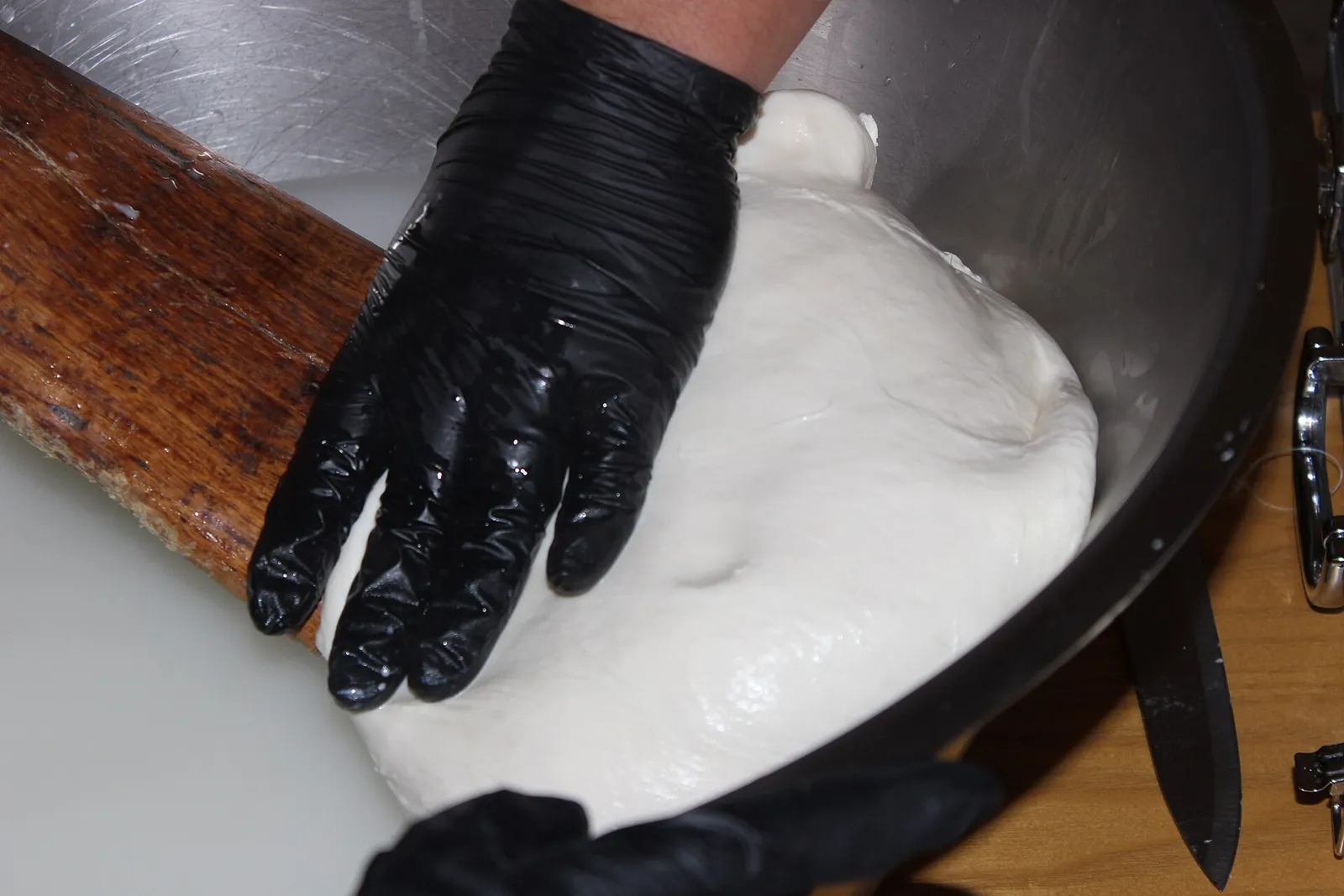
- To stretch in the microwave, heat the curd for 1 minute, drain off the whey, fold it with a spoon, heat 35 seconds, knead with gloves or two spoons, heat another 35 seconds, and knead again.
- To stretch in hot water instead, heat the reserved whey or salted water to about 175°F (80°C), dip the curd in a ladle, and fold it under the surface until it is soft, then pull it like taffy.
- Add the salt as you fold, and keep stretching until the cheese is glossy and smooth and pulls into a long ribbon without tearing; if it cools and stiffens, dip it back in the hot water.
- Shape it into balls, drop them into ice water for 10 minutes to firm them, then eat right away or refrigerate.
Milk for homemade mozzarella
The best milk for homemade mozzarella is fresh, pasteurized whole milk that does not say ultra-pasteurized on the carton. New England Cheesemaking Supply's recipe specifies milk that is not ultra-pasteurized, and ultra-pasteurized milk is the usual reason a home batch will not form a firm curd. Raw milk is a separate question with legal and safety rules; see raw milk cheese and pasteurized vs raw cheese before you try it.
Homogenized milk works. If you cannot find pasteurized milk that is not ultra-pasteurized, look for a local dairy or organic store, since many large organic brands are ultra-pasteurized for shelf life. Store milk keeps best at 40°F (4°C) or below, so start with it cold.
Rennet and citric acid for mozzarella
Rennet and citric acid do different jobs in mozzarella: the acid sets the stage and the rennet forms the curd. Citric acid lowers the milk's pH so the curd will stretch later, and rennet is the enzyme that makes the milk gel; rennet explained covers the animal and vegetarian types. Single-strength liquid rennet is the easiest to measure for a gallon, and a quarter teaspoon is the quantity in the supplier recipe.
Use non-chlorinated water to dilute the rennet, since chlorine can weaken it. Rennet loses strength with age, so a curd that never sets in a fresh batch is often old rennet.
Stretching mozzarella curd
Stretching mozzarella curd is the step that turns crumbly cheese into elastic mozzarella, and it works because heat makes the proteins pliable. In water between about 140 and 185°F (60 to 85°C) the curd turns plastic and its proteins line up into fibers, as the types of mozzarella page explains.
The curd is hot enough to burn you, so wear rubber gloves or use two spoons for the first folds. If the curd breaks into crumbs instead of stretching, it has either cooled or the milk was not acidic enough. Dip it back into hot water and keep folding.
Mozzarella mistakes and fixes
Mozzarella mistakes mostly come from the milk, the rennet, or too much handling.
Mozzarella that won't set
Mozzarella that won't set usually means ultra-pasteurized milk or tired rennet. Check the carton first, then try a fresh bottle of rennet and warm the milk to 95°F next time.
Tough or rubbery mozzarella
Tough, rubbery mozzarella comes from kneading too long or heating the curd too many times. Stop when the cheese is glossy; overworking squeezes out the fat and moisture.
Mozzarella that is crumbly or dry
Crumbly, dry mozzarella is under-acidified, or the curd was cut too small or heated too long. Measure the citric acid exactly and keep the cubes near 1 inch.
Bland mozzarella
Bland mozzarella needs more salt. Work in a full teaspoon during stretching, or sit the finished balls in a light brine for an hour.
Storing homemade mozzarella
Storing homemade mozzarella is simple: eat it the day you make it for the best texture, and refrigerate the rest in a covered container with a little of its cooling water. The supplier recipe says it lasts several days refrigerated but is best fresh. Keep the refrigerator at 40°F (4°C) or below and use a clean container. Homemade mozzarella is a fresh, high-moisture cheese, so smell it and check the surface for slime before you use it.
Cooking with it is worth planning. Fresh mozzarella suits caprese and the last minutes of a hot pizza, while a long bake drives out its water.
Questions about making mozzarella
These are the questions people ask most about making mozzarella at home.
Can you make mozzarella with store-bought milk?
You can make mozzarella with store-bought milk as long as it is pasteurized and not ultra-pasteurized, and whole milk gives the best stretch and flavor.
Is it hard to make mozzarella without a microwave?
Making mozzarella without a microwave is easy: stretch the curd in hot whey or salted water around 175°F, folding it until it turns glossy.
How much mozzarella does a gallon of milk make?
A gallon of milk makes about a pound of mozzarella, depending on the milk's fat and how much whey you press out.
Do you need rennet to make mozzarella?
You need rennet to make mozzarella that stretches and tastes like the store-bought kind; acid alone makes crumbly cheeses such as ricotta and paneer.
Why is homemade mozzarella rubbery?
Homemade mozzarella is rubbery when it has been kneaded or reheated too many times; stretch only until it is smooth and shiny.
Your first mozzarella
Your first mozzarella needs one gallon of the right milk, fresh rennet and a thermometer. Start with the microwave stretch, which is easier to control, and keep the cooling water cold. Once it works, pick up the basic cheesemaking equipment and try milk-and-acid ricotta with the leftover whey.
Sources
- 30 Minute Mozzarella Recipe, New England Cheesemaking Supply Co.
- Mozzarella Cheese Stretching: A Minireview (Gonçalves and Cardarelli, 2021), Food Technology and Biotechnology via PubMed Central
- The basics of cheesemaking, Oregon State University Extension