
Feta is one of the more forgiving cheeses for a first aged project because the work is gentle: no cooking of the curd, no heavy press.
What turns soft curd into feta is salt. Dry salt pulls out whey, brine seasons the cheese and keeps spoilage organisms out, and the cheese firms and sharpens as it sits. Real feta is a Greek PDO cheese of sheep's milk, so a cow's or goat's milk version is feta-style, and a good one.
Feta at a glance
This table shows what making feta at home takes, from yield to curing time.
| Homemade feta | |
|---|---|
| Yield | About 1 1/2 pounds (680 g) from 1 gallon |
| Active time | About 2 hours in total, spread over a day |
| Setting temperature | 85°F (29°C), per Oregon State Extension |
| Draining and pressing | 4 hours hanging, then about 12 hours pressed |
| Brine | At least a few days; 2 months for the full flavor |
| Best milk | Pasteurized whole milk, not ultra-pasteurized; sheep's if you can find it |
| Equipment | Pot, thermometer, long knife, cheesecloth, mold or colander, lidded jar |
How to make feta
Making feta at home follows the standard sequence for a brined cheese: ripen, set, cut, drain, press, salt and cure. The recipe below uses cow's milk because it is the easiest to buy, and swaps are covered further down.
Ingredients for making feta
These are the ingredients for making feta, enough for about 1 1/2 pounds from one gallon of milk.
- 1 gallon (3.8 liters) pasteurized whole milk, not ultra-pasteurized
- 1/8 teaspoon mesophilic starter culture (or the amount on the packet for one gallon)
- 1/2 teaspoon liquid single-strength rennet, diluted in 1/4 cup (60 ml) cool non-chlorinated water
- 1/4 teaspoon calcium chloride in 1/4 cup (60 ml) water, optional, for store-bought milk that sets weakly
- 2 tablespoons (35 g) non-iodized salt for dry-salting the cubes
- Brine: 1 quart (1 liter) cold water plus 1/4 cup (about 70 g) non-iodized salt
Steps for making feta
Follow these steps for making feta over about a day, then let it cure in the fridge.
- Pour the milk into a clean stainless steel pot and warm it to 85°F (29°C), stirring gently. Stir in the calcium chloride if you are using it.
- Sprinkle the culture over the surface, wait 2 minutes for it to soak, then stir it in and let the milk ripen, covered, for 1 hour at 85°F.
- Stir in the diluted rennet with an up-and-down motion for 1 minute, then stop the milk moving and leave it covered and still for 45 to 60 minutes.
- Test for a clean break: slide a clean knife into the curd and lift. The curd should split with sharp edges and clear, yellow-green whey in the crack. If it is soft and milky, wait another 10 minutes.
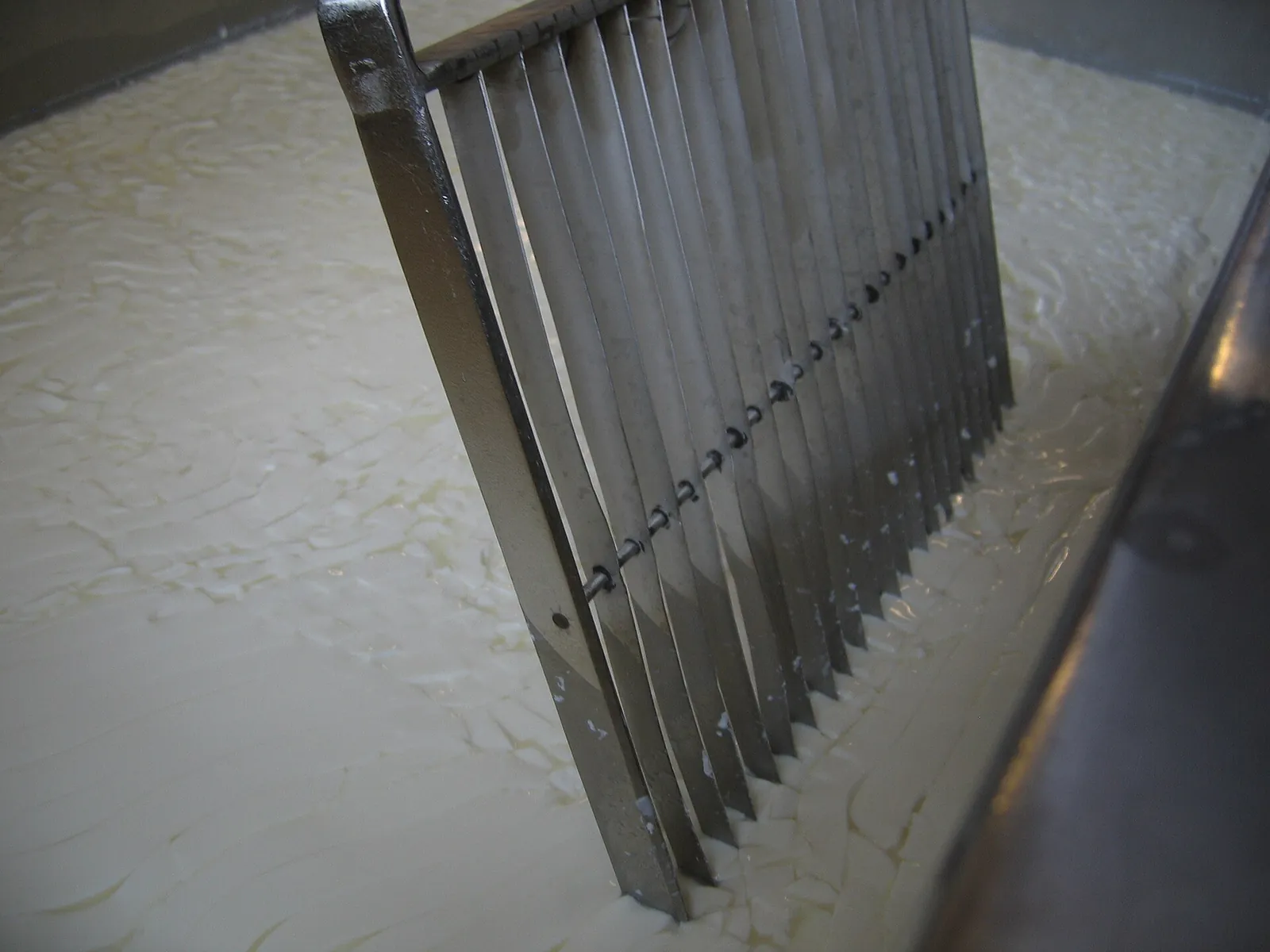
- Cut the curd into 1/2 inch (1.3 cm) cubes, rest it 5 minutes, then stir slowly for 10 minutes so the cubes firm up without breaking apart.
- Let the curds settle for 15 minutes, then ladle them into a cheesecloth-lined colander. Tie the corners and hang the bag for about 4 hours until it stops dripping.
- Break the curd into a cheese mold or a lined colander, fold the cloth over it, and press with about 2 pounds (1 kg) of weight, such as a full jar, for about 12 hours at cool room temperature or in the fridge.
- Unwrap the block, cut it into 1 inch (2.5 cm) cubes, and rub the cubes all over with the dry salt. Rest them on a rack or plate in the fridge for 12 to 24 hours.
- Stir the brine until the salt dissolves, pack the cubes into a jar, cover them completely with brine, and refrigerate at 40°F (4°C) or below.
- Taste after 3 days for a mild, creamy feta, or leave the cheese in brine for 2 weeks to 2 months for a saltier, firmer, tangier one.
The best milk for feta
The best milk for feta is whole pasteurized milk with no "ultra-pasteurized" on the carton. Oregon State Extension starts its cheesemaking guide with pasteurized milk, and America's Test Kitchen warns that ultra-pasteurized and UHT milk have proteins altered by the extra heat, which makes curds difficult to form. Read the label before you buy; the pasteurization guide covers heating raw milk safely.
Sheep's milk is what Greek feta is made from, with up to 30 percent goat's milk, and it gives a richer, creamier cheese because it carries more fat and protein than cow's milk. Sheep's milk is hard to find in a US store, so most home makers use cow's milk, goat's milk, or a blend, and the cheese comes out a little leaner and more crumbly. Whole milk matters: skim gives a dry, chalky block.
Making feta mistakes and fixes
Making feta mistakes mostly come from weak curd, too much salt or a warm fridge. The usual fixes are simple.
Weak curd that will not break cleanly usually means ultra-pasteurized milk, old rennet or milk that lost calcium in processing. Switch milk, buy fresh rennet, and add the calcium chloride. See troubleshooting common cheesemaking problems for more.
Cheese that is too salty can be soaked. The Utah State study held feta in brines of 6.5, 8.0 and 9.5 percent salt and found the salt in the cheese's moisture settled at 4.6, 5.7 and 6.7 percent. A weaker brine gives milder cheese, which is why this recipe uses about 7 percent. A 20 to 30 minute soak in cold water or milk pulls salt from a block that is too sharp.
Cheese that swells or sours has been stored warm. In the same Utah State work, feta held at 37°F (3°C) gained moisture and swelled by 20 to 30 percent, while feta at 72°F (22°C) shrank by 13 to 18 percent of its weight and the pH fell to 4.1. Keep the jar cold and the cheese covered by brine. Throw it out if it turns slimy or smells off.
Variations on homemade feta
Variations on homemade feta change the milk, the herbs or the cure. Use goat's milk for a sharper, more goaty cheese, or a mix of goat's and cow's for balance. Add a spoonful of dried oregano to the brine jar, or layer the cubes with olive oil, peppercorns and a strip of lemon peel after the first week. If a brined block is harder than you like, a weaker brine and a shorter cure give a softer cheese.
For the real thing, see how to spot authentic feta. If you want to compare it with a fresh cheese, feta vs goat cheese lays out the differences.
Storing homemade feta
Storing homemade feta means keeping the cheese cold and under brine in a lidded jar. Oregon State Extension says feta can stay in brine for a long time and keeps aging and gaining flavor, and it suggests storing portions in quart jars with brine. For this lower-salt brine, plan on a few weeks and watch for off smells, slime or a swollen jar. Use clean utensils every time, and if the brine turns cloudy, replace it with fresh brine made at the same strength.
Crumble the cheese over a salad, bake it with tomatoes, or fold it into a phyllo pie such as spanakopita.
Questions about making feta
These questions cover the most common problems when you make feta at home.
Can you make feta at home without rennet?
You can make feta at home without rennet only if you give up the classic texture. Feta is set with rennet and culture, and acid-set cheeses are softer and more like ricotta. The rennet guide explains animal and vegetarian types.
How long does homemade feta take to make?
Homemade feta takes about 2 hours of hands-on work over a day, plus about 12 hours of pressing and a few days to two months of brining. Oregon State Extension brines feta for two months.
What milk do you use to make feta?
The milk you use to make feta should be pasteurized whole milk that is not ultra-pasteurized. Sheep's milk is traditional, and goat's or cow's milk works.
Why is homemade feta crumbly or rubbery?
Homemade feta turns crumbly when it is pressed too long or brined too salty, and rubbery when the curd was cut too small or stirred too hard. Cut to 1/2 inch and stir gently.
Is homemade feta safe to eat?
Homemade feta is safest when it is made from pasteurized milk and kept at 40°F or below. People who are pregnant or immunocompromised should read the pasteurized vs raw guide before eating soft cheeses.
Make feta this weekend
To make feta this weekend, buy a gallon of pasteurized whole milk, culture, rennet and cheesecloth, and start in the morning so the curd can drain overnight. Taste the first batch at 3 days and again at 2 weeks to learn what brine time you like. Equipment needs are in the cheesemaking equipment guide.
Sources
- The Basics of Cheesemaking, Oregon State University Extension
- Feta cheese in brine: salt and storage temperature study, Utah State University
- How to Make Cheese from Scratch, America's Test Kitchen