
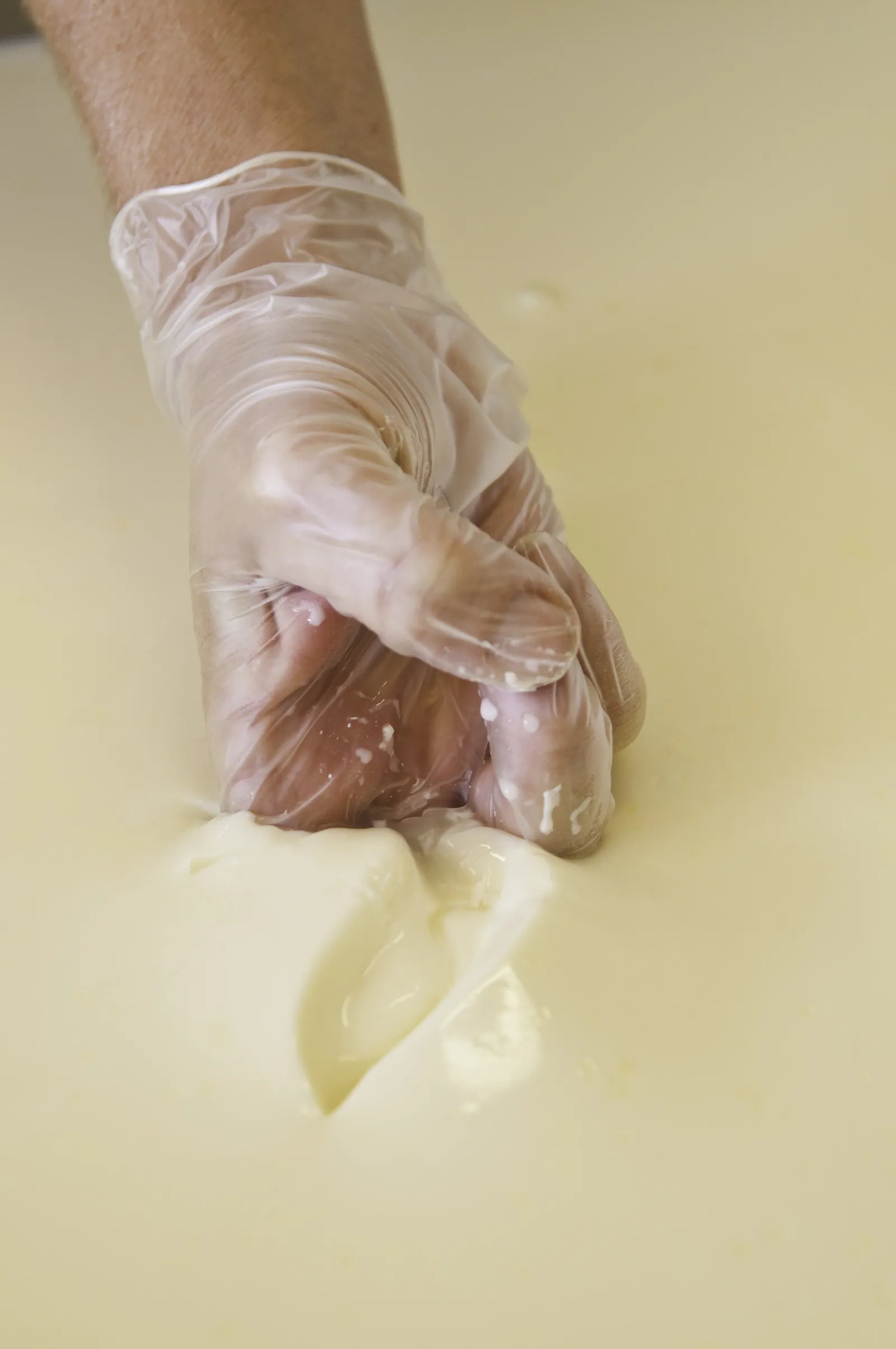
Rennet matters to eaters as much as to cheesemakers, because the kind a maker uses decides whether a cheese is vegetarian and whether a protected name can be used. It also matters in a home kitchen, where a few drops decide whether you get a firm, sliceable curd or a pot of milk.
What rennet is and how rennet sets milk
Rennet sets milk by cutting one protein. The enzyme chymosin cleaves kappa casein at a specific site, which removes the slightly negatively charged glycomacropeptide from the surface of the casein micelle. With that charge gone, the micelles no longer repel each other, so they cluster and separate from the water as curd.
That is a different route from acid. Acid-set cheeses such as paneer and many ricotta styles curdle with acid or heat and need no rennet. Rennet makes a firmer, more elastic curd, which is why it sits behind most aged and pressed cheeses. The wider process is in how cheese is made.
Animal rennet
Animal rennet is the traditional kind, taken from the abomasum, the fourth stomach chamber, of young nursing calves, as a byproduct of veal production. Because it comes from slaughtered animals, a cheese set with it is not vegetarian.
Some protected cheeses still require it. Parmigiano-Reggiano uses only calf rennet, as the label guide and the vegetarian cheese and wine page both note. Gorgonzola lists calf rennet as a permitted raw material, and Comté is made with it. Feta's specification describes traditional rennet from the stomachs of unweaned lambs and kids, and the feta page covers the details.
Microbial rennet
Microbial rennet is a coagulant made by molds grown in a fermenter, and it is vegetarian. Rhizomucor miehei is one mold that produces proteolytic enzymes used for coagulating milk. These enzymes set milk differently from chymosin, so a maker adjusts the recipe, and cheeses can taste somewhat different.
On a label it often appears as "microbial rennet" or "microbial enzymes." That is the wording to look for on a vegetarian pack of cheddar or mozzarella.
Fermentation-produced chymosin (FPC)
Fermentation-produced chymosin is chymosin made by microbes rather than extracted from a calf: bacteria, fungi or yeasts are engineered to produce the same enzyme the calf makes, and it can qualify as vegetarian if no animal products were used in the fermentation. The FDA lists chymosin made this way, including from a strain of E. coli K-12 carrying the prochymosin gene, as generally recognized as safe under 21 CFR 184.1685.
FPC is now widely used, so many cheeses on a US shelf are not set with calf rennet, which is why vegetarians can usually find a match. The label is the only sure way to tell.
Plant rennet
Plant rennet is made from plants that contain milk-clotting enzymes, and it is traditional in parts of Spain and Portugal. A review of vegetable rennets names cardoon (Cynara cardunculus) and artichoke (Cynara scolymus) as the main sources, with enzymes called cardosins and cyprosins in cardoon and cynarases in artichoke. Older traditional options include fig juice, nettle and mallow.
The same review lists three protected cheeses made with cardoon: Torta del Casar and Queso de la Serena from Extremadura, Spain, and Queijo Serra da Estrela from Portugal. The drawback is strong proteolytic activity, meaning the enzymes break proteins down fast, which can leave a bitter flavor. The review says PDO cheeses made with sheep's milk reduce those problems.
Rennet types compared
The four rennet types compare most easily side by side, and the table shows source and vegetarian status.
| Type | Source | Vegetarian? | Where you see it |
|---|---|---|---|
| Animal rennet | Stomach of young calves, lambs or kids | No | Parmigiano-Reggiano, Gorgonzola, Comté |
| Microbial rennet | Molds grown in a fermenter | Yes | Vegetarian cheddar, mozzarella |
| Fermentation-produced chymosin | Engineered microbes | Generally yes | Much US supermarket cheese |
| Plant rennet | Cardoon, artichoke and others | Yes | Torta del Casar, Serra da Estrela |
Using rennet at home
Using rennet at home means measuring a tiny amount and dissolving it first. New Mexico State University Extension's home cheesemaking guide says one teaspoon of liquid rennet is equivalent to one tablet, and that rennet should be dissolved completely in cool distilled or boiled water before it goes into the milk.
Follow each recipe's own amount, because strengths vary by brand and type. Stir the diluted rennet through quickly, then leave the milk still while it sets. A beginner's tool list is on the equipment page, and a failed set is covered in troubleshooting.
Rennet mistakes and label traps
The biggest rennet mistake is assuming a cheese is vegetarian because it looks vegetarian. Two cheddars on the same shelf can be set with different rennets. The label guide points out that US rules let makers declare cheese enzymes simply as "enzymes," so the word alone does not reveal the source. A vegetarian statement, or "microbial enzymes" or "vegetable rennet," is the dependable sign, and a quick question to the maker settles the rest.
Another trap is the protected name. Halloumi's PDO bans only pig rennet, so a halloumi can be animal-set, and halloumi vegetarians should look for microbial rennet on the pack. And keep bleach residue away from your rennet at home: Oregon State University Extension warns it makes rennet inactive or less active.
Questions about rennet
These questions about rennet cover the points readers ask about most.
What is rennet made of?
Rennet is made of enzymes, chiefly chymosin, and the source varies: calf stomach, mold, engineered microbes or plants such as cardoon.
Is rennet vegetarian?
Rennet is vegetarian only when it is not animal rennet. Microbial rennet and plant rennet are vegetarian, and FPC generally is.
Is Parmesan made with rennet?
Parmesan labeled Parmigiano-Reggiano is made with calf rennet, so it is not vegetarian, though vegetarian hard cheeses exist as alternatives.
Do all cheeses use rennet?
Not all cheeses use rennet. Acid-set cheeses such as paneer set with acid, and most ricotta is heat and acid set.
Can vegetable rennet replace animal rennet?
Vegetable rennet can replace animal rennet, but it acts differently, and the cheese may taste more bitter. Follow the product's directions.
Choosing rennet
Choosing rennet comes down to your diet and the cheese. For a vegetarian kitchen, buy microbial or FPC rennet and check the pack for the word vegetarian. For a tradition-minded cheese, animal or plant rennet suits what the protected name asks for. Check your next block of cheddar for the enzyme line, and see the label guide for the rest.
Sources
- Rennet, Wikipedia
- Future Perspective and Technological Innovation in Cheese Making Using Artichoke (Cynara scolymus) as Vegetable Rennet: A Review, PubMed Central
- Making Homemade Cheese (Guide E-216), New Mexico State University Extension
- The basics of cheesemaking, Oregon State University Extension
- 21 CFR 184.1685, Chymosin, Legal Information Institute, Cornell Law School