
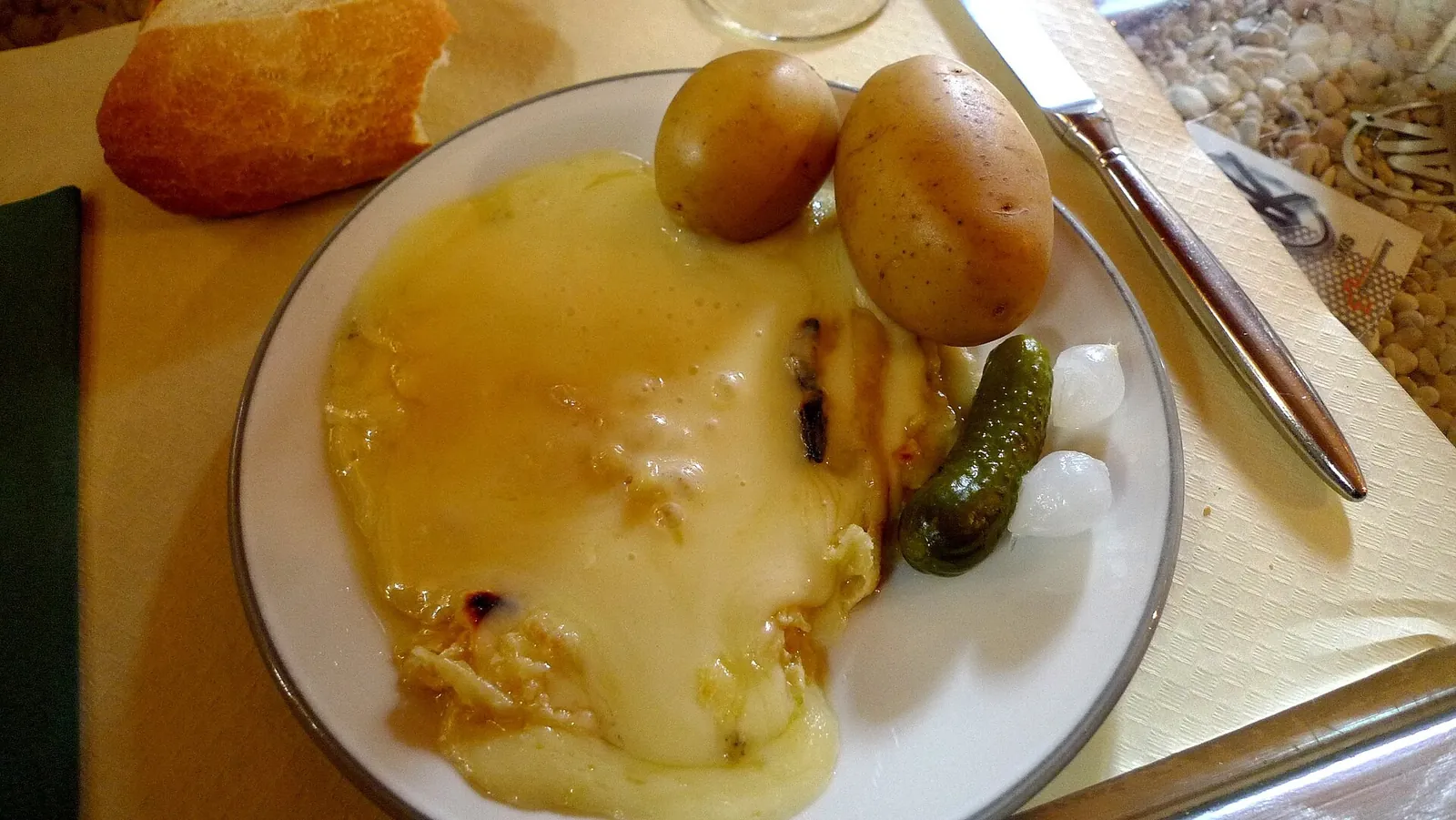
Olives suit sheep's milk and Mediterranean cheeses, while pickles suit firm, aged and melted cheeses.
The rule of thumb is to match intensity. A salty cheese with a salty olive can taste harsh, so put briny olives with creamy or mild cheeses and sharper pickles with fatty ones. Everything else is a variation.
Cheese with olives and pickles at a glance
This table of cheese with olives and pickles sets each cheese beside a briny partner and the reason.
| Cheese | Olive or pickle | Why it works |
|---|---|---|
| Feta | Green or Kalamata olives | Salty and tangy together, a familiar Greek-style plate |
| Manchego | Green olives, pickled peppers | Nutty sheep's milk against a salty bite |
| Halloumi | Marinated olives | Grilled and salty with a bright, herby edge |
| Cheddar | Pickled onions, gherkins | Acid cuts sharp, rich cheese |
| Raclette | Cornichons | Tart crunch against melted, fatty cheese |
| Washed rind and aged cheese | Sharp dill pickles, pickled vegetables | Strong flavor needs strong contrast |
| Soft and creamy (brie, chèvre) | Mild green olives, a few cornichons | Gentle acid without overpowering |
Why olives and pickles go with cheese
Olives and pickles go with cheese because cheese is rich and salty-savory, and the acid in vinegar or brine cuts fat the way a squeeze of lemon does. The sourness also resets your palate, so the third bite of cheese tastes as good as the first. That is guidance rather than a rule, but it is why the pairing shows up on boards everywhere.
The sensible limit is salt. Cheese is already salty, and so are brined olives, so keep the quantities small and offer something fresh, such as grapes or pear and apple slices, to balance the plate.
Cheese with olives
Cheese with olives is strongest with Mediterranean cheeses, where the two come from the same kitchen tradition. Feta is brined sheep's milk cheese, so it is already tangy and salty, and olives echo that. See feta for how real Greek feta differs from US versions. Manchego is Spanish sheep's milk cheese, and green olives are a natural tapas partner.
Olives vary a lot in saltiness and firmness, so taste one before you serve it and rinse any that are very salty. Choose pitted olives for a board so guests are not hunting for a place to put pits, or put out a small dish for them. Marinated olives with orange peel, garlic or chili suit milder cheeses such as halloumi or fresh mozzarella. Plain brined olives suit richer cheese.
Cheese with pickles
Cheese with pickles suits firm, aged and melted cheese better than soft ones. Pickled onions and a spoon of chutney make a ploughman's-style plate with sharp cheddar. Cornichons, the small tart gherkins, are a standard partner for melted raclette and for rich cheeses. A sharp dill pickle or pickled vegetables stands up to washed-rind cheese and aged Gouda.
Crunch matters here: a limp pickle disappoints, and a pickle with some bite makes the cheese taste richer by contrast. Cut large gherkins into spears or coins so they are easy to pick up with a cracker. Drain pickles and pat them dry before they go on the board so they do not wet the cheese or crackers.
Cheese with other briny foods
Cheese with other briny foods follows the same logic: capers, pickled peppers, pepperoncini, artichoke hearts and cocktail onions all add acid and salt. Pickled peppers suit mild, creamy cheese, because heat and acid lift it. Capers and artichokes work with soft fresh cheese and ricotta. Brined items also pair with cured meat on the same board; see pairing cheese with charcuterie.
How to serve olives and pickles on a cheese board
Serving olives and pickles on a cheese board takes small bowls, a spoon or fork for each, and a little space between wet items and the cheese. A few olives and two pickle types is plenty: one briny, one sharp. Add crackers or bread to carry them.
The olives and pickles are shelf-stable until opened, but the cheese is not. The University of Nebraska-Lincoln says cut cheeses should not sit at room temperature for more than 2 hours, or 1 hour above 90°F. Refrigerate the cheese, not the pickles, when the party is over, and use the cheese board guide for amounts.
Cheese with olives and pickles mistakes to avoid
Cheese with olives and pickles mistakes tend to be too much salt, too little variety and too many wet items. A plate of feta, olives and salted crackers is a salt bomb, so offer something neutral such as plain bread. Do not bury a delicate cheese beneath a strong pickle; a sharp onion will overwhelm a fresh chèvre.
Avoid piling oily marinated olives straight onto the board. Oil spreads across cheese and makes crackers soggy, so use a bowl.
Questions about cheese with olives and pickles
These questions about cheese with olives and pickles cover the most common board decisions.
What cheese goes with olives?
The cheese that goes with olives is usually feta, Manchego or halloumi, which share Mediterranean origins and handle salt well.
What pickles go with cheddar?
The pickles that go with cheddar are pickled onions and gherkins, plus a spoon of chutney, since acid cuts sharp cheddar's richness.
What goes with raclette?
What goes with raclette is cornichons, pickled onions and boiled potatoes. The tart pickles cut through the melted cheese.
Do olives go on a cheese board?
Olives go on a cheese board as a briny, savory counterpoint to rich cheese and sweet fruit. Serve them in a small bowl.
Are pickles good with soft cheese?
Pickles are good with soft cheese in small amounts: a cornichon or mild pickled pepper adds acid without overpowering it.
Is there a non-alcoholic drink to go with this?
A non-alcoholic option such as sparkling water with lemon suits briny pairings well; see non-alcoholic pairings.
Choosing olives and pickles for your cheese
Pick one briny olive and one sharp pickle, match them to the strength of your cheese, and keep them dry and in small bowls. Feta and Manchego want olives, cheddar and raclette want pickles. Next, build the whole plate with the board builder.
Sources
- Charcuterie Boards and Food Safety, University of Nebraska-Lincoln Extension
- Leftovers and Food Safety, USDA Food Safety and Inspection Service
- FoodKeeper App, FoodSafety.gov (USDA)