
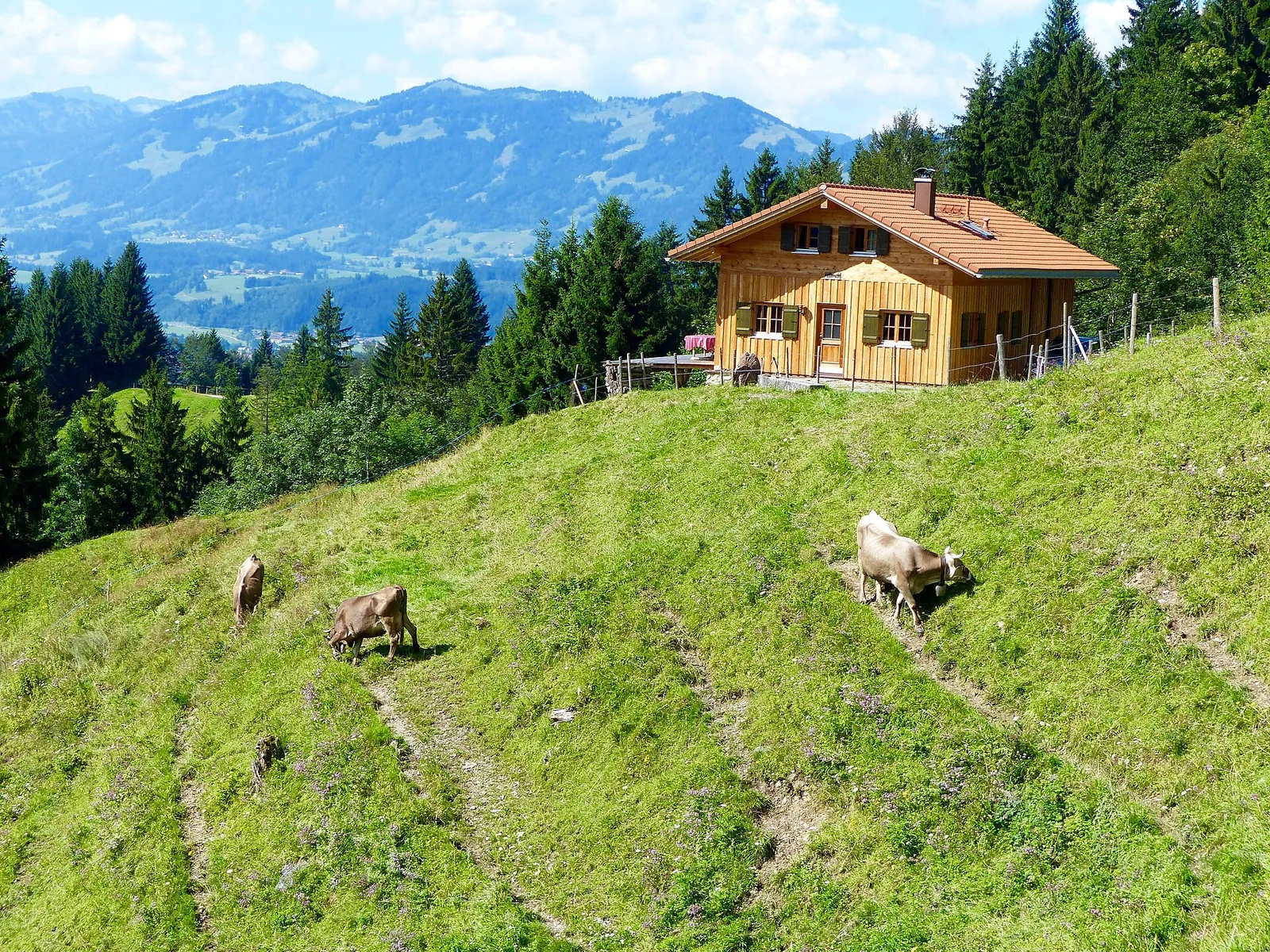
The EU protects several German names, among them Allgäuer Bergkäse, Hessischer Handkäse and Holsteiner Tilsiter.
This page maps the main cheeses of Germany, what the protected names mean and where to look for them in the US. The cheese-by-cheese detail lives in the guide linked at the end.
Germany cheese at a glance
Here is Germany cheese at a glance: the cheeses most worth knowing, their style and whether the EU protects the name.
| Cheese | Style | Protected name |
|---|---|---|
| Allgäuer Bergkäse | Firm Alpine, raw cow's milk, aged at least 4 months | PDO, registered 1997 |
| Hessischer Handkäse | Small, hand-formed sour-milk cheese | PGI, 2010 |
| Holsteiner Tilsiter | Semi-hard, smear-ripened | PGI, 2013 |
| Limburger | Washed rind, very pungent | None |
| Butterkäse | Semi-soft, mild and buttery | None |
| Cambozola | Soft blue-white hybrid | None |
| Quark | Fresh, spoonable | None |
Allgäuer Emmentaler and Altenburger Ziegenkäse, a goat's-milk cheese, also hold PDO status.
Germany cheese tradition
Germany cheese tradition is regional rather than national. The south, above all the Allgäu in Bavaria, makes mountain cheeses in the Alpine manner. The north and center lean toward fresh quark, soft table cheeses and sour-milk cheeses that were once farmhouse staples.
Most German cheese is eaten at the bread table. A Brotzeit or Abendbrot plate puts a few slices of cheese beside rye bread, butter, cold cuts and pickles, so mild, sliceable cheeses do most of the daily work and the strong ones stay a specialty.
Alpine and protected cheese from Germany
Alpine cheese from Germany means Allgäuer Bergkäse first. The European Commission's entry describes it as made only from raw cow's milk heated to below 104°F (40°C) before renneting, in rind-matured wheels of 33 to 110 pounds (15 to 50 kg) with pea-sized holes, aged at least 4 months, with a flavor from mild to very aromatic. The area covers the German Allgäu, in Swabian Bavaria and parts of Baden-Württemberg. See the Allgäuer Bergkäse profile for buying and serving.
Protected names matter because they tie a cheese to a place and a recipe. Commission Regulation (EU) No 784/2010 entered Hessischer Handkäse in the register in 2010, and Holsteiner Tilsiter followed as a PGI in 2013 under Regulation (EU) No 1266/2013. The PDO and PGI guide explains the difference between the two labels.
Washed-rind and mild cheese from Germany
Washed-rind cheese from Germany is led by Limburger, famous for an aroma far stronger than its savory, meaty taste. In the US it is usually made in Wisconsin, so it is easier to find than most imports. The Tilsit page covers the milder, smear-ripened cousin.
At the gentle end, Butterkäse is the mild, buttery slicing cheese, and quark is the fresh, tangy cheese stirred into spreads, dips and cheesecakes. Cambozola, a Camembert and Gorgonzola hybrid, is the usual first blue for people who think they dislike blue.
How to find Germany cheese in the US
To find Germany cheese in the US, start with supermarkets and German delis for quark, Butterkäse and Cambozola, then move to specialty counters for the Alpine wheels.
Read the label for the full protected name, not just "Alpine style" or "Swiss style," which can come from anywhere. EU protection does not automatically apply on US shelves, so the origin line and the milk are the evidence. Raw-milk cheeses sold in the US have to follow the FDA's 60-day aging rule, and Allgäuer Bergkäse clears it easily at 4 months.
Serving Germany cheese at home
Serving Germany cheese at home works best as a Brotzeit board: one mild cheese, one Alpine cheese and one strong one, with dark rye, soft pretzels, mustard, pickles and sliced radishes. Plan about 1 to 2 ounces of each cheese per person as an appetizer, and bring Bergkäse and Limburger out of the refrigerator 30 minutes early so the flavor opens up. The board builder scales the amounts by headcount.
Beer is the natural match. A helles or Märzen suits Bergkäse, a pilsner or Kölsch suits Butterkäse, and a dunkel or bock stands up to Limburger. Riesling is the wine to try with all three.
Cooking with Germany cheese
Cooking with Germany cheese is simpler than the board suggests. Bergkäse melts like a Gruyère-style cheese, so it works in gratins, with boiled potatoes, and in the classic Käsespätzle, layered with onions. Butterkäse melts evenly for toasties and quark replaces cream cheese or sour cream in baking, where its tang cuts richness. Limburger belongs in a sandwich, not a sauce.
What most Germany cheese lists get wrong
Most Germany cheese lists get one thing wrong: they reduce the country to Limburger. It is the cheese with the reputation, but the registered names, the Alpine wheels and the everyday mild cheeses are what Germans actually buy.
They also treat Cambozola as a classic when it is a modern industrial cheese, and they skip the sour-milk family entirely. Handkäse is a PGI with its own regional identity, yet it almost never appears in US guides.
Questions about Germany cheese
These are the most common questions about Germany cheese.
What cheese is Germany known for?
Germany is known for Allgäuer Bergkäse and Emmentaler from the Allgäu, mild Butterkäse, fresh quark and pungent Limburger.
Which German cheeses are protected?
Protected German cheeses include Allgäuer Bergkäse, Hessischer Handkäse and Holsteiner Tilsiter, plus Allgäuer Emmentaler and Altenburger Ziegenkäse.
Is German cheese strong?
German cheese ranges widely: Butterkäse is mild, Bergkäse nutty, and Limburger and Handkäse are the strong ones.
Where can you buy German cheese in the US?
Buy German cheese in the US at German delis, well-stocked supermarkets and cheese counters, and read the label for the full protected name.
Where to start with Germany cheese
Start with Germany cheese by tasting a young Butterkäse for the baseline, then a 4-month Allgäuer Bergkäse with dark bread and Riesling. Add Limburger last, with rye, mustard and raw onion. The pairing guide has beers and wines for each, and the German cheese guide goes deeper into every style.
Sources
- Allgäuer Bergkäse (PDO), European Commission
- Commission Regulation (EU) No 784/2010 entering Hessischer Handkäse or Hessischer Handkäs (PGI), European Union
- Commission Implementing Regulation (EU) No 1266/2013, Holsteiner Tilsiter (PGI), EUR-Lex
- List of European cheeses with protected geographical status, Wikipedia