
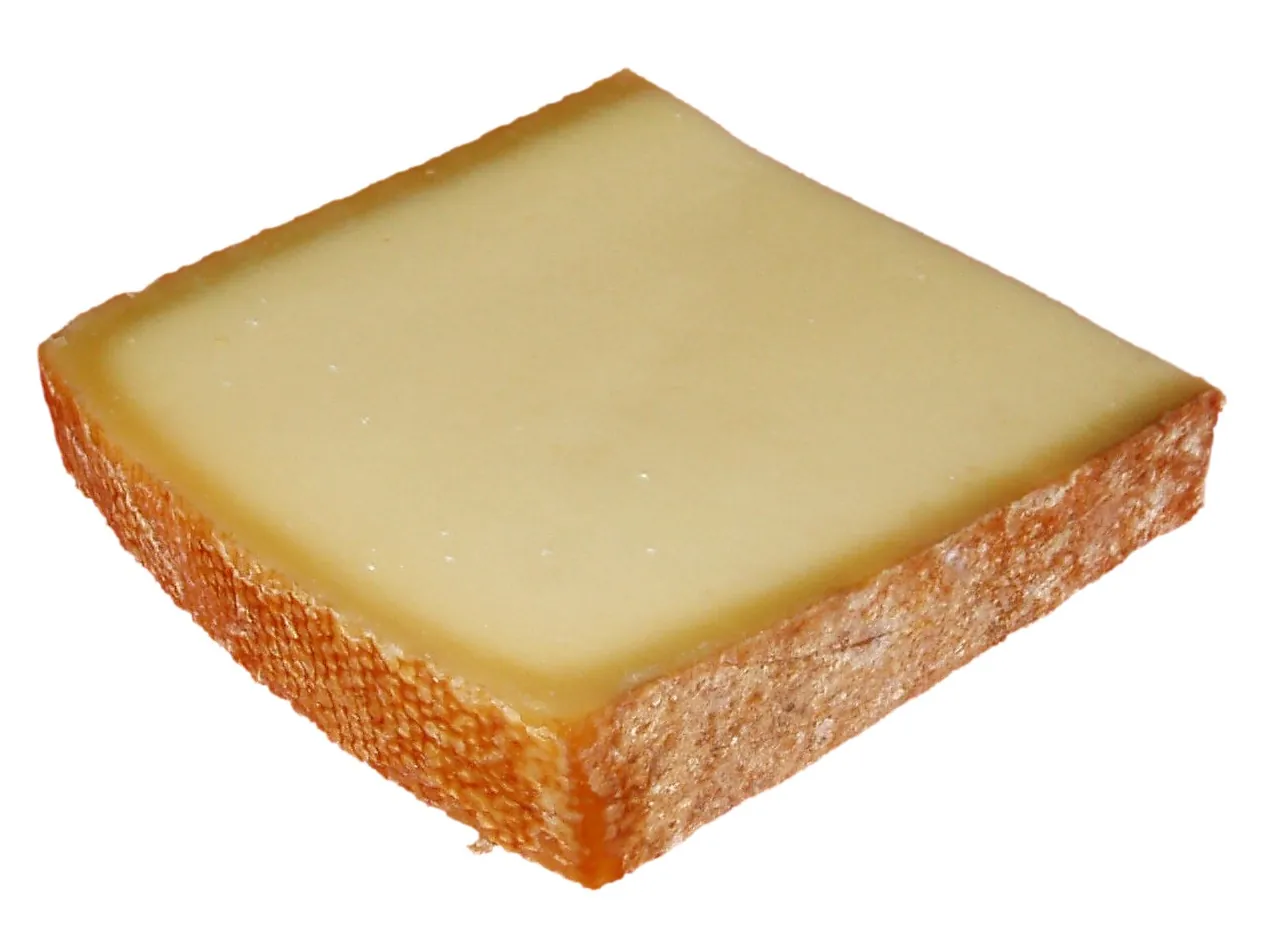
It is firm, nutty and a little sweet, and its name has been protected in the EU since 1997.
Think of it as the German cousin of Gruyère. It belongs to the same mountain-cheese tradition, with big wheels, a natural rind and flavor that deepens with age. The German cheese guide places it beside Allgäuer Emmentaler, the region's other protected wheel.
Allgäuer Bergkäse at a glance
Here is Allgäuer Bergkäse at a glance, with the facts box on this page giving milk, texture and age.
| Detail | Allgäuer Bergkäse |
|---|---|
| Protected name | PDO, registered in the EU on January 24, 1997 |
| Milk | Raw cow's milk |
| Rind | Natural, firm, often brushed |
| Flavor | Nutty, sweet, brothy, grassy |
| Wheel | Large, roughly 15 to 20 kg (33 to 44 lb) |
Origin and protected name
The protected name Allgäuer Bergkäse means the cheese must come from the Allgäu region, and the name carries a PDO, a protected designation of origin. The GOV.UK register entry records the original EU registration on January 24, 1997, and the name was carried into the UK scheme at the end of 2020. A PDO ties every step of production to the named place, which the PDO and PGI guide explains in more detail.
How Allgäuer Bergkäse is made
Allgäuer Bergkäse is made from raw cow's milk, heated gently and set with rennet. The curds are cut, pressed into molds, brined for several days and then ripened in cool, humid cellars, according to one cheese guide. During ripening the rind is brushed, which gives the wheel its rustic look. The same guide puts fat in the dry matter at 45 to 50 percent.
Raw milk and long cellar time are what give a mountain cheese its depth: the milk's own bacteria and the slow ripening build the nutty, brothy flavor that pasteurized, quickly ripened cheeses rarely reach. The wheels are big, roughly 15 to 20 kg (33 to 44 lb), which also slows ripening and keeps the paste moist inside a firm rind.
Taste and texture by age
Allgäuer Bergkäse tastes different at four months than at twelve, and the age on the label matters more than the brand. Young wheels, about 4 to 6 months, are milder and slightly softer, with sweet milk and a nutty edge. Past a year the cheese turns sharper and more savory, with a crumblier body that breaks into shards rather than slicing cleanly. The German cheese guide notes the minimum age is four months.
How to buy Allgäuer Bergkäse in the US
Buying Allgäuer Bergkäse in the US mostly means asking at a good cheese counter or a German or Alpine specialty shop, since it is not a supermarket staple. Look for the PDO name on the label and ask how old the wheel is. A piece cut to order from a wheel will taste better than vacuum-packed wedges that have sat for months. If the shop has none, ask for a Gruyère or Comté instead.
How to serve and cook with Allgäuer Bergkäse
Serve Allgäuer Bergkäse at room temperature, since cold mutes the nutty flavor; give it about an hour out of the fridge. Shave it over warm boiled potatoes, melt it into Käsespätzle, or stir it into a fondue with a splash of white wine. It also works on a raclette-style dinner when you want something drier than raclette cheese. Grate it into gratins, where it browns well and holds its flavor.
What to serve with Allgäuer Bergkäse
What to serve with Allgäuer Bergkäse is mostly German: dark bread, cured ham, boiled potatoes and walnuts. Fruit that suits it includes apple, pear and grape. For wine, Riesling, Grüner Veltliner and Pinot Noir all work, and beer pairs well too: Helles, Märzen or Dunkel. The pairing guide lists more options.
Substitutes for Allgäuer Bergkäse
Substitutes for Allgäuer Bergkäse are the other firm Alpine cheeses. Gruyère is the nearest match in flavor and melt, Comté is slightly fruitier, and fontina is softer and meltier. The substitute finder can narrow the choice by the dish you are making.
Allgäuer Bergkäse mistakes to avoid
Allgäuer Bergkäse mistakes usually come down to temperature and slicing. Serving it straight from the fridge hides the sweetness, so let it warm up. Cutting a big pile of slices an hour early dries the edges, so cut only what the table will eat. In cooking, add it to sauces off the boil, because high heat makes aged mountain cheese turn stringy and oily. And do not bother with the rind: it is natural and firm, fine in a soup pot but not for eating.
How to store Allgäuer Bergkäse
Store Allgäuer Bergkäse wrapped in wax or parchment paper in the fridge, and use a cut piece within a few weeks. The storing cheese guide covers wraps. Dry rind ends are good for flavoring soups.
Questions about Allgäuer Bergkäse
These are common questions about Allgäuer Bergkäse.
Is Allgäuer Bergkäse the same as Bergkäse?
Allgäuer Bergkäse is one specific Bergkäse, while "Bergkäse" simply means mountain cheese and is made in Germany, Austria and elsewhere. Only cheese from the Allgäu may carry the protected name.
Is Allgäuer Bergkäse raw milk cheese?
Allgäuer Bergkäse is made from raw cow's milk, according to a cheese guide and the German cheese guide on this site. Check the label of the piece you buy.
What does Allgäuer Bergkäse taste like?
Allgäuer Bergkäse tastes nutty, sweet and brothy, with a grassy note, and it sharpens as it ages.
Is Allgäuer Bergkäse like Gruyère?
Allgäuer Bergkäse is similar to Gruyère in style and melts well, though it is a separate cheese with its own protected name. Gruyère is Swiss, as the Swiss cheese guide explains.
Try Allgäuer Bergkäse first
To try Allgäuer Bergkäse, buy a small piece of a 4 to 6 month wheel, warm it up and eat it with boiled potatoes and a cold Helles. Then try an older piece to taste how sharpness builds.
Sources
- Allgäuer Bergkäse, GOV.UK protected food names register
- Allgäuer Bergkäse: Taste, Production, Pairings Guide, MyCheese
- Protection and Controls, Weltgenusserbe Bayern