
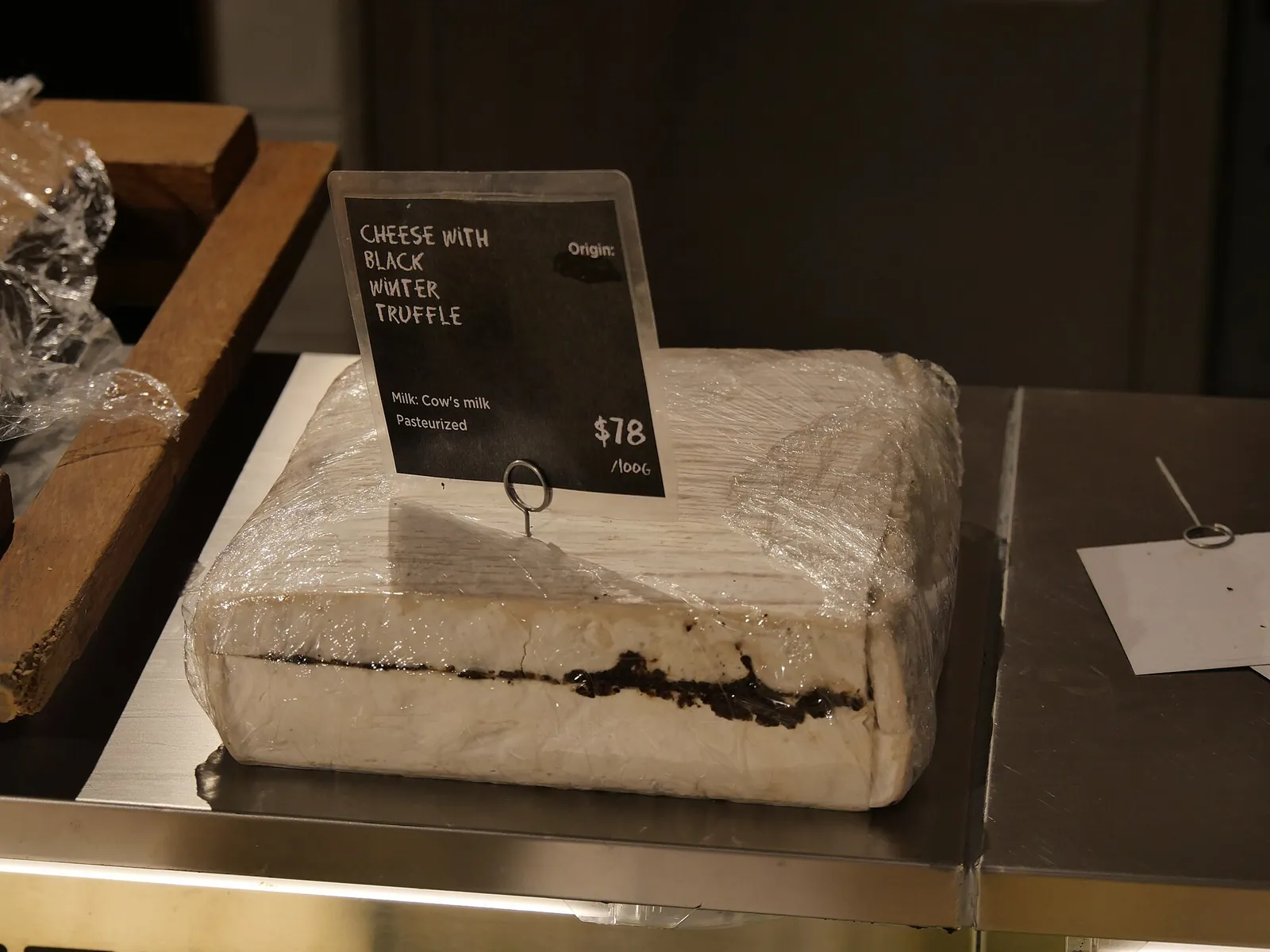
They are not worth it when the money buys a fancy label, a flavoring or a wedge that has sat open for weeks.
This page is about which splurges pay off. For the headline-grabbing record prices, such as a prize Cabrales wheel sold at auction, see the world's most expensive cheeses. Those are curiosities. The cheeses below are ones you can actually buy by the wedge and taste the difference.
Splurge cheeses at a glance
This table compares splurge cheeses by what you are paying for, the age to ask for and the best way to serve each.
| Cheese | What the money buys | Age to look for | Best use |
|---|---|---|---|
| Comté | Raw milk from two breeds, cellar aging | 18 to 24 months or more | Board, shaved over salads |
| Parmigiano-Reggiano | Years of aging, a branded wheel | 24 to 40 months | Chunks to eat, grating |
| Roquefort | Raw ewe's milk, natural caves | Whatever is ripe at the counter | Board with honey and walnuts |
| Aged Gouda | Long drying, caramel and crunch | A year or more | Shards on a board |
| Aged cheddar | Time in the cellar | Extra sharp, up to 2 years or more | Eating out of hand |
What makes a cheese worth the price
A cheese is worth the price when the cost comes from something real and tasteable. Four things qualify, and most splurges combine two or three.
Age
Age is the cost you can taste most directly, because every month ties up space, labor and money while flavor changes. The Parmigiano-Reggiano consortium's maturation chart shows how much: at 12 months it is milky, buttery and tangy, at 24 months it has white pepper and meat broth notes with a little granularity, at 40 months it is full and lingering with chestnut and a touch of astringency, and at 60 months it is very dry and crumbly. Each step is a different cheese, not just a stronger one.
Milk and maker
Milk and maker matter when the rules name the animal. Comté may be made only from the raw milk of Montbéliarde and French Simmental cows, with at least 1.3 hectares (3.2 acres) of forage per cow, no silage and no GMO feed, according to the Comté interprofession. Roquefort uses only raw milk from Lacaune ewes, and at least 75 percent of the flock's feed must come from the production zone, the Roquefort confederation says. Those limits cap supply, and the price follows.
Protected rules
Protected names promise a fixed recipe and place, not automatic quality, and they are worth paying for only when the rules are tight. Roquefort was recognized by a law signed on July 26, 1925, one of the oldest cheese appellations, and the name is limited to cheese ripened in the natural cellars of Roquefort-sur-Soulzon. The PDO and PGI guide explains how to read these labels.
Scarcity
Scarcity is the weakest reason to pay more, because rare is not the same as good. Cheeses made in tiny volumes from unusual animals can cost many times the price of a great Comté and taste no better. Spend on age and craft first.
The best splurge cheeses
The best splurge cheeses below each say what you are buying, what to ask for and where the splurge can disappoint.
Aged Comté
Aged Comté is the best-value splurge, because the cheese is built for years of aging and the price rises only gently. The interprofession says a wheel weighs about 40 kg and takes 400 liters of milk, about 10 liters per kilo, which is ordinary for a hard cheese, so you are paying for cellar time and strict farming rather than rare milk. The minimum age is 4 months, and wheels can be aged to 12, 18, 24 months or beyond. Ask for 18 months or older; the Comté guide explains the green and brown bands and the tiny white crystals, which are tyrosine, not salt. Weak spot: a piece cut weeks ago dries and loses its aroma, so buy it cut to order.
Parmigiano-Reggiano at 24 months or more
Parmigiano-Reggiano at 24 months or more is worth splurging on because you eat it in chunks, not just grated. The label must state the minimum age on prepackaged pieces, so shop by the number: 24 months for pepper and broth notes, 40 for chestnut and a long finish. Look for the dotted lettering on the rind, and use the Parmigiano-Reggiano buying guide to avoid look-alikes. Weak spot: grating it onto a weeknight pasta wastes the extra years; a cheaper Parmesan or Grana Padano does that job.
Roquefort
Roquefort is a splurge worth making because its character cannot be copied: raw ewe's milk, a blue mold and cellars cut into the Combalou mountain. The confederation says the ripening cellars sit on the rubble slope of Combalou and that one-fifth of production leaves France. Serve it with honey and walnuts, and read the Roquefort guide for how to buy it. Weak spot: it is very salty, so a thin slice goes a long way, and you can taste a cheaper Stilton or Gorgonzola first to see whether you want the full effect.
Aged Gouda and aged cheddar
Aged Gouda and aged cheddar are the cheapest way into a long-aged flavor. Wisconsin's dairy board says Gouda matures from four weeks to 12 months or more and turns sweeter, nuttier and tangier, with a crunchy crystalline texture, and that extra sharp cheddar is generally aged up to two years, with some going 10 years or more. Buy the oldest wedge at the counter and break it into shards; the Gouda guide explains the age words and the cheddar guide what to look for in a good one. Weak spot: very old cheddar can turn grainy when melted, so splurge for eating, not for sauce.
Triple creams and a ripe soft cheese
A triple cream such as Brillat-Savarin is a splurge for texture, and it is only worth buying ripe and fresh. Soft cheeses spoil faster than hard ones, so check the date and buy the wedge you will eat that week. The guide to choosing a ripe Brie or Camembert covers the signs.
Where a splurge is wasted
A splurge is wasted when the price pays for something you will not taste. Four common cases cost shoppers money.
Splurging on cheese you will melt
Splurging on cheese you will melt wastes the money, because heat flattens the delicate notes that justified the price. Aged hard cheeses also resist a smooth melt. Use a good everyday cheese in the sauce and save the splurge wedge for the board.
Splurging on a name alone
Splurging on a name alone is a mistake because "imported" and "artisan" are not quality marks. Ask for a taste, and judge the cheese by sight and smell, as the guide to judging quality describes.
Splurging on a big piece
Splurging on a big piece is wasteful because an exceptional cheese is at its best the day it is cut. Buy 4 to 8 ounces rather than a pound; the cheese per person guide shows how little a board needs.
Splurging with no plan to serve it properly
Splurging with no plan to serve it properly throws away the flavor, because cold cheese tastes muted. Take it out of the refrigerator about an hour before serving. The cheesemonger questions guide helps you get the best piece in the first place.
Questions about splurge cheeses
These are the questions about splurge cheeses that come up most often.
Which cheeses are worth splurging on?
The cheeses worth splurging on are aged Comté, Parmigiano-Reggiano at 24 months or more, Roquefort and a well-aged Gouda or cheddar, since each one's price reflects aging or strict rules you can taste.
Is expensive cheese really better?
Expensive cheese is better only when the price comes from aging, a named breed and feed, or protected rules. Rarity alone does not improve flavor.
What is the best splurge cheese for a cheese board?
The best splurge cheese for a cheese board is an aged Comté or a Parmigiano-Reggiano of 24 months or more, served in chunks with honey or fruit. The Board Builder plans quantities.
How much splurge cheese should you buy?
How much splurge cheese to buy depends on the plan, but 4 to 8 ounces is plenty for a small gathering, and a counter will cut exactly that.
Does a protected name mean the cheese is worth the money?
A protected name means the cheese follows a fixed recipe and place, not that every wheel is excellent. Taste before you commit to a large piece.
Your splurge cheese shopping plan
Your splurge cheese shopping plan starts with one cheese and one reason: pick a Comté aged 18 months or more or a 24-month Parmigiano-Reggiano, ask for a taste, and buy a wedge cut that day. Serve it at room temperature and eat it plain before you add anything. If you want a gift, see cheeses for gifting.
Sources
- Maturation and wine pairings, Consorzio del Formaggio Parmigiano Reggiano
- Portrait d'un grand fromage, Comité Interprofessionnel de Gestion du Comté
- The first PDO: history, Confédération Générale des Producteurs de Lait de Brebis et des Industriels de Roquefort
- Types of cheddar cheese and Gouda, Dairy Farmers of Wisconsin