
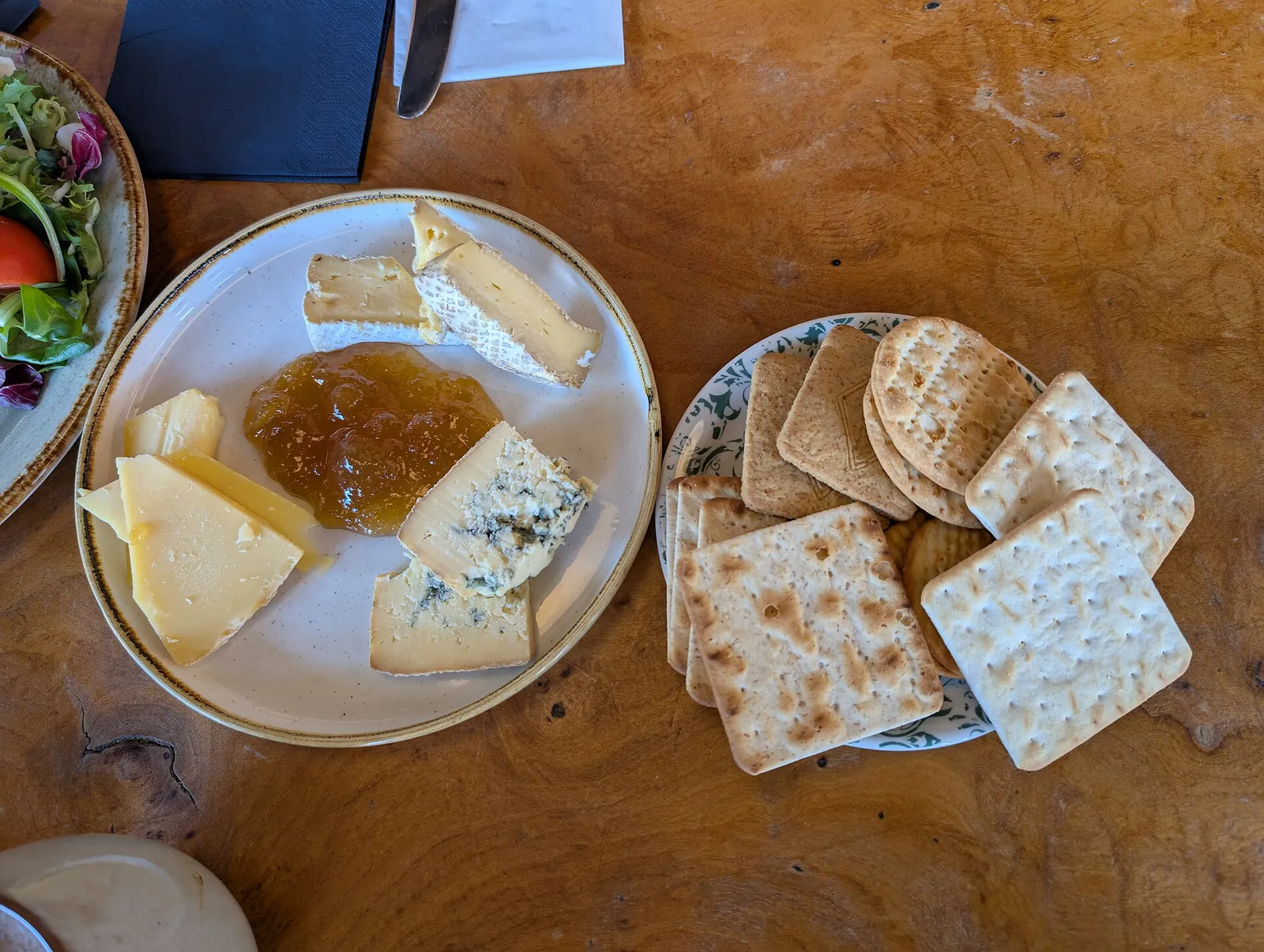
Taste fresh mozzarella, chèvre, brie, Havarti, Gruyère, aged cheddar, Parmigiano-Reggiano, Gorgonzola dolce and Taleggio in that order, and almost anything else at the counter will remind you of one of them.
Age, moisture and microbes set the order. As Dairy Farmers of Wisconsin puts it, mild cheeses tend to be young, and strong ones are aged or carry added molds or bacteria. Most Americans already know the first steps: by USDA Economic Research Service estimates, they ate about 12.5 pounds of mozzarella and 10.9 pounds of cheddar per person in 2024, more than half of all the natural cheese they ate.
The basic cheeses at a glance
The basic cheeses below run from mildest to boldest; buy three or four at a time rather than all nine at once.
| Order | Cheese | Family | Texture and flavor | What to ask for |
|---|---|---|---|---|
| 1 | Fresh mozzarella | Fresh, stretched curd | Soft, milky, barely salty | Balls in water or whey, eaten within days |
| 2 | Fresh goat cheese (chèvre) | Fresh, goat's milk | Soft, bright white, tangy | A plain log |
| 3 | Brie | Bloomy rind | Creamy, buttery, mushroomy rind | A wedge that gives slightly when pressed |
| 4 | Havarti | Semi-soft, washed curd | Buttery, sweet, smooth | Plain and young |
| 5 | Gruyère | Alpine | Firm, nutty, fruity | Le Gruyère AOP Classic, 6 to 9 months |
| 6 | Aged cheddar | Firm, cheddared | Tangy, flaky, crunchy crystals | A block with its age on the label |
| 7 | Parmigiano-Reggiano | Hard grating | Savory, granular, crystals | A piece cut from the wheel |
| 8 | Gorgonzola dolce | Blue | Creamy with a peppery edge | "Dolce," not "piccante" |
| 9 | Taleggio | Washed rind | Yeasty rind, sweet paste | A square slab with a thin pinkish rind |
A starter set of basic cheeses, mild to bold
This starter set of basic cheeses climbs one step at a time, so each cheese adds one new idea to the last.
1. Fresh mozzarella
Fresh mozzarella is the gentlest start because it is meant to be eaten young: Dairy Farmers of Wisconsin says it is best within a day or two of being made, and US rules let it hold 52 to 60 percent water. What you taste is clean milk and a little tang. Buy balls packed in water or whey, slice them thick and salt lightly. Next step: a block of low-moisture mozzarella, to feel what less water does.
2. Fresh goat cheese
Fresh goat cheese, or chèvre, adds the first new flavor: the bright, lemony tang of goat's milk. It is soft, chalky-creamy and stark white, and it changes how you think about "mild," since it is young but not shy. Buy a plain log, crumble it over a salad or spread it on toast with a little honey. Next step: an aged goat cheese with a rind.
3. Brie
Brie introduces a rind you eat. Its white bloom is a mold that ripens the cheese from the outside in over about 4 to 5 weeks, per Wisconsin's brie guide, and the longer it ripens the stronger it gets, so younger brie is the mild one. US rules allow raw-milk soft-ripened cheese only after 60 days of curing, so the brie you buy here is almost always pasteurized. The brie guide explains how to judge ripeness.
4. Havarti
Havarti is the semi-soft slicer of the set, gentle by design. It is a washed-curd cheese: rinsing the curds washes out some of the milk sugar, which keeps the flavor soft and buttery. Young Havarti is very mild, while older wheels turn saltier with a hint of hazelnut. Young Gouda, another washed-curd cheese, makes an equal swap.
5. Gruyère
Gruyère is your first Alpine cheese: firm, nutty and quietly sweet when young. Ask for Le Gruyère AOP Classic, which its producers describe as 6 to 9 months old with a soft, refined taste; Réserve, aged more than 10 months, is fuller and fruitier, the natural second purchase. It also melts beautifully, which is why it anchors fondue.
6. Aged cheddar
Aged cheddar shows what time does to a cheese you already know. Mild cheddar is typically aged 3 to 6 months, while aged cheddar averages 12 to 18 months and turns drier, flakier and tangier, with crunchy crystals forming as proteins break down. Buy a block that states its age in months or years, then taste it beside a mild one from the deli case.
7. Parmigiano-Reggiano
Parmigiano-Reggiano is the savory one. It must age at least 12 months, and most sold is 24 to 36 months old, according to the consortium's FAQ; the crunchy white specks are tyrosine, an amino acid freed as proteins break down, and they multiply with age. Ask for a piece cut from the wheel, and break it into rough chunks rather than slicing it.
8. Gorgonzola dolce
Gorgonzola dolce is the gentle way into blue cheese. The Gorgonzola consortium ages dolce 50 to 150 days, against 80 to 270 for the firmer, stronger piccante, and makes both from pasteurized milk; the veins grow where needles let air into the wheel. Spoon it onto pear slices or drizzle it with honey, which softens the salt. Next step: piccante, then Roquefort or Stilton.
9. Taleggio
Taleggio is the friendliest washed rind, the family behind the famously smelly cheeses. Its thin, pinkish rind is sponged with brine while it ages at least 35 days, and it ripens from the rind inward, so the paste near the center is the mildest part, says the Taleggio consortium. Taste the middle first, then the edge. Next step: stronger washed rinds, from Munster to Époisses.
How to taste basic cheeses
Tasting basic cheeses well takes an hour of planning and five minutes of attention.
- Warm them up. Take the cheese out of the fridge 30 to 60 minutes ahead, as Wisconsin's brie guide advises; cold cheese hides its aroma and texture.
- Go mild to bold. Follow the order above. A blue or washed rind lingers and flattens anything milder after it.
- Look and smell first. Note the color and holes, then smell the paste and the rind separately.
- Taste plain, then paired. Let a small piece warm on your tongue and notice the texture (creamy, springy, crumbly, crystalline) before reaching for honey, fruit or nuts.
- Reset between cheeses. Water and plain bread or crackers reset the palate; save the wine for after.
- Write one line each. Words like milky, buttery, nutty, tangy, savory or earthy tell the counter what to sell you next.
What to buy first at a cheese counter
What to buy first at a cheese counter is three cheeses from different families, not nine. Fresh mozzarella, brie and aged cheddar make a good first trip because they cover fresh, bloomy-rind and aged cheese in one bag.
Ask to taste before you buy; a good counter will cut a sliver, and saying what you liked and how you will use the cheese gets better suggestions (the cheese counter guide has more ways to shop like a regular). For quantities, plan 1 to 2 ounces per person in total for a snack board or 4 to 6 ounces when cheese is the meal, split across the cheeses, as the cheese per person guide explains. Buy soft cheeses close to the day you will eat them; hard ones keep longer, and the Parmigiano consortium gives a freshly cut piece about 15 days at 12 to 18 months old and about a month at 24 months or more. If you want only gentle choices for now, see the mildest cheeses, ranked.
What most beginner cheese advice gets wrong
Most beginner cheese advice stops at mild cheeses, and that leaves out what actually builds a palate.
Mild-only is a dead end. A plate of five mild cheeses mostly teaches you what mild tastes like. Put one bold cheese on every tasting, with something sweet beside it, and the mild ones start to taste distinct.
The name matters less than the age. Gouda can be four weeks or a year old, cheddar 3 months or 18, Gorgonzola 50 days or 270. Two cheeses with the same name can be further apart than two different cheeses of the same age, so read for "young," "aged," "dolce," "piccante" or a number of months.
Cold cheese tastes like less. Straight from the fridge, even a great brie tastes muted. Warm-up time is the cheapest upgrade there is.
Questions about basic cheeses
These are the questions about basic cheeses that come up most.
What is the most basic cheese?
The most basic cheese depends on what you mean: the simplest to make are fresh heat-and-acid cheeses like ricotta and paneer, and the most eaten in the US is mozzarella, at about 12.5 pounds per person in 2024 by USDA estimates.
What are the basic types of cheese?
The basic types of cheese are usually sorted by texture (soft, semi-soft, semi-firm and hard) and by ripening (fresh, bloomy rind, blue and washed rind). Sorting by how the cheese is made gives seven cheese families instead.
What are the most popular cheeses in the US?
The most popular cheeses in the US by USDA per-person estimates for 2024 are mozzarella (12.5 pounds), cheddar (10.9), processed cheese (6.1), cream cheese and Neufchâtel (3.1), Hispanic-style cheeses (1.1) and Swiss (1.1), with Muenster and blue far behind.
What is a good first blue cheese?
A good first blue cheese is Gorgonzola dolce, which is younger, softer and milder than piccante. Its consortium advises taking it out of the fridge at least half an hour before eating, when it is at its creamiest.
Should you eat the rind?
You can eat the rind of brie, Taleggio and Parmigiano-Reggiano, though the rind is often the strongest-tasting part. Skip wax, cloth and plastic coatings; the guide to eating cheese rinds goes type by type.
Which basic cheeses are safe during pregnancy?
The CDC lists pasteurized hard cheeses such as cheddar, Parmesan and Gruyère, and pasteurized mozzarella, cream cheese and feta, among the safer choices for people who are pregnant, 65 or older, or immunocompromised. It advises those groups to avoid raw-milk cheese and unheated queso fresco-type cheeses unless they are heated to 165°F or until steaming hot. Le Gruyère AOP itself is a raw-milk cheese, so read the label.
Your first basic cheeses shopping list
Your first basic cheeses shopping list can be three items: a ball of fresh mozzarella, a wedge of brie that gives slightly when pressed, and an aged cheddar with its age on the label. Next time add Gruyère and Gorgonzola dolce, then finish the set with Parmigiano-Reggiano and Taleggio. When you know which families you like, building a starter collection is the next step.
Sources
- Dairy Data: Per Capita Consumption of Selected Cheese Varieties, USDA Economic Research Service
- Wisconsin Cheese style guides: Fresh mozzarella, Brie, Havarti, Gouda, Mild cheddar, Aged cheddar, Gorgonzola, Gruyère and Different types of cheese, Dairy Farmers of Wisconsin
- Our types of Le Gruyère AOP and Characteristics, Interprofession du Gruyère
- FAQ and Cutting and Storage, Consorzio del Formaggio Parmigiano Reggiano
- The Gorgonzola, Consorzio per la Tutela del Formaggio Gorgonzola
- The Taleggio, Consorzio Tutela Taleggio
- Preventing Listeria Infection, Centers for Disease Control and Prevention
- 21 CFR Part 133: 133.155 Mozzarella cheese and 133.182 Soft ripened cheeses, Electronic Code of Federal Regulations