
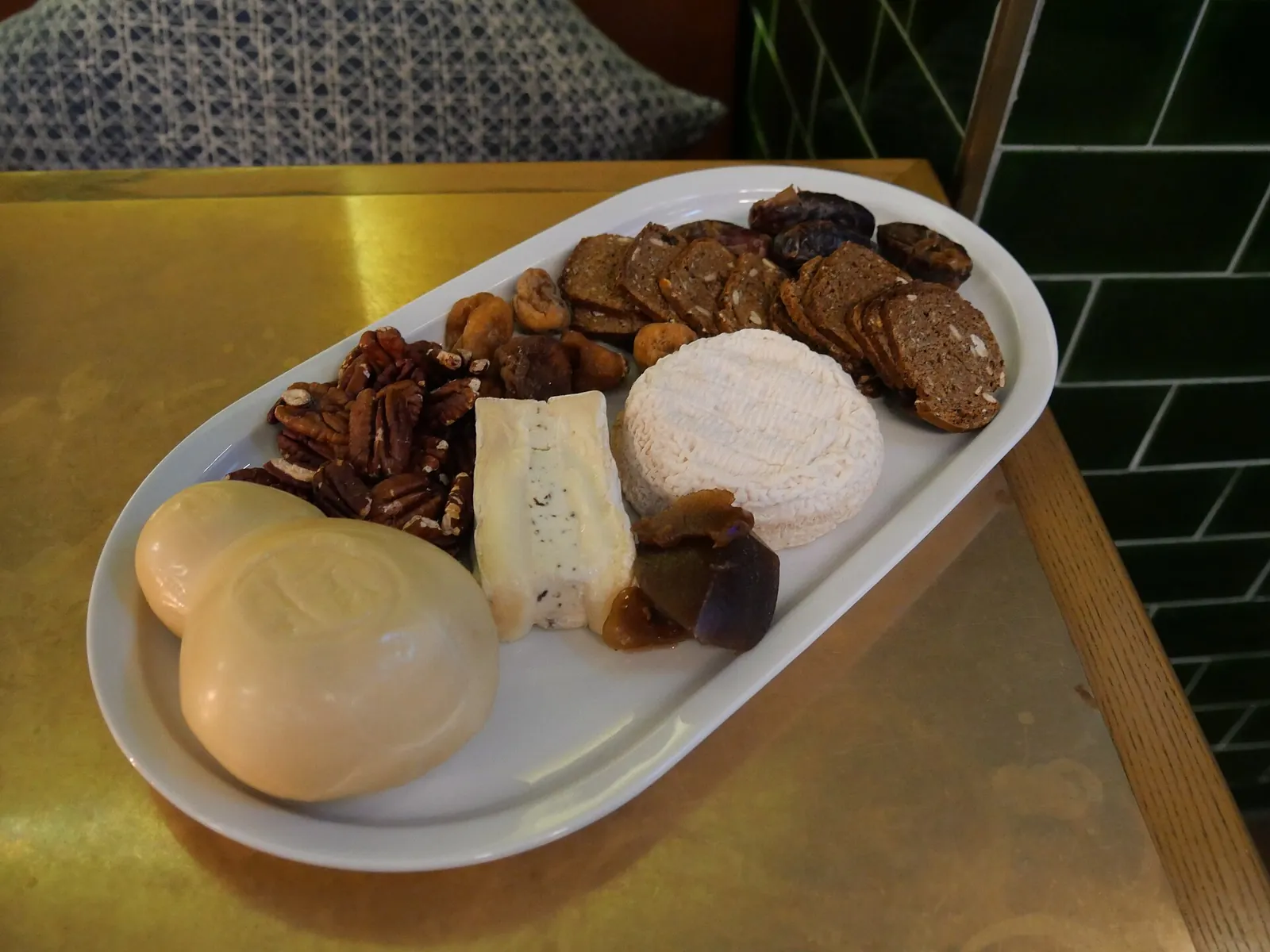
Eight cheeses is enough to learn how texture, rind, milk and age change flavor, and few enough to finish while they are fresh.
The idea is to buy for contrast, not for fame. Two cheddars teach you less than a cheddar and a washed-rind cheese. If you want a gentler first step, start with cheeses for beginners and come back here.
The starter collection at a glance
This table lists the starter cheese collection by family, with what each cheese teaches and the best use.
| Family | Cheese | Milk | What it teaches | Best use |
|---|---|---|---|---|
| Fresh | Mozzarella | Cow | Mild, milky, unaged | Salads, pizza, caprese |
| Bloomy rind | Brie | Cow | Edible white rind, creamy paste | Board, baking |
| Semi-hard | Gouda | Cow | How age changes one cheese | Sandwiches, board |
| Firm | Cheddar | Cow | Sharpness and age | Melting, snacking |
| Hard | Parmigiano-Reggiano | Cow | Long aging, crystals | Grating, chunks |
| Washed rind | Taleggio | Cow | Strong smell, mild taste | Melting, board |
| Blue | Gorgonzola dolce | Cow | Mold veins, salt | Board, sauce |
| Sheep's milk | Manchego | Sheep | Nutty, firm, protected | Board with quince |
How to choose a starter cheese collection
To choose a starter cheese collection, pick by family first and by brand second. A cheese family is a group of cheeses that share a texture and a way of being made, so one example teaches you about dozens of others. Buy about 4 to 6 ounces of each; the cheese per person guide shows how that stretches across a table.
The eight cheeses in a starter collection
Each of the eight cheeses below says what to buy, how to use it and its weak spot.
Fresh: mozzarella
Mozzarella is the fresh pick, a soft, milky cheese with no rind and almost no age. Fresh mozzarella is sold in liquid and suits salads, while the firmer low-moisture block suits pizza and baked pasta; the mozzarella guide explains the difference. Buy fresh balls the day you will eat them. Weak spot: it is mild and goes bland when cold, so let it come to room temperature.
Bloomy rind: Brie
Brie is the bloomy-rind pick, a soft cheese with a thin, edible white rind and a creamy paste. Look for a wheel that gives slightly when pressed and a rind with no ammonia smell; the guide to choosing a ripe Brie has the signs, and the Brie guide covers the protected names. Weak spot: it ripens fast, so buy it within a few days of serving.
Semi-hard: Gouda
Gouda is the semi-hard pick, and it is the best cheese for learning what age does. Wisconsin's dairy board says Gouda matures from four weeks to 12 months or more, going from mild and creamy to sweeter, nuttier and tangier with a crunchy crystalline texture. Buy a young wedge and an aged one, taste them side by side and read the Gouda guide. Weak spot: plain "Gouda" can come from anywhere, so go by the age on the label.
Firm: cheddar
Cheddar is the firm pick, the cheese that does the most daily work. Wisconsin's dairy board describes mild cheddar as aged 3 to 6 months, sharp as 9 to 12 months and extra sharp as generally up to two years. Buy a sharp wedge for the board and a block for melting; the cheddar guide covers cheddaring, and aged vs. young cheddar shows what the months change. Weak spot: very old cheddar can turn grainy in a sauce.
Hard: Parmigiano-Reggiano
Parmigiano-Reggiano is the hard pick, a raw-milk cheese aged at least 12 months. The consortium describes it as milky and buttery at 12 months, peppery with meat broth notes at 24, and full with chestnut at 40. Buy a 24-month wedge, grate half and eat the rest in chunks. The Parmigiano-Reggiano guide explains the rind marks, and the real vs. fake Parmesan guide helps you avoid imitations. Weak spot: the price per pound is high, so buy a small wedge and save the rind for soup.
Washed rind: Taleggio
Taleggio is the washed-rind pick, a soft cheese with a pink, sticky rind that smells much stronger than it tastes. The paste is sweet and milky, which makes it the best proof that smell is not flavor. Melt it over polenta or eat it with pears; the Taleggio guide has more, and rind types explains how washing works. Weak spot: it dulls fast in plastic, so wrap it in paper.
Blue: Gorgonzola dolce
Gorgonzola dolce is the blue pick, the gentle end of the blue family. The dolce style is soft, mild and only slightly spicy, while piccante is firmer and much sharper. Start with dolce, melt it into a sauce or serve it with honey; the Gorgonzola guide compares the two, and Blue Cheese 101 shows how the veins form. Weak spot: blue is salty and strong, so serve it in thin slices.
Sheep's milk: Manchego
Manchego is the sheep's-milk pick, a firm Spanish cheese that shows how milk changes taste. The real one has a woven rind pattern and a D.O.P. Queso Manchego casein plate, and it is nutty and sharper as it ages. Serve it with quince paste and almonds; read the Manchego guide for the age labels. Weak spot: the name is imitated, so look for the plate and the numbered label.
Starter cheese collection mistakes that waste money
Starter cheese collection mistakes usually come from buying too much or too much alike. Three come up again and again.
Buying the same family twice
Buying the same family twice teaches you less than buying a new one. Cheddar plus Gruyère plus Gouda gives three firm cheeses; cheddar plus Brie plus blue gives three lessons. Add a second cheese only to compare ages.
Buying large pieces of soft cheese
Buying large pieces of soft cheese is a mistake because bloomy and washed-rind cheeses ripen fast and spoil sooner than hard ones. Buy the soft cheeses closer to the day you will serve them, and see how to store cheese you just bought.
Skipping the tasting
Skipping the tasting costs you the lesson, because the point of a starter set is to compare. Taste each cheese plain at room temperature before you cook with it. A counter will often give you a sample if you ask, as the guide to shopping at a cheese counter explains.
Questions about a starter cheese collection
These are the questions about a starter cheese collection that come up most often.
How many cheeses should a starter collection have?
A starter collection should have about six to eight cheeses, one per family, so you can learn the range without letting any go to waste.
What is the best first cheese to buy?
The best first cheese to buy is a sharp cheddar or a young Gouda, since both are easy to like, versatile and sold nearly everywhere.
Which cheeses go on a cheese board from a starter collection?
The cheeses that go on a cheese board from a starter collection are Brie, aged Gouda or cheddar, Manchego, Gorgonzola dolce and a wedge of Parmigiano-Reggiano. The Board Builder plans the amounts.
How to store a starter cheese collection?
To store a starter cheese collection, wrap each cheese in cheese paper or parchment and keep them in the vegetable drawer, with strong ones apart from mild ones.
Should a starter collection include imported cheeses?
A starter collection should include a few imports where the name is protected, such as Parmigiano-Reggiano and Manchego, since those follow fixed rules; the PDO and PGI guide explains the labels.
Your next step for a starter cheese collection
Your next step for a starter cheese collection is to buy three wedges this week: a young Gouda, a sharp cheddar and a 24-month Parmigiano-Reggiano. Taste them plain, then add Brie and a blue on the next trip. Once those are familiar, a splurge cheese makes a good reward.
Sources
- Types of cheddar cheese, Dairy Farmers of Wisconsin
- Gouda, Dairy Farmers of Wisconsin
- Maturation and wine pairings, Consorzio del Formaggio Parmigiano Reggiano