
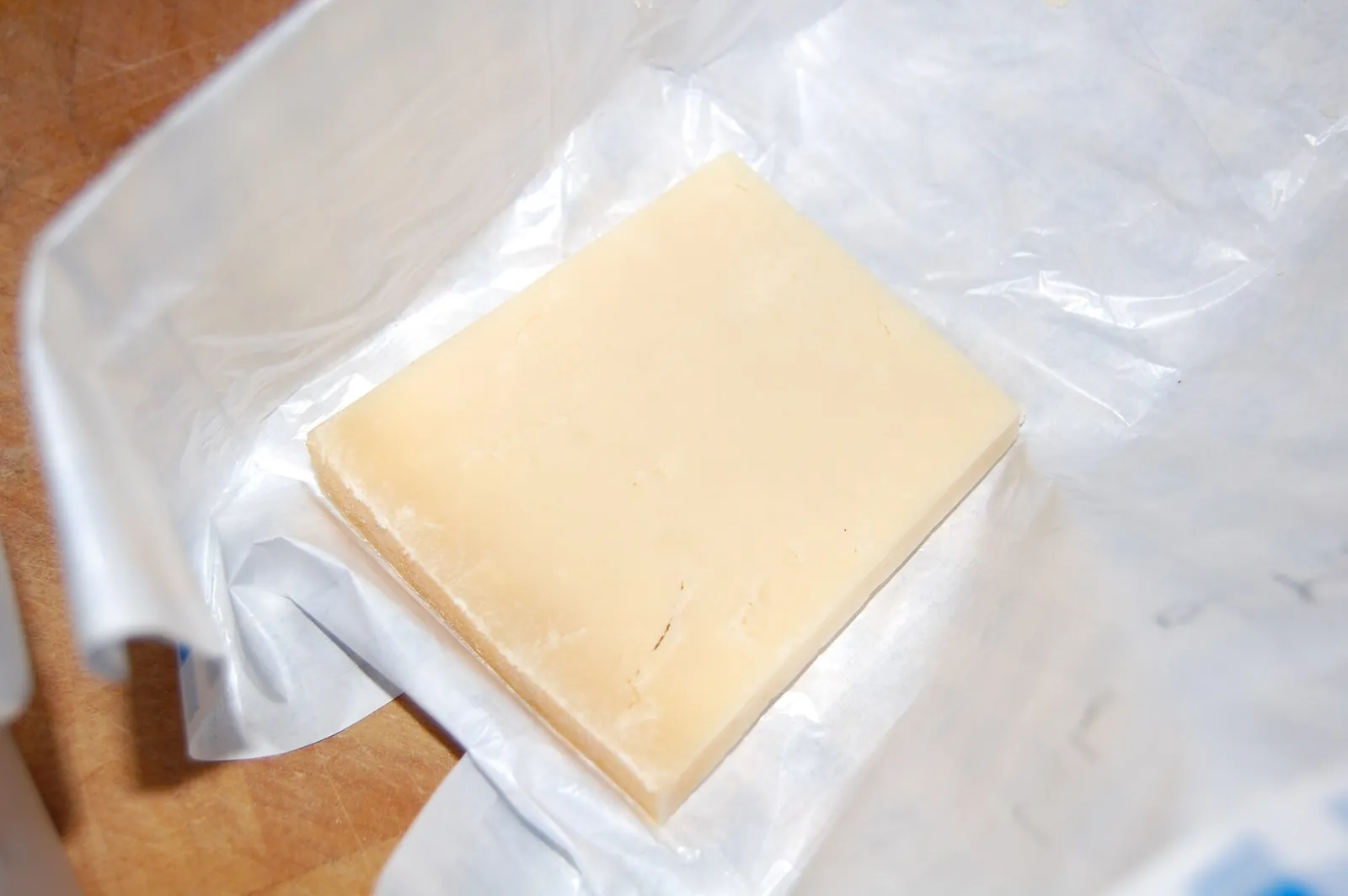
The word "cheddar" is generic and unprotected, so the label alone says little. Three choices separate a forgettable block from a great one: how long it aged, whether it aged sealed in film or wrapped in cloth, and who made it.
Color is not on that list. Orange and white cheddar from the same maker, at the same age, taste alike. What follows is how to read the age, the wrapper and the paste so you can pick well at a counter or a shelf.
Cheddar age words on the label
Cheddar age words on the label tell you roughly how sharp the cheese will be, but they are brand terms and not legal ones. The federal standard for cheddar, 21 CFR 133.113, sets a maximum of 39 percent moisture and a minimum of 50 percent milkfat in the solids, and its only age rule is that cheddar made from raw milk be cured at least 60 days at 35°F or above. Nothing defines "sharp."
Dairy Farmers of Wisconsin puts mild cheddar at 3 to 6 months and sharp at 9 to 12, with extra sharp aged up to two years and some cheddar held 10 years or more. The aged vs. young cheddar guide lists brand ladders, including Tillamook's. If the package states months, trust the number over the adjective.
| Age on the pack | What it is like | Best use |
|---|---|---|
| 3 to 6 months (mild) | Milky, springy, gentle tang | Sandwiches, kids' snacks, melting |
| 9 to 12 months (sharp) | Tangy, firmer, still melts well | Sauces, burgers, everyday eating |
| 1 to 2 years (extra sharp) | Deeper, drier, crumbly | Boards, grating, blending into sauces |
| Several years (vintage, reserve) | Intense, hard, often crystalline | Shaving, finishing, slow snacking |
Block vs. clothbound cheddar
Block vs. clothbound cheddar is the biggest style split. Most cheddar is pressed, wrapped in film and aged as a rindless block that keeps all its moisture, so it ends up smooth and consistent. A clothbound wheel is coated in fat, wrapped in cloth and aged so that it breathes, which builds a natural rind and a drier, more crumbly, savory paste.
Clothbound costs more, and it is worth it for a cheese board or for eating plain. For sandwiches and sauces a good block is easier and often better, since a very dry cheese clumps when heated. Cabot Clothbound Cheddar, made by Cabot and aged 9 to 14 months by Jasper Hill Farm in Vermont, is a widely sold American example. How the wrapper changes the cheese is covered in cheddar's origin, flavor and uses.
White vs. orange cheddar
White vs. orange cheddar is a difference of color and nothing else. Cheesemakers add annatto, an odorless vegetable dye from the achiote tree, to make cheddar orange, and Dairy Farmers of Wisconsin states that the flavor of white and orange cheddar is not affected by the color but by how long it is aged. The federal standard lists coloring as an allowed optional ingredient.
So do not buy orange because it looks sharper or white because it looks artisan. Buy by the age and the maker.
Crystals and texture in good cheddar
Crystals and texture in good cheddar are the signs that a long-aged cheese has matured well. Aged cheddar should be firm and dense, and it often crumbles or flakes instead of slicing cleanly. Small white specks that crunch when you bite are common in cheese aged a year or more. They are usually calcium lactate, a mineral salt, and not mold, and the aged-cheddar guide explains how to tell them from tyrosine crystals in cheeses like Parmigiano-Reggiano.
Crystals are a bonus, not proof. A young cheddar can be excellent without them, and a bland one can still form some. What you do not want is a rubbery, sweaty or gummy block, or a surface that smells sour or soapy.
Cheddar buying mistakes
Cheddar buying mistakes usually come from reading the wrong clue.
Trusting color or the word "sharp" alone
Trusting color or the word "sharp" alone fails because color means nothing and "sharp" varies by brand. One company's sharp is another's medium. Find the months, or ask the person at the counter.
Buying very old cheddar for melting
Very old cheddar melts poorly: its proteins tighten with age, so it clumps and leaks fat in a sauce. Use a sharp block of about 6 to 12 months for mac and cheese, or blend an older cheddar with a younger one.
Assuming farmhouse and clothbound are the same
Farmhouse and clothbound are different words. England's West Country Farmhouse Cheddar is a protected name, covered in the origin guide, but "farmhouse" on a US label is a marketing word and clothbound is a method.
Overlooking the cut-to-order wedge
A fresh wedge cut at the counter, with a taste offered, beats a prepacked piece that has sat in the case. Ask for a sample of two ages side by side.
Questions about good cheddar
These are the questions people ask when choosing a good cheddar.
What makes a good cheddar?
A good cheddar has a stated age, a firm, dense texture and a balanced savory tang, and its age and style fit your use. It should not be rubbery or bland.
Is aged cheddar better?
Aged cheddar is more flavorful but not always better: it is drier and melts less smoothly. Mild to sharp suits cooking, and extra sharp or older suits snacking and boards.
Is clothbound cheddar worth it?
Clothbound cheddar is worth it for eating plain or on a board, where its rind and crumbly, savory paste show. For sauces and sandwiches, a good block does the job for less.
Does orange cheddar taste different from white?
Orange cheddar does not taste different from white at the same age. The color comes from annatto, and flavor depends on how long the cheese aged.
What are the white crystals in cheddar?
The white crystals in cheddar are usually calcium lactate, a harmless mineral salt that can form in aged cheese. They are not mold.
Picking your good cheddar
Picking a good cheddar starts with the use: a 9-month sharp block for cooking and sandwiches, extra sharp for the board, and a clothbound wheel when you want the best eating cheese. Check the months on the label, ignore the color, and taste at a counter when you can. For melting and comparing, the guide above has the details.
Sources
- 21 CFR 133.113 Cheddar cheese, Legal Information Institute, Cornell Law School
- Types of cheddar cheese, Dairy Farmers of Wisconsin
- 21 CFR Part 133, Cheeses and Related Cheese Products, eCFR (FDA standards of identity)