
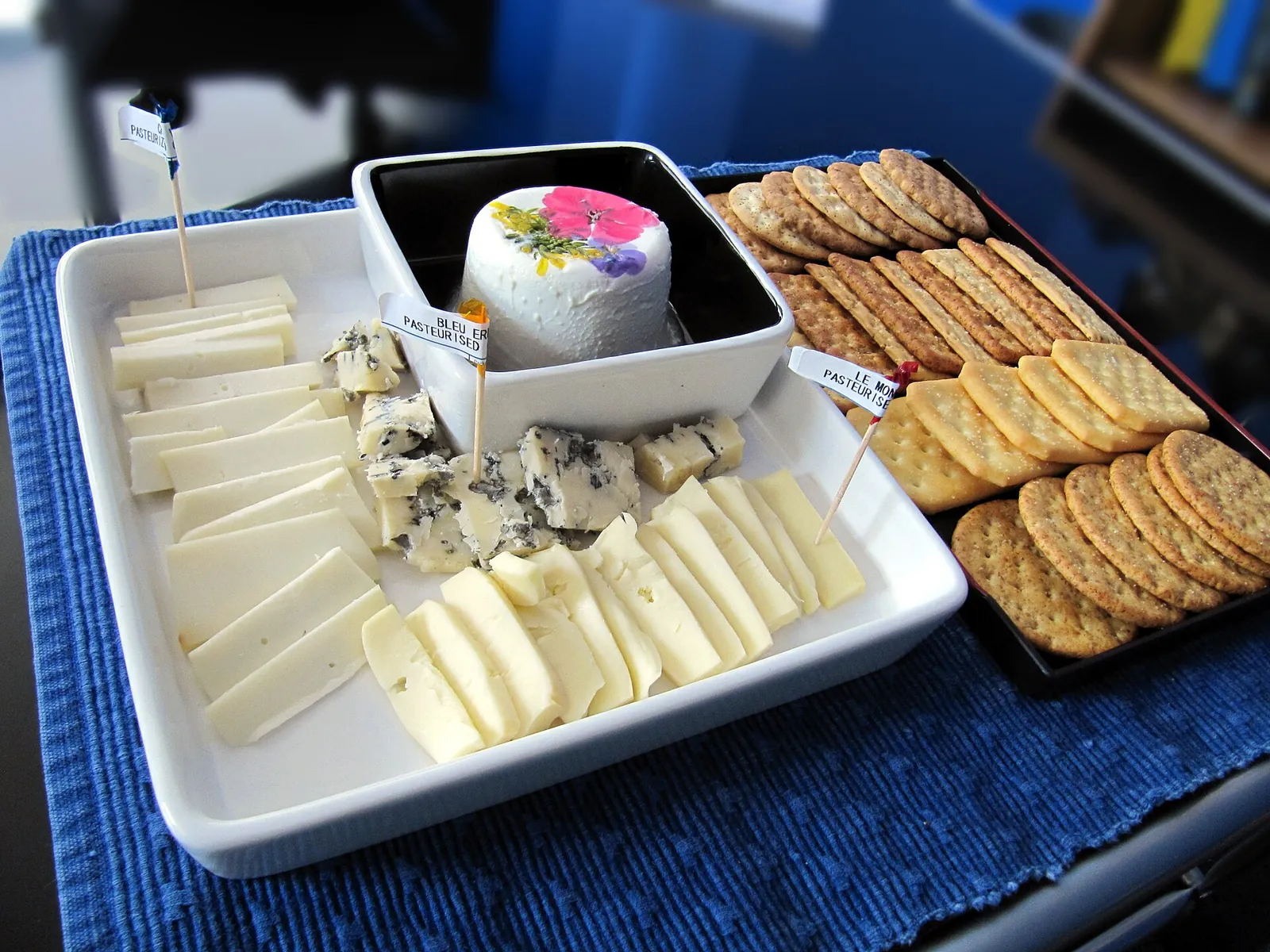
They survive a car trip or a mailed box because there is little water in them for bacteria to use, and they keep longer in the recipient's refrigerator than a soft cheese does.
A gift cheese has two jobs: be good, and be forgiving. This page picks cheeses for the second job and says why. How to order and receive a mailed gift is on buying cheese online, and recurring deliveries are covered on the subscription box page.
Cheeses for gifting that travel and keep well
Cheeses for gifting that travel and keep well share three traits: they are hard, aged and cut from a bigger piece. Clemson's extension service names "hard cheese" among the foods that ship well, and says hard cheese generally stays safe for several months when properly stored, against one to three weeks for soft cheeses once opened (handling of cheese).
| Cheese | Why it works as a gift | Age to look for |
|---|---|---|
| Parmigiano-Reggiano | Hard, dry, aged at least 12 months | 24 to 36 months, the common age |
| Comté | Firm and nutty, aged at least 4 months | An older wedge for more depth |
| Aged Gouda | Hard and crystalline, with caramel sweetness | A year or more |
| Manchego | Firm, with a woven rind and a clear label | An aged wedge, age on the label |
| Aged cheddar | Sharp, and familiar to nearly everyone | Sharp, 9 to 12 months, or older |
| Stilton | A showpiece blue, with a gift-box tradition | Whole or half wedge |
Parmigiano-Reggiano as a gift
Parmigiano-Reggiano is the safest gift cheese because it is hard, aged at least 12 months, and instantly recognizable by the dotted lettering on its rind. Most wheels sold are 24 to 36 months old, according to the Parmigiano-Reggiano page on this site. A wedge keeps for a long time in the refrigerator and works for grating, shaving and snacking. Weak spot: a bare supermarket wedge looks ordinary, so choose one with the rind marks showing, which is the part that makes it feel like a gift.
Comté as a gift
Comté makes an elegant gift for people who like to cook, because it is firm, nutty and aged at least four months. A wheel is about 88 pounds, so what you give is a cut piece, and the older the piece, the deeper and more crystalline it gets. See the Comté page for the green and brown band scoring. Weak spot: it is raw-milk cheese, so check with the recipient if they are pregnant (more below).
Aged Gouda as a gift
Aged Gouda is the crowd-pleaser, caramel-sweet and crunchy with crystals after a year or more. It also suits people who think they do not like "strong" cheese, since it tastes sweet rather than sharp. The Gouda page explains why age on the label matters more than the brand: look for a wedge that states its age. Weak spot: young Gouda, which is softer and milder, is a different cheese and keeps less well.
Manchego as a gift
Manchego is a neat gift because its authenticity is visible: a woven rind, a casein plate stamped D.O.P. Queso Manchego and a numbered back label, as the Manchego page lists. It is a sheep's milk cheese, firm and made to be cut into thin triangles, so pair it with quince paste and almonds in the same box. Weak spot: Manchego can be raw (labeled Artesano) or pasteurized, so check the label if the recipient needs pasteurized cheese.
Aged cheddar as a gift
Aged cheddar is the dependable choice for a recipient whose taste you do not know. Wisconsin's dairy board describes sharp cheddar as aged 9 to 12 months and extra sharp as generally up to two years, with some aged 10 years or more. Older wedges are drier and more crumbly, and sharper, and the cheddar page covers what to expect. Weak spot: very old cheddar is for eating, not melting, so tell the recipient.
Stilton as a gift
Stilton is the showpiece, a cheese whose blue veins and flaky body look like an occasion. It is always pasteurized, because the protected name allows only pasteurized cow's milk, which helps for gifts to people who avoid raw-milk cheese (Stilton page). Keep it in paper in a lidded container and eat a cut wedge within about two weeks. Weak spot: blue is polarizing, and it is softer than the hard cheeses above, so give it by hand or by overnight shipping.
What most cheese gift advice gets wrong
Most cheese gift advice says to buy the most impressive wheel, and the problem is that a gift does not end at the handoff. The recipient has to store it, serve it and finish it.
Here are the mistakes that matter more than the choice of cheese:
- Giving a ripe soft cheese that must be eaten in days. Hold it for a party you attend yourself.
- Forgetting the recipient's health. The CDC advises people who are pregnant, adults 65 and older and anyone with a weakened immune system to avoid raw-milk cheese unless it is heated until steaming hot; see pasteurized vs. raw-milk cheese. Pasteurized hard cheese, or a label-checked pick, is the safe route.
- Leaving the cheese warm. Keep a gift in a refrigerator or a cooler until the handoff, and for a long drive keep it in a cooler.
- Giving too much. A good gift is one or two wedges of about half a pound each, not a pile.
Add a card with the name, the age if known and one line on how to store it: wrap it in paper and keep it in the refrigerator.
Questions about cheeses for gifting
These are the questions about cheeses for gifting that readers ask most often.
What cheese makes the best gift?
The cheese that makes the best gift is a hard, aged one such as Parmigiano-Reggiano, aged Gouda or Comté, since they travel well, keep for weeks and are easy to enjoy.
Which cheeses keep best as gifts?
The cheeses that keep best as gifts are hard cheeses, which Clemson says generally stay safe for several months when stored properly, while soft cheeses keep one to three weeks once opened.
Is mailing cheese as a gift a good idea?
Mailing cheese as a gift works if it ships cold and fast, ideally overnight and not at the end of the week.
What cheese is safe to give a pregnant person?
The cheese that is safe to give a pregnant person is pasteurized, and the CDC advises avoiding raw-milk cheese unless heated until steaming hot. Ask the recipient or their doctor, and see cheese during pregnancy.
How much cheese makes a good cheese gift?
A good cheese gift of one or two half-pound wedges is plenty for most households, and more only makes sense for a gathering.
Choosing your gift cheese
Your gift cheese should be a hard, aged wedge with its label or rind marks intact: Parmigiano-Reggiano for cooks, aged Gouda for people who say they do not like strong cheese, Stilton for blue lovers. Add a card with storage notes, keep it cold until the handoff and check the recipient's health needs first.
Sources
- Mailing Perishable Foods, Clemson Cooperative Extension
- Handling of Cheese for Safety and Quality, Clemson Cooperative Extension
- Types of Cheddar Cheese, Dairy Farmers of Wisconsin