
Guilds and trails exist to point you to makers, and they often say which ones sell directly or take visitors.
Local matters for a practical reason, beyond the pleasure of meeting the person who made your cheese: small makers sell fresh cheese you cannot get elsewhere, often only at one market, one farm shop or through a few shops. Finding them takes a short search, not a long one.
State cheese guilds and councils
State cheese guilds and councils are the best first stop for finding local cheesemakers, because they are made of the makers. Cheese Trail, a directory site, has a page of cheese guilds of America that lists examples such as the California Artisan Cheese Guild, Maine Cheese Guild, Massachusetts Cheese Guild, New Mexico Cheese Guild, New York State Cheese Council, Ohio Cheese Guild, Oregon Cheese Guild, Pennsylvania Cheese Guild, Vermont Cheese Council, Wisconsin Cheese Makers Association and the WNC Cheese Trail in western North Carolina. Those are examples, not a complete list: search your state name plus "cheese guild" or "cheese council."
Many guild sites have a "meet the cheesemakers" or map page. Look for it first, then check each maker's own page for hours and where they sell.
Cheese trails and maps
Cheese trails and maps turn a list of makers into a route. The Vermont Cheese Council says Vermont has over 40 cheesemakers and runs the Vermont Cheese Trail, an interactive map that shows which makers welcome visitors, whether tours are available and where they are. Visiting policies vary, so check before you drive.
A trail is also a good way to plan a day: pick two or three makers near each other, call ahead, and bring a cooler bag. The tips in how to store cheese you just bought cover the ride home.
The American Cheese Society
The American Cheese Society is a national nonprofit, and it can help with finding cheesemakers, though not as a consumer shop finder. Its site, cheesesociety.org, describes the group as promoting and supporting American cheeses, and offers a member directory, a judging competition for American-made cheeses and an annual conference. The site does not appear to have a tool for locating cheese by region, so use the member directory as a lead, and then go to the maker's own site.
Competition results are useful in a different way: a cheese that places in a national competition gives you a name to search for.
Farmers markets and farm shops
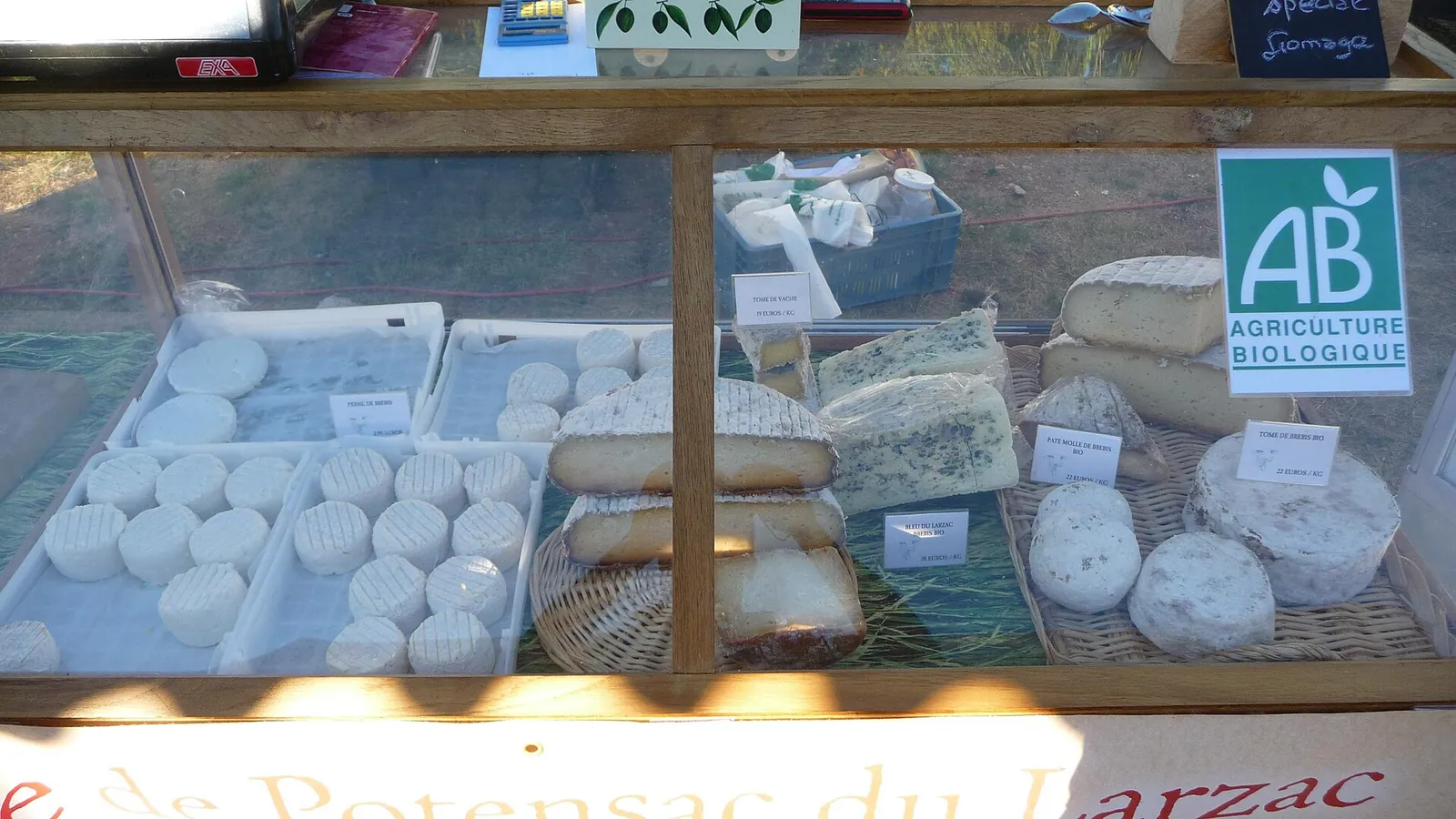
Farmers markets and farm shops are where many small makers sell, and the maker is often at the stall to answer questions about the milk, the age and the best way to serve each cheese. Search your area for markets and look for a cheese vendor. Cheesemakers at a market can tell you what is new this week, offer a taste and say when the next batch is ready, which pairs well with the seasonal cheese buying guide.
Farmstead producers, who make cheese from their own herd's milk, sometimes sell from the farm. Call first, because many are working dairies and not shops.
Cheese counters and shops
Cheese counters and shops are the way to reach local cheese that is not sold at a market near you. Specialty shops and good grocery counters often stock regional makers. Ask what is made within a couple of hours of town. The questions to ask your cheesemonger include a few that work well here, such as who made it and when.
Shops also tell you which makers they trust, which is useful when you are choosing from a long list. A good counter will let you taste before buying, and will usually know which local cheeses are new this month and which have been on the case for a while. If a shop does not carry local makers, ask whether it can order one; many will.
What most advice on local cheese gets wrong
Most advice on local cheese gets wrong the idea that local means better. It means closer and often fresher, but quality varies like it does anywhere, so taste before you commit. Taste a sample, and buy a small piece first.
Also check how the cheese is made. Raw-milk cheese in the US must be aged at least 60 days, a rule explained in pasteurized vs. raw-milk cheese, so a very fresh local cheese is usually pasteurized. If you are pregnant, ask the maker which milk they use and talk to your doctor.
Questions about local cheesemakers
These are the questions about local cheesemakers that come up most.
How do you find cheesemakers nearby?
You find cheesemakers nearby through your state cheese guild or council, a cheese trail map, your farmers market and a good cheese counter. Searching your state name plus "cheese guild" is the quickest start.
Does every state have a cheese guild?
Not every state is certain to have one. Cheese Trail lists guilds for many states, so check there and search your state name.
Can you visit a cheesemaker?
You can visit many cheesemakers, but not all. The Vermont Cheese Trail, for example, shows which makers are open to the public and when, so check a trail map or call first.
Does the American Cheese Society list cheesemakers?
The American Cheese Society offers a member directory and runs a competition for American-made cheeses. It does not appear to offer a consumer cheese finder.
Is local cheese raw milk?
Local cheese may be raw or pasteurized. Ask the maker, and read the label.
Finding your local cheesemakers
Finding your local cheesemakers takes three steps: search your state guild or trail map, visit one farmers market, and ask a cheese counter what is made nearby. Start with one maker and one cheese, ask when it was made, and go from there.
Sources
- Cheese Guilds of America, Cheese Trail
- The American Cheese Society, American Cheese Society
- Vermont Cheese Council and Vermont Cheese Trail, Vermont Cheese Council