
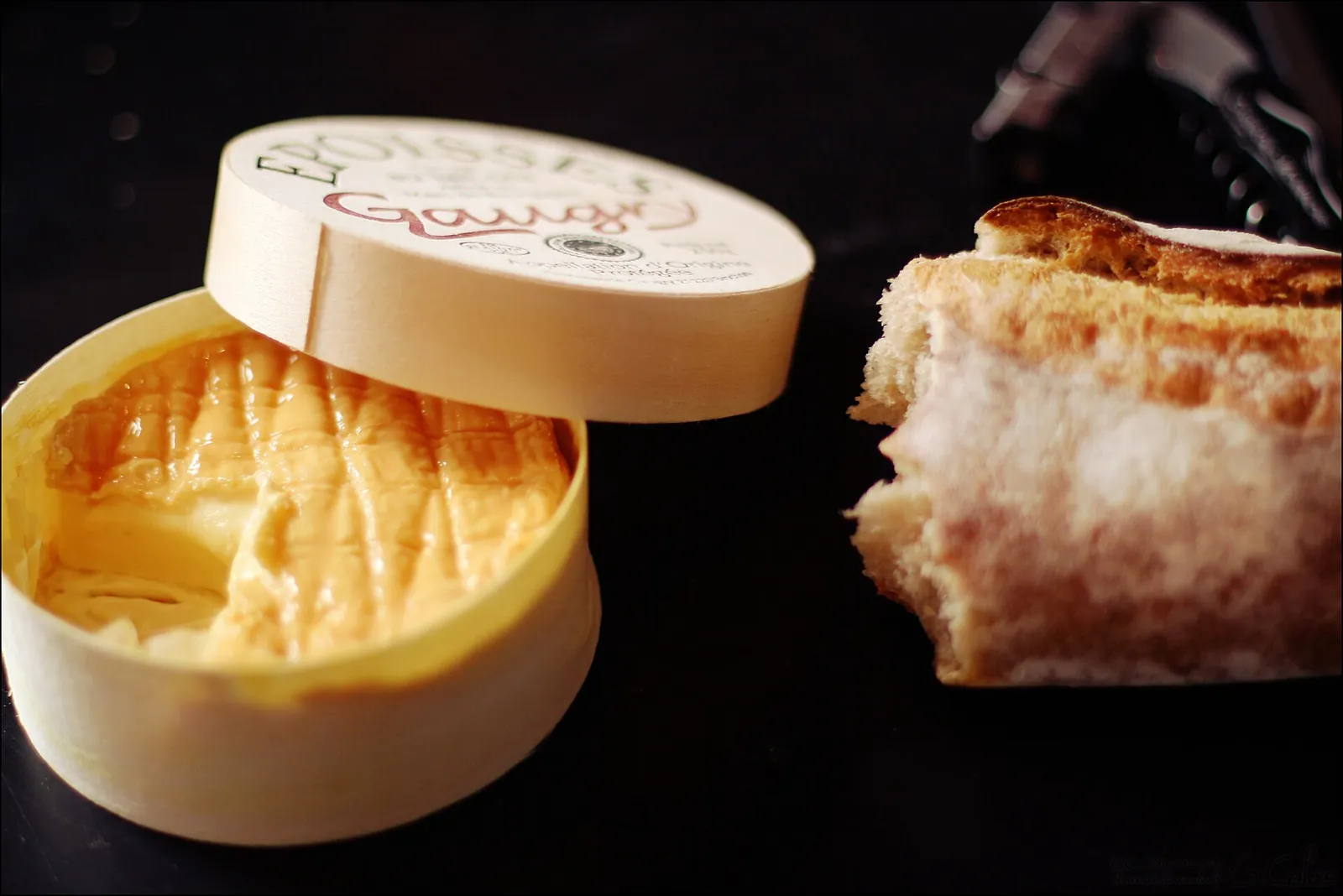
In 2004 it beat 14 other cheeses in a sniff test at Cranfield University in England. Nearly every other famous smelly cheese shares its method: Époisses, Limburger, Munster, Maroilles, Pont-l'Évêque, Livarot, Taleggio and Stinking Bishop are all washed-rind cheeses.
The smell lives on the rind, not in the whole cheese. Washing a young cheese in brine, beer or brandy grows a sticky orange film of microbes that turn protein into sulfur compounds your nose catches in tiny amounts. The paste underneath ripens more slowly and usually tastes of milk, butter and salt. That gap is the bark-worse-than-bite rule.
Smelly cheese list at a glance
Here is the smelly cheese list most people are after, ordered roughly from gentler to fiercer.
| Cheese | Where it's from | Rind washed with | Smell versus taste |
|---|---|---|---|
| Taleggio | Lombardy, Piedmont and Veneto, Italy | Brine, once a week | Yeasty more than fierce; sweet paste, sometimes a hint of truffle |
| Pont-l'Évêque | Normandy, France | Brushed or washed | Came second in the 2004 sniff test, yet officially described as mild |
| Munster | Vosges mountains, Alsace and Lorraine | Washed during humid aging | Powerful nose; finer and gentler in the mouth |
| Maroilles | Thiérache, northern France | Salt water, or brushing | Strong, slightly ammoniated smell; milky, lightly salty paste |
| Livarot | Pays d'Auge, Normandy | Salt water, sometimes tinted with annatto | Powerful and lingering; straw, hay and smoky notes |
| Stinking Bishop | Dymock, Gloucestershire, England | Perry made from the Stinking Bishop pear | Its maker's pitch: delicious, if you can get past the smell |
| Limburger | Belgian style; made in the US only in Monroe, Wisconsin | Smear cultures | The famous foot smell; creamy, buttery paste |
| Époisses | Burgundy, France | Water, then marc de Bourgogne brandy | Powerful nose; runny, spoonable paste when ripe |
| Vieux-Boulogne | Boulogne-sur-Mer, northern France | Beer | Smelliest of 15 cheeses in the 2004 Cranfield test |
Why smelly cheese smells
Smelly cheese gets its smell from a living rind that the cheesemaker cultivates on purpose. In the aging room, young cheeses are washed or rubbed with salt water, sometimes laced with beer, wine, perry or brandy, as often as several times a week. Yeasts arrive first, eat the lactic acid on the surface and give off alkaline compounds such as ammonia. Once the surface is less acidic, salt-tolerant bacteria take over and spread into the sticky red-orange layer the trade calls a smear, as Irish dairy researchers describe in their study of smear-ripened cheese surfaces.
Those bacteria break milk proteins into amino acids and then into small, volatile molecules. The ones that matter most are sulfur compounds built from the amino acid methionine, starting with methanethiol. Switching off a single gene in Brevibacterium linens cut its sulfur-compound output by 97 percent in one experiment, and the researchers note that the nose detects these compounds at very low levels (Amarita and colleagues). They credit smear bacteria with the typical sulfur notes of Limburger, Tilsit, Livarot, Époisses and Munster.
The orange is bacterial too. Époisses rules ban added coloring, so its ivory-orange to brick-red rind comes only from pigments made by the surface bacteria.
The smelliest cheese in the world: the Cranfield test
The smelliest cheese in the world, by the best-known measure, is Vieux-Boulogne, winner of a 2004 sniff test at Cranfield University in Bedfordshire, England. Researchers used an electronic nose and a panel of 19 human testers, and Vieux-Boulogne beat 14 other cheeses. Washed rinds were the smelliest group, English cheddar and Parmesan were among the least smelly, and the lead researcher found no clear link between a cheese's age or milk type and its smell. The study was commissioned by Fine Cheeses from France, a body that promotes French cheese in the UK.
The Associated Press published the top six, all of them French:
- Vieux-Boulogne, brushed with beer during about two months in cellars around Boulogne-sur-Mer
- Pont-l'Évêque, from Normandy
- Camembert, from Normandy
- Munster, from Alsace and Lorraine
- Brie de Meaux
- Roquefort
Fifteen cheeses is a small field, so treat the title as a fun data point rather than a global census. The BBC has since floated a Scottish cheese called Minger as a challenger.
Stinky cheese names to know
These stinky cheese names cover most of the washed rinds a good US cheese counter carries.
Époisses
Époisses is the Burgundy cheese most people picture when they hear "stinky cheese": a cow's milk drum washed one to three times a week for at least four weeks, first with water and then with ever-stronger marc de Bourgogne, the local pomace brandy, under its official production rules. The small size weighs 250 to 350 grams, about 9 to 12 ounces. Ripe Époisses runs, which is why it comes in a round box; spoon it rather than slicing it. The gastronome Brillat-Savarin is credited with calling it the king of cheeses, and the full Époisses guide covers buying and serving it.
Limburger
Limburger is the classic Belgian-style washed rind, and its foot smell has been confirmed by an unlikely judge: researchers at Wageningen in the Netherlands showed that the malaria mosquito Anopheles gambiae is attracted equally to Limburger and to human feet, work that earned an Ig Nobel Prize. In the US it is made only by Chalet Cheese Cooperative in Monroe, Wisconsin, which still washes its cheese with cultures carried on from the co-op's founding. Try it on dark rye with raw onion and mustard; the Limburger guide has more.
Munster (not Muenster)
Munster is the washed rind of the Vosges mountains, made on both the Alsace and Lorraine sides under the name Munster or Munster-Géromé. France's agriculture ministry credits red-smear bacteria and humid aging for its color and powerful smell, then describes the taste as less strong than it seems: the bark-worse-than-bite rule in official form. American Muenster is a different cheese entirely, as the Muenster vs. Munster comparison explains.
Maroilles
Maroilles is the square washed rind of Thiérache in far northern France, first made by monks of the abbey of Maroilles. It is brushed or washed with salt water as it ripens, and its official description calls for a strong, slightly ammoniated smell over a milky, lightly salty paste that keeps a chalky core when young. The Maroilles guide covers how to cook with it.
Pont-l'Évêque and Livarot
Pont-l'Évêque and Livarot are Normandy's two classic washed rinds, one gentle and one loud. Square Pont-l'Évêque is brushed or washed during a short ripening, and its official profile is mild, with milky, vegetal and creamy notes; its second place in the Cranfield test shows how far smell and taste can part ways. Round Livarot is the louder cousin: washed repeatedly in salt water, ringed with bands of dried sedge, and described in its rules as powerful and lingering, with notes of straw, hay, animal and smoke.
Taleggio
Taleggio is one of the gentlest washed rinds and the best first stinky cheese. Made in parts of Lombardy, Piedmont and Veneto from raw or pasteurized cow's milk, it ages at least 35 days at 36 to 43°F (2 to 6°C) while the square slabs are turned and sponged with brine once a week, says the Taleggio consortium. The flavor is sweet and slightly aromatic, sometimes with an aftertaste of truffle, and it melts beautifully into polenta or risotto; the Taleggio guide covers more ways to use it.
Stinking Bishop
Stinking Bishop comes from Charles Martell's farm in Dymock, Gloucestershire, where the rind is washed in perry made from a local pear variety called Stinking Bishop. It is a soft cheese made with pasteurized cow's milk and vegetarian rennet, sold in a poplar-wood box, and it had a starring role in the Wallace & Gromit film The Curse of the Were-Rabbit; the Stinking Bishop guide tells the rest.
American smelly cheeses
American smelly cheeses start with Chalet's Limburger, but several US washed rinds belong on the list:
- Aged brick: a Wisconsin original created in the late 1800s by Swiss immigrant John Jossi, who wanted something like Limburger; few makers still produce the pungent, authentic kind, according to Serious Eats. See the brick cheese profile.
- Red Hawk: a triple-crème from Cowgirl Creamery in Marin County, California, washed in brine for four weeks; each 10-ounce wheel ripens from chalky to fully oozing.
- Grayson: a raw-milk washed rind from Meadow Creek Dairy in Galax, Virginia, with a rich, beefy paste. Its makers say it is best with beer.
- Rush Creek Reserve: a raw-milk, spruce-bark-wrapped winter cheese from Uplands in Wisconsin, eaten with a spoon from the top.
Blue cheese: a different kind of smelly cheese
Blue cheese is a different kind of smelly cheese, sharp and peppery rather than barnyard, because its smell comes from mold growing through the cheese instead of bacteria on the rind. The blue mold, Penicillium roqueforti, turns milk fat into methyl ketones, the compounds behind the classic blue aroma, and the strains used for Roquefort make more of them than most. Roquefort was the only blue in the Cranfield top six. Blue Cheese 101 explains how the veins form.
What most smelly cheese lists get wrong
Most smelly cheese lists get a few things wrong, and the mistakes affect what you buy and how you handle it.
The public transport ban is folklore
The public transport ban you will read about, usually pinned on Époisses or Vieux-Boulogne, is repeated far more often than it is sourced. The BBC's 2004 report repeated the Époisses version without naming a regulation, and the cheesemonger who wrote the Serious Eats guide said he could never find the actual decree. What French transit rulebooks do contain is a general clause: the bus and tram rules in Brest, for example, bar objects whose nature, size or smell could bother other passengers, and they name no cheese.
Brevibacterium linens is not the whole story
Brevibacterium linens is the bacterium every article names, but it is not the whole story. When researchers identified the microbes on four Irish farmhouse washed rinds, they found 14 bacterial species, and the yeast Debaryomyces hansenii dominated all four. The ripening cultures the makers had deliberately added were not recovered at all; each dairy's resident microbes had taken over. It helps explain why two wheels of the same style, from different makers or even different weeks, rarely smell alike.
A little ammonia is normal
A little ammonia is normal on a washed rind, since the yeasts that start the smear release it, and the official Maroilles profile even calls for a slightly ammoniated smell. A lot is not. Unwrap the cheese and let it breathe for 15 to 20 minutes: a whiff that fades is fine, while a sting that stays, along with a dark, sticky or cracked rind and a bitter taste, means it has gone past its best.
The smell is strongest at the rind
The smell is strongest at the rind because washed rinds ripen from the outside in, which the Taleggio consortium calls centripetal ripening. The paste near the center is younger and milder than the layer under the crust, so taste a piece from the middle first. If the rind is too much, trim it; you lose some character but keep the creamy, savory paste.
How to serve and store smelly cheese
Serve and store smelly cheese with two aims: let the flavor open up at the table, and keep the smell contained everywhere else.
At the table. Take the cheese out of the fridge about an hour ahead, but keep it wrapped or under a cloche until guests sit down, and give it its own board so the aroma does not drift into milder cheeses. Sturdy bread (rye or pumpernickel) and something sharp or sweet (mustard, raw onion, pears, a floral apricot jam) give the funk a counterweight. For drinks, match the wash: beer with Limburger, brick, Maroilles and Grayson; a Burgundy wine with Époisses; perry or dry cider with Stinking Bishop and Livarot.
In the fridge. Skip plastic wrap. The Taleggio consortium warns that cling film stops air reaching a living rind and makes the cheese ferment; keep it in its paper, or any wrap that breathes, at 39 to 43°F (4 to 6°C), and eat it within five to seven days for the best aroma. Then put the wrapped cheese in a lidded box to protect everything else in the fridge.
Safety. If you are pregnant, 65 or older, or have a weakened immune system, the CDC advises against raw-milk cheese unless it is heated to 165°F or until steaming hot. Taleggio can be made from raw or pasteurized milk, Stinking Bishop is pasteurized, and Grayson and Rush Creek Reserve are raw-milk cheeses, so read the label.
Questions about smelly cheese
These are the questions about smelly cheese that come up most, with short answers.
What are the top 5 smelliest cheeses?
The top five smelliest cheeses in the Cranfield test were Vieux-Boulogne, Pont-l'Évêque, Camembert, Munster and Brie de Meaux.
What is smelly cheese called?
Smelly cheese is usually called washed-rind cheese, or smear-ripened cheese, after the orange layer of bacteria and yeasts that grows on the rind.
What is the smelliest cheese in the USA?
No sniff test has crowned the smelliest cheese made in the USA, but Limburger from Chalet Cheese Cooperative in Monroe, Wisconsin, the only US factory still making it, is the classic answer. Aged brick, Red Hawk, Grayson and Rush Creek Reserve are the artisan challengers.
Why does Limburger smell like feet?
Limburger smells like feet because similar chemistry is at work: bacteria on its rind and bacteria on sweaty skin both break down amino acids into pungent compounds. On feet, researchers have traced the classic odor to isovaleric acid that skin bacteria make from leucine in sweat.
Does smelly cheese taste as strong as it smells?
Smelly cheese rarely tastes as strong as it smells. Sulfur compounds register at tiny concentrations, and the paste inside ripens more slowly than the rind, so most washed rinds taste milky, buttery and savory.
Can you eat the rind of a smelly cheese?
You can eat the rind of most smelly cheeses; the Taleggio consortium calls its brine-washed rind fully edible, though it is the strongest-tasting part.
Where to start with smelly cheese
Start your smelly cheese tasting low and climb: Taleggio or Pont-l'Évêque first, then Munster, then Maroilles, Livarot and Limburger, and Époisses when you want the full experience. Buy a small piece close to the day you will eat it, ask the counter for one that is ripe but not ammoniated, and serve it at room temperature with rye, mustard and a cold beer.
Sources
- 'World's smelliest cheese' named, BBC News
- French cheese called world's smelliest, Associated Press via NBC News
- Identification and functional analysis of the gene encoding methionine-gamma-lyase in Brevibacterium linens, Applied and Environmental Microbiology
- Surface microflora of four smear-ripened cheeses, Applied and Environmental Microbiology
- Cahier des charges de l'appellation d'origine Epoisses, INAO
- The Taleggio, Consorzio Tutela Taleggio
- A Brief Guide to Great Stinky Cheeses, Serious Eats
- Preventing Listeria Infection, Centers for Disease Control and Prevention