
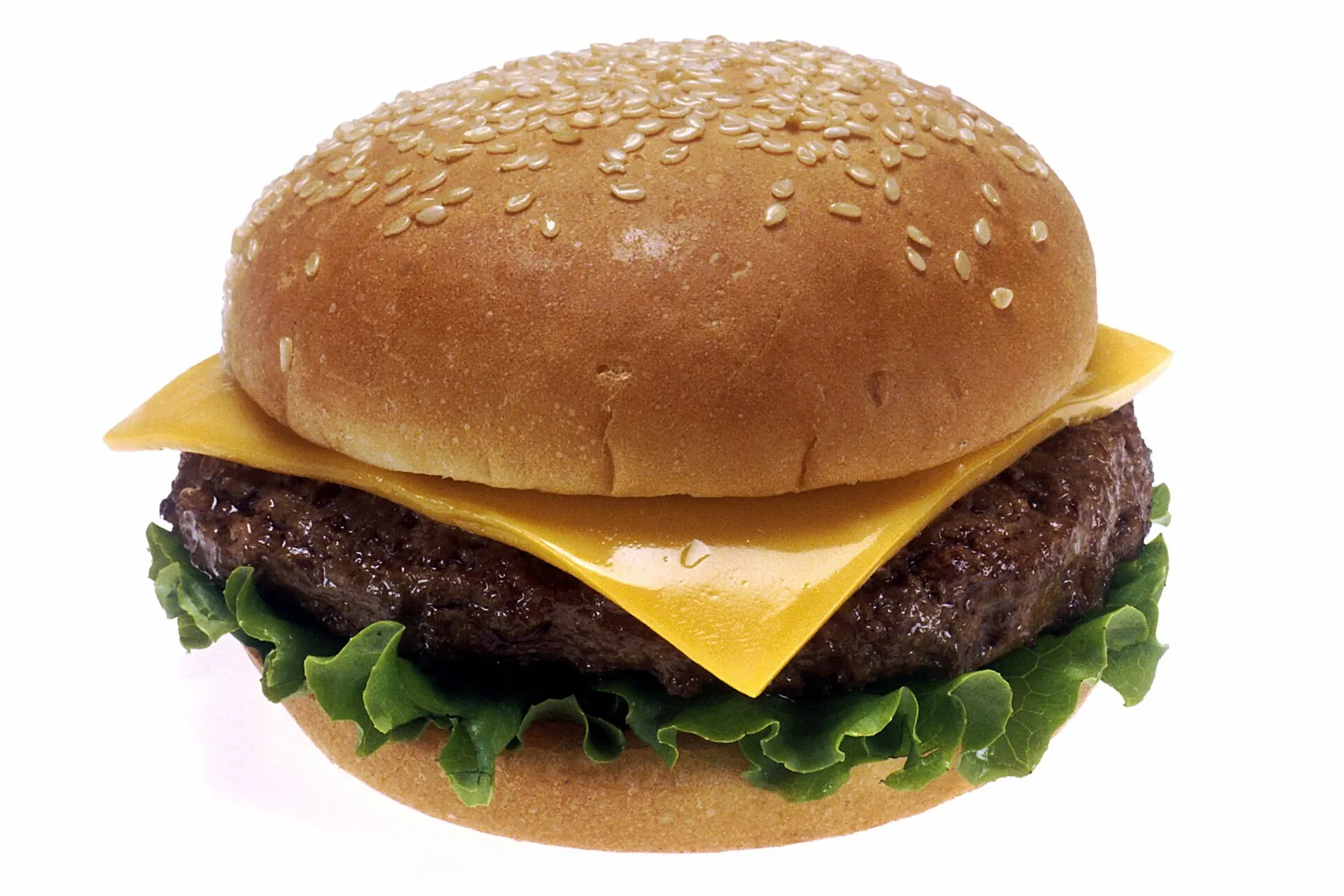
Cheddar takes second for flavor, as long as it is young or medium, followed by pepper jack, Swiss and provolone. Blue cheese, brie and pimento cheese are for burgers built around them.
A burger gives cheese very little time. Milk fat liquefies at around 90°F, but the proteins holding a slice together only let go another 40 to 90 degrees higher, according to Serious Eats' guide to melting cheese, and the patty has about a minute to get them there before the beef overcooks. Young, moist cheeses and process cheese make it in time. Aged, dry cheeses need help, which is why this ranking puts melt first and flavor second.
Best cheese for burgers, ranked
This ranking orders each burger cheese by how well it melts on a hot patty, then by how its flavor works with beef.
| Rank | Cheese | Melt on a hot patty | Flavor with beef | Best on |
|---|---|---|---|---|
| 1 | American | Fastest and smoothest, never greasy | Mild, milky, salty | Smash burgers, diner burgers |
| 2 | Cheddar (medium or young sharp) | Good; aged cheddar turns oily | Tangy, sharp | Backyard and bacon burgers |
| 3 | Pepper jack | Fast and smooth | Buttery, with chile heat | Southwest, turkey and chicken burgers |
| 4 | Swiss | Good | Mild, nutty | Mushroom and onion burgers |
| 5 | Provolone | Good, stringy | Mild to sharp | Burgers with peppers or marinara |
| 6 | Gruyère | Good when young; steam aged wedges | Nutty, deep | Caramelized onion burgers |
| 7 | Muenster | Fast and even | Very mild | Turkey burgers, kids |
| 8 | Smoked Gouda (young) | Good | Smoky, buttery | Barbecue burgers |
| 9 | Blue cheese | Softens, doesn't drape | Sharp, salty | Bacon and steakhouse burgers |
| 10 | Brie | Fast and runny | Rich, earthy | Burgers with fig jam or bacon |
| 11 | Pimento cheese | Spreads; can break | Tangy, peppery | Thick Southern-style burgers |
1. American cheese
American cheese ranks first because it was engineered to melt. Process cheese starts with young cheddar-style cheese, then adds milk, extra milk protein and an emulsifying salt that keeps the proteins from tightening, which gives it a very low melting point and makes it nearly impossible to break. Nothing else coats a patty as evenly or binds a double stack as well. American cheese, explained covers what is actually in it. Weak spot: the flavor is mild and salty, at 473 mg of sodium per ounce in USDA data.
2. Cheddar
Cheddar is the flavor pick, and the trick is buying one young enough to melt. Medium and younger sharp cheddars melt smoothly; well-aged cheddar has tighter protein clumps that squeeze out fat, so it slumps into an oily layer. In a Serious Eats blind tasting of cheddar slices on cheeseburgers, Tillamook Sharp Cheddar won, the only slice tasters unanimously called distinctly cheddar, and Kraft Singles Sharp Cheddar came second with near-top scores for flavor and melt. Use two thin slices per patty. Weak spot: extra-sharp, crumbly cheddar needs the steaming fix described further down.
3. Pepper jack
Pepper jack melts almost as easily as American and brings its own heat. It is Monterey Jack studded with chiles, and Jack is one of the young, moist cheeses that Serious Eats counts among the most reliable melters; USDA puts Monterey at about 41 percent water against about 37 for cheddar. Use it with guacamole, pickled jalapeños or chipotle mayo, or on a lean turkey burger that needs the fat. More on its styles is in the pepper jack guide. Weak spot: the heat can crowd out the beef.
4. Swiss
Swiss is the mild, nutty choice for mushroom and onion burgers. Emmental-style Swiss melts reliably, by Serious Eats' account, and its gentle flavor lets sautéed mushrooms carry the burger. It is also the low-sodium pick, at 53 mg per ounce in USDA data, the least of any cheese in this ranking with a USDA entry. Swiss, Gruyère and Emmental are easy to mix up at the counter. Weak spot: the holes leave bald spots, so overlap two slices.
5. Provolone
Provolone melts into stretchy strings, the classic finish for a burger topped with peppers, onions or marinara. It is a stretched-curd cheese like mozzarella, so it holds together on the patty instead of running off. Buy mild provolone for kids and sharp or smoked provolone when the burger is seasoned like Italian sausage. Weak spot: mild deli provolone adds texture more than flavor.
6. Gruyère
Gruyère gives a burger the nutty depth of French onion soup, which is why it suits caramelized onions so well. Young Gruyère melts beautifully, but it is also the driest cheese in this ranking, about 33 percent water in USDA data, so an older wedge can break into fat and curd. Grate it and steam it with a little cream (the method is below) and it melts almost like a slice of American. Weak spot: the price, for a cheese that often disappears under toppings.
7. Muenster
Muenster is the quiet melter: very mild, soft and moist, at about 42 percent water in USDA data, so it melts quickly and evenly. It suits turkey and chicken burgers, children, and anyone who wants melt without much cheese flavor. Weak spot: next to well-seasoned beef, it tastes of almost nothing.
8. Smoked Gouda
Smoked Gouda belongs on a barbecue burger, where its smoke meets the sauce. Buy a young smoked Gouda, because Serious Eats notes that aged Gouda, even when aged in its wax shell, has a tough time melting smoothly. The difference between young and old is laid out in Gouda by age. Weak spot: the smoke can overwhelm a simply seasoned patty.
9. Blue cheese
Blue cheese is for burgers built around it, usually with bacon or caramelized onions. Crumbles soften into creamy pockets rather than draping, and the flavor is strong and salty, about 326 mg of sodium per ounce in USDA data. One fix is to put it inside: the Blucy at the Twin Cities' Blue Door Pub stuffs blue cheese and garlic into the patty. How blue cheese gets its veins explains the flavor. Weak spot: it doesn't help hold the burger together.
10. Brie
Brie melts readily, and at about 48 percent water in USDA data it is the wettest cheese in this ranking. Slice it cold, rind on, add it in the last 30 seconds under a lid, and pair it with fig jam, bacon or arugula. Its eagerness to melt is exactly why it needs watching. Weak spot: left too long, it runs off the patty and onto the grill.
11. Pimento cheese
Pimento cheese, the Southern spread of sharp cheddar, mayonnaise and pimentos, melts into a tangy, peppery coating. In Kenji López-Alt's pimento cheeseburger, very chunky pimento cheese broke into a greasy sheen as the mayonnaise separated, so he pulses it until only moderately chunky, spoons it on about a minute before the patty is done, and covers the grill. Homemade pimento cheese takes minutes. Weak spot: it needs a thick, juicy patty to stand up to it.
How to melt cheese on a burger
The best way to melt cheese on a burger is to add it about a minute before the patty is done, then cover it so trapped heat and steam finish the job. On a grill, close the lid. In a skillet or on a griddle, cover the patty with a lid or an upturned metal bowl, and splash a spoonful of water onto the hot pan beside it first: steam heats cheese more evenly and gently and puts back moisture, as Serious Eats explains. Take the slices out of the fridge when the patties go on, since fridge-cold cheese needs longer to reach melting temperature.
Best cheese for smash burgers
The best cheese for smash burgers is American, because a smashed patty gives the cheese only seconds. In Serious Eats' smash cheeseburger, two 2-ounce patties brown for about 45 seconds, and the second side cooks for just a few seconds after the flip. The slice goes on one patty the instant they turn, with the other patty stacked on top, so the cheese melts from both sides and glues the stack together. A thin cheddar slice works in the same stack; a thick one won't melt in time.
Cheese-stuffed burgers
Cheese-stuffed burgers put the melt problem inside the patty, where you can't see it. The original, the Juicy Lucy, likely began at Matt's Bar in Minneapolis in the 1950s, filled with American cheese, and Serious Eats' Juicy Lucy recipe explains the catch: cook the burger to a juicy medium and the center may not melt, and you can't probe the middle without opening a channel for the cheese to escape. In that recipe's tests, deli American melted well and Kraft Singles were gooier still. Seal the two patties tightly at the edges and let the burgers rest at least five minutes, because the molten center can scald.
Safety still applies. The USDA safe minimum for ground meat is 160°F (71.1°C), so slide the thermometer in from the side, into the beef ring rather than the cheese pocket.
What most burger cheese advice gets wrong
Most burger cheese advice ranks cheeses by flavor alone, but on a hot patty the deciding factor is whether the cheese can melt in the time the beef takes to finish.
Thick slices are the usual failure. A hand-cut slab of cheddar can still be cold in the middle when the burger is done, so the patty overcooks while you wait. Two thin deli slices melt faster and cover more of the patty than one thick one, and Serious Eats used two slices per burger in its cheddar tasting.
Aged cheese needs moisture, not more heat. More heat only pushes the fat out of an aged cheddar or Gruyère. Kenji López-Alt's fix, from his easy-melting cheese method: for each burger, toss 1 ounce of grated aged cheese with 1/2 teaspoon of instant flour (such as Wondra) and 1 teaspoon of cream or milk, steam it in a small ramekin while the burgers cook, stir it smooth, and spoon it over the patty. The flour and liquid keep the fat in suspension, so even a crumbly cheese spoons on like sauce.
"Real" American is not the meltier one. In Serious Eats' Burger Lab tasting of ten brands, singles labeled "pasteurized prepared cheese product" melted at lower temperatures than slices labeled "American cheese," because their extra milk protein and emulsifiers keep them soft, and the meltiest slices scored best on burgers. For a smash burger, plain singles beat the fancier deli label.
Questions about the best cheese for burgers
These quick answers cover the burger cheese questions people search most.
What cheese do burger restaurants use?
Burger restaurants vary, but American cheese is the burger-joint classic because it melts in seconds and stays glossy on a busy griddle. Kenji López-Alt has written that if he had to stock just one cheese in a burger joint, it would be American.
What is the healthiest cheese for burgers?
The healthiest cheese for burgers depends on what you are watching. In USDA data, Swiss carries about a ninth of the sodium of process American, and part-skim mozzarella has the least fat, about 4.5 g per ounce. Using one thin slice instead of two halves either number.
How many slices of cheese go on a burger?
One slice covers a 4-ounce patty, and two thin slices suit a thick burger or a double. Pile on more than that and the cheese is still melting after the beef is done.
Can you use shredded cheese on a burger?
You can use shredded cheese on a burger, and its thin strands melt faster than a slice, but they need a lid to keep them from sliding off. Grate it from a block, since bagged shreds are coated with starch or cellulose to stop clumping.
What cheese is best on a turkey or chicken burger?
The best cheese on a turkey or chicken burger adds the fat lean poultry lacks: pepper jack, Muenster or Havarti melt quickly and keep the patty from tasting dry. Cook poultry burgers to 165°F, the USDA minimum for ground poultry.
Picking the best cheese for burgers
Picking the best cheese for burgers starts with the patty. Thin and fast wants American; thick and juicy can carry cheddar, Swiss, Gruyère or pimento cheese, as long as the cheese goes on a minute before the end and the lid goes on after it. For a first test, buy a pack of American singles and a block of medium cheddar, make a double smash burger with the singles and a thick burger with two thin slices of cheddar under a lid, and taste them side by side.
Sources
- The Science of Melting Cheese, Serious Eats
- In Search of the Best American Cheese (The Burger Lab), Serious Eats
- We Taste-Tested 8 Brands of Cheddar Cheese Singles on Cheeseburgers, Serious Eats
- The Ultimate Smash Cheeseburger, Serious Eats
- Seared Burgers With Easy-Melting Comté Cheese Slices, Serious Eats
- Pimento-Jalapeño Cheeseburgers, Serious Eats
- Juicy Lucy, Serious Eats
- Safe Minimum Internal Temperature Chart, USDA Food Safety and Inspection Service