
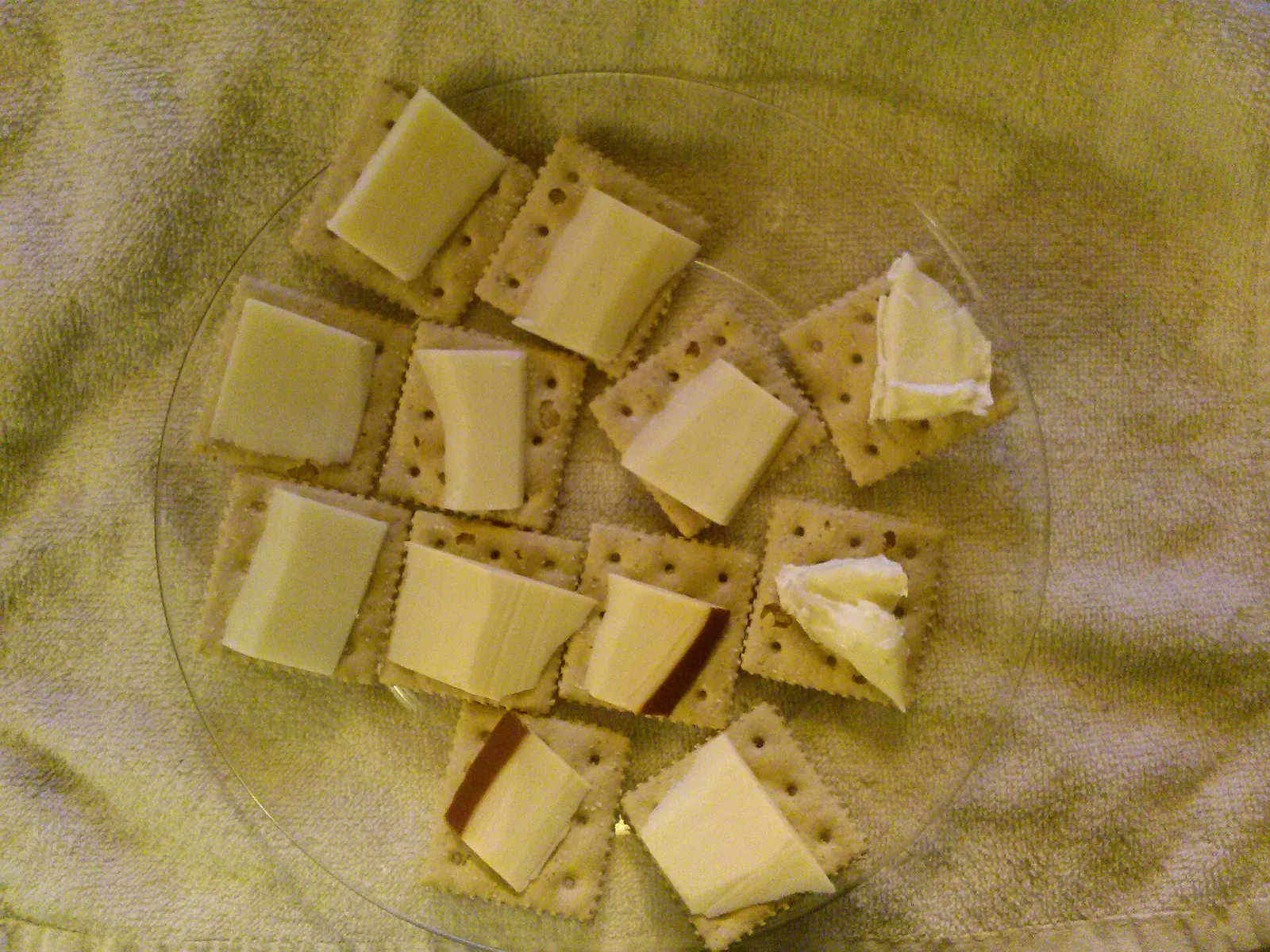
Cooking usually calls for the opposite. Young, moist cheeses such as low-moisture mozzarella, young cheddar, Monterey Jack and fontina melt smoothly, and hard Parmesan or Pecorino Romano handle the grating.
Heat is what splits the two lists. Months of aging dry a cheese out and break its proteins into flavor, which is exactly what you want on a cracker and exactly what fights you in a pan. When America's Test Kitchen baked cheddar aged 3, 16 and 24 months, the youngest flowed smoothly and the oldest broke into two pieces and never melted. Young cheese is the reverse: mild when cold, silky when hot.
Best cheese for snacking vs cooking at a glance
Here is the best cheese for snacking or cooking at a glance, with USDA figures per ounce.
| Cheese | Best job | Why | Per ounce (USDA) |
|---|---|---|---|
| Aged cheddar | Snacking | Dry and tangy, with crunchy crystals; clumps when melted | 116 calories, 6.9 g protein, 183 mg sodium (sharp) |
| Aged Gouda | Snacking | Hard and crystalline, with caramel notes | 101 calories, 7.1 g protein, 232 mg sodium (Gouda) |
| Parmigiano-Reggiano | Snacking and grating | About 30% water, the most protein; salty | 111 calories, 10.1 g protein, 333 mg sodium (hard Parmesan) |
| Swiss | Snacking and sandwiches | Nutty, with the least sodium here | 111 calories, 7.6 g protein, 53 mg sodium |
| String cheese | Snacking | Stretched mozzarella that peels; needs the fridge | 84 calories, 6.7 g protein, 189 mg sodium (part-skim) |
| Brie | Snacking | Soft and rich; best near room temperature | 95 calories, 5.9 g protein, 178 mg sodium |
| Gruyère | Both | Full flavor cold; melts into fondue | 117 calories, 8.5 g protein, 202 mg sodium |
| Young cheddar | Both, best in sauces | Moist enough to melt smoothly | 114 calories, 6.5 g protein, 185 mg sodium |
| Low-moisture mozzarella | Cooking | 45 to 52% water, stretches; bland cold | 90 calories, 6.1 g protein, 201 mg sodium (whole milk) |
| Monterey Jack | Cooking | Up to 44% water, melts fast | 106 calories, 6.9 g protein, 170 mg sodium |
| Fontina | Cooking | Young, so it melts readily | 110 calories, 7.3 g protein, 227 mg sodium |
| Romano | Cooking (grating) | Hard and the saltiest here | 110 calories, 9.0 g protein, 406 mg sodium |
| Halloumi | Cooking (grilling) | Holds its shape over a flame | No USDA entry |
What makes a cheese better for snacking or cooking
What makes a cheese better for snacking or cooking comes down to moisture, age, melt and salt.
Moisture. Water helps cheese melt. The University of Wisconsin's Center for Dairy Research (CDR) notes in its guide to melt and stretch that more moisture means more melt and stretch, though not always: cottage cheese is 80 percent water and still won't stretch, because it is so acidic. Water also decides how long a cheese can sit out. CDR's cheese safety notes put cottage cheese at a water activity of about 0.99 and Parmesan as low as 0.67, and the less water microbes can use, the slower they grow.
Age. Aging trades melt for flavor. As cheddar ages, fat and protein break down into its tangy flavor while the cheese loses moisture, turns dense and flaky, and grows small salt-like crystals, according to Dairy Farmers of Wisconsin. That makes a superb snack and a stubborn melter.
Melt. Fat helps a cheese flow. CDR explains that fat globules break up the protein network, so a full-fat cheese melts and stretches more readily, and at a cooler temperature, than a lower-fat one. Process cheese adds melting salts to keep its fat emulsified, which keeps it from breaking. The best melting cheeses guide covers the chemistry dish by dish.
Salt. Salt matters most when cheese is the whole snack. Per ounce in USDA data, Swiss carries 53 mg of sodium and Romano 406 mg, nearly eight times as much. Spread through a pot of pasta, that gap shrinks. Eaten in cubes, it doesn't.
The best cheeses for snacking
The best cheeses for snacking taste complete on their own, plus a few mild, portable ones for lunch boxes and kids.
Aged cheddar
Aged cheddar is the classic snacking cheese because a year or more of aging builds tang and crunch that a young block lacks. Dairy Farmers of Wisconsin puts extra sharp cheddar at 1 to 2 years, so look for that label or, better, an age in months. Break it into rough chunks rather than slicing it thin; the crystals are half the pleasure. Weak spot: the aging that makes it a great snack makes it a poor melter, so buy a younger block for sauce.
Aged Gouda
Aged Gouda is the sweeter alternative. As it ages, it turns harder, with a crystalline, slightly crunchy texture and a sweeter, nuttier, tangier flavor with more caramel, according to Wisconsin's Gouda guide. Gouda is sold anywhere from four weeks to 12 months or more, so read for "aged" and a number; a young Gouda is a mild slicing cheese instead. Weak spot: an old wheel is hard enough to need a sturdy knife, so break it into shards.
Parmigiano-Reggiano
Parmigiano-Reggiano is the most protein-dense snack in the case. USDA lists hard Parmesan at 10.1 grams of protein per ounce, because it is only about 30 percent water, and the federal standard for Parmesan requires at least 10 months of curing and no more than 32 percent moisture. Break a wedge into rough chunks with the tip of a knife and serve it with pears or a drizzle of honey. Weak spot: salt, at 333 mg of sodium per ounce. The Parmigiano-Reggiano guide covers the real thing.
Swiss
Swiss is the everyday pick for anyone watching salt, with 53 mg of sodium per ounce in USDA data, the least of any cheese in this guide, plus 7.6 grams of protein. Its nutty flavor comes from the bacteria that also make its holes. For small children, baby Swiss is milder, sweeter and creamier, per Dairy Farmers of Wisconsin. Weak spot: straight from the fridge it tastes of very little, so give it a few minutes on the counter.
String cheese
String cheese is mozzarella that has been heated to about 140°F and stretched so its proteins line up, which is why it peels into strings, as Wisconsin's string cheese guide explains. It is mild, portion-sized and lighter than most snack cheeses, at 84 calories and 6.7 grams of protein per ounce for part-skim mozzarella. Weak spot: it is perishable, so a lunch bag needs an ice pack. The string cheese article covers the rest.
Brie
Brie is the soft snacking cheese, rich and mild, and it shows best near room temperature, which Dairy Farmers of Wisconsin puts at 67 to 70°F. Take it out about 30 minutes ahead; soft cheese warms faster than hard. Weak spot: it is perishable, so put leftovers away within two hours. Brie sold in the US is almost always pasteurized, and the brie guide explains why and how to pick a ripe one.
The best cheeses for cooking
The best cheeses for cooking are chosen by the job: melting, grating or holding their shape.
Low-moisture mozzarella for pizza and baked pasta
Low-moisture mozzarella is the cooking cheese for pizza and baked pasta because it melts and stretches without flooding the dish. The federal standard holds it to more than 45 and no more than 52 percent water, against more than 52 and up to 60 percent for fresh mozzarella. Buy a whole-milk block and shred it yourself, since Dairy Farmers of Wisconsin warns that anticaking ingredients in bagged shreds can keep a sauce from turning smooth. Weak spot: cold, it is mild to the point of bland.
Young cheddar, Monterey Jack and fontina for melting
Young cheddar, Monterey Jack and fontina melt smoothly because they are young and moist. Wisconsin's guide to cooking with cheese says to cook with cheeses aged six months or less, and its list includes fontina, Colby, Gouda, mozzarella and Muenster. Monterey Jack may hold up to 44 percent moisture under its federal standard, against 39 percent for cheddar. For a cheese sauce, let a younger cheese carry the melt and a sharper cheddar the flavor, as in these mac and cheese blends. Weak spot: all three taste mild cold.
Gruyère for fondue and gratins
Gruyère is the crossover, full-flavored enough for a board and the base of the Gruyère interprofession's own fondue recipe, which melts 600 grams of Gruyère AOP with 200 grams of a second cheese into white wine and a little cornstarch to serve four. Cook with the Classic, aged 6 to 9 months. Weak spot: the Réserve, aged more than 10 months, is firmer and slightly crumbly, so save it for snacking.
Parmesan and Pecorino Romano for grating
Parmesan and Pecorino Romano are grating cheeses: hard, dry and salty, they season a dish rather than melt into it, and the federal Parmesan standard says outright that it "grates readily." Grate them over pasta, soup or risotto at the end, and taste before you salt, since Romano carries 406 mg of sodium per ounce in USDA data. Weak spot: a little goes a long way, so measure by the tablespoon.
Halloumi and queso fresco for grilling and frying
Halloumi and queso fresco are cooking cheeses because they don't melt. Halloumi is cooked in hot whey during production, which kills its bacteria and inactivates the rennet, so its pH stays high and calcium keeps its protein network rigid, Dr. Photis Papademas of the Cyprus University of Technology explained to America's Test Kitchen; its leftover milk sugar helps it brown. Queso fresco softens rather than melts when heated, says Dairy Farmers of Wisconsin. Sear halloumi in thick slabs and crumble queso fresco over tacos. Weak spot: both are bland unless browned or seasoned.
What most snacking cheese advice gets wrong
Most snacking cheese advice stops at a list of names and skips temperature, storage, portion and salt.
Cold cheese hides its flavor. Dairy Farmers of Wisconsin says most cheese is best at 67 to 70°F and suggests taking it out about 30 minutes before eating. Too warm and it "sweats," with beads of fat on the surface. Mind the clock too: the USDA's Food Safety and Inspection Service (FSIS) says perishable food should not sit out more than 2 hours, or 1 hour above 90°F.
Not every snack cheese can travel. FSIS lists hard cheese among lunch-bag foods that need no cold source. Its power-outage chart keeps cheddar, Colby, Swiss, Parmesan, provolone, Romano and processed cheese after 2 hours above 40°F, but tells you to discard mozzarella, Edam, Monterey Jack, brie, cream cheese and cottage cheese, along with shredded and low-fat cheeses. That puts string cheese in the ice-pack group; FSIS suggests two cold sources, such as two frozen gel packs.
A snack portion is smaller than it looks. MyPlate counts 1½ ounces of natural cheese, or 2 ounces of processed cheese, as one cup from the dairy group, as Oklahoma State University Extension summarizes it. An ounce makes a satisfying snack, and for a party, plan 1 to 2 ounces per person as an appetizer, as the guide to cheese per person explains.
Salt adds up fast. Two ounces of Parmesan carry about 666 mg of sodium, close to 30 percent of the 2,300 mg Daily Value in FDA labeling rules. The same two ounces of Swiss have 106 mg.
Light cheese belongs on the snack plate. Reduced-fat cheese melts less readily than full-fat cheese, by CDR's account, so eat it cold and cook with the full-fat version.
Questions about the best cheese for snacking
Here are short answers to common questions about the best cheese for snacking.
What is the best cheese to snack on?
The best cheese to snack on is a flavorful aged one, such as aged cheddar, aged Gouda, Parmigiano-Reggiano or Gruyère. For milder snacks, choose Swiss, string cheese or mild cheddar.
What is a good snack cheese for kids?
A good snack cheese for kids is a mild one, such as string cheese, mild cheddar, Colby-Jack or baby Swiss, sliced thin for toddlers. The ranking of mild cheeses has more ideas.
What is the healthiest cheese for snacking?
The healthiest cheese for snacking depends on what you are watching. In USDA data, Swiss has the least sodium (53 mg per ounce), part-skim mozzarella the fewest calories of the cheeses here (84 per ounce) and Parmesan the most protein (10.1 grams).
What is the best cheese to snack on for protein?
The best cheese to snack on for protein is Parmesan, at 10.1 grams per ounce in USDA data, followed by Gruyère at 8.5 grams and Swiss at 7.6. The high-protein cheese ranking compares them per calorie too.
Can cheese snacks sit out at room temperature?
Cheese snacks can sit out for up to 2 hours, or 1 hour above 90°F, under FSIS guidance, and hard cheeses such as cheddar and Swiss can ride in a lunch bag without ice.
Why is brie illegal in the US?
Brie is not illegal in the US. Federal rules require a soft ripened cheese made from raw milk to cure for at least 60 days at 35°F or warmer, so nearly all brie sold here is made from pasteurized milk.
Can you cook with snacking cheese?
You can cook with snacking cheese when it is young: Gruyère Classic, young Gouda and mild cheddar all melt well. Long-aged cheddar and aged Gouda work better grated in small amounts or blended with a younger melter.
How to stock cheese for snacking and cooking
Stock cheese for snacking and cooking as two short lists. For snacks, keep an aged cheese such as extra sharp cheddar or aged Gouda, a mild one the whole family will eat, like Swiss or string cheese, and a wedge of Parmigiano-Reggiano. For cooking, keep a block of whole-milk low-moisture mozzarella and a young cheddar or Monterey Jack, with Parmesan for grating.
Then try one small experiment. Pull the aged cheddar out of the fridge 30 minutes before you eat it, and taste a cold piece beside it.
Sources
- USDA FoodData Central (SR Legacy): cheddar, sharp, cheddar, Gouda, Parmesan, hard, Swiss, mozzarella, low moisture, part-skim, mozzarella, whole milk, low moisture, brie, Gruyère, Monterey, fontina and Romano, U.S. Department of Agriculture
- Food Safety and Inspection Service: Keeping "Bag" Lunches Safe and Keeping Food Safe During an Emergency, U.S. Department of Agriculture
- Center for Dairy Research: The Melt and Stretch of Cheese (Dairy Pipeline, Winter 2000) and Cheese Safety/Storage, University of Wisconsin-Madison
- Wisconsin Cheese guides: How to Store Cheese, The Art of Cooking with Cheese, The Cheese Lover's Guide to Cheddar, Extra Sharp Cheddar, Gouda, Swiss, Baby Swiss, String Cheese and How to Serve Cheese in the Summer, Dairy Farmers of Wisconsin
- America's Test Kitchen: Why Young Cheese Melts Better Than Aged Cheese, The Gooey Science of Melting Cheese and What Is Halloumi Cheese?, America's Test Kitchen
- Electronic Code of Federal Regulations: 21 CFR 133.153 (Monterey Jack), 133.155 (mozzarella), 133.156 (low-moisture mozzarella), 133.165 (Parmesan), 133.182 (soft ripened cheeses) and 101.9 (nutrition labeling), National Archives and Records Administration
- Interprofession du Gruyère: Our types of Le Gruyère AOP and Fondue Neuchâteloise Gruyère AOP, Interprofession du Gruyère
- Nutrition for Older Adults: USDA MyPlate Food Groups, Oklahoma State University Extension